Unprocessed Western Red Cedar Wood
CN → US| HS编码 | 关税税率 | 原产国 | 目的国 | 文档 |
|---|---|---|---|---|
| 4407190068 | 35.0% | CN | US | 官方文档 |
| 4407190069 | 35.0% | CN | US | 官方文档 |
商品图片
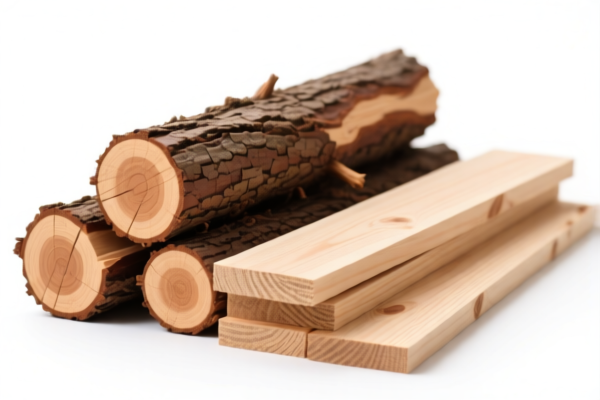
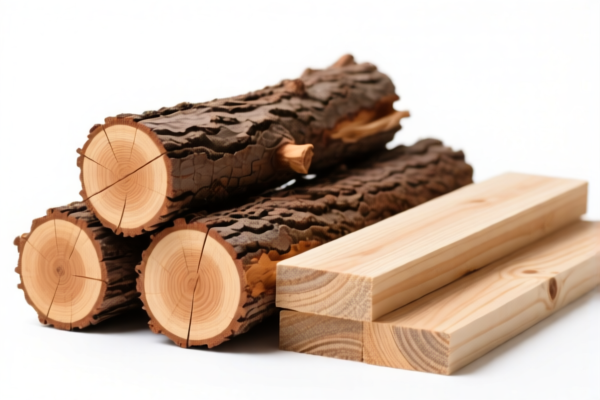
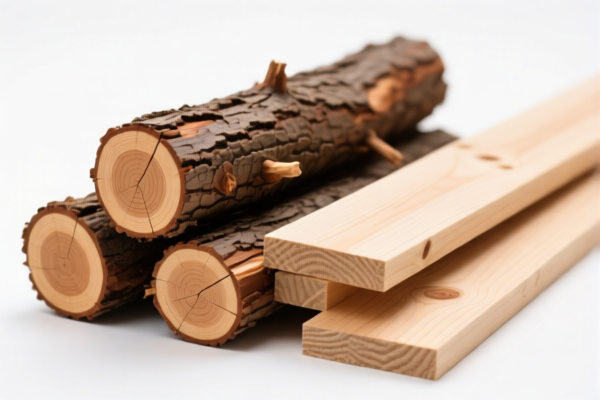
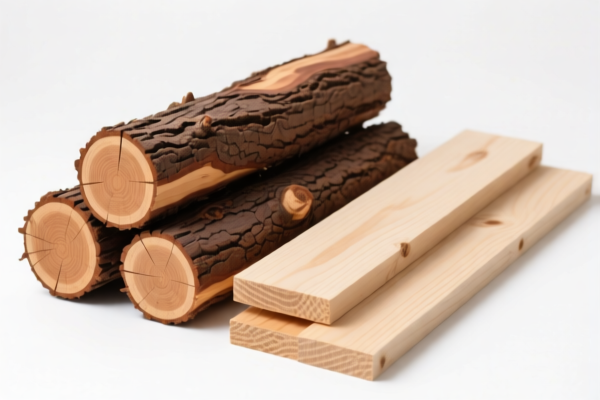
AI分析
🌲 Western Red Cedar Wood (Unprocessed)
🌐 HS Code Reference & Clearance Guide | 2026 Latest Tariff Analysis | Professional Customs Strategy
📌 I. Product Definition & Classification: What is "Western Red Cedar"?
Western Red Cedar (Thuja plicata) is a premium softwood native to the Pacific Northwest of North America. In international trade, it is primarily classified under Chapter 44 (Wood and articles of wood; wood charcoal), specifically as "Wood sawn or chipped lengthwise, sliced or peeled... of a thickness exceeding 6 mm."
Key Distinction for This Product: * "Unprocessed" / "Not Treated": The wood has not been impregnated, painted, or chemically treated. It may be rough-sawn, planed, sanded, or end-jointed. * Coniferous: It belongs to the softwood category. * Thickness: Must exceed 6 mm (otherwise it might fall under veneer or other categories).
⚠️ Critical Classification Point:
- If the wood is "Rough" (not planed/sanded smoothly, just sawn/peeled) → HS Code: 4407.19.00.68
- If the wood is "Other" (Planed, Sanded, End-jointed, but NOT treated) → HS Code: 4407.19.00.69
- If treated/impregnated: It would likely fall under a different subheading (e.g., 4407.10), which has different duties. This guide assumes "Not Treated" as per your data.
📦 II. HS Code Classification Details (2026 Latest Tariff Alignment)
| HS Code | Product Description | Key Characteristics | Tax Rate (China to US) |
|---|---|---|---|
4407.19.00.68 |
Rough Western Red Cedar Sawn Wood | - Thickness > 6mm - Coniferous - Not treated - Rough surface (not planed/sanded) |
25.0% (Base: 0% + Add'l: 25%) |
4407.19.00.69 |
Other Western Red Cedar Sawn Wood | - Thickness > 6mm - Coniferous - Not treated - Planed, Sanded, or End-jointed |
25.0% (Base: 0% + Add'l: 25%) |
🔍 Note on "Rough" vs. "Other":
- "Rough" (.68): Typically refers to lumber that has been sawn but retains the natural surface texture of the saw blade. No smoothing or sanding.
- "Other" (.69): Includes lumber that has been planed, sanded, or end-jointed. This is the more common form for construction decking or siding.
- Both codes carry the SAME tax rate of 25% for imports from China to the US.
💰 III. 2026 Tariff Rate Detailed Breakdown (US Market)
✅ Applicable Country: United States (US)
✅ Origin: China (CN)
✅ Effective Date: 2025–2026 (Subject to Section 301 & IEEPA adjustments)
🎯 1. 4407.19.00.68 & 4407.19.00.69 — Western Red Cedar Sawn Wood
| Item | Detail |
|---|---|
| Base MFN Rate | 0.0% (Ad Valorem) |
| Section 301 Additional Duty | +25.0% |
| Total Tariff Rate | 25.0% |
| Calculation Basis | CIF Value × 25% |
| De Minimis Exemption? | ❌ No (Section 301 duties apply regardless of value; no de minimis waiver for wood products from China) |
| Legal Basis Path | USITC:4407.19.00.68/.69 → Section 301: 17 CFR Part 301 → HTSUS Chapter 44 |
📌 Explanation:
- The 0% base rate reflects standard Most Favored Nation (MFN) treatment for wood products.
- The 25% additional duty is imposed under Section 301 of the Trade Act of 1974, targeting specific Chinese imports to address unfair trade practices.
- No IEEPA 10% surcharge is applied in the provided data for these specific codes (unlike electronics), but the 25% Section 301 duty alone is significant.
- Total Effective Duty: 25%.
🛠️ IV. Customs Clearance Practical Advice
✅ 1. Documentation Checklist (Must-Have)
| Document | Required? | Notes |
|---|---|---|
| Commercial Invoice | ✔️ | Must clearly state: "Western Red Cedar," "Coniferous," "Not Treated," "Thickness: >6mm," and "HS Code: 4407.19.00.68/.69" |
| Packing List | ✔️ | Include gross/net weights, number of packages, and dimensions |
| Bill of Lading / Air Waybill | ✔️ | Standard shipping document |
| Certificate of Origin (CO) | ✔️ | Crucial to prove origin as China. If origin is Canada/US, no Section 301 duty applies (but different HS codes may apply). |
| Phytosanitary Certificate | ✔️ | Critical for wood! Issued by the exporting country’s plant protection agency to prove the wood is free from pests/diseases (e.g., Emerald Ash Borer, Spongy Moth). |
| Fumigation Certificate | ✔️ | If required by US CBP for wood packaging or raw timber |
| Product Description Statement | ✔️ | Explicitly state: "No chemical treatment, pressure impregnation, or paint applied." |
✅ 2. Classification Strategy & Avoiding Pitfalls
| Scenario | Correct Action | Common Mistake |
|---|---|---|
| Wood is Planed/Sanded | Use 4407.19.00.69 |
Using .68 (Rough) → May trigger customs inquiry, though rate is same |
| Wood is Rough-Sawn | Use 4407.19.00.68 |
Using .69 → Inaccurate description |
| Wood is Treated (e.g., Pressure-Treated) | DO NOT USE 4407.19.00.68/69 | Must classify under treated wood code (e.g., 4407.10) → Different duty rate & regulatory requirements |
| Thickness ≤ 6mm | DO NOT USE 4407 | Must classify under Veneer Sheets (e.g., 4408) or Plywood → Different duty structure |
🔥 Golden Rule:
"Rough vs. Planed: Check the Surface! Treated vs. Untreated: Check the Chemical! Thickness > 6mm: Don’t Veneer!"
✅ 3. Special Considerations for Wood
- Phytosanitary Compliance: The US Department of Agriculture (USDA) strictly regulates wood imports to prevent invasive species. Ensure the exporting facility is registered with APHIS (Animal and Plant Health Inspection Service).
- Labeling: Wood products must often be labeled with the species name, country of origin, and treatment status.
- Duty Mitigation: Since the duty is 25%, consider:
- Supply Chain Diversification: Sourcing from Canada or the US (NAFTA/USMCA eligible) to avoid Section 301 duties.
- First Sale Rule: If applicable, declare value at the first sale in the supply chain, not the final sale, to reduce dutiable value.
🌍 V. Global Market Comparison (2026)
| Country/Region | Recommended HS Code | Duty (China Origin) | Key Requirement |
|---|---|---|---|
| 🇺🇸 USA | 4407.19.00.68/.69 |
25.0% | Phytosanitary Certificate, Section 301 Duty |
| 🇨🇳 China | 4407.19.00.68/.69 |
0–5% (Import Duty) | Standard customs clearance |
| 🇪🇺 EU | 4407.10.00 or 4407.91 |
0–6.5% | EUTR (EU Timber Regulation) compliance, FLEGT license |
| 🇯🇵 Japan | 4407.10.000 |
0–3.2% | ISPM 15 for wood packaging |
| 🇦🇺 Australia | 4407.10.00 |
0–5% | Biosecurity Permit required |
📌 Conclusion:
- The US market imposes the highest burden on Chinese Western Red Cedar due to Section 301 tariffs.
- Phytosanitary compliance is equally critical in all markets but especially strict in the US and Australia.
📌 VI. Common Errors & Pitfalls (Lessons Learned)
❌ Error 1: Misclassifying "Treated Wood" as "Unprocessed"
👉 Consequence: Incorrect HS Code → Potential fraud allegations, penalties, and higher retroactive duties.
❌ Error 2: Ignoring Phytosanitary Requirements
👉 Consequence: Shipment held at port, destroyed, or returned by USDA → 100% loss of goods and shipping costs.
❌ Error 3: Confusing "Rough" vs. "Planed"
👉 Consequence: Customs may reject the declaration, causing delays. (Though tax rate is same, accuracy is mandatory for trade statistics and compliance audits.)
❌ Error 4: Not declaring "Not Treated"
👉 Consequence: Ambiguity leads to customs requesting additional info or assigning a default higher duty rate.
✅ Correct Practice:
"Western Red Cedar Sawn Wood, Coniferous, Thickness 19mm, Planed, Not Treated, Origin: China, Phytosanitary Cert: ABC123, HS: 4407.19.00.69"
🎯 VII. Conclusion: Professional Clearance, Cost Optimization
🎯 Remember the Motto:
🔹 "Check the Surface: Rough (.68) or Planed (.69)?”
🔹 "Check the Treatment: Untreated = 25% Duty, Treated = Different Code!"
🔹 "Phytosanitary Cert is a MUST for Wood!"
📌 Pro Tip:
If you are importing Western Red Cedar into the US, 25% duty is unavoidable for Chinese origin. To mitigate costs:
1. Verify Origin: Ensure it’s not re-exported from China if it’s actually Canadian (USMCA benefits).
2. Accurate Description: Use precise language to avoid customs holds.
3. Pre-Clearance: Apply for an Advance Ruling from US CBP if you are unsure about the "Treated" status.
📣 Immediate Action:
📞 Contact your freight forwarder + Provide Phytosanitary Certificate + Confirm HS Code (
4407.19.00.68or.69)
🚀 Clear customs smoothly, avoid delays, and maximize your profit margin!
✨ Professional Customs, Starts with Precise Classification!
💼 Every percent of duty counts!
用户评价
关于 HS 编码归类
协调制度(HS)是由世界海关组织(WCO)制定的国际贸易商品分类标准。全球 200 多个国家采用 HS 系统作为海关关税、贸易统计和进出口监管的基础。
每个 HS 编码遵循以下层级结构:
- 章(2 位)——商品大类(例如:第 84 章:机器和机械设备)
- 品目(4 位)——章内的更具体分类
- 子目(6 位)——国际通用细分,所有 WCO 成员国统一使用
- 本国细分(8-10 位)——各国自行扩展的细分编码,如美国 HTSUS 10 位编码
正确的 HS 编码归类对于顺利通关、准确缴纳关税和遵守贸易法规至关重要。错误归类可能导致海关延误、多缴关税或罚款。
从CN进口到US时,适用的关税税率可能包括:
- 最惠国(MFN)税率——适用于 WTO 成员国的标准关税税率
- 普通税率——适用于无贸易协定国家
- 贸易救济关税——附加关税,如 301 条款(反倾销)、232 条款(国家安全)或反补贴税
本页内容仅供参考。如需正式归类,请咨询当地海关或持牌报关代理。