Unprocessed Western Red Cedar Wood
CN → US| HS Code | Tariff Rate | Origin | Destination | Doc |
|---|---|---|---|---|
| 4407190068 | 35.0% | CN | US | Official Doc |
| 4407190069 | 35.0% | CN | US | Official Doc |
Product Images
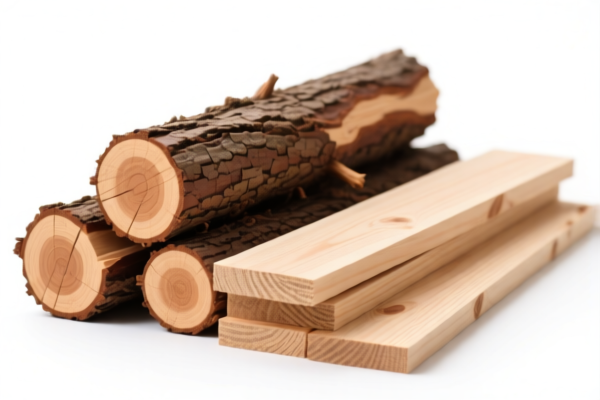
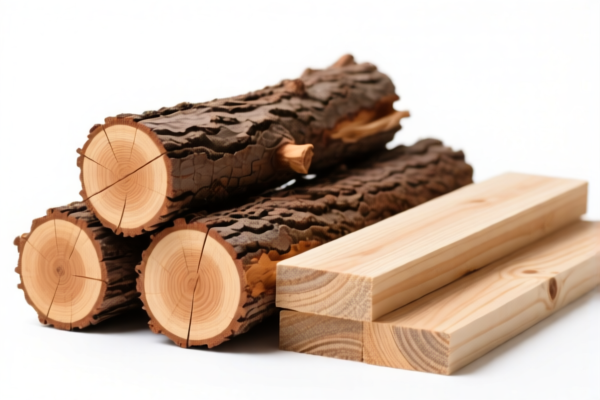
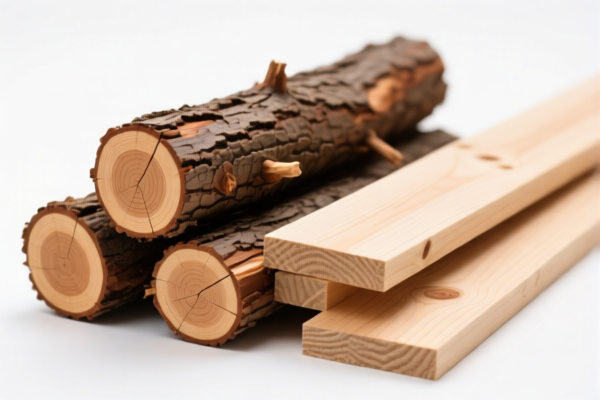
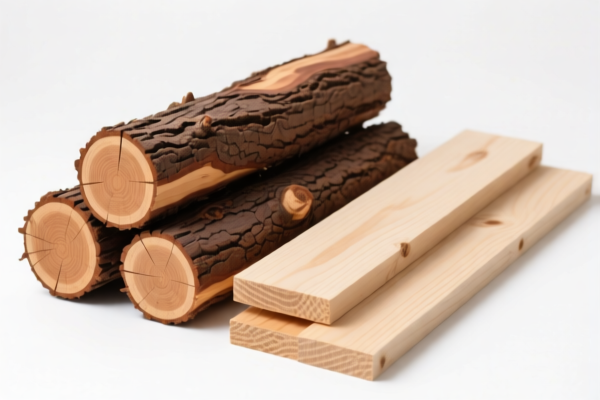
AI Analysis
🌲 Western Red Cedar Wood (Unprocessed)
🌐 HS Code Reference & Clearance Guide | 2026 Latest Tariff Analysis | Professional Customs Strategy
📌 I. Product Definition & Classification: What is "Western Red Cedar"?
Western Red Cedar (Thuja plicata) is a premium softwood native to the Pacific Northwest of North America. In international trade, it is primarily classified under Chapter 44 (Wood and articles of wood; wood charcoal), specifically as "Wood sawn or chipped lengthwise, sliced or peeled... of a thickness exceeding 6 mm."
Key Distinction for This Product: * "Unprocessed" / "Not Treated": The wood has not been impregnated, painted, or chemically treated. It may be rough-sawn, planed, sanded, or end-jointed. * Coniferous: It belongs to the softwood category. * Thickness: Must exceed 6 mm (otherwise it might fall under veneer or other categories).
⚠️ Critical Classification Point:
- If the wood is "Rough" (not planed/sanded smoothly, just sawn/peeled) → HS Code: 4407.19.00.68
- If the wood is "Other" (Planed, Sanded, End-jointed, but NOT treated) → HS Code: 4407.19.00.69
- If treated/impregnated: It would likely fall under a different subheading (e.g., 4407.10), which has different duties. This guide assumes "Not Treated" as per your data.
📦 II. HS Code Classification Details (2026 Latest Tariff Alignment)
| HS Code | Product Description | Key Characteristics | Tax Rate (China to US) |
|---|---|---|---|
4407.19.00.68 |
Rough Western Red Cedar Sawn Wood | - Thickness > 6mm - Coniferous - Not treated - Rough surface (not planed/sanded) |
25.0% (Base: 0% + Add'l: 25%) |
4407.19.00.69 |
Other Western Red Cedar Sawn Wood | - Thickness > 6mm - Coniferous - Not treated - Planed, Sanded, or End-jointed |
25.0% (Base: 0% + Add'l: 25%) |
🔍 Note on "Rough" vs. "Other":
- "Rough" (.68): Typically refers to lumber that has been sawn but retains the natural surface texture of the saw blade. No smoothing or sanding.
- "Other" (.69): Includes lumber that has been planed, sanded, or end-jointed. This is the more common form for construction decking or siding.
- Both codes carry the SAME tax rate of 25% for imports from China to the US.
💰 III. 2026 Tariff Rate Detailed Breakdown (US Market)
✅ Applicable Country: United States (US)
✅ Origin: China (CN)
✅ Effective Date: 2025–2026 (Subject to Section 301 & IEEPA adjustments)
🎯 1. 4407.19.00.68 & 4407.19.00.69 — Western Red Cedar Sawn Wood
| Item | Detail |
|---|---|
| Base MFN Rate | 0.0% (Ad Valorem) |
| Section 301 Additional Duty | +25.0% |
| Total Tariff Rate | 25.0% |
| Calculation Basis | CIF Value × 25% |
| De Minimis Exemption? | ❌ No (Section 301 duties apply regardless of value; no de minimis waiver for wood products from China) |
| Legal Basis Path | USITC:4407.19.00.68/.69 → Section 301: 17 CFR Part 301 → HTSUS Chapter 44 |
📌 Explanation:
- The 0% base rate reflects standard Most Favored Nation (MFN) treatment for wood products.
- The 25% additional duty is imposed under Section 301 of the Trade Act of 1974, targeting specific Chinese imports to address unfair trade practices.
- No IEEPA 10% surcharge is applied in the provided data for these specific codes (unlike electronics), but the 25% Section 301 duty alone is significant.
- Total Effective Duty: 25%.
🛠️ IV. Customs Clearance Practical Advice
✅ 1. Documentation Checklist (Must-Have)
| Document | Required? | Notes |
|---|---|---|
| Commercial Invoice | ✔️ | Must clearly state: "Western Red Cedar," "Coniferous," "Not Treated," "Thickness: >6mm," and "HS Code: 4407.19.00.68/.69" |
| Packing List | ✔️ | Include gross/net weights, number of packages, and dimensions |
| Bill of Lading / Air Waybill | ✔️ | Standard shipping document |
| Certificate of Origin (CO) | ✔️ | Crucial to prove origin as China. If origin is Canada/US, no Section 301 duty applies (but different HS codes may apply). |
| Phytosanitary Certificate | ✔️ | Critical for wood! Issued by the exporting country’s plant protection agency to prove the wood is free from pests/diseases (e.g., Emerald Ash Borer, Spongy Moth). |
| Fumigation Certificate | ✔️ | If required by US CBP for wood packaging or raw timber |
| Product Description Statement | ✔️ | Explicitly state: "No chemical treatment, pressure impregnation, or paint applied." |
✅ 2. Classification Strategy & Avoiding Pitfalls
| Scenario | Correct Action | Common Mistake |
|---|---|---|
| Wood is Planed/Sanded | Use 4407.19.00.69 |
Using .68 (Rough) → May trigger customs inquiry, though rate is same |
| Wood is Rough-Sawn | Use 4407.19.00.68 |
Using .69 → Inaccurate description |
| Wood is Treated (e.g., Pressure-Treated) | DO NOT USE 4407.19.00.68/69 | Must classify under treated wood code (e.g., 4407.10) → Different duty rate & regulatory requirements |
| Thickness ≤ 6mm | DO NOT USE 4407 | Must classify under Veneer Sheets (e.g., 4408) or Plywood → Different duty structure |
🔥 Golden Rule:
"Rough vs. Planed: Check the Surface! Treated vs. Untreated: Check the Chemical! Thickness > 6mm: Don’t Veneer!"
✅ 3. Special Considerations for Wood
- Phytosanitary Compliance: The US Department of Agriculture (USDA) strictly regulates wood imports to prevent invasive species. Ensure the exporting facility is registered with APHIS (Animal and Plant Health Inspection Service).
- Labeling: Wood products must often be labeled with the species name, country of origin, and treatment status.
- Duty Mitigation: Since the duty is 25%, consider:
- Supply Chain Diversification: Sourcing from Canada or the US (NAFTA/USMCA eligible) to avoid Section 301 duties.
- First Sale Rule: If applicable, declare value at the first sale in the supply chain, not the final sale, to reduce dutiable value.
🌍 V. Global Market Comparison (2026)
| Country/Region | Recommended HS Code | Duty (China Origin) | Key Requirement |
|---|---|---|---|
| 🇺🇸 USA | 4407.19.00.68/.69 |
25.0% | Phytosanitary Certificate, Section 301 Duty |
| 🇨🇳 China | 4407.19.00.68/.69 |
0–5% (Import Duty) | Standard customs clearance |
| 🇪🇺 EU | 4407.10.00 or 4407.91 |
0–6.5% | EUTR (EU Timber Regulation) compliance, FLEGT license |
| 🇯🇵 Japan | 4407.10.000 |
0–3.2% | ISPM 15 for wood packaging |
| 🇦🇺 Australia | 4407.10.00 |
0–5% | Biosecurity Permit required |
📌 Conclusion:
- The US market imposes the highest burden on Chinese Western Red Cedar due to Section 301 tariffs.
- Phytosanitary compliance is equally critical in all markets but especially strict in the US and Australia.
📌 VI. Common Errors & Pitfalls (Lessons Learned)
❌ Error 1: Misclassifying "Treated Wood" as "Unprocessed"
👉 Consequence: Incorrect HS Code → Potential fraud allegations, penalties, and higher retroactive duties.
❌ Error 2: Ignoring Phytosanitary Requirements
👉 Consequence: Shipment held at port, destroyed, or returned by USDA → 100% loss of goods and shipping costs.
❌ Error 3: Confusing "Rough" vs. "Planed"
👉 Consequence: Customs may reject the declaration, causing delays. (Though tax rate is same, accuracy is mandatory for trade statistics and compliance audits.)
❌ Error 4: Not declaring "Not Treated"
👉 Consequence: Ambiguity leads to customs requesting additional info or assigning a default higher duty rate.
✅ Correct Practice:
"Western Red Cedar Sawn Wood, Coniferous, Thickness 19mm, Planed, Not Treated, Origin: China, Phytosanitary Cert: ABC123, HS: 4407.19.00.69"
🎯 VII. Conclusion: Professional Clearance, Cost Optimization
🎯 Remember the Motto:
🔹 "Check the Surface: Rough (.68) or Planed (.69)?”
🔹 "Check the Treatment: Untreated = 25% Duty, Treated = Different Code!"
🔹 "Phytosanitary Cert is a MUST for Wood!"
📌 Pro Tip:
If you are importing Western Red Cedar into the US, 25% duty is unavoidable for Chinese origin. To mitigate costs:
1. Verify Origin: Ensure it’s not re-exported from China if it’s actually Canadian (USMCA benefits).
2. Accurate Description: Use precise language to avoid customs holds.
3. Pre-Clearance: Apply for an Advance Ruling from US CBP if you are unsure about the "Treated" status.
📣 Immediate Action:
📞 Contact your freight forwarder + Provide Phytosanitary Certificate + Confirm HS Code (
4407.19.00.68or.69)
🚀 Clear customs smoothly, avoid delays, and maximize your profit margin!
✨ Professional Customs, Starts with Precise Classification!
💼 Every percent of duty counts!
Customer Reviews
About HS Code Classification
The Harmonized System (HS) is an internationally standardized nomenclature developed by the World Customs Organization (WCO) to classify traded products. Over 200 countries use the HS system as the basis for customs tariffs, trade statistics, and import/export regulations.
Each HS code follows a hierarchical structure:
- Chapter (2 digits) — Broad category of goods (e.g., Chapter 84: Machinery and Mechanical Appliances)
- Heading (4 digits) — More specific grouping within the chapter
- Subheading (6 digits) — Internationally standardized breakdown, used by all WCO member countries
- National subdivisions (8-10 digits) — Country-specific extensions for further classification, such as US HTSUS 10-digit codes
Correct HS code classification is essential for smooth customs clearance, accurate duty payment, and compliance with trade regulations. Misclassification can lead to customs delays, overpayment of duties, or penalties.
When importing from CN to US, the applicable tariff rates may include:
- Most-Favored-Nation (MFN) rate — The standard duty rate applied to WTO members
- General rate — Applied to countries without trade agreements
- Trade remedy duties — Additional tariffs such as Section 301 (anti-dumping), Section 232 (national security), or countervailing duties
The information provided on this page is for reference purposes only. For official classification, please consult with your local customs authority or a licensed customs broker.