Unstripped Aspen Rough Wood
CN → US| HS编码 | 关税税率 | 原产国 | 目的国 | 文档 |
|---|---|---|---|---|
| 4403970022 | 35.0% | CN | US | 官方文档 |
| 4403970067 | 35.0% | CN | US | 官方文档 |
| 9403910010 | 35.0% | CN | US | 官方文档 |
商品图片
AI分析
🌲 Unstripped Aspen Rough Wood (Poplar/Aspen Logs)
🌐 HS Code Reference & Customs Clearance Guide | 2026 Latest Tariff Analysis | Professional Entry Strategy
📌 I. Product Definition & Classification: Do You Really Understand "Aspen/Poplar Logs"?
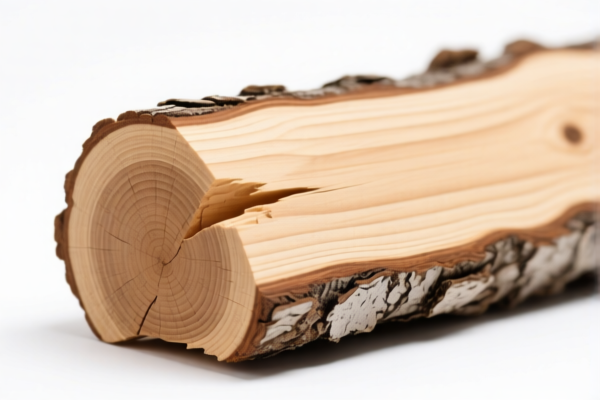
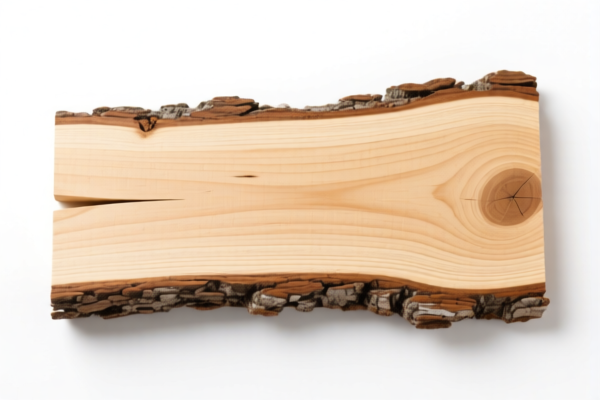
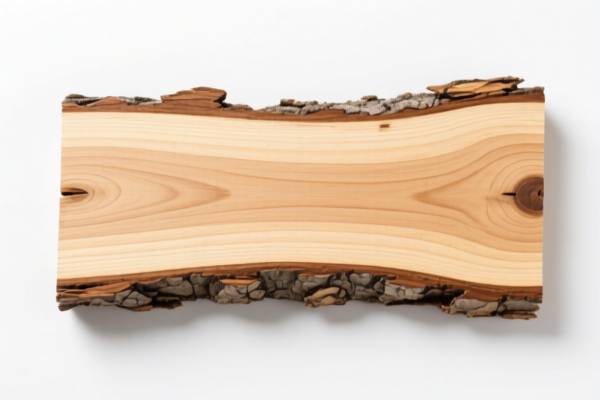
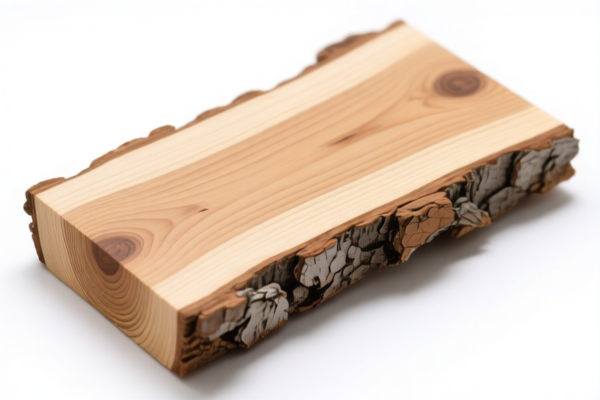
Unstripped Aspen Rough Wood refers to timber that has been felled but has not yet been debarked (unstripped) and has undergone minimal processing (rough wood/log format). In international trade, this product falls under Chapter 44 (Wood and articles of wood), specifically heading 44.03, which covers wood in the rough.
Key Distinction:
Unstripped (Not Debarked): The bark is still attached. This distinguishes it from "stripped" wood.
Rough Wood (Logs/Sawn): It has not been planed, sanded, or chemically treated. It is in its primary, raw state.
Species Identification: The term "Aspen" often overlaps with "Poplar" (Genus Populus) in customs classification. However, some listings may cross-reference with Birch (Betula spp.*) or generic "Other" hardwoods if species verification is ambiguous, though Aspen/Poplar is the primary target.
⚠️ Critical Classification Point:
- If the wood is Aspen/Poplar (Populus spp.): Primarily classified under 4403.97.
- If the wood is Birch (Betula spp.): Classified under 4403.95 or 4403.96 depending on specific sub-grouping.
- If the species is unclear or mixed: Customs may apply "Other" classifications, but material consistency is key.
📦 II. HS Code Classification Details (2026 Latest Tariff Authority Comparison)
| HS Code | Product Description | Applicable Scenario | Species Match | Stripping Status |
|---|---|---|---|---|
4403.97.00.22 |
Wood of other species (Aspen/Poplar group), in the rough, not treated | Rough logs, unstripped Aspen/Poplar pulpwood | Aspen/Populus | ❌ Unstripped |
4403.97.00.67 |
Wood of other species (Aspen/Poplar group), in the rough, not treated | Rough logs, unstripped Aspen/Poplar, general category | Aspen/Populus | ❌ Unstripped |
4403.96.01.30 |
Wood of Birch (Betula spp.), in the rough, not treated | Birch logs (if Aspen is misidentified or mixed) | Betula (Birch) | ❌ Unstripped |
4403.95.01.30 |
Wood of other species (Birch sub-group), in the rough, not treated | Birch logs, specific sub-category | Betula (Birch) | ❌ Unstripped |
9403.91.00.10 |
Parts of wooden furniture (Miscellaneous) | Incorrect/Fallback: Only if wood is confirmed as furniture parts (not raw logs) | Wooden | N/A (Processed) |
🔍 Key Reminder:
- Primary Classification:4403.97.xx.xxis the standard for Aspen/Poplar logs.
- Species Risk: If "Aspen" is not strictly verified as Populus, customs may scrutinize against Birch (4403.96) codes.
- State of Processing: "Unstripped" and "Rough" firmly place this in 44.03. Do not classify under finished goods (like9403) unless it is clearly a pre-manufactured furniture component.
💰 III. 2026 Latest Tariff Rate Details (Including Surcharges & Policy Add-ons)
✅ Applicable Country: United States (US)
✅ Origin: China (CN)
✅ Effective Date: From November 10, 2025 (Including subsequent imports)
🎯 1. 4403.97.00.22 & 4403.97.00.67 —— Unstripped Aspen/Poplar Logs
| Item | Content |
|---|---|
| Base Tariff | 0% (ad valorem) |
| USITC Additional Tariff | +25% (Under USITC Footnote 9903.88.01 / Section 301) |
| IEEPA Additional Tariff | +10% (Targeting Chinese/Hong Kong products, effective Nov 10, 2025) |
| Total Tariff Rate | 35.0% |
| Tax Calculation | CIF Value × 35% |
| De Minimis Eligibility | ❌ Not Allowed (deny_de_minimis) |
| Legal Basis Path | IEEPA:9903.01.25 → IEEPA:9903.01.24 → USITC:4403.97.00.22 → FOOTNOTE:9903.88.01 |
📌 Explanation:
- "25% USITC Surcharge": Imposed under Section 301 of the Trade Act due to unfair trade practices.
- "10% IEEPA Surcharge": A national emergency economic power surcharge on Chinese goods.
- Total 35%: This is a high tariff rate. Importers must budget accordingly. No small-shipment exemptions apply.
🎯 2. 4403.96.01.30 & 4403.95.01.30 —— Birch Logs (If Species Disputed)
| Item | Content |
|---|---|
| Base Tariff | 0% |
| USITC Additional Tariff | +25% |
| IEEPA Additional Tariff | +10% |
| Total Tariff Rate | 35.0% |
| Tax Calculation | CIF × 35% |
| De Minimis Eligibility | ❌ Not Allowed |
| Legal Basis Path | IEEPA:9901.25 → IEEPA:9903.01.24 → USITC:4403.95/96 → FOOTNOTE:9903.88.01 |
📌 Note:
- Birch logs face the exact same 35% tariff as Aspen logs under current US-China trade policies.
- Mislabeling Aspen as Birch to avoid scrutiny is highly risky and can lead to penalties if physical inspection reveals non-Birch material.
🎯 3. 9403.91.00.10 —— Wooden Parts of Furniture (Incorrect Classification for Logs)
| Item | Content |
|---|---|
| Base Tariff | 0% |
| USITC Additional Tariff | +25% |
| IEEPA Additional Tariff | +10% |
| Total Tariff Rate | 35.0% |
| Tax Calculation | CIF × 35% |
| De Minimis Eligibility | ❌ Not Allowed |
📌 Warning:
- This code applies to finished or semi-finished furniture parts (e.g., legs, panels).
- Declaring raw logs as "furniture parts" is a major compliance error. Even if the rate is the same (35%), the misclassification can lead to seizure, fines, or audit triggers. Only use if the wood is clearly shaped for furniture assembly.
🛠️ IV. Customs Clearance Practical Advice (实战避坑指南)
✅ 1. Required Documentation Checklist (Must-Have)
| Document | Required | Description |
|---|---|---|
| ✅ Commercial Invoice | ✔️ | Must clearly state "Unstripped Aspen Rough Wood (Log)" or "Populus spp. Raw Timber" |
| ✅ Packing List | ✔️ | Detail volume (cubic meters/feet), weight, and number of pieces |
| ✅ Phytosanitary Certificate | ✔️ | Critical for Wood: Issued by the exporting country's NPPO to prove no pests/diseases |
| ✅ Species Declaration Letter | ✔️ | Explicitly confirm species as Populus (Aspen/Poplar). If mixed, list all species |
| ✅ Bill of Lading / Air Waybill | ✔️ | Standard transport document |
| ✅ Fumigation Certificate | ✔️ | Proof of heat treatment or methyl bromide fumigation (ISPM 15 compliant if packaged, but logs still need phytosanitary) |
✅ 2. Declaration Tips (Key Mantras)
🔥 "Raw Wood, No Bark, Phytosanitary is King!"
| Scenario | Correct Declaration | Wrong Practice |
|---|---|---|
| Aspen/Poplar Logs | 4403.97.00.22 |
Mislabeling as "Birch" (4403.96) without proof → Risk of penalty |
| Unstripped Logs | Specify "Unstripped" (Bark Attached) | Saying "Debarked" → Discrepancy during inspection |
| Mixed Species | List primary species + "including X% other hardwoods" | Vague term "Miscellaneous Wood" → High inspection rate |
| Furniture Parts | 9403.91.00.10 only if shaped |
Declaring raw logs as parts → Misdeclaration |
✅ 3. Special Handling Cases
| Case | Handling Advice |
|---|---|
| High Moisture Content | Ensure phytosanitary certificate is valid; moisture can lead to mold claims or rejection |
| Cross-Species Shipment | If shipment contains both Aspen and Birch, declare the majority species or split if values differ significantly |
| Wood Preservative Treatment | If treated with chemicals, additional MSDS and treatment certificates are required |
| USDA-APHIS Inspection | Be prepared for physical inspection. Ensure logs are stacked for easy access |
🌍 V. Global Market Clearance Comparison (2026 Latest)
| Country/Region | Recommended HS Code | Tariff | Certification | Notes |
|---|---|---|---|---|
| 🇺🇸 USA | 4403.97.00.22 |
35% (China Origin) | Phytosanitary + APHIS | High Cost: 25% Section 301 + 10% IEEPA |
| 🇨🇳 China | 4403.97.00.22 |
0% (if imported) | Phytosanitary | No additional surcharges |
| 🇪🇺 EU | 4403.97 |
0% (If符合 EU Timber Regulation) | EUTR Due Diligence | Strict legality proof required |
| 🇬🇧 UK | 4403.97 |
0% - 5% | UK Timber Regulation | Post-Brexit rules apply |
| 🇯🇵 Japan | 4403.97 |
0% - 3% | ISPM 15 (if packaged) | Low tariff, but strict quality checks |
📌 Conclusion:
- USA is the most expensive market for raw wood imports from China due to the 35% cumulative tariff.
- EU and Japan are more favorable on tariffs but have strict non-tariff barriers (Phytosanitary & Legality Proof).
- Profit Margin Impact: The 35% US tariff significantly impacts competitiveness. Consider sourcing from non-China origins if possible.
📌 VI. Common Mistakes & Pitfalls (Lessons Learned)
❌ Mistake 1: Declaring "Aspen" when logs are actually "Birch"
👉 Consequence: Customs inspection reveals mismatch → Fine + Delay + Potential Seizure
❌ Mistake 2: Forgetting the Phytosanitary Certificate
👉 Consequence: Rejection at port. Wood without this certificate is almost always blocked.
❌ Mistake 3: Misclassifying Raw Logs as "Furniture Parts" (9403)
👉 Consequence: Although tax rate is same (35%), it triggers fraud suspicion. Better to stay accurate in 4403.
❌ Mistake 4: Ignoring "Unstripped" Status
👉 Consequence: If bark is removed but declared as "Unstripped", or vice versa, it leads to misdeclaration penalties.
✅ Correct Practice:
"Unstripped Aspen (Populus spp.) Rough Logs, Phytosanitary Certified, No Chemical Treatment, HS Code 4403.97.00.22"
🎯 VII. Conclusion: Precise Declaration, Cost Control, Smooth Clearance!
🎯 Remember the Mantra:
🔹 "Aspen is 4403.97, Birch is 4403.95/96, Phytosanitary is Mandatory!"
🔹 "35% Tax in USA, Zero Tax in EU/Japan, but Strict Rules Everywhere!"
📌 Tips:
If your wood originates from Canada, Russia, or Vietnam, tariffs may be lower (0%-5%).
For China-origin wood to the US, the 35% tariff is unavoidable under current policies.
Pre-approval: Apply for a Binding Ruling from CBP if the species is ambiguous.
📣 Immediate Action:
📞 Contact a licensed customs broker + Provide Phytosanitary Certificate + Verify Species
🚀 Ensure your wood passes APHIS Inspection and Clears US Customs efficiently!
✨ Professional Clearance, Starting with Accurate Classification!
💼 Your Cost Savings Depend on Precision!
用户评价
关于 HS 编码归类
协调制度(HS)是由世界海关组织(WCO)制定的国际贸易商品分类标准。全球 200 多个国家采用 HS 系统作为海关关税、贸易统计和进出口监管的基础。
每个 HS 编码遵循以下层级结构:
- 章(2 位)——商品大类(例如:第 84 章:机器和机械设备)
- 品目(4 位)——章内的更具体分类
- 子目(6 位)——国际通用细分,所有 WCO 成员国统一使用
- 本国细分(8-10 位)——各国自行扩展的细分编码,如美国 HTSUS 10 位编码
正确的 HS 编码归类对于顺利通关、准确缴纳关税和遵守贸易法规至关重要。错误归类可能导致海关延误、多缴关税或罚款。
从CN进口到US时,适用的关税税率可能包括:
- 最惠国(MFN)税率——适用于 WTO 成员国的标准关税税率
- 普通税率——适用于无贸易协定国家
- 贸易救济关税——附加关税,如 301 条款(反倾销)、232 条款(国家安全)或反补贴税
本页内容仅供参考。如需正式归类,请咨询当地海关或持牌报关代理。