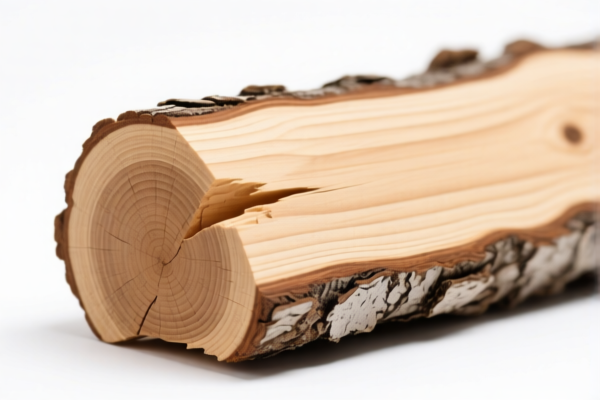
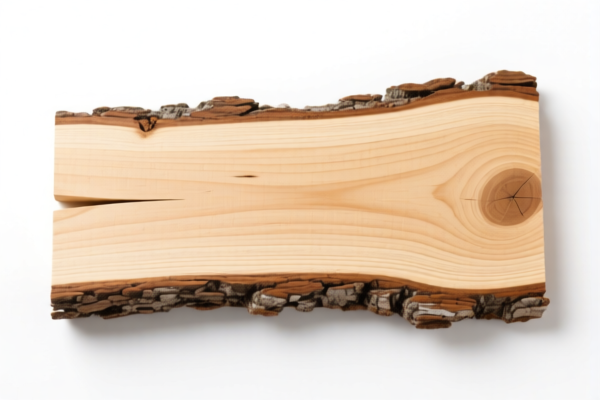
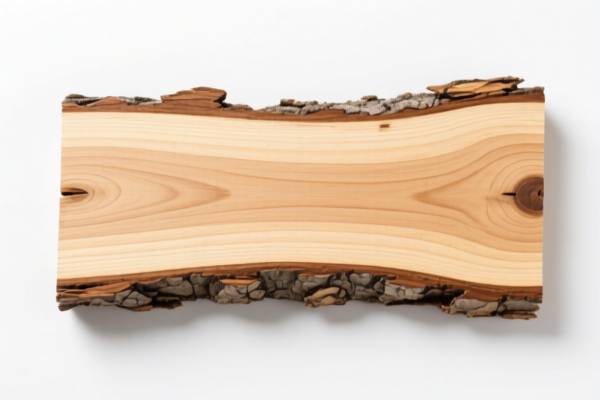
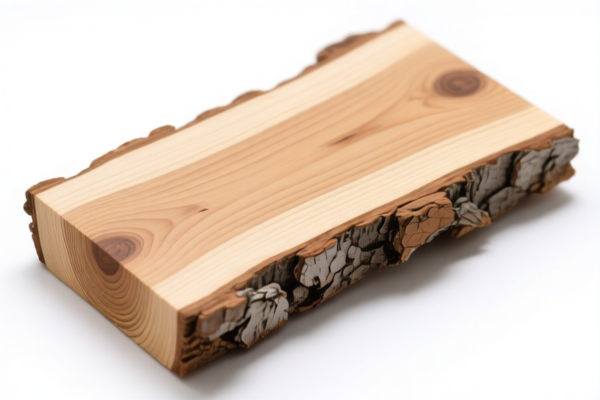
Unstripped Aspen Rough Wood
CN → US| HS Code | Tariff Rate | Origin | Destination | Doc |
|---|---|---|---|---|
| 4403970022 | 35.0% | CN | US | Official Doc |
| 4403970067 | 35.0% | CN | US | Official Doc |
| 9403910010 | 35.0% | CN | US | Official Doc |
Product Images
AI Analysis
🌲 Unstripped Aspen Rough Wood (Poplar/Aspen Logs)
🌐 HS Code Reference & Customs Clearance Guide | 2026 Latest Tariff Analysis | Professional Entry Strategy
📌 I. Product Definition & Classification: Do You Really Understand "Aspen/Poplar Logs"?
Unstripped Aspen Rough Wood refers to timber that has been felled but has not yet been debarked (unstripped) and has undergone minimal processing (rough wood/log format). In international trade, this product falls under Chapter 44 (Wood and articles of wood), specifically heading 44.03, which covers wood in the rough.
Key Distinction:
Unstripped (Not Debarked): The bark is still attached. This distinguishes it from "stripped" wood.
Rough Wood (Logs/Sawn): It has not been planed, sanded, or chemically treated. It is in its primary, raw state.
Species Identification: The term "Aspen" often overlaps with "Poplar" (Genus Populus) in customs classification. However, some listings may cross-reference with Birch (Betula spp.*) or generic "Other" hardwoods if species verification is ambiguous, though Aspen/Poplar is the primary target.
⚠️ Critical Classification Point:
- If the wood is Aspen/Poplar (Populus spp.): Primarily classified under 4403.97.
- If the wood is Birch (Betula spp.): Classified under 4403.95 or 4403.96 depending on specific sub-grouping.
- If the species is unclear or mixed: Customs may apply "Other" classifications, but material consistency is key.
📦 II. HS Code Classification Details (2026 Latest Tariff Authority Comparison)
| HS Code | Product Description | Applicable Scenario | Species Match | Stripping Status |
|---|---|---|---|---|
4403.97.00.22 |
Wood of other species (Aspen/Poplar group), in the rough, not treated | Rough logs, unstripped Aspen/Poplar pulpwood | Aspen/Populus | ❌ Unstripped |
4403.97.00.67 |
Wood of other species (Aspen/Poplar group), in the rough, not treated | Rough logs, unstripped Aspen/Poplar, general category | Aspen/Populus | ❌ Unstripped |
4403.96.01.30 |
Wood of Birch (Betula spp.), in the rough, not treated | Birch logs (if Aspen is misidentified or mixed) | Betula (Birch) | ❌ Unstripped |
4403.95.01.30 |
Wood of other species (Birch sub-group), in the rough, not treated | Birch logs, specific sub-category | Betula (Birch) | ❌ Unstripped |
9403.91.00.10 |
Parts of wooden furniture (Miscellaneous) | Incorrect/Fallback: Only if wood is confirmed as furniture parts (not raw logs) | Wooden | N/A (Processed) |
🔍 Key Reminder:
- Primary Classification:4403.97.xx.xxis the standard for Aspen/Poplar logs.
- Species Risk: If "Aspen" is not strictly verified as Populus, customs may scrutinize against Birch (4403.96) codes.
- State of Processing: "Unstripped" and "Rough" firmly place this in 44.03. Do not classify under finished goods (like9403) unless it is clearly a pre-manufactured furniture component.
💰 III. 2026 Latest Tariff Rate Details (Including Surcharges & Policy Add-ons)
✅ Applicable Country: United States (US)
✅ Origin: China (CN)
✅ Effective Date: From November 10, 2025 (Including subsequent imports)
🎯 1. 4403.97.00.22 & 4403.97.00.67 —— Unstripped Aspen/Poplar Logs
| Item | Content |
|---|---|
| Base Tariff | 0% (ad valorem) |
| USITC Additional Tariff | +25% (Under USITC Footnote 9903.88.01 / Section 301) |
| IEEPA Additional Tariff | +10% (Targeting Chinese/Hong Kong products, effective Nov 10, 2025) |
| Total Tariff Rate | 35.0% |
| Tax Calculation | CIF Value × 35% |
| De Minimis Eligibility | ❌ Not Allowed (deny_de_minimis) |
| Legal Basis Path | IEEPA:9903.01.25 → IEEPA:9903.01.24 → USITC:4403.97.00.22 → FOOTNOTE:9903.88.01 |
📌 Explanation:
- "25% USITC Surcharge": Imposed under Section 301 of the Trade Act due to unfair trade practices.
- "10% IEEPA Surcharge": A national emergency economic power surcharge on Chinese goods.
- Total 35%: This is a high tariff rate. Importers must budget accordingly. No small-shipment exemptions apply.
🎯 2. 4403.96.01.30 & 4403.95.01.30 —— Birch Logs (If Species Disputed)
| Item | Content |
|---|---|
| Base Tariff | 0% |
| USITC Additional Tariff | +25% |
| IEEPA Additional Tariff | +10% |
| Total Tariff Rate | 35.0% |
| Tax Calculation | CIF × 35% |
| De Minimis Eligibility | ❌ Not Allowed |
| Legal Basis Path | IEEPA:9901.25 → IEEPA:9903.01.24 → USITC:4403.95/96 → FOOTNOTE:9903.88.01 |
📌 Note:
- Birch logs face the exact same 35% tariff as Aspen logs under current US-China trade policies.
- Mislabeling Aspen as Birch to avoid scrutiny is highly risky and can lead to penalties if physical inspection reveals non-Birch material.
🎯 3. 9403.91.00.10 —— Wooden Parts of Furniture (Incorrect Classification for Logs)
| Item | Content |
|---|---|
| Base Tariff | 0% |
| USITC Additional Tariff | +25% |
| IEEPA Additional Tariff | +10% |
| Total Tariff Rate | 35.0% |
| Tax Calculation | CIF × 35% |
| De Minimis Eligibility | ❌ Not Allowed |
📌 Warning:
- This code applies to finished or semi-finished furniture parts (e.g., legs, panels).
- Declaring raw logs as "furniture parts" is a major compliance error. Even if the rate is the same (35%), the misclassification can lead to seizure, fines, or audit triggers. Only use if the wood is clearly shaped for furniture assembly.
🛠️ IV. Customs Clearance Practical Advice (实战避坑指南)
✅ 1. Required Documentation Checklist (Must-Have)
| Document | Required | Description |
|---|---|---|
| ✅ Commercial Invoice | ✔️ | Must clearly state "Unstripped Aspen Rough Wood (Log)" or "Populus spp. Raw Timber" |
| ✅ Packing List | ✔️ | Detail volume (cubic meters/feet), weight, and number of pieces |
| ✅ Phytosanitary Certificate | ✔️ | Critical for Wood: Issued by the exporting country's NPPO to prove no pests/diseases |
| ✅ Species Declaration Letter | ✔️ | Explicitly confirm species as Populus (Aspen/Poplar). If mixed, list all species |
| ✅ Bill of Lading / Air Waybill | ✔️ | Standard transport document |
| ✅ Fumigation Certificate | ✔️ | Proof of heat treatment or methyl bromide fumigation (ISPM 15 compliant if packaged, but logs still need phytosanitary) |
✅ 2. Declaration Tips (Key Mantras)
🔥 "Raw Wood, No Bark, Phytosanitary is King!"
| Scenario | Correct Declaration | Wrong Practice |
|---|---|---|
| Aspen/Poplar Logs | 4403.97.00.22 |
Mislabeling as "Birch" (4403.96) without proof → Risk of penalty |
| Unstripped Logs | Specify "Unstripped" (Bark Attached) | Saying "Debarked" → Discrepancy during inspection |
| Mixed Species | List primary species + "including X% other hardwoods" | Vague term "Miscellaneous Wood" → High inspection rate |
| Furniture Parts | 9403.91.00.10 only if shaped |
Declaring raw logs as parts → Misdeclaration |
✅ 3. Special Handling Cases
| Case | Handling Advice |
|---|---|
| High Moisture Content | Ensure phytosanitary certificate is valid; moisture can lead to mold claims or rejection |
| Cross-Species Shipment | If shipment contains both Aspen and Birch, declare the majority species or split if values differ significantly |
| Wood Preservative Treatment | If treated with chemicals, additional MSDS and treatment certificates are required |
| USDA-APHIS Inspection | Be prepared for physical inspection. Ensure logs are stacked for easy access |
🌍 V. Global Market Clearance Comparison (2026 Latest)
| Country/Region | Recommended HS Code | Tariff | Certification | Notes |
|---|---|---|---|---|
| 🇺🇸 USA | 4403.97.00.22 |
35% (China Origin) | Phytosanitary + APHIS | High Cost: 25% Section 301 + 10% IEEPA |
| 🇨🇳 China | 4403.97.00.22 |
0% (if imported) | Phytosanitary | No additional surcharges |
| 🇪🇺 EU | 4403.97 |
0% (If符合 EU Timber Regulation) | EUTR Due Diligence | Strict legality proof required |
| 🇬🇧 UK | 4403.97 |
0% - 5% | UK Timber Regulation | Post-Brexit rules apply |
| 🇯🇵 Japan | 4403.97 |
0% - 3% | ISPM 15 (if packaged) | Low tariff, but strict quality checks |
📌 Conclusion:
- USA is the most expensive market for raw wood imports from China due to the 35% cumulative tariff.
- EU and Japan are more favorable on tariffs but have strict non-tariff barriers (Phytosanitary & Legality Proof).
- Profit Margin Impact: The 35% US tariff significantly impacts competitiveness. Consider sourcing from non-China origins if possible.
📌 VI. Common Mistakes & Pitfalls (Lessons Learned)
❌ Mistake 1: Declaring "Aspen" when logs are actually "Birch"
👉 Consequence: Customs inspection reveals mismatch → Fine + Delay + Potential Seizure
❌ Mistake 2: Forgetting the Phytosanitary Certificate
👉 Consequence: Rejection at port. Wood without this certificate is almost always blocked.
❌ Mistake 3: Misclassifying Raw Logs as "Furniture Parts" (9403)
👉 Consequence: Although tax rate is same (35%), it triggers fraud suspicion. Better to stay accurate in 4403.
❌ Mistake 4: Ignoring "Unstripped" Status
👉 Consequence: If bark is removed but declared as "Unstripped", or vice versa, it leads to misdeclaration penalties.
✅ Correct Practice:
"Unstripped Aspen (Populus spp.) Rough Logs, Phytosanitary Certified, No Chemical Treatment, HS Code 4403.97.00.22"
🎯 VII. Conclusion: Precise Declaration, Cost Control, Smooth Clearance!
🎯 Remember the Mantra:
🔹 "Aspen is 4403.97, Birch is 4403.95/96, Phytosanitary is Mandatory!"
🔹 "35% Tax in USA, Zero Tax in EU/Japan, but Strict Rules Everywhere!"
📌 Tips:
If your wood originates from Canada, Russia, or Vietnam, tariffs may be lower (0%-5%).
For China-origin wood to the US, the 35% tariff is unavoidable under current policies.
Pre-approval: Apply for a Binding Ruling from CBP if the species is ambiguous.
📣 Immediate Action:
📞 Contact a licensed customs broker + Provide Phytosanitary Certificate + Verify Species
🚀 Ensure your wood passes APHIS Inspection and Clears US Customs efficiently!
✨ Professional Clearance, Starting with Accurate Classification!
💼 Your Cost Savings Depend on Precision!
Customer Reviews
About HS Code Classification
The Harmonized System (HS) is an internationally standardized nomenclature developed by the World Customs Organization (WCO) to classify traded products. Over 200 countries use the HS system as the basis for customs tariffs, trade statistics, and import/export regulations.
Each HS code follows a hierarchical structure:
- Chapter (2 digits) — Broad category of goods (e.g., Chapter 84: Machinery and Mechanical Appliances)
- Heading (4 digits) — More specific grouping within the chapter
- Subheading (6 digits) — Internationally standardized breakdown, used by all WCO member countries
- National subdivisions (8-10 digits) — Country-specific extensions for further classification, such as US HTSUS 10-digit codes
Correct HS code classification is essential for smooth customs clearance, accurate duty payment, and compliance with trade regulations. Misclassification can lead to customs delays, overpayment of duties, or penalties.
When importing from CN to US, the applicable tariff rates may include:
- Most-Favored-Nation (MFN) rate — The standard duty rate applied to WTO members
- General rate — Applied to countries without trade agreements
- Trade remedy duties — Additional tariffs such as Section 301 (anti-dumping), Section 232 (national security), or countervailing duties
The information provided on this page is for reference purposes only. For official classification, please consult with your local customs authority or a licensed customs broker.