V Belt Rubber Transmission Belts
CN → US| HS编码 | 关税税率 | 原产国 | 目的国 | 文档 |
|---|---|---|---|---|
| 4010313000 | 38.4% | CN | US | 官方文档 |
| 4010391000 | 38.4% | CN | US | 官方文档 |
| 4010316000 | 37.8% | CN | US | 官方文档 |
| 3926906010 | 39.2% | CN | US | 官方文档 |
| 4010313000 | 38.4% | CN | US | 官方文档 |
商品图片
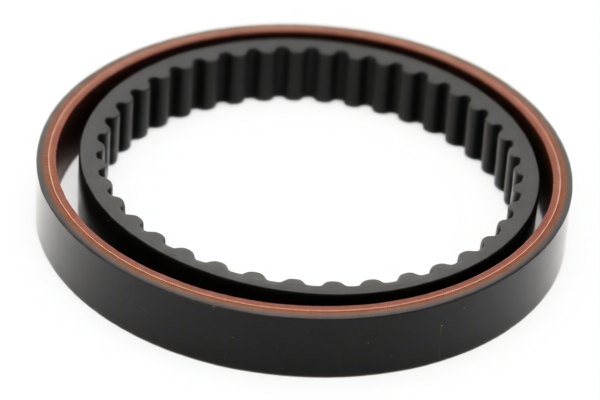
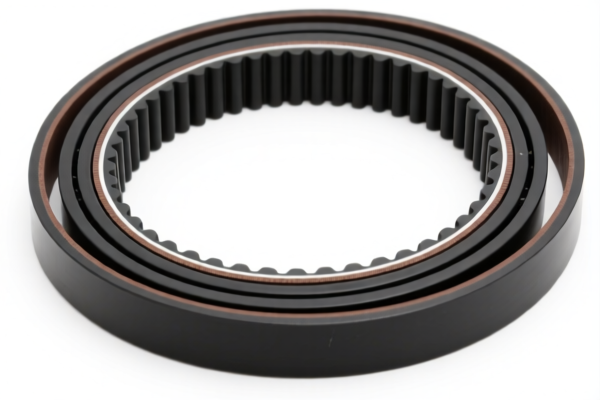
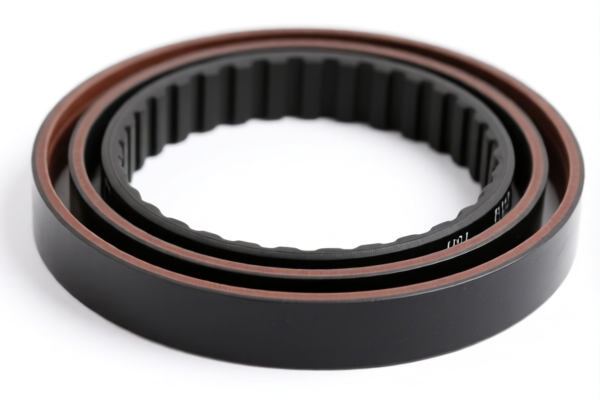
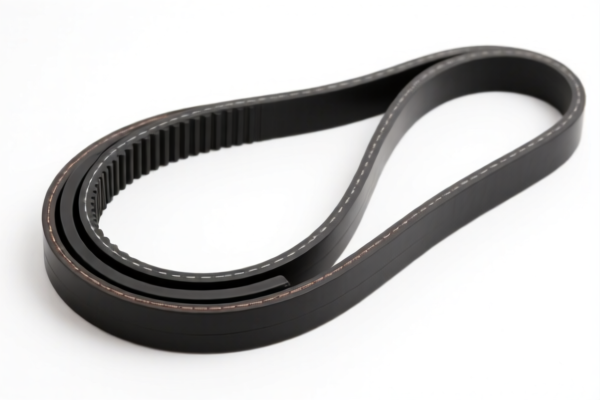
AI分析
🛠️ V-Belt Rubber Transmission Belts
🌐 HS Code Reference & Clearance Guide | 2026 Latest Tariff Analysis | Professional Clearance Strategy
📌 I. Product Definition & Classification: What Exactly Are "V-Belts"?
V-belts, also known as wedge belts, are the most common type of mechanical power transmission belt. They are characterized by their trapezoidal cross-section, which allows them to wedge into pulley grooves for high-friction grip and efficient torque transmission. In international trade, classification depends heavily on two factors: Material Composition and Intended Use.
⚠️ Key Distinction Point:
- If the belt is primarily made of Rubber (with textile/cord reinforcement) → Classified under Chapter 40 (Rubber and Articles Thereof).
- If the belt is made of Plastic/Polymer or non-rubber materials → Classified under Chapter 39 (Plastics and Articles Thereof).
📦 II. HS Code Classification Details (2026 Latest Tariff Authority Comparison)
| HS Code | Product Description | Key Characteristics | Material Basis | Match Status |
|---|---|---|---|---|
4010.31.30.00 |
V-Belt Rubber Transmission Belt | V-shaped form, used for conveying/transmission | Rubber | ✅ Matched |
4010.39.10.00 |
V-Belt Rubber Transmission Belt | V-shaped form, used for conveying/transmission | Rubber | ✅ Matched |
4010.31.60.00 |
Transmission Belt (V-Belt) | V-shaped form, inferred material: Vulcanized Rubber | Vulcanized Rubber | ✅ Matched |
3926.90.60.10 |
Transmission Belt (V-Belt) | V-shaped form, inferred material: Plastic/Other | Plastic/Non-Rubber | ✅ Matched |
4010.31.30.00 |
Rubber Transmission Belt | Transmission belt, generic V-shape | Rubber | ✅ Matched |
🔍 Critical Note:
- The primary differentiator between4010(Rubber) and3926(Plastics) is the material composition.
- Most standard industrial V-belts are rubber-based (specifically vulcanized rubber with fabric cords), making4010the most likely category.
- If the belt is a solid plastic or composite material without significant rubber content,3926applies.
💰 III. 2026 Latest Tariff Rate Breakdown (Including Surcharges & Policy Add-ons)
✅ Applicable Country: USA (US)
✅ Origin: China (CN)
✅ Effective Date: Post-November 2025 (Including subsequent imports)
🎯 1. 4010.31.30.00 / 4010.39.10.00 —— Rubber V-Belts (Most Common)
| Item | Content |
|---|---|
| Base Tariff | 3.4% (Ad Valorem) |
| Section 301 Surcharge | +25.0% (From USITC Footnote 9903.88.01) |
| Section 122 Tariff | +10.0% (Specific to certain industrial goods) |
| Total Effective Rate | 38.4% |
| Tax Calculation | CIF Value × 38.4% |
| De Minimis Eligibility | ❌ Not Eligible (Deny De Minimis) |
| Legal Basis Path | Base Tariff: 3.4% → Section 301: +25% → Section 122: +10% |
📌 Explanation:
- These HS codes fall under Chapter 40, which is subject to the standard 25% Section 301 tariff imposed on Chinese goods.
- Additionally, a 10% Section 122 tariff applies, likely due to specific industrial import provisions or recent trade adjustments.
- Total Tax: 38.4%. This is a high-cost category. Importers must budget accordingly.
🎯 2. 4010.31.60.00 —— Vulcanized Rubber Transmission Belts
| Item | Content |
|---|---|
| Base Tariff | 2.8% (Ad Valorem) |
| Section 301 Surcharge | +25.0% (From USITC Footnote 9903.88.01) |
| Section 122 Tariff | +10.0% (Specific to certain industrial goods) |
| Total Effective Rate | 37.8% |
| Tax Calculation | CIF Value × 37.8% |
| De Minimis Eligibility | ❌ Not Eligible (Deny De Minimis) |
| Legal Basis Path | Base Tariff: 2.8% → Section 301: +25% → Section 122: +10% |
📌 Note:
- Slightly lower base rate (2.8%) compared to4010.31.30.00(3.4%), resulting in a total of 37.8%.
- Applies to belts explicitly classified as "Vulcanized Rubber" transmission belts.
- Still subject to heavy surcharges.
🎯 3. 3926.90.60.10 —— Plastic/Non-Rubber Transmission Belts
| Item | Content |
|---|---|
| Base Tariff | 4.2% (Ad Valorem) |
| Section 301 Surcharge | +25.0% (From USITC Footnote 9903.88.01) |
| Section 122 Tariff | +10.0% (Specific to certain industrial goods) |
| Total Effective Rate | 39.2% |
| Tax Calculation | CIF Value × 39.2% |
| De Minimis Eligibility | ❌ Not Eligible (Deny De Minimis) |
| Legal Basis Path | Base Tariff: 4.2% → Section 301: +25% → Section 122: +10% |
📌 Warning:
- If your V-belt is made of plastic or non-rubber materials, it falls under Chapter 39.
- The base rate is higher (4.2%), leading to the highest total rate of 39.2%.
- Do not misclassify rubber belts as plastic to save costs; customs will audit material composition.
🛠️ IV. Clearance Practical Advice (Real-World Pitfall Avoidance)
✅ 1. Preparation Checklist (Mandatory Documents)
| Document | Required | Purpose |
|---|---|---|
| ✅ Product Specification Sheet | ✔️ | Must state material (Rubber vs. Plastic), dimensions, and tensile strength. |
| ✅ Material Composition Statement | ✔️ | Crucial to distinguish between Chapter 40 (Rubber) and Chapter 39 (Plastics). |
| ✅ Product Photos (Cross-section) | ✔️ | Show internal structure (cord reinforcement) to confirm rubber/vulcanized nature. |
| ✅ Commercial Invoice | ✔️ | Must clearly describe item as "V-Belt, Rubber, for Transmission". |
| ✅ Packing List | ✔️ | Include quantity, weight, and model numbers. |
| ✅ Origin Certificate | ✔️ | To verify Chinese origin and apply correct surcharges. |
✅ 2. Declaration Tips (Critical Rules)
🔥 Golden Rule:
"Material Determines Chapter, Shape Determines Subheading!"
| Scenario | Correct HS Code | Incorrect Practice |
|---|---|---|
| Standard Rubber V-Belt | 4010.31.30.00 or 4010.31.60.00 |
Declare as "Plastic Belt" → Higher tax (39.2%) |
| Plastic/Synthetic V-Belt | 3926.90.60.10 |
Declare as "Rubber Belt" → False declaration penalty |
| Mixed Materials (Rubber + Fabric) | 4010 (Rubber is essential character) |
Split declaration → Risk of seizure |
✅ 3. Special Considerations
| Situation | Handling Advice |
|---|---|
| OEM/Custom Belts | Provide design drawings showing material layers. |
| High-Load Industrial Belts | Ensure they are not classified as "Conveyor Belts" (Chapter 40, other subheadings) if they are purely for transmission. |
| Sample Imports | Even samples are subject to 38.4%-39.2% tax; no de minimis exemption. |
| Re-export | If re-exported, verify bond requirements to avoid double taxation. |
🌍 V. Global Market Comparison (2026 Latest)
| Country/Region | Recommended HS Code | Tariff Rate (China Origin) | Certification | Notes |
|---|---|---|---|---|
| 🇺🇸 USA | 4010.31.30.00 / 4010.31.60.00 |
38.4% (incl. 301 & 122) | No special certs | Highest cost due to surcharges |
| 🇨🇳 China | 4010.31.30.00 |
8.0% | CCC (if applicable) | Base rate + VAT |
| 🇪🇺 EU | 4010.31.00 |
0% - 3.5% | REACH / CE | No major surcharges |
| 🇯🇵 Japan | 4010.31.00 |
0% - 6% | PSE (if motor-related) | Low tariffs |
| 🇲🇽 Mexico | 4010.31.00 |
0% (if USMCA compliant) | NOM | Preferential if produced in NAFTA zone |
📌 Conclusion:
- USA is the most expensive market due to the cumulative effect of Section 301 (25%) and Section 122 (10%) tariffs.
- EU and Japan offer significantly lower costs, making them more competitive for Chinese V-belt exports.
- Consider supply chain diversification (e.g., manufacturing in Vietnam or Mexico) to mitigate US tariffs.
📌 VI. Common Errors & Pitfall Guide (Lessons Learned)
❌ Error 1: Declaring Rubber V-Belts as "Plastic Accessories" (3926.90.60.10)
👉 Consequence: Even though the rate is similar (39.2%), it triggers material verification audits. If found non-compliant, goods are seized, and fines apply.
❌ Error 2: Missing the 10% Section 122 Tariff in cost calculation
👉 Consequence: Profit margin erosion. Many importers only account for the 25% Section 301 tariff, forgetting the additional 10%.
❌ Error 3: Misidentifying "Transmission Belt" as "Conveyor Belt"
👉 Consequence: Conveyor belts may have different HS codes (4010.29 etc.) with different tax treatments. Incorrect declaration leads to customs delays.
❌ Error 4: Assuming De Minimis Applies
👉 Consequence: Packages under $800 are NOT exempt for these goods. Taxes apply regardless of value.
✅ Correct Approach:
"V-Belt, Rubber, Vulcanized, for Power Transmission, Model XYZ, Cross-Section A, Length 1200mm, Made in China"
🎯 VII. Conclusion: Precision Classification Saves Money!
🎯 Remember the Golden Rules:
🔹 "Rubber = 4010, Plastic = 3926"
🔹 "Total Tax = Base + 25% (301) + 10% (122)"
🔹 "No De Minimis for Industrial Belts to USA!"
📌 Pro Tip:
If your V-belts contain significant textile or metal cord reinforcement, ensure the declaration emphasizes the rubber as the essential character to remain in Chapter 40. Misclassification can lead to penalties and back-taxes.
📣 Immediate Action:
📞 Consult a Customs Broker for Pre-Ruling on Material Composition.
📊 Calculate Landed Cost including 38.4%-39.2% total duty.
🚀 Optimize Supply Chain by considering non-China origins for US-bound goods.
✨ Professional Clearance Starts with Accurate Classification!
💼 Your Bottom Line Depends on Your HS Code!
用户评价
关于 HS 编码归类
协调制度(HS)是由世界海关组织(WCO)制定的国际贸易商品分类标准。全球 200 多个国家采用 HS 系统作为海关关税、贸易统计和进出口监管的基础。
每个 HS 编码遵循以下层级结构:
- 章(2 位)——商品大类(例如:第 84 章:机器和机械设备)
- 品目(4 位)——章内的更具体分类
- 子目(6 位)——国际通用细分,所有 WCO 成员国统一使用
- 本国细分(8-10 位)——各国自行扩展的细分编码,如美国 HTSUS 10 位编码
正确的 HS 编码归类对于顺利通关、准确缴纳关税和遵守贸易法规至关重要。错误归类可能导致海关延误、多缴关税或罚款。
从CN进口到US时,适用的关税税率可能包括:
- 最惠国(MFN)税率——适用于 WTO 成员国的标准关税税率
- 普通税率——适用于无贸易协定国家
- 贸易救济关税——附加关税,如 301 条款(反倾销)、232 条款(国家安全)或反补贴税
本页内容仅供参考。如需正式归类,请咨询当地海关或持牌报关代理。