V Belt Rubber Transmission Belts
CN → US| HS Code | Tariff Rate | Origin | Destination | Doc |
|---|---|---|---|---|
| 4010313000 | 38.4% | CN | US | Official Doc |
| 4010391000 | 38.4% | CN | US | Official Doc |
| 4010316000 | 37.8% | CN | US | Official Doc |
| 3926906010 | 39.2% | CN | US | Official Doc |
| 4010313000 | 38.4% | CN | US | Official Doc |
Product Images
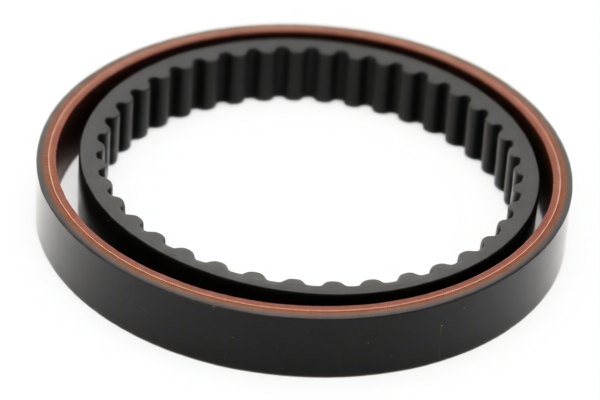
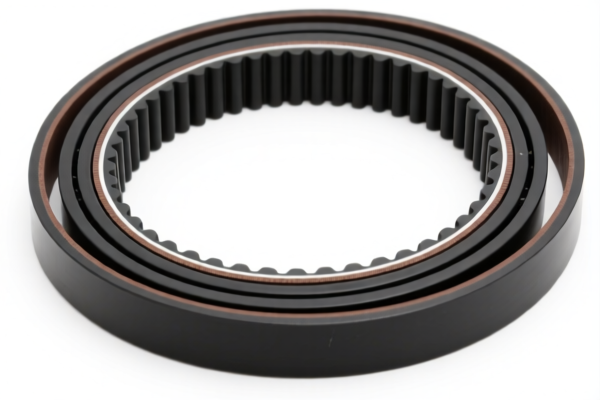
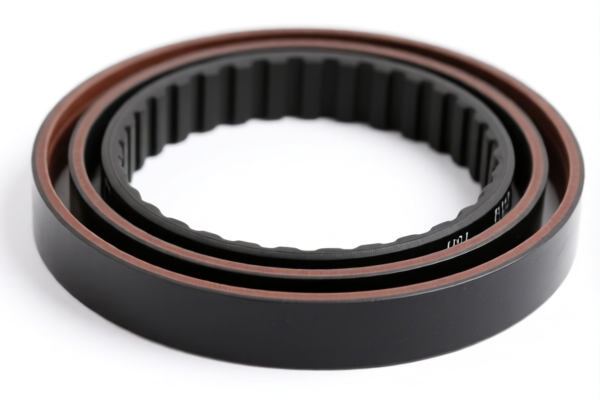
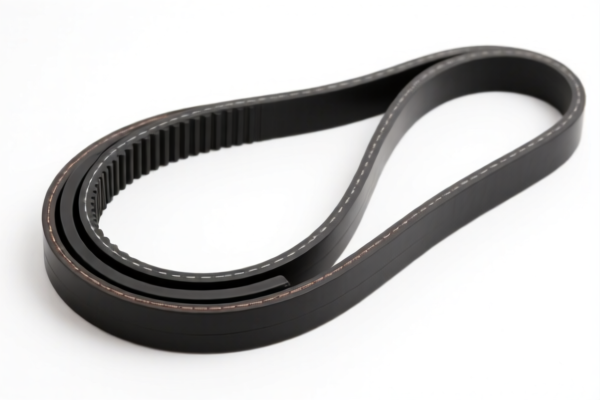
AI Analysis
🛠️ V-Belt Rubber Transmission Belts
🌐 HS Code Reference & Clearance Guide | 2026 Latest Tariff Analysis | Professional Clearance Strategy
📌 I. Product Definition & Classification: What Exactly Are "V-Belts"?
V-belts, also known as wedge belts, are the most common type of mechanical power transmission belt. They are characterized by their trapezoidal cross-section, which allows them to wedge into pulley grooves for high-friction grip and efficient torque transmission. In international trade, classification depends heavily on two factors: Material Composition and Intended Use.
⚠️ Key Distinction Point:
- If the belt is primarily made of Rubber (with textile/cord reinforcement) → Classified under Chapter 40 (Rubber and Articles Thereof).
- If the belt is made of Plastic/Polymer or non-rubber materials → Classified under Chapter 39 (Plastics and Articles Thereof).
📦 II. HS Code Classification Details (2026 Latest Tariff Authority Comparison)
| HS Code | Product Description | Key Characteristics | Material Basis | Match Status |
|---|---|---|---|---|
4010.31.30.00 |
V-Belt Rubber Transmission Belt | V-shaped form, used for conveying/transmission | Rubber | ✅ Matched |
4010.39.10.00 |
V-Belt Rubber Transmission Belt | V-shaped form, used for conveying/transmission | Rubber | ✅ Matched |
4010.31.60.00 |
Transmission Belt (V-Belt) | V-shaped form, inferred material: Vulcanized Rubber | Vulcanized Rubber | ✅ Matched |
3926.90.60.10 |
Transmission Belt (V-Belt) | V-shaped form, inferred material: Plastic/Other | Plastic/Non-Rubber | ✅ Matched |
4010.31.30.00 |
Rubber Transmission Belt | Transmission belt, generic V-shape | Rubber | ✅ Matched |
🔍 Critical Note:
- The primary differentiator between4010(Rubber) and3926(Plastics) is the material composition.
- Most standard industrial V-belts are rubber-based (specifically vulcanized rubber with fabric cords), making4010the most likely category.
- If the belt is a solid plastic or composite material without significant rubber content,3926applies.
💰 III. 2026 Latest Tariff Rate Breakdown (Including Surcharges & Policy Add-ons)
✅ Applicable Country: USA (US)
✅ Origin: China (CN)
✅ Effective Date: Post-November 2025 (Including subsequent imports)
🎯 1. 4010.31.30.00 / 4010.39.10.00 —— Rubber V-Belts (Most Common)
| Item | Content |
|---|---|
| Base Tariff | 3.4% (Ad Valorem) |
| Section 301 Surcharge | +25.0% (From USITC Footnote 9903.88.01) |
| Section 122 Tariff | +10.0% (Specific to certain industrial goods) |
| Total Effective Rate | 38.4% |
| Tax Calculation | CIF Value × 38.4% |
| De Minimis Eligibility | ❌ Not Eligible (Deny De Minimis) |
| Legal Basis Path | Base Tariff: 3.4% → Section 301: +25% → Section 122: +10% |
📌 Explanation:
- These HS codes fall under Chapter 40, which is subject to the standard 25% Section 301 tariff imposed on Chinese goods.
- Additionally, a 10% Section 122 tariff applies, likely due to specific industrial import provisions or recent trade adjustments.
- Total Tax: 38.4%. This is a high-cost category. Importers must budget accordingly.
🎯 2. 4010.31.60.00 —— Vulcanized Rubber Transmission Belts
| Item | Content |
|---|---|
| Base Tariff | 2.8% (Ad Valorem) |
| Section 301 Surcharge | +25.0% (From USITC Footnote 9903.88.01) |
| Section 122 Tariff | +10.0% (Specific to certain industrial goods) |
| Total Effective Rate | 37.8% |
| Tax Calculation | CIF Value × 37.8% |
| De Minimis Eligibility | ❌ Not Eligible (Deny De Minimis) |
| Legal Basis Path | Base Tariff: 2.8% → Section 301: +25% → Section 122: +10% |
📌 Note:
- Slightly lower base rate (2.8%) compared to4010.31.30.00(3.4%), resulting in a total of 37.8%.
- Applies to belts explicitly classified as "Vulcanized Rubber" transmission belts.
- Still subject to heavy surcharges.
🎯 3. 3926.90.60.10 —— Plastic/Non-Rubber Transmission Belts
| Item | Content |
|---|---|
| Base Tariff | 4.2% (Ad Valorem) |
| Section 301 Surcharge | +25.0% (From USITC Footnote 9903.88.01) |
| Section 122 Tariff | +10.0% (Specific to certain industrial goods) |
| Total Effective Rate | 39.2% |
| Tax Calculation | CIF Value × 39.2% |
| De Minimis Eligibility | ❌ Not Eligible (Deny De Minimis) |
| Legal Basis Path | Base Tariff: 4.2% → Section 301: +25% → Section 122: +10% |
📌 Warning:
- If your V-belt is made of plastic or non-rubber materials, it falls under Chapter 39.
- The base rate is higher (4.2%), leading to the highest total rate of 39.2%.
- Do not misclassify rubber belts as plastic to save costs; customs will audit material composition.
🛠️ IV. Clearance Practical Advice (Real-World Pitfall Avoidance)
✅ 1. Preparation Checklist (Mandatory Documents)
| Document | Required | Purpose |
|---|---|---|
| ✅ Product Specification Sheet | ✔️ | Must state material (Rubber vs. Plastic), dimensions, and tensile strength. |
| ✅ Material Composition Statement | ✔️ | Crucial to distinguish between Chapter 40 (Rubber) and Chapter 39 (Plastics). |
| ✅ Product Photos (Cross-section) | ✔️ | Show internal structure (cord reinforcement) to confirm rubber/vulcanized nature. |
| ✅ Commercial Invoice | ✔️ | Must clearly describe item as "V-Belt, Rubber, for Transmission". |
| ✅ Packing List | ✔️ | Include quantity, weight, and model numbers. |
| ✅ Origin Certificate | ✔️ | To verify Chinese origin and apply correct surcharges. |
✅ 2. Declaration Tips (Critical Rules)
🔥 Golden Rule:
"Material Determines Chapter, Shape Determines Subheading!"
| Scenario | Correct HS Code | Incorrect Practice |
|---|---|---|
| Standard Rubber V-Belt | 4010.31.30.00 or 4010.31.60.00 |
Declare as "Plastic Belt" → Higher tax (39.2%) |
| Plastic/Synthetic V-Belt | 3926.90.60.10 |
Declare as "Rubber Belt" → False declaration penalty |
| Mixed Materials (Rubber + Fabric) | 4010 (Rubber is essential character) |
Split declaration → Risk of seizure |
✅ 3. Special Considerations
| Situation | Handling Advice |
|---|---|
| OEM/Custom Belts | Provide design drawings showing material layers. |
| High-Load Industrial Belts | Ensure they are not classified as "Conveyor Belts" (Chapter 40, other subheadings) if they are purely for transmission. |
| Sample Imports | Even samples are subject to 38.4%-39.2% tax; no de minimis exemption. |
| Re-export | If re-exported, verify bond requirements to avoid double taxation. |
🌍 V. Global Market Comparison (2026 Latest)
| Country/Region | Recommended HS Code | Tariff Rate (China Origin) | Certification | Notes |
|---|---|---|---|---|
| 🇺🇸 USA | 4010.31.30.00 / 4010.31.60.00 |
38.4% (incl. 301 & 122) | No special certs | Highest cost due to surcharges |
| 🇨🇳 China | 4010.31.30.00 |
8.0% | CCC (if applicable) | Base rate + VAT |
| 🇪🇺 EU | 4010.31.00 |
0% - 3.5% | REACH / CE | No major surcharges |
| 🇯🇵 Japan | 4010.31.00 |
0% - 6% | PSE (if motor-related) | Low tariffs |
| 🇲🇽 Mexico | 4010.31.00 |
0% (if USMCA compliant) | NOM | Preferential if produced in NAFTA zone |
📌 Conclusion:
- USA is the most expensive market due to the cumulative effect of Section 301 (25%) and Section 122 (10%) tariffs.
- EU and Japan offer significantly lower costs, making them more competitive for Chinese V-belt exports.
- Consider supply chain diversification (e.g., manufacturing in Vietnam or Mexico) to mitigate US tariffs.
📌 VI. Common Errors & Pitfall Guide (Lessons Learned)
❌ Error 1: Declaring Rubber V-Belts as "Plastic Accessories" (3926.90.60.10)
👉 Consequence: Even though the rate is similar (39.2%), it triggers material verification audits. If found non-compliant, goods are seized, and fines apply.
❌ Error 2: Missing the 10% Section 122 Tariff in cost calculation
👉 Consequence: Profit margin erosion. Many importers only account for the 25% Section 301 tariff, forgetting the additional 10%.
❌ Error 3: Misidentifying "Transmission Belt" as "Conveyor Belt"
👉 Consequence: Conveyor belts may have different HS codes (4010.29 etc.) with different tax treatments. Incorrect declaration leads to customs delays.
❌ Error 4: Assuming De Minimis Applies
👉 Consequence: Packages under $800 are NOT exempt for these goods. Taxes apply regardless of value.
✅ Correct Approach:
"V-Belt, Rubber, Vulcanized, for Power Transmission, Model XYZ, Cross-Section A, Length 1200mm, Made in China"
🎯 VII. Conclusion: Precision Classification Saves Money!
🎯 Remember the Golden Rules:
🔹 "Rubber = 4010, Plastic = 3926"
🔹 "Total Tax = Base + 25% (301) + 10% (122)"
🔹 "No De Minimis for Industrial Belts to USA!"
📌 Pro Tip:
If your V-belts contain significant textile or metal cord reinforcement, ensure the declaration emphasizes the rubber as the essential character to remain in Chapter 40. Misclassification can lead to penalties and back-taxes.
📣 Immediate Action:
📞 Consult a Customs Broker for Pre-Ruling on Material Composition.
📊 Calculate Landed Cost including 38.4%-39.2% total duty.
🚀 Optimize Supply Chain by considering non-China origins for US-bound goods.
✨ Professional Clearance Starts with Accurate Classification!
💼 Your Bottom Line Depends on Your HS Code!
Customer Reviews
About HS Code Classification
The Harmonized System (HS) is an internationally standardized nomenclature developed by the World Customs Organization (WCO) to classify traded products. Over 200 countries use the HS system as the basis for customs tariffs, trade statistics, and import/export regulations.
Each HS code follows a hierarchical structure:
- Chapter (2 digits) — Broad category of goods (e.g., Chapter 84: Machinery and Mechanical Appliances)
- Heading (4 digits) — More specific grouping within the chapter
- Subheading (6 digits) — Internationally standardized breakdown, used by all WCO member countries
- National subdivisions (8-10 digits) — Country-specific extensions for further classification, such as US HTSUS 10-digit codes
Correct HS code classification is essential for smooth customs clearance, accurate duty payment, and compliance with trade regulations. Misclassification can lead to customs delays, overpayment of duties, or penalties.
When importing from CN to US, the applicable tariff rates may include:
- Most-Favored-Nation (MFN) rate — The standard duty rate applied to WTO members
- General rate — Applied to countries without trade agreements
- Trade remedy duties — Additional tariffs such as Section 301 (anti-dumping), Section 232 (national security), or countervailing duties
The information provided on this page is for reference purposes only. For official classification, please consult with your local customs authority or a licensed customs broker.