V belt Conveyor Belt
CN → US| HS编码 | 关税税率 | 原产国 | 目的国 | 文档 |
|---|---|---|---|---|
| 8431390010 | 35.0% | CN | US | 官方文档 |
| 5910001010 | 39.0% | CN | US | 官方文档 |
| 4010313000 | 38.4% | CN | US | 官方文档 |
| 4010316000 | 37.8% | CN | US | 官方文档 |
| 4010313000 | 38.4% | CN | US | 官方文档 |
商品图片
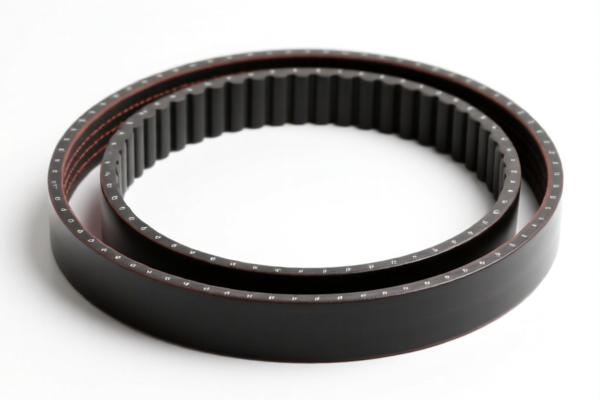
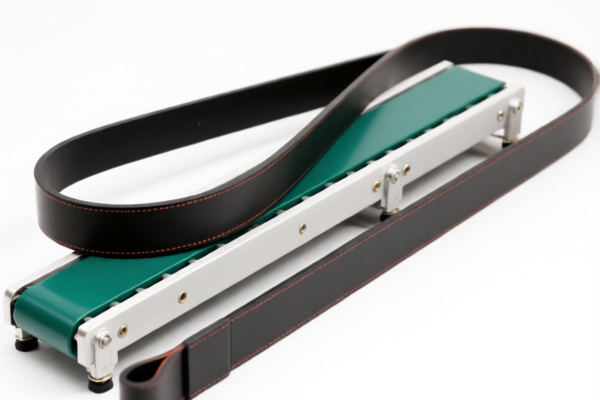
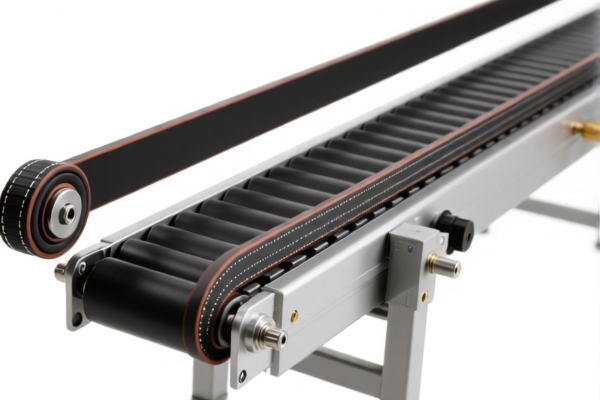
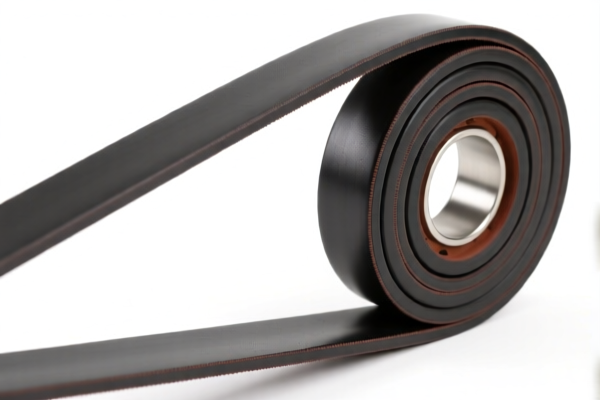
AI分析
🏭 V-Belt Conveyor Belt: HS Code Classification & US Tariff Strategy (2026)
🌐 HS Code Reference & Customs Clearance Guide | Latest 2026 Tariff Analysis | Professional Clearance Strategy
📌 I. Product Definition: What Exactly is a "V-Belt"?
In international trade, "V-Belts" are versatile power transmission elements. However, customs authorities distinguish them based on function and composition:
- Industrial Drive Belts (V-Belts): Used to transmit power from a motor to a mechanical component (e.g., in engines, pumps, or machinery). These are typically made of rubber/fabric and have a trapezoidal cross-section.
- Conveyor Belt Sections: Specifically designed as parts of a conveyor system. If classified strictly as a part of a lifting/transporting machine, it falls under machinery parts.
⚠️ Critical Distinction:
- If the belt is sold as a component of a complete conveyor system or specifically as a "conveyor part," it may fall under HS 8431.
- If the belt is a stand-alone industrial drive belt (trapezoidal cross-section, rubber/textile material), it falls under HS 4010.
- Note: Some traders attempt to classify V-belts under HS 5910 (Textile Conveyor Belts), but this is risky unless the primary material is textile, not rubber.
📦 II. HS Code Classification Details (2026 Latest Tariff)
Based on the provided data, here are the four potential HS Code classifications for V-Belt Conveyor Belts, ranging from machinery parts to rubber goods.
| HS Code | Product Description | Application Scenario | Primary Material |
|---|---|---|---|
8431.39.00.10 |
Parts of lifting or handling machinery (Conveyor Belt) | Sold specifically as a spare part for a conveyor machine | N/A (Component) |
5910.00.10.10 |
Textile Conveyor Belts (V-structure) | Belts with significant textile/fiber reinforcement | Artificial Fiber / Rubber |
4010.31.30.00 |
V-Belts (Trapezoidal Cross-Section) | Standard industrial drive belts | Vulcanized Rubber + Textile |
4010.31.60.00 |
Other V-Belts (Rubber) | Pure rubber or rubber-heavy V-belts | Vulcanized Rubber |
🔍 Key Insight:
- HS 8431 is the safest if the item is explicitly a "conveyor part."
- HS 4010 is the standard for industrial rubber V-belts used in power transmission.
- HS 5910 is the highest tariff risk if misclassified as a generic textile belt.
💰 III. 2026 US Tariff Rate Breakdown (Detailed)
✅ Applicable Country: United States (US)
✅ Country of Origin: China (CN)
✅ Effective Date: November 10, 2025 (Including subsequent imports)
🎯 1. 8431.39.00.10 — Parts of Conveyor Machinery
| Item | Content |
|---|---|
| Base Duty Rate | 0.0% |
| Section 301 Surcharge | +25.0% |
| IEEPA Surcharge (122 Clause) | +10.0% |
| Total Effective Rate | 35.0% |
| Tax Calculation | CIF Value × 35% |
| De Minimis Exemption | ❌ Not Eligible |
| Legal Basis | Section 301: 8431.39.00.10 + IEEPA: 122 Clause |
📌 Explanation:
- As a "part of machinery," the base duty is zero. However, the 25% Section 301 tariff applies to all Chinese-origin machinery parts.
- An additional 10% IEEPA tariff applies to Chinese goods under specific trade measures.
- Total Cost Impact: 35%. This is a moderate-high tariff, but lower than rubber goods.
🎯 2. 5910.00.10.10 — Textile Conveyor Belts
| Item | Content |
|---|---|
| Base Duty Rate | 4.0% |
| Section 301 Surcharge | +25.0% |
| IEEPA Surcharge (122 Clause) | +10.0% |
| Total Effective Rate | 39.0% |
| Tax Calculation | CIF Value × 39% |
| De Minimis Exemption | ❌ Not Eligible |
| Legal Basis | Section 301: 5910.00.10.10 + IEEPA: 122 Clause |
📌 Warning:
- If your V-belt is classified under this code (often due to textile reinforcement), the base rate is 4%.
- Adding 25% + 10% surcharges results in the highest tariff rate (39%) among the options.
- Strategy: Avoid this classification unless the product is predominantly textile and not rubber.
🎯 3. 4010.31.30.00 — V-Belts (Trapezoidal Section, Rubber)
| Item | Content |
|---|---|
| Base Duty Rate | 3.4% |
| Section 301 Surcharge | +25.0% |
| IEEPA Surcharge (122 Clause) | +10.0% |
| Total Effective Rate | 38.4% |
| Tax Calculation | CIF Value × 38.4% |
| De Minimis Exemption | ❌ Not Eligible |
| Legal Basis | Section 301: 4010.31.30.00 + IEEPA: 122 Clause |
📌 Note:
- This is the most common classification for standard industrial V-belts.
- The base duty (3.4%) is slightly higher than machinery parts, leading to a total of 38.4%.
- Ensure the belt is described as "V-type" or "Trapezoidal cross-section" to support this classification.
🎯 4. 4010.31.60.00 — Other V-Belts (Rubber)
| Item | Content |
|---|---|
| Base Duty Rate | 2.8% |
| Section 301 Surcharge | +25.0% |
| IEEPA Surcharge (122 Clause) | +10.0% |
| Total Effective Rate | 37.8% |
| Tax Calculation | CIF Value × 37.8% |
| De Minimis Exemption | ❌ Not Eligible |
| Legal Basis | Section 301: 4010.31.60.00 + IEEPA: 122 Clause |
📌 Opportunity:
- This code offers the lowest total tariff (37.8%) among the rubber belt categories.
- It applies to V-belts that do not fit the specific "trapezoidal" description of4010.31.30.00but are still rubber-based.
- Strategy: If your belt is a standard V-belt, check if4010.31.60.00is applicable to reduce costs by 0.6% compared to4010.31.30.00.
🛠️ IV. Customs Clearance Practical Advice
✅ 1. Documentation Checklist (Non-negotiable)
| Document | Required? | Purpose |
|---|---|---|
| Product Specification Sheet | ✔️ | Must detail: Cross-section shape (V/trapezoidal), Material (Rubber/Textile), Length, Width. |
| Commercial Invoice | ✔️ | Must clearly state "V-Belt" or "Conveyor Belt Part" and HS Code. |
| Packing List | ✔️ | List quantities, weights, and dimensions. |
| Photo of Product | ✔️ | Show cross-section to prove it is a V-shape. |
| Origin Certificate | ✔️ | Prove Chinese origin (triggers Section 301 & IEEPA). |
| Material Safety Data Sheet (MSDS) | ✔️ | If the rubber contains specific chemicals. |
✅ 2. Classification Strategy: How to Choose?
| Scenario | Recommended HS Code | Reason |
|---|---|---|
| Sold as a spare part for a conveyor machine | 8431.39.00.10 |
Lowest tariff (35%). Must prove it's a "part of machinery." |
| Standard industrial V-belt (Rubber) | 4010.31.60.00 |
Best rate for standalone belts (37.8%). |
| Highly reinforced textile belt | 5910.00.10.10 |
Avoid if possible due to high tax (39%). |
| Exact Trapezoidal Rubber Belt | 4010.31.30.00 |
Standard rate (38.4%). |
🔥 Golden Rule:
"Parts are cheaper than Products."
If you can justify that the V-belt is a "part of a conveyor system" (HS 8431), you save 2.2%–11.2% in tariffs compared to classifying it as a standalone rubber or textile product.
✅ 3. Common Mistakes to Avoid
❌ Mistake 1: Calling it "Conveyor Belt" without specifying it's a "Part."
👉 Consequence: Customs may classify it as a finished good under HS 4010 or 5910, increasing taxes.
❌ Mistake 2: Misidentifying the material.
👉 Consequence: If it's 100% rubber but declared as "textile" (HS 5910), you face higher duties (39%) and potential fraud investigations.
❌ Mistake 3: Ignoring the IEEPA 10% Surcharge.
👉 Consequence: Underestimating landed cost by 10%. This surcharge is mandatory for Chinese-origin goods under Clause 122.
🌍 V. Global Market Comparison (2026)
| Country/Region | Recommended HS Code | Total Tariff (China Origin) | Notes |
|---|---|---|---|
| 🇺🇸 USA | 8431.39.00.10 |
35.0% | Includes 25% Sec 301 + 10% IEEPA. |
| 🇺🇸 USA | 4010.31.60.00 |
37.8% | Best rate for standalone rubber belts. |
| 🇨🇳 China | 4010.31.60.00 |
~5-10% | Import duty only, no surcharges. |
| 🇪🇺 EU | 4010.31.00 |
~3-6% | No Section 301 or IEEPA surcharges. |
📌 Conclusion:
- The US market is the most expensive due to dual surcharges (301 + IEEPA).
- HS 8431 offers the most competitive rate (35%) if the product qualifies as a "machine part."
- For standalone belts, HS 4010.31.60.00 (37.8%) is the optimal choice.
📌 VI. Final Recommendations for Importers
- Prioritize HS 8431: If the belt is sold to industrial clients for conveyor maintenance, classify it as a "Part of Lifting/Handling Machinery." This saves up to 4.2% in duties.
- Verify Material Composition: Ensure invoices clearly state "Vulcanized Rubber" if using HS 4010. Avoid vague terms like "Synthetic Material."
- Prepare for Inspections: Be ready with product samples showing the V-shaped cross-section. Customs officers often verify this physical characteristic.
- Calculate Landed Cost Accurately:
- Formula:
CIF Value + (CIF Value × Total Tax Rate) - Example for HS 8431:
CIF + (CIF × 0.35) - Example for HS 4010.31.60.00:
CIF + (CIF × 0.378)
🎯 Pro Tip:
"If it fits the machine, it's a part. If it sells alone, it's a product.
Parts pay 35%. Products pay 37.8%-39%.
Choose wisely, save thousands!"
📢 Immediate Action Required:
📞 Consult a Customs Broker: Before shipping, obtain a Pre-Ruling from US Customs (CBP) if your shipment value is high.
📄 Document Everything: Keep photos, specs, and material certs ready for border inspection.
✨ Professional Clearance Starts with Accurate Classification!
💼 Every Percent of Duty Saved is Pure Profit!
用户评价
关于 HS 编码归类
协调制度(HS)是由世界海关组织(WCO)制定的国际贸易商品分类标准。全球 200 多个国家采用 HS 系统作为海关关税、贸易统计和进出口监管的基础。
每个 HS 编码遵循以下层级结构:
- 章(2 位)——商品大类(例如:第 84 章:机器和机械设备)
- 品目(4 位)——章内的更具体分类
- 子目(6 位)——国际通用细分,所有 WCO 成员国统一使用
- 本国细分(8-10 位)——各国自行扩展的细分编码,如美国 HTSUS 10 位编码
正确的 HS 编码归类对于顺利通关、准确缴纳关税和遵守贸易法规至关重要。错误归类可能导致海关延误、多缴关税或罚款。
从CN进口到US时,适用的关税税率可能包括:
- 最惠国(MFN)税率——适用于 WTO 成员国的标准关税税率
- 普通税率——适用于无贸易协定国家
- 贸易救济关税——附加关税,如 301 条款(反倾销)、232 条款(国家安全)或反补贴税
本页内容仅供参考。如需正式归类,请咨询当地海关或持牌报关代理。