V belt Conveyor Belt
CN → US| HS Code | Tariff Rate | Origin | Destination | Doc |
|---|---|---|---|---|
| 8431390010 | 35.0% | CN | US | Official Doc |
| 5910001010 | 39.0% | CN | US | Official Doc |
| 4010313000 | 38.4% | CN | US | Official Doc |
| 4010316000 | 37.8% | CN | US | Official Doc |
| 4010313000 | 38.4% | CN | US | Official Doc |
Product Images

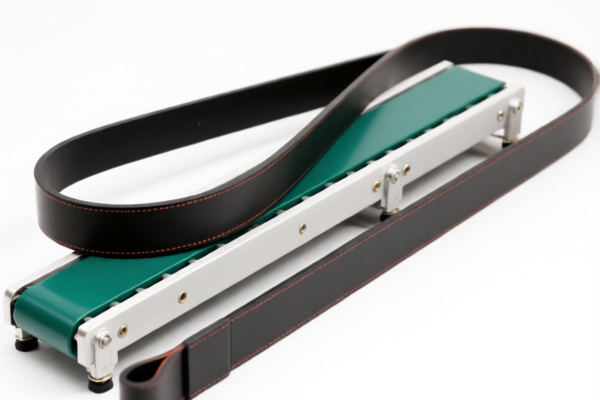
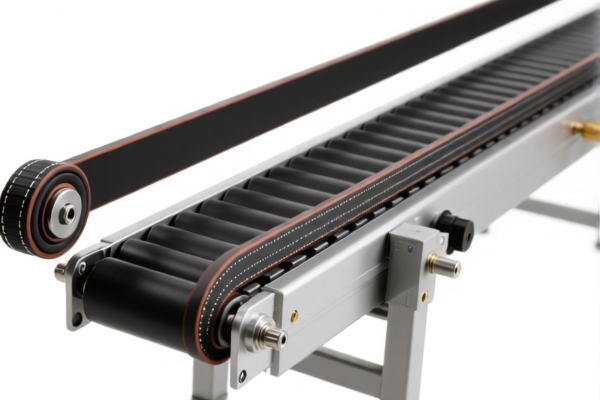

AI Analysis
🏭 V-Belt Conveyor Belt: HS Code Classification & US Tariff Strategy (2026)
🌐 HS Code Reference & Customs Clearance Guide | Latest 2026 Tariff Analysis | Professional Clearance Strategy
📌 I. Product Definition: What Exactly is a "V-Belt"?
In international trade, "V-Belts" are versatile power transmission elements. However, customs authorities distinguish them based on function and composition:
- Industrial Drive Belts (V-Belts): Used to transmit power from a motor to a mechanical component (e.g., in engines, pumps, or machinery). These are typically made of rubber/fabric and have a trapezoidal cross-section.
- Conveyor Belt Sections: Specifically designed as parts of a conveyor system. If classified strictly as a part of a lifting/transporting machine, it falls under machinery parts.
⚠️ Critical Distinction:
- If the belt is sold as a component of a complete conveyor system or specifically as a "conveyor part," it may fall under HS 8431.
- If the belt is a stand-alone industrial drive belt (trapezoidal cross-section, rubber/textile material), it falls under HS 4010.
- Note: Some traders attempt to classify V-belts under HS 5910 (Textile Conveyor Belts), but this is risky unless the primary material is textile, not rubber.
📦 II. HS Code Classification Details (2026 Latest Tariff)
Based on the provided data, here are the four potential HS Code classifications for V-Belt Conveyor Belts, ranging from machinery parts to rubber goods.
| HS Code | Product Description | Application Scenario | Primary Material |
|---|---|---|---|
8431.39.00.10 |
Parts of lifting or handling machinery (Conveyor Belt) | Sold specifically as a spare part for a conveyor machine | N/A (Component) |
5910.00.10.10 |
Textile Conveyor Belts (V-structure) | Belts with significant textile/fiber reinforcement | Artificial Fiber / Rubber |
4010.31.30.00 |
V-Belts (Trapezoidal Cross-Section) | Standard industrial drive belts | Vulcanized Rubber + Textile |
4010.31.60.00 |
Other V-Belts (Rubber) | Pure rubber or rubber-heavy V-belts | Vulcanized Rubber |
🔍 Key Insight:
- HS 8431 is the safest if the item is explicitly a "conveyor part."
- HS 4010 is the standard for industrial rubber V-belts used in power transmission.
- HS 5910 is the highest tariff risk if misclassified as a generic textile belt.
💰 III. 2026 US Tariff Rate Breakdown (Detailed)
✅ Applicable Country: United States (US)
✅ Country of Origin: China (CN)
✅ Effective Date: November 10, 2025 (Including subsequent imports)
🎯 1. 8431.39.00.10 — Parts of Conveyor Machinery
| Item | Content |
|---|---|
| Base Duty Rate | 0.0% |
| Section 301 Surcharge | +25.0% |
| IEEPA Surcharge (122 Clause) | +10.0% |
| Total Effective Rate | 35.0% |
| Tax Calculation | CIF Value × 35% |
| De Minimis Exemption | ❌ Not Eligible |
| Legal Basis | Section 301: 8431.39.00.10 + IEEPA: 122 Clause |
📌 Explanation:
- As a "part of machinery," the base duty is zero. However, the 25% Section 301 tariff applies to all Chinese-origin machinery parts.
- An additional 10% IEEPA tariff applies to Chinese goods under specific trade measures.
- Total Cost Impact: 35%. This is a moderate-high tariff, but lower than rubber goods.
🎯 2. 5910.00.10.10 — Textile Conveyor Belts
| Item | Content |
|---|---|
| Base Duty Rate | 4.0% |
| Section 301 Surcharge | +25.0% |
| IEEPA Surcharge (122 Clause) | +10.0% |
| Total Effective Rate | 39.0% |
| Tax Calculation | CIF Value × 39% |
| De Minimis Exemption | ❌ Not Eligible |
| Legal Basis | Section 301: 5910.00.10.10 + IEEPA: 122 Clause |
📌 Warning:
- If your V-belt is classified under this code (often due to textile reinforcement), the base rate is 4%.
- Adding 25% + 10% surcharges results in the highest tariff rate (39%) among the options.
- Strategy: Avoid this classification unless the product is predominantly textile and not rubber.
🎯 3. 4010.31.30.00 — V-Belts (Trapezoidal Section, Rubber)
| Item | Content |
|---|---|
| Base Duty Rate | 3.4% |
| Section 301 Surcharge | +25.0% |
| IEEPA Surcharge (122 Clause) | +10.0% |
| Total Effective Rate | 38.4% |
| Tax Calculation | CIF Value × 38.4% |
| De Minimis Exemption | ❌ Not Eligible |
| Legal Basis | Section 301: 4010.31.30.00 + IEEPA: 122 Clause |
📌 Note:
- This is the most common classification for standard industrial V-belts.
- The base duty (3.4%) is slightly higher than machinery parts, leading to a total of 38.4%.
- Ensure the belt is described as "V-type" or "Trapezoidal cross-section" to support this classification.
🎯 4. 4010.31.60.00 — Other V-Belts (Rubber)
| Item | Content |
|---|---|
| Base Duty Rate | 2.8% |
| Section 301 Surcharge | +25.0% |
| IEEPA Surcharge (122 Clause) | +10.0% |
| Total Effective Rate | 37.8% |
| Tax Calculation | CIF Value × 37.8% |
| De Minimis Exemption | ❌ Not Eligible |
| Legal Basis | Section 301: 4010.31.60.00 + IEEPA: 122 Clause |
📌 Opportunity:
- This code offers the lowest total tariff (37.8%) among the rubber belt categories.
- It applies to V-belts that do not fit the specific "trapezoidal" description of4010.31.30.00but are still rubber-based.
- Strategy: If your belt is a standard V-belt, check if4010.31.60.00is applicable to reduce costs by 0.6% compared to4010.31.30.00.
🛠️ IV. Customs Clearance Practical Advice
✅ 1. Documentation Checklist (Non-negotiable)
| Document | Required? | Purpose |
|---|---|---|
| Product Specification Sheet | ✔️ | Must detail: Cross-section shape (V/trapezoidal), Material (Rubber/Textile), Length, Width. |
| Commercial Invoice | ✔️ | Must clearly state "V-Belt" or "Conveyor Belt Part" and HS Code. |
| Packing List | ✔️ | List quantities, weights, and dimensions. |
| Photo of Product | ✔️ | Show cross-section to prove it is a V-shape. |
| Origin Certificate | ✔️ | Prove Chinese origin (triggers Section 301 & IEEPA). |
| Material Safety Data Sheet (MSDS) | ✔️ | If the rubber contains specific chemicals. |
✅ 2. Classification Strategy: How to Choose?
| Scenario | Recommended HS Code | Reason |
|---|---|---|
| Sold as a spare part for a conveyor machine | 8431.39.00.10 |
Lowest tariff (35%). Must prove it's a "part of machinery." |
| Standard industrial V-belt (Rubber) | 4010.31.60.00 |
Best rate for standalone belts (37.8%). |
| Highly reinforced textile belt | 5910.00.10.10 |
Avoid if possible due to high tax (39%). |
| Exact Trapezoidal Rubber Belt | 4010.31.30.00 |
Standard rate (38.4%). |
🔥 Golden Rule:
"Parts are cheaper than Products."
If you can justify that the V-belt is a "part of a conveyor system" (HS 8431), you save 2.2%–11.2% in tariffs compared to classifying it as a standalone rubber or textile product.
✅ 3. Common Mistakes to Avoid
❌ Mistake 1: Calling it "Conveyor Belt" without specifying it's a "Part."
👉 Consequence: Customs may classify it as a finished good under HS 4010 or 5910, increasing taxes.
❌ Mistake 2: Misidentifying the material.
👉 Consequence: If it's 100% rubber but declared as "textile" (HS 5910), you face higher duties (39%) and potential fraud investigations.
❌ Mistake 3: Ignoring the IEEPA 10% Surcharge.
👉 Consequence: Underestimating landed cost by 10%. This surcharge is mandatory for Chinese-origin goods under Clause 122.
🌍 V. Global Market Comparison (2026)
| Country/Region | Recommended HS Code | Total Tariff (China Origin) | Notes |
|---|---|---|---|
| 🇺🇸 USA | 8431.39.00.10 |
35.0% | Includes 25% Sec 301 + 10% IEEPA. |
| 🇺🇸 USA | 4010.31.60.00 |
37.8% | Best rate for standalone rubber belts. |
| 🇨🇳 China | 4010.31.60.00 |
~5-10% | Import duty only, no surcharges. |
| 🇪🇺 EU | 4010.31.00 |
~3-6% | No Section 301 or IEEPA surcharges. |
📌 Conclusion:
- The US market is the most expensive due to dual surcharges (301 + IEEPA).
- HS 8431 offers the most competitive rate (35%) if the product qualifies as a "machine part."
- For standalone belts, HS 4010.31.60.00 (37.8%) is the optimal choice.
📌 VI. Final Recommendations for Importers
- Prioritize HS 8431: If the belt is sold to industrial clients for conveyor maintenance, classify it as a "Part of Lifting/Handling Machinery." This saves up to 4.2% in duties.
- Verify Material Composition: Ensure invoices clearly state "Vulcanized Rubber" if using HS 4010. Avoid vague terms like "Synthetic Material."
- Prepare for Inspections: Be ready with product samples showing the V-shaped cross-section. Customs officers often verify this physical characteristic.
- Calculate Landed Cost Accurately:
- Formula:
CIF Value + (CIF Value × Total Tax Rate) - Example for HS 8431:
CIF + (CIF × 0.35) - Example for HS 4010.31.60.00:
CIF + (CIF × 0.378)
🎯 Pro Tip:
"If it fits the machine, it's a part. If it sells alone, it's a product.
Parts pay 35%. Products pay 37.8%-39%.
Choose wisely, save thousands!"
📢 Immediate Action Required:
📞 Consult a Customs Broker: Before shipping, obtain a Pre-Ruling from US Customs (CBP) if your shipment value is high.
📄 Document Everything: Keep photos, specs, and material certs ready for border inspection.
✨ Professional Clearance Starts with Accurate Classification!
💼 Every Percent of Duty Saved is Pure Profit!
Customer Reviews
About HS Code Classification
The Harmonized System (HS) is an internationally standardized nomenclature developed by the World Customs Organization (WCO) to classify traded products. Over 200 countries use the HS system as the basis for customs tariffs, trade statistics, and import/export regulations.
Each HS code follows a hierarchical structure:
- Chapter (2 digits) — Broad category of goods (e.g., Chapter 84: Machinery and Mechanical Appliances)
- Heading (4 digits) — More specific grouping within the chapter
- Subheading (6 digits) — Internationally standardized breakdown, used by all WCO member countries
- National subdivisions (8-10 digits) — Country-specific extensions for further classification, such as US HTSUS 10-digit codes
Correct HS code classification is essential for smooth customs clearance, accurate duty payment, and compliance with trade regulations. Misclassification can lead to customs delays, overpayment of duties, or penalties.
When importing from CN to US, the applicable tariff rates may include:
- Most-Favored-Nation (MFN) rate — The standard duty rate applied to WTO members
- General rate — Applied to countries without trade agreements
- Trade remedy duties — Additional tariffs such as Section 301 (anti-dumping), Section 232 (national security), or countervailing duties
The information provided on this page is for reference purposes only. For official classification, please consult with your local customs authority or a licensed customs broker.