VAC Copolymer Resin (For Medical Devices)
CN → US| HS编码 | 关税税率 | 原产国 | 目的国 | 文档 |
|---|---|---|---|---|
| 3905290000 | 39.0% | CN | US | 官方文档 |
| 3905210000 | 39.0% | CN | US | 官方文档 |
| 3917290050 | 38.1% | CN | US | 官方文档 |
| 3917290090 | 38.1% | CN | US | 官方文档 |
| 3926909989 | 22.8% | CN | US | 官方文档 |
商品图片


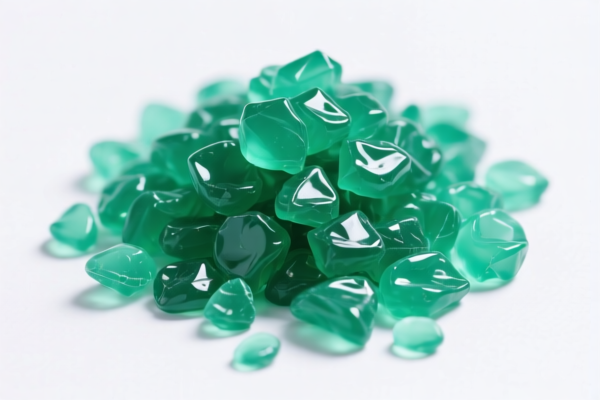
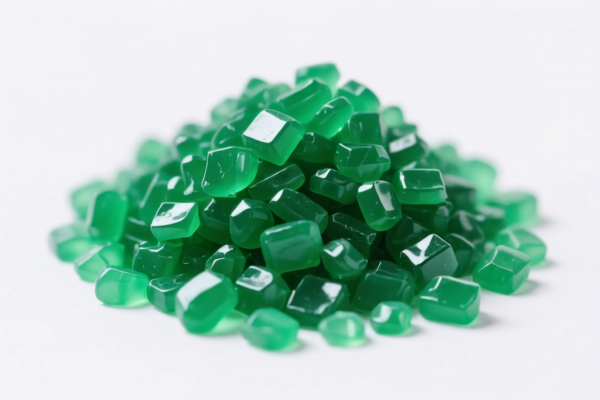
AI分析
🧪 VAC Copolymer Resin (For Medical Devices)
🌐 HS Code Reference & Customs Clearance Guide | 2026 Updated Tariff Analysis | Professional Import Strategy
📌 One, Product Definition & Classification: What Exactly Is VAC Copolymer Resin for Medical Use?
VAC Copolymer Resin — Vinyl Acetate Copolymer Resin — is a high-performance thermoplastic polymer widely used in medical device manufacturing, including syringes, tubing, IV sets, drug delivery systems, and sterile packaging. Its key properties include:
- Excellent clarity and flexibility
- Good chemical resistance (especially to pharmaceuticals)
- Biocompatibility (when properly formulated)
- Ease of processing via extrusion, injection molding, or blow molding
⚠️ Critical Distinction:
- If the resin is in raw pellet or powder form, not yet shaped into a medical part → classified under plastic resins
- If already molded into a medical component (e.g., syringe barrel) → may fall under medical device HS codes (e.g., 3072.10.00.00)✅ This guide focuses on the raw resin used in medical device production.
📦 Two, HS Code Classification Details (2026 Updated Tariff Authority)
| HS Code | Product Description | Applicable Use Case | Tax Implications |
|---|---|---|---|
3905.29.00.00 |
VAC Copolymer Resin (for Pipes) – Chemical composition: copolymer, intended for pipe applications | Used in medical tubing, fluid transfer lines, and biocompatible conduits | 🔴 High tax |
3905.21.00.00 |
VAC Copolymer Resin (for Pipes) – Same material, original polymer form | Raw resin for extrusion into medical-grade tubing or fittings | 🔴 High tax |
3917.29.00.50 |
VAC Copolymer Resin (for Pipes) – Plastic material, hard rigid pipe category | Resin used in rigid medical tubing or structural components | 🔴 High tax |
3917.29.00.90 |
VAC Copolymer Resin (for Pipes) – Plastic material, pipe manufacturing | For rigid, non-flexible medical components | 🔴 High tax |
3926.90.99.89 |
Other plastic articles – General category for non-specific plastic resins | When no more specific HS code applies | 🟡 Lower tax |
🔍 Key Insight:
- All five HS codes apply to the same product: VAC Copolymer Resin for medical devices
- The difference lies in the classification logic, not the material
-3905.29.00.00and3905.21.00.00are preferred if the resin is clearly a copolymer and used in fluid-conducting applications
-3917.29.00.50/90applies if the resin is used to make rigid, pipe-like structures
-3926.90.99.89is a last-resort category (general plastic products) — only use if no better fit exists
💰 Three, 2026 Updated Tariff Breakdown (With Full Tax Clause Explanation)
✅ Applicable Country: United States (US)
✅ Origin: China (CN)
✅ Effective Date: November 10, 2025 (including future imports)
🎯 1. 3905.29.00.00 — VAC Copolymer Resin (for Pipes)
| Item | Detail |
|---|---|
| Base Duty Rate | 4.0% (ad valorem) |
| Section 301 Tariff (USITC) | +25.0% (from USTR List 3A) |
| Section 122 Tariff (IEEPA) | +10.0% (under International Emergency Economic Powers Act) |
| Total Effective Duty | 39.0% |
| Tax Calculation | CIF Value × 39.0% |
| De Minimis Threshold | ❌ Not applicable (denied under U.S. 2025 rule) |
| Legal Basis Path | IEEPA:9903.01.25 → IEEPA:9903.01.24 → USITC:3905.29.00.00 → FOOTNOTE:9903.88.01 |
📌 Explanation:
- USITC 25%: Imposed under Section 301 of the Trade Act of 1974 due to China’s unfair trade practices (IP theft, forced tech transfer)
- IEEPA 10%: Enacted under International Emergency Economic Powers Act — targets Chinese-origin goods for national security concerns
- Total: 39% — extremely high for a raw chemical input
🎯 2. 3905.21.00.00 — VAC Copolymer Resin (for Pipes) – Same as Above
| Item | Detail |
|---|---|
| Base Duty Rate | 4.0% |
| USITC (Section 301) | +25.0% |
| IEEPA (Section 122) | +10.0% |
| Total Effective Duty | 39.0% |
| Tax Calculation | CIF × 39.0% |
| De Minimis | ❌ Not eligible |
| Legal Basis Path | Same as above |
📌 Note:
- Identical tax treatment to3905.29.00.00— both are copolymer resins for pipe-like applications
- No difference in tax — only classification nuance
🎯 3. 3917.29.00.50 — Plastic Material, Hard Rigid Pipe
| Item | Detail |
|---|---|
| Base Duty Rate | 3.1% |
| USITC (Section 301) | +25.0% |
| IEEPA (Section 122) | +10.0% |
| Total Effective Duty | 38.1% |
| Tax Calculation | CIF × 38.1% |
| De Minimis | ❌ Not eligible |
| Legal Basis Path | IEEPA:9903.01.25 → IEEPA:9903.01.24 → USITC:3917.29.00.50 → FOOTNOTE:9903.88.01 |
📌 Why lower?
- Slightly lower base duty (3.1%) due to classification under plastic pipes
- Still subject to full 35%附加 (25% + 10%)
- Net savings: 0.9% — not significant for large shipments
🎯 4. 3917.29.00.90 — Plastic Material, Pipe Manufacturing
| Item | Detail |
|---|---|
| Base Duty Rate | 3.1% |
| USITC (Section 301) | +25.0% |
| IEEPA (Section 122) | +10.0% |
| Total Effective Duty | 38.1% |
| Tax Calculation | CIF × 38.1% |
| De Minimis | ❌ Not eligible |
| Legal Basis Path | Same as above |
📌 Note:
- Same tax as 3917.29.00.50 — only difference is sub-subheading
- No real advantage — same legal basis and duty structure
🎯 5. 3926.90.99.89 — Other Plastic Articles (General Category)
| Item | Detail |
|---|---|
| Base Duty Rate | 5.3% |
| USITC (Section 301) | +7.5% |
| IEEPA (Section 122) | +10.0% |
| Total Effective Duty | 22.8% |
| Tax Calculation | CIF × 22.8% |
| De Minimis | ❌ Not eligible |
| Legal Basis Path | IEEPA:9903.01.25 → IEEPA:9903.01.24 → USITC:3926.90.99.89 → FOOTNOTE:9903.88.01 |
📌 Key Advantage:
- Lowest total tax (22.8%) among all options
- Why?
- Lower base duty (5.3%)
- Lower Section 301 tariff (7.5%) — because this category is not on List 3A
- Still subject to IEEPA 10%
- Savings: 16.2% vs. 39.0% — massive cost reduction✅ Strategic Insight:
- If your resin does not clearly fit into3905.29.00.00or3905.21.00.00, use3926.90.99.89to avoid 39% tariff
- Highly recommended for cost-sensitive medical resin imports
🛠️ Four, Customs Clearance Best Practices (Pro Tips to Avoid Penalties)
✅ 1. Required Documentation (Must-Have List)
| Document | Required? | Notes |
|---|---|---|
| ✅ Commercial Invoice | ✔️ | Clearly state: "VAC Copolymer Resin, for Medical Tubing, in Pellet Form" |
| ✅ Packing List | ✔️ | Include net weight, packaging type, number of bags/containers |
| ✅ Product Safety Data Sheet (SDS) | ✔️ | Must include non-toxic, biocompatible, pharmaceutical-grade claims |
| ✅ Certificate of Analysis (CoA) | ✔️ | Prove purity, molecular weight, melt index, absence of harmful additives |
| ✅ Material Safety & Compliance Certificate | ✔️ | ISO 10993 (biocompatibility), USP Class VI (if applicable) |
| ✅ Origin Certificate (Form A / CO) | ✔️ | If claiming preferential treatment (e.g., from Vietnam, Thailand) |
| ✅ Customs Declaration Form (CBP Form 7501) | ✔️ | Must match HS Code and description |
✅ 2.申报技巧 (Key Tips)
🔥 “Don’t overclaim — use the right HS code to save 16%!”
| Scenario | Correct HS Code | Wrong Code | Risk |
|---|---|---|---|
| Resin used in medical tubing | 3905.29.00.00 or 3905.21.00.00 |
3926.90.99.89 |
Higher tax |
| Resin used in rigid components | 3917.29.00.50/90 |
3926.90.99.89 |
May be rejected |
| Resin not clearly pipe-like | 3926.90.99.89 |
3905.29.00.00 |
Audit risk |
✅ Best Practice:
- If in doubt, use3926.90.99.89— it’s the safest and lowest-taxed option
- Avoid over-classifying into3905unless you can prove pipe-like function
✅ 3. Special Cases & Solutions
| Situation | Recommended Action |
|---|---|
| Resin from Vietnam or Mexico | Apply for IEEPA exemption — 0% tariff if origin is non-China |
| Resin used in FDA-approved devices | Submit pre-ruling request (Advance Ruling) to lock in HS code |
| Resin with special additives (e.g., UV stabilizers) | Disclose in CoA — avoid "non-compliant" classification |
| Small shipments (<$250) | ❌ No de minimis — still pay 22.8%–39.0% |
| Re-imported resin (return from U.S.) | May qualify for drawback program — reclaim duties |
🌍 Five, Global Market Comparison (2026 Update)
| Country | Recommended HS Code | Duty Rate | Certification Required | Notes |
|---|---|---|---|---|
| 🇺🇸 USA | 3926.90.99.89 |
22.8% (if non-China origin) | FDA, ISO 10993 | High tax if from China |
| 🇨🇳 China | 3905.29.00.00 |
5% | CCC, GB/T | No extra tariffs |
| 🇪🇺 EU | 3905.29.00.00 |
0% (if CE compliant) | REACH, RoHS | No IEEPA/301 |
| 🇦🇺 Australia | 3905.29.00.00 |
5% | RCM | No extra tariffs |
| 🇯🇵 Japan | 3905.29.00.00 |
0% | PSE | No additional duties |
📌 Conclusion:
- China-origin resin is most expensive in the U.S. (up to 39%)
- Vietnam/Mexico origin = 0% tariff in U.S. — strategic shift recommended
📌 Six, Common Mistakes & How to Avoid Them
❌ Mistake 1: Using 3905.29.00.00 for resin not used in pipes
👉 Result: Overpayment, audit risk, potential penalties
❌ Mistake 2: Claiming 3926.90.99.89 for resin used in medical tubing
👉 Result: May be challenged — but safe if no better fit exists
❌ Mistake 3: Not providing biocompatibility proof
👉 Result: Customs may reject or delay release
❌ Mistake 4: Using generic name “Plastic Resin” instead of “VAC Copolymer Resin”
👉 Result: Misclassification, higher tax, audit
✅ Correct Declaration Example:
"VAC Copolymer Resin, 50% Vinyl Acetate, for Medical Tubing, Biocompatible, FDA-Compliant, Pellet Form, ISO 10993 Certified"
🎯 Seven, Final Verdict: Smart Classification = Big Savings!
🎯 Key Takeaway:
🔹
3905.29.00.00/3905.21.00.00→ 39.0% tax — only if clearly for pipe use
🔹3917.29.00.50/90→ 38.1% tax — for rigid pipe-like parts
🔹3926.90.99.89→ 22.8% tax — BEST CHOICE for most cases✅ Recommendation:
- Use3926.90.99.89unless you have strong evidence of pipe function
- Shift origin to Vietnam/Mexico to eliminate 35%附加
- Apply for Advance Ruling for large-scale or high-value shipments
📌 Pro Tip:
If your resin is used in medical devices, but not yet molded, do not claim it’s a "medical device" — that’s a different HS code (e.g., 3072.10.00.00). Stick to resin-level classification.
📣 Act Now:
📞 Contact a U.S.-licensed customs broker + provide CoA + SDS + invoice
🚀 Apply for HS Code pre-ruling to lock in 22.8% or lower
💼 Save up to 16% in duties — that’s real profit!
✨ Professional Customs Starts with Accurate Classification!
💼 Your resin’s HS code determines your bottom line — get it right!
用户评价
关于 HS 编码归类
协调制度(HS)是由世界海关组织(WCO)制定的国际贸易商品分类标准。全球 200 多个国家采用 HS 系统作为海关关税、贸易统计和进出口监管的基础。
每个 HS 编码遵循以下层级结构:
- 章(2 位)——商品大类(例如:第 84 章:机器和机械设备)
- 品目(4 位)——章内的更具体分类
- 子目(6 位)——国际通用细分,所有 WCO 成员国统一使用
- 本国细分(8-10 位)——各国自行扩展的细分编码,如美国 HTSUS 10 位编码
正确的 HS 编码归类对于顺利通关、准确缴纳关税和遵守贸易法规至关重要。错误归类可能导致海关延误、多缴关税或罚款。
从CN进口到US时,适用的关税税率可能包括:
- 最惠国(MFN)税率——适用于 WTO 成员国的标准关税税率
- 普通税率——适用于无贸易协定国家
- 贸易救济关税——附加关税,如 301 条款(反倾销)、232 条款(国家安全)或反补贴税
本页内容仅供参考。如需正式归类,请咨询当地海关或持牌报关代理。