VAC Copolymer Resin (For Medical Devices)
CN → US| HS Code | Tariff Rate | Origin | Destination | Doc |
|---|---|---|---|---|
| 3905290000 | 39.0% | CN | US | Official Doc |
| 3905210000 | 39.0% | CN | US | Official Doc |
| 3917290050 | 38.1% | CN | US | Official Doc |
| 3917290090 | 38.1% | CN | US | Official Doc |
| 3926909989 | 22.8% | CN | US | Official Doc |
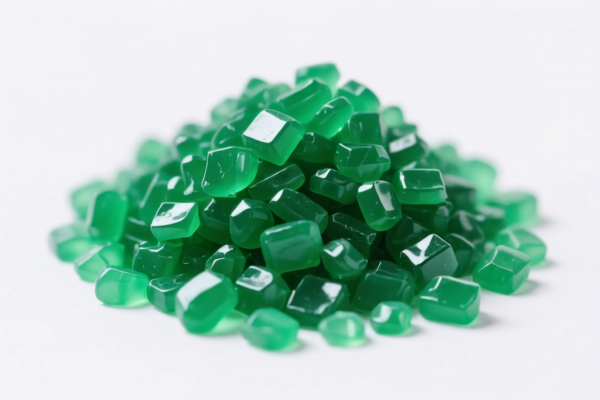
Product Images



AI Analysis
🧪 VAC Copolymer Resin (For Medical Devices)
🌐 HS Code Reference & Customs Clearance Guide | 2026 Updated Tariff Analysis | Professional Import Strategy
📌 One, Product Definition & Classification: What Exactly Is VAC Copolymer Resin for Medical Use?
VAC Copolymer Resin — Vinyl Acetate Copolymer Resin — is a high-performance thermoplastic polymer widely used in medical device manufacturing, including syringes, tubing, IV sets, drug delivery systems, and sterile packaging. Its key properties include:
- Excellent clarity and flexibility
- Good chemical resistance (especially to pharmaceuticals)
- Biocompatibility (when properly formulated)
- Ease of processing via extrusion, injection molding, or blow molding
⚠️ Critical Distinction:
- If the resin is in raw pellet or powder form, not yet shaped into a medical part → classified under plastic resins
- If already molded into a medical component (e.g., syringe barrel) → may fall under medical device HS codes (e.g., 3072.10.00.00)✅ This guide focuses on the raw resin used in medical device production.
📦 Two, HS Code Classification Details (2026 Updated Tariff Authority)
| HS Code | Product Description | Applicable Use Case | Tax Implications |
|---|---|---|---|
3905.29.00.00 |
VAC Copolymer Resin (for Pipes) – Chemical composition: copolymer, intended for pipe applications | Used in medical tubing, fluid transfer lines, and biocompatible conduits | 🔴 High tax |
3905.21.00.00 |
VAC Copolymer Resin (for Pipes) – Same material, original polymer form | Raw resin for extrusion into medical-grade tubing or fittings | 🔴 High tax |
3917.29.00.50 |
VAC Copolymer Resin (for Pipes) – Plastic material, hard rigid pipe category | Resin used in rigid medical tubing or structural components | 🔴 High tax |
3917.29.00.90 |
VAC Copolymer Resin (for Pipes) – Plastic material, pipe manufacturing | For rigid, non-flexible medical components | 🔴 High tax |
3926.90.99.89 |
Other plastic articles – General category for non-specific plastic resins | When no more specific HS code applies | 🟡 Lower tax |
🔍 Key Insight:
- All five HS codes apply to the same product: VAC Copolymer Resin for medical devices
- The difference lies in the classification logic, not the material
-3905.29.00.00and3905.21.00.00are preferred if the resin is clearly a copolymer and used in fluid-conducting applications
-3917.29.00.50/90applies if the resin is used to make rigid, pipe-like structures
-3926.90.99.89is a last-resort category (general plastic products) — only use if no better fit exists
💰 Three, 2026 Updated Tariff Breakdown (With Full Tax Clause Explanation)
✅ Applicable Country: United States (US)
✅ Origin: China (CN)
✅ Effective Date: November 10, 2025 (including future imports)
🎯 1. 3905.29.00.00 — VAC Copolymer Resin (for Pipes)
| Item | Detail |
|---|---|
| Base Duty Rate | 4.0% (ad valorem) |
| Section 301 Tariff (USITC) | +25.0% (from USTR List 3A) |
| Section 122 Tariff (IEEPA) | +10.0% (under International Emergency Economic Powers Act) |
| Total Effective Duty | 39.0% |
| Tax Calculation | CIF Value × 39.0% |
| De Minimis Threshold | ❌ Not applicable (denied under U.S. 2025 rule) |
| Legal Basis Path | IEEPA:9903.01.25 → IEEPA:9903.01.24 → USITC:3905.29.00.00 → FOOTNOTE:9903.88.01 |
📌 Explanation:
- USITC 25%: Imposed under Section 301 of the Trade Act of 1974 due to China’s unfair trade practices (IP theft, forced tech transfer)
- IEEPA 10%: Enacted under International Emergency Economic Powers Act — targets Chinese-origin goods for national security concerns
- Total: 39% — extremely high for a raw chemical input
🎯 2. 3905.21.00.00 — VAC Copolymer Resin (for Pipes) – Same as Above
| Item | Detail |
|---|---|
| Base Duty Rate | 4.0% |
| USITC (Section 301) | +25.0% |
| IEEPA (Section 122) | +10.0% |
| Total Effective Duty | 39.0% |
| Tax Calculation | CIF × 39.0% |
| De Minimis | ❌ Not eligible |
| Legal Basis Path | Same as above |
📌 Note:
- Identical tax treatment to3905.29.00.00— both are copolymer resins for pipe-like applications
- No difference in tax — only classification nuance
🎯 3. 3917.29.00.50 — Plastic Material, Hard Rigid Pipe
| Item | Detail |
|---|---|
| Base Duty Rate | 3.1% |
| USITC (Section 301) | +25.0% |
| IEEPA (Section 122) | +10.0% |
| Total Effective Duty | 38.1% |
| Tax Calculation | CIF × 38.1% |
| De Minimis | ❌ Not eligible |
| Legal Basis Path | IEEPA:9903.01.25 → IEEPA:9903.01.24 → USITC:3917.29.00.50 → FOOTNOTE:9903.88.01 |
📌 Why lower?
- Slightly lower base duty (3.1%) due to classification under plastic pipes
- Still subject to full 35%附加 (25% + 10%)
- Net savings: 0.9% — not significant for large shipments
🎯 4. 3917.29.00.90 — Plastic Material, Pipe Manufacturing
| Item | Detail |
|---|---|
| Base Duty Rate | 3.1% |
| USITC (Section 301) | +25.0% |
| IEEPA (Section 122) | +10.0% |
| Total Effective Duty | 38.1% |
| Tax Calculation | CIF × 38.1% |
| De Minimis | ❌ Not eligible |
| Legal Basis Path | Same as above |
📌 Note:
- Same tax as 3917.29.00.50 — only difference is sub-subheading
- No real advantage — same legal basis and duty structure
🎯 5. 3926.90.99.89 — Other Plastic Articles (General Category)
| Item | Detail |
|---|---|
| Base Duty Rate | 5.3% |
| USITC (Section 301) | +7.5% |
| IEEPA (Section 122) | +10.0% |
| Total Effective Duty | 22.8% |
| Tax Calculation | CIF × 22.8% |
| De Minimis | ❌ Not eligible |
| Legal Basis Path | IEEPA:9903.01.25 → IEEPA:9903.01.24 → USITC:3926.90.99.89 → FOOTNOTE:9903.88.01 |
📌 Key Advantage:
- Lowest total tax (22.8%) among all options
- Why?
- Lower base duty (5.3%)
- Lower Section 301 tariff (7.5%) — because this category is not on List 3A
- Still subject to IEEPA 10%
- Savings: 16.2% vs. 39.0% — massive cost reduction✅ Strategic Insight:
- If your resin does not clearly fit into3905.29.00.00or3905.21.00.00, use3926.90.99.89to avoid 39% tariff
- Highly recommended for cost-sensitive medical resin imports
🛠️ Four, Customs Clearance Best Practices (Pro Tips to Avoid Penalties)
✅ 1. Required Documentation (Must-Have List)
| Document | Required? | Notes |
|---|---|---|
| ✅ Commercial Invoice | ✔️ | Clearly state: "VAC Copolymer Resin, for Medical Tubing, in Pellet Form" |
| ✅ Packing List | ✔️ | Include net weight, packaging type, number of bags/containers |
| ✅ Product Safety Data Sheet (SDS) | ✔️ | Must include non-toxic, biocompatible, pharmaceutical-grade claims |
| ✅ Certificate of Analysis (CoA) | ✔️ | Prove purity, molecular weight, melt index, absence of harmful additives |
| ✅ Material Safety & Compliance Certificate | ✔️ | ISO 10993 (biocompatibility), USP Class VI (if applicable) |
| ✅ Origin Certificate (Form A / CO) | ✔️ | If claiming preferential treatment (e.g., from Vietnam, Thailand) |
| ✅ Customs Declaration Form (CBP Form 7501) | ✔️ | Must match HS Code and description |
✅ 2.申报技巧 (Key Tips)
🔥 “Don’t overclaim — use the right HS code to save 16%!”
| Scenario | Correct HS Code | Wrong Code | Risk |
|---|---|---|---|
| Resin used in medical tubing | 3905.29.00.00 or 3905.21.00.00 |
3926.90.99.89 |
Higher tax |
| Resin used in rigid components | 3917.29.00.50/90 |
3926.90.99.89 |
May be rejected |
| Resin not clearly pipe-like | 3926.90.99.89 |
3905.29.00.00 |
Audit risk |
✅ Best Practice:
- If in doubt, use3926.90.99.89— it’s the safest and lowest-taxed option
- Avoid over-classifying into3905unless you can prove pipe-like function
✅ 3. Special Cases & Solutions
| Situation | Recommended Action |
|---|---|
| Resin from Vietnam or Mexico | Apply for IEEPA exemption — 0% tariff if origin is non-China |
| Resin used in FDA-approved devices | Submit pre-ruling request (Advance Ruling) to lock in HS code |
| Resin with special additives (e.g., UV stabilizers) | Disclose in CoA — avoid "non-compliant" classification |
| Small shipments (<$250) | ❌ No de minimis — still pay 22.8%–39.0% |
| Re-imported resin (return from U.S.) | May qualify for drawback program — reclaim duties |
🌍 Five, Global Market Comparison (2026 Update)
| Country | Recommended HS Code | Duty Rate | Certification Required | Notes |
|---|---|---|---|---|
| 🇺🇸 USA | 3926.90.99.89 |
22.8% (if non-China origin) | FDA, ISO 10993 | High tax if from China |
| 🇨🇳 China | 3905.29.00.00 |
5% | CCC, GB/T | No extra tariffs |
| 🇪🇺 EU | 3905.29.00.00 |
0% (if CE compliant) | REACH, RoHS | No IEEPA/301 |
| 🇦🇺 Australia | 3905.29.00.00 |
5% | RCM | No extra tariffs |
| 🇯🇵 Japan | 3905.29.00.00 |
0% | PSE | No additional duties |
📌 Conclusion:
- China-origin resin is most expensive in the U.S. (up to 39%)
- Vietnam/Mexico origin = 0% tariff in U.S. — strategic shift recommended
📌 Six, Common Mistakes & How to Avoid Them
❌ Mistake 1: Using 3905.29.00.00 for resin not used in pipes
👉 Result: Overpayment, audit risk, potential penalties
❌ Mistake 2: Claiming 3926.90.99.89 for resin used in medical tubing
👉 Result: May be challenged — but safe if no better fit exists
❌ Mistake 3: Not providing biocompatibility proof
👉 Result: Customs may reject or delay release
❌ Mistake 4: Using generic name “Plastic Resin” instead of “VAC Copolymer Resin”
👉 Result: Misclassification, higher tax, audit
✅ Correct Declaration Example:
"VAC Copolymer Resin, 50% Vinyl Acetate, for Medical Tubing, Biocompatible, FDA-Compliant, Pellet Form, ISO 10993 Certified"
🎯 Seven, Final Verdict: Smart Classification = Big Savings!
🎯 Key Takeaway:
🔹
3905.29.00.00/3905.21.00.00→ 39.0% tax — only if clearly for pipe use
🔹3917.29.00.50/90→ 38.1% tax — for rigid pipe-like parts
🔹3926.90.99.89→ 22.8% tax — BEST CHOICE for most cases✅ Recommendation:
- Use3926.90.99.89unless you have strong evidence of pipe function
- Shift origin to Vietnam/Mexico to eliminate 35%附加
- Apply for Advance Ruling for large-scale or high-value shipments
📌 Pro Tip:
If your resin is used in medical devices, but not yet molded, do not claim it’s a "medical device" — that’s a different HS code (e.g., 3072.10.00.00). Stick to resin-level classification.
📣 Act Now:
📞 Contact a U.S.-licensed customs broker + provide CoA + SDS + invoice
🚀 Apply for HS Code pre-ruling to lock in 22.8% or lower
💼 Save up to 16% in duties — that’s real profit!
✨ Professional Customs Starts with Accurate Classification!
💼 Your resin’s HS code determines your bottom line — get it right!
Customer Reviews
About HS Code Classification
The Harmonized System (HS) is an internationally standardized nomenclature developed by the World Customs Organization (WCO) to classify traded products. Over 200 countries use the HS system as the basis for customs tariffs, trade statistics, and import/export regulations.
Each HS code follows a hierarchical structure:
- Chapter (2 digits) — Broad category of goods (e.g., Chapter 84: Machinery and Mechanical Appliances)
- Heading (4 digits) — More specific grouping within the chapter
- Subheading (6 digits) — Internationally standardized breakdown, used by all WCO member countries
- National subdivisions (8-10 digits) — Country-specific extensions for further classification, such as US HTSUS 10-digit codes
Correct HS code classification is essential for smooth customs clearance, accurate duty payment, and compliance with trade regulations. Misclassification can lead to customs delays, overpayment of duties, or penalties.
When importing from CN to US, the applicable tariff rates may include:
- Most-Favored-Nation (MFN) rate — The standard duty rate applied to WTO members
- General rate — Applied to countries without trade agreements
- Trade remedy duties — Additional tariffs such as Section 301 (anti-dumping), Section 232 (national security), or countervailing duties
The information provided on this page is for reference purposes only. For official classification, please consult with your local customs authority or a licensed customs broker.