Vanadium Compounds for Catalysts
CN → US| HS编码 | 关税税率 | 原产国 | 目的国 | 文档 |
|---|---|---|---|---|
| 3824992900 | 41.5% | CN | US | 官方文档 |
| 8108903060 | 40.5% | CN | US | 官方文档 |
| 8108906075 | 50.0% | CN | US | 官方文档 |
| 2825300050 | 40.5% | CN | US | 官方文档 |
商品图片
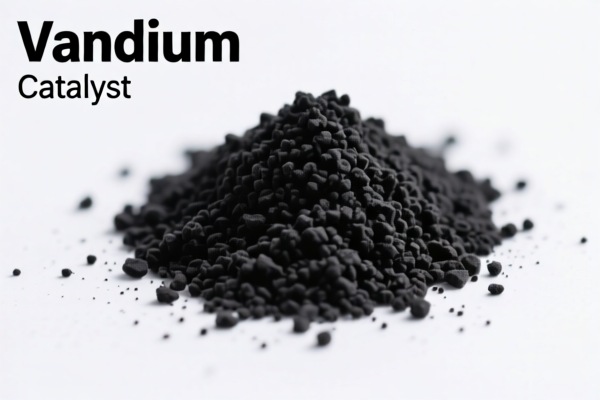

AI分析
💎 Vanadium Compounds for Catalyst Support: The Chemical Chameleon
🌐 HS Code Reference & Customs Clearance Guide | 2026 Latest Tariff Analysis | Strategic Classification for Vanadium-Based Catalysts
📌 I. Product Definition & Classification: Is it Metal or Chemical?
Vanadium compounds used as catalyst supports sit at the intersection of two major regulatory worlds: Metallurgy and Chemical Industry. The core question for customs authorities is:
"Are you importing a refined metal product, or a chemical compound/preparation?"
Key Distinctions:
- Chemical Perspective (Chapter 28/38): If the vanadium is in the form of oxides, hydroxides, salts, or mixed with other carriers (like alumina/silica) for catalytic use, it often falls under Chemical Products.
- Metal Perspective (Chapter 81): If the product is primarily identified as "Vanadium and Articles Thereof" (e.g., alloyed or specific metal forms), it falls under Non-ferrous Metals.
⚠️ Critical Classification Pivot:
- Oxides/Hydroxides (Common catalyst supports) → Likely 2825 (Inorganic Compounds).
- General Metal Forms/Alloys → Likely 8108 (Titanium/Vanadium Metals) Note: Vanadium is grouped with Titanium in some tariff structures for structural metals, or strictly as 8104/8105 depending on specific national tariff lines. In the provided data, it maps to 8108.
- Preparations/Carrier Mixtures → Likely 3824 (Prepared Binders for Foundry Molds, Chemical Preparations).
📦 II. HS Code Classification Breakdown (2026 Official Data)
Based on the provided dataset, here are the four potential classifications and their logical justifications:
| HS Code | Product Description & Logic | Tax Burden | Legal/Tariff Logic |
|---|---|---|---|
3824.99.29.00 |
Chemical Preparation / Catalyst Support Vanadium compounds used as catalyst supports are classified as Chemical Preparations. They are not pure metals but functional chemical products designed for catalytic processes. |
41.5% | Base: 6.5% Sect. 301 (Add-on): 25.0% Section 122: 10% |
8108.90.30.60 |
Metal Product / Vanadium Alloy Treated as a Titanium/Vanadium Metal Product. The classification logic assumes the material is primarily a metal article/derivative, despite containing vanadium compounds. |
40.5% | Base: 5.5% Sect. 301 (Add-on): 25.0% Section 122: 10% |
8108.90.60.75 |
Other Vanadium Articles / Metal Derivative Classified under "Other Articles of Titanium and Vanadium". This is a "catch-all" for non-specific metal forms that don't fit standard ingot/wire categories but are metal-based. |
50.0% | Base: 15.0% Sect. 301 (Add-on): 25.0% Section 122: 10% |
2825.30.00.50 |
Inorganic Compound (Oxide/Hydroxide) The chemical essence is Vanadium Oxide (V₂O₅) or Hydroxide. This is the most scientifically accurate classification for standard catalyst supports like V₂O₅/TiO₂. |
40.5% | Base: 5.5% Sect. 301 (Add-on): 25.0% Section 122: 10% |
🔍 Strategic Insight:
-2825.30.00.50and8108.90.30.60offer the lowest total tax (40.5%).
-8108.90.60.75is the highest risk/cost (50.0%) due to a higher base rate.
-3824.99.29.00is safe for "preparations" but has a higher base rate (6.5%) than the oxide/metal options.
💰 III. Detailed Tariff Structure & Calculation (2026 US Import)
✅ Applicable Country: United States (US)
✅ Origin: China (CN)
✅ Effective Date: 2025-11-10 (Post-Section 122 & 301 adjustments)
🎯 1. The "Lowest Cost" Option: 2825.30.00.50 (Vanadium Oxides/Hydroxides)
| Component | Rate | Source / Footnote |
|---|---|---|
| Base Duty | 5.5% | HTSUS General Rate |
| Section 301 Add-on | +25.0% | USITC Footnote 9903.01.24 (List 3/4A items) |
| Section 122 Add-on | +10.0% | USTR Designation (China-specific) |
| Total Effective Rate | 40.5% | Ad Valorem |
📌 Why this rate?
Vanadium oxides are essential inorganic intermediates. While taxed as a chemical, they benefit from a lower base rate compared to general chemical preparations. The 301 and 122 tariffs are non-negotiable for Chinese origin.
🎯 2. The "Metal Product" Option: 8108.90.30.60 (Other Metal Articles)
| Component | Rate | Source / Footnote |
|---|---|---|
| Base Duty | 5.5% | HTSUS Specific for Titanium/Vanadium articles |
| Section 301 Add-on | +25.0% | USITC Footnote 9903.01.24 |
| Section 122 Add-on | +10.0% | USTR Designation |
| Total Effective Rate | 40.5% | Ad Valorem |
📌 Why this rate?
If customs accepts the argument that the product is a "metal article" (even if compound-loaded), it shares the same low base rate as the oxide. However, this requires strong evidence that the product is primarily a metal form.
🎯 3. The "Catch-All" Option: 8108.90.60.75 (Other Vanadium Articles)
| Component | Rate | Source / Footnote |
|---|---|---|
| Base Duty | 15.0% | HTSUS "Other" Category |
| Section 301 Add-on | +25.0% | USITC Footnote 9903.01.24 |
| Section 122 Add-on | +10.0% | USTR Designation |
| Total Effective Rate | 50.0% | Ad Valorem |
🚨 Warning: This classification is the most expensive. Only use if the product cannot be classified as an oxide (
2825) or a standard metal article (8108.30).
🛠️ IV. Customs Clearance Strategy & Best Practices
✅ 1. Documentation Requirements (Mandatory)
| Document | Purpose | Key Details to Include |
|---|---|---|
| Commercial Invoice | Declare Value | Explicitly state "Vanadium Compound for Catalyst Support" |
| Product Specification Sheet | Prove Composition | List % of Vanadium, Carrier material (e.g., Alumina, Silica), Chemical Formula (e.g., V₂O₅) |
| Certificate of Analysis (COA) | Prove Purity | Show Vanadium content, impurity levels, and physical form (powder, granule, etc.) |
| Statement of Non-Metallic Nature | Support 2825 |
If using HS 2825, declare that the product is not a metal alloy or ingot. |
| Statement of Metal Article Nature | Support 8108 |
If using HS 8108, declare that the product is a manufactured metal article. |
✅ 2. Classification Decision Tree (How to Choose)
-
Is it a pure oxide/hydroxide (e.g., V₂O₅)?
→ Use2825.30.00.50(40.5%). Most common for catalyst supports. -
Is it a metal/vanadium alloy with compounds embedded?
→ Use8108.90.30.60(40.5%). Requires proof of metallic structure. -
Is it a mixture/preparation with organic binders?
→ Use3824.99.29.00(41.5%). If it doesn't fit "pure chemical" or "metal" definitions. -
Is it a strange, non-standard metal form?
→ Use8108.90.60.75(50.0%). Avoid if possible due to higher tax.
🔥 Pro Tip:
2825.30.00.50is often the safest and most scientifically accurate for "Vanadium Compounds" because catalyst supports are chemically defined by their oxide/hydroxide state. Customs officials are more familiar with chemical classifications for catalysts than exotic metal article codes.
🌍 V. Global Market Comparison (2026)
| Region | Recommended HS Code | Est. Base Duty | Special Duties (US-China) | Total Est. Rate | Notes |
|---|---|---|---|---|---|
| 🇺🇸 USA | 2825.30.00.50 |
5.5% | +35% (301 + 122) | 40.5% | High compliance scrutiny. Provide COA. |
| 🇨🇳 China | 2825.30.00.50 |
5.5% | None | 5.5% | No additional tariffs for import. |
| 🇪🇺 EU | 2825.30.00.50 |
4.5% | None | 4.5% | Standard chemical tariff. No Section 301. |
| 🇬🇧 UK | 2825.30.00.50 |
4.5% | None | 4.5% | Post-Brexit tariffs align closely with EU. |
📌 Conclusion:
The US market is the most expensive due to Section 301 and Section 122 tariffs. If possible, consider sourcing vanadium compounds from non-Chinese origins (e.g., Vietnam, India) to potentially mitigate these duties, though rules of origin must be strictly verified.
📌 VI. Common Pitfalls & How to Avoid Them
❌ Pitfall 1: Misclassifying as "Metal Vanadium" (8105)
👉 Consequence: Customs may reject the classification because vanadium metal is rarely imported as a catalyst support.
👉 Fix: Use 2825 (Oxides) or 3824 (Preparations).
❌ Pitfall 2: Omitting "Catalyst Support" in Description
👉 Consequence: Customs may classify as raw material (2825) with different usage codes, leading to delays.
👉 Fix: Clearly state "Vanadium Oxide for Catalyst Support" in the commercial invoice.
❌ Pitfall 3: Ignoring Section 122 Tariffs
👉 Consequence: Underpayment by 10%.
👉 Fix: Always include the 10% Section 122 in your landed cost calculation for Chinese imports.
✅ Best Practice:
Declare: "Vanadium Pentoxide (V₂O₅) on Silica Carrier, for use in Catalytic Oxidation Processes, HS 2825.30.00.50"
Provide: COA showing >98% V₂O₅ purity, particle size distribution, and carrier type.
🎯 VII. Final Recommendation
For Vanadium Compounds for Catalysts, the optimal strategy is:
- Primary Choice:
2825.30.00.50(40.5% Total Tax) - Why? Scientifically accurate for oxides/hydroxides. Low base rate.
- Secondary Choice:
8108.90.30.60(40.5% Total Tax) - Why? Only if the product is a metallic structure. Risky if chemical composition dominates.
- Avoid:
8108.90.60.75(50.0% Total Tax) - Why? Highest tax burden with no added benefit.
🚀 Action Plan:
1. Obtain a Certificate of Analysis (COA) from your supplier.
2. Confirm if the product is primarily an oxide or a metal article.
3. Use2825.30.00.50unless you have specific justification for metal classification.
4. Budget for 40.5% total duties on US imports from China.
✨ Precision in Classification = Profit in Clearance.
💼 Don’t let a 9.5% tax difference eat your margin. Choose wisely!
用户评价
关于 HS 编码归类
协调制度(HS)是由世界海关组织(WCO)制定的国际贸易商品分类标准。全球 200 多个国家采用 HS 系统作为海关关税、贸易统计和进出口监管的基础。
每个 HS 编码遵循以下层级结构:
- 章(2 位)——商品大类(例如:第 84 章:机器和机械设备)
- 品目(4 位)——章内的更具体分类
- 子目(6 位)——国际通用细分,所有 WCO 成员国统一使用
- 本国细分(8-10 位)——各国自行扩展的细分编码,如美国 HTSUS 10 位编码
正确的 HS 编码归类对于顺利通关、准确缴纳关税和遵守贸易法规至关重要。错误归类可能导致海关延误、多缴关税或罚款。
从CN进口到US时,适用的关税税率可能包括:
- 最惠国(MFN)税率——适用于 WTO 成员国的标准关税税率
- 普通税率——适用于无贸易协定国家
- 贸易救济关税——附加关税,如 301 条款(反倾销)、232 条款(国家安全)或反补贴税
本页内容仅供参考。如需正式归类,请咨询当地海关或持牌报关代理。