Vanadium Compounds for Catalysts
CN → US| HS Code | Tariff Rate | Origin | Destination | Doc |
|---|---|---|---|---|
| 3824992900 | 41.5% | CN | US | Official Doc |
| 8108903060 | 40.5% | CN | US | Official Doc |
| 8108906075 | 50.0% | CN | US | Official Doc |
| 2825300050 | 40.5% | CN | US | Official Doc |
Product Images
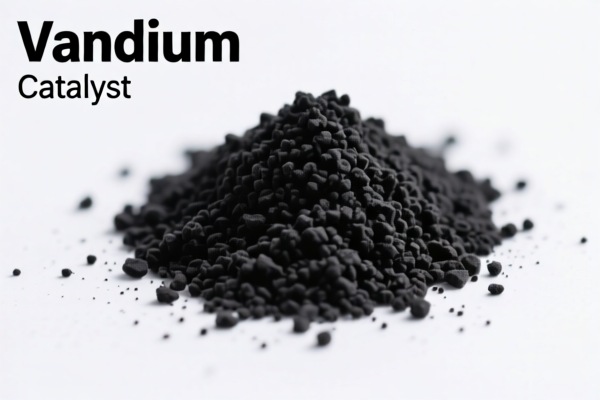

AI Analysis
💎 Vanadium Compounds for Catalyst Support: The Chemical Chameleon
🌐 HS Code Reference & Customs Clearance Guide | 2026 Latest Tariff Analysis | Strategic Classification for Vanadium-Based Catalysts
📌 I. Product Definition & Classification: Is it Metal or Chemical?
Vanadium compounds used as catalyst supports sit at the intersection of two major regulatory worlds: Metallurgy and Chemical Industry. The core question for customs authorities is:
"Are you importing a refined metal product, or a chemical compound/preparation?"
Key Distinctions:
- Chemical Perspective (Chapter 28/38): If the vanadium is in the form of oxides, hydroxides, salts, or mixed with other carriers (like alumina/silica) for catalytic use, it often falls under Chemical Products.
- Metal Perspective (Chapter 81): If the product is primarily identified as "Vanadium and Articles Thereof" (e.g., alloyed or specific metal forms), it falls under Non-ferrous Metals.
⚠️ Critical Classification Pivot:
- Oxides/Hydroxides (Common catalyst supports) → Likely 2825 (Inorganic Compounds).
- General Metal Forms/Alloys → Likely 8108 (Titanium/Vanadium Metals) Note: Vanadium is grouped with Titanium in some tariff structures for structural metals, or strictly as 8104/8105 depending on specific national tariff lines. In the provided data, it maps to 8108.
- Preparations/Carrier Mixtures → Likely 3824 (Prepared Binders for Foundry Molds, Chemical Preparations).
📦 II. HS Code Classification Breakdown (2026 Official Data)
Based on the provided dataset, here are the four potential classifications and their logical justifications:
| HS Code | Product Description & Logic | Tax Burden | Legal/Tariff Logic |
|---|---|---|---|
3824.99.29.00 |
Chemical Preparation / Catalyst Support Vanadium compounds used as catalyst supports are classified as Chemical Preparations. They are not pure metals but functional chemical products designed for catalytic processes. |
41.5% | Base: 6.5% Sect. 301 (Add-on): 25.0% Section 122: 10% |
8108.90.30.60 |
Metal Product / Vanadium Alloy Treated as a Titanium/Vanadium Metal Product. The classification logic assumes the material is primarily a metal article/derivative, despite containing vanadium compounds. |
40.5% | Base: 5.5% Sect. 301 (Add-on): 25.0% Section 122: 10% |
8108.90.60.75 |
Other Vanadium Articles / Metal Derivative Classified under "Other Articles of Titanium and Vanadium". This is a "catch-all" for non-specific metal forms that don't fit standard ingot/wire categories but are metal-based. |
50.0% | Base: 15.0% Sect. 301 (Add-on): 25.0% Section 122: 10% |
2825.30.00.50 |
Inorganic Compound (Oxide/Hydroxide) The chemical essence is Vanadium Oxide (V₂O₅) or Hydroxide. This is the most scientifically accurate classification for standard catalyst supports like V₂O₅/TiO₂. |
40.5% | Base: 5.5% Sect. 301 (Add-on): 25.0% Section 122: 10% |
🔍 Strategic Insight:
-2825.30.00.50and8108.90.30.60offer the lowest total tax (40.5%).
-8108.90.60.75is the highest risk/cost (50.0%) due to a higher base rate.
-3824.99.29.00is safe for "preparations" but has a higher base rate (6.5%) than the oxide/metal options.
💰 III. Detailed Tariff Structure & Calculation (2026 US Import)
✅ Applicable Country: United States (US)
✅ Origin: China (CN)
✅ Effective Date: 2025-11-10 (Post-Section 122 & 301 adjustments)
🎯 1. The "Lowest Cost" Option: 2825.30.00.50 (Vanadium Oxides/Hydroxides)
| Component | Rate | Source / Footnote |
|---|---|---|
| Base Duty | 5.5% | HTSUS General Rate |
| Section 301 Add-on | +25.0% | USITC Footnote 9903.01.24 (List 3/4A items) |
| Section 122 Add-on | +10.0% | USTR Designation (China-specific) |
| Total Effective Rate | 40.5% | Ad Valorem |
📌 Why this rate?
Vanadium oxides are essential inorganic intermediates. While taxed as a chemical, they benefit from a lower base rate compared to general chemical preparations. The 301 and 122 tariffs are non-negotiable for Chinese origin.
🎯 2. The "Metal Product" Option: 8108.90.30.60 (Other Metal Articles)
| Component | Rate | Source / Footnote |
|---|---|---|
| Base Duty | 5.5% | HTSUS Specific for Titanium/Vanadium articles |
| Section 301 Add-on | +25.0% | USITC Footnote 9903.01.24 |
| Section 122 Add-on | +10.0% | USTR Designation |
| Total Effective Rate | 40.5% | Ad Valorem |
📌 Why this rate?
If customs accepts the argument that the product is a "metal article" (even if compound-loaded), it shares the same low base rate as the oxide. However, this requires strong evidence that the product is primarily a metal form.
🎯 3. The "Catch-All" Option: 8108.90.60.75 (Other Vanadium Articles)
| Component | Rate | Source / Footnote |
|---|---|---|
| Base Duty | 15.0% | HTSUS "Other" Category |
| Section 301 Add-on | +25.0% | USITC Footnote 9903.01.24 |
| Section 122 Add-on | +10.0% | USTR Designation |
| Total Effective Rate | 50.0% | Ad Valorem |
🚨 Warning: This classification is the most expensive. Only use if the product cannot be classified as an oxide (
2825) or a standard metal article (8108.30).
🛠️ IV. Customs Clearance Strategy & Best Practices
✅ 1. Documentation Requirements (Mandatory)
| Document | Purpose | Key Details to Include |
|---|---|---|
| Commercial Invoice | Declare Value | Explicitly state "Vanadium Compound for Catalyst Support" |
| Product Specification Sheet | Prove Composition | List % of Vanadium, Carrier material (e.g., Alumina, Silica), Chemical Formula (e.g., V₂O₅) |
| Certificate of Analysis (COA) | Prove Purity | Show Vanadium content, impurity levels, and physical form (powder, granule, etc.) |
| Statement of Non-Metallic Nature | Support 2825 |
If using HS 2825, declare that the product is not a metal alloy or ingot. |
| Statement of Metal Article Nature | Support 8108 |
If using HS 8108, declare that the product is a manufactured metal article. |
✅ 2. Classification Decision Tree (How to Choose)
-
Is it a pure oxide/hydroxide (e.g., V₂O₅)?
→ Use2825.30.00.50(40.5%). Most common for catalyst supports. -
Is it a metal/vanadium alloy with compounds embedded?
→ Use8108.90.30.60(40.5%). Requires proof of metallic structure. -
Is it a mixture/preparation with organic binders?
→ Use3824.99.29.00(41.5%). If it doesn't fit "pure chemical" or "metal" definitions. -
Is it a strange, non-standard metal form?
→ Use8108.90.60.75(50.0%). Avoid if possible due to higher tax.
🔥 Pro Tip:
2825.30.00.50is often the safest and most scientifically accurate for "Vanadium Compounds" because catalyst supports are chemically defined by their oxide/hydroxide state. Customs officials are more familiar with chemical classifications for catalysts than exotic metal article codes.
🌍 V. Global Market Comparison (2026)
| Region | Recommended HS Code | Est. Base Duty | Special Duties (US-China) | Total Est. Rate | Notes |
|---|---|---|---|---|---|
| 🇺🇸 USA | 2825.30.00.50 |
5.5% | +35% (301 + 122) | 40.5% | High compliance scrutiny. Provide COA. |
| 🇨🇳 China | 2825.30.00.50 |
5.5% | None | 5.5% | No additional tariffs for import. |
| 🇪🇺 EU | 2825.30.00.50 |
4.5% | None | 4.5% | Standard chemical tariff. No Section 301. |
| 🇬🇧 UK | 2825.30.00.50 |
4.5% | None | 4.5% | Post-Brexit tariffs align closely with EU. |
📌 Conclusion:
The US market is the most expensive due to Section 301 and Section 122 tariffs. If possible, consider sourcing vanadium compounds from non-Chinese origins (e.g., Vietnam, India) to potentially mitigate these duties, though rules of origin must be strictly verified.
📌 VI. Common Pitfalls & How to Avoid Them
❌ Pitfall 1: Misclassifying as "Metal Vanadium" (8105)
👉 Consequence: Customs may reject the classification because vanadium metal is rarely imported as a catalyst support.
👉 Fix: Use 2825 (Oxides) or 3824 (Preparations).
❌ Pitfall 2: Omitting "Catalyst Support" in Description
👉 Consequence: Customs may classify as raw material (2825) with different usage codes, leading to delays.
👉 Fix: Clearly state "Vanadium Oxide for Catalyst Support" in the commercial invoice.
❌ Pitfall 3: Ignoring Section 122 Tariffs
👉 Consequence: Underpayment by 10%.
👉 Fix: Always include the 10% Section 122 in your landed cost calculation for Chinese imports.
✅ Best Practice:
Declare: "Vanadium Pentoxide (V₂O₅) on Silica Carrier, for use in Catalytic Oxidation Processes, HS 2825.30.00.50"
Provide: COA showing >98% V₂O₅ purity, particle size distribution, and carrier type.
🎯 VII. Final Recommendation
For Vanadium Compounds for Catalysts, the optimal strategy is:
- Primary Choice:
2825.30.00.50(40.5% Total Tax) - Why? Scientifically accurate for oxides/hydroxides. Low base rate.
- Secondary Choice:
8108.90.30.60(40.5% Total Tax) - Why? Only if the product is a metallic structure. Risky if chemical composition dominates.
- Avoid:
8108.90.60.75(50.0% Total Tax) - Why? Highest tax burden with no added benefit.
🚀 Action Plan:
1. Obtain a Certificate of Analysis (COA) from your supplier.
2. Confirm if the product is primarily an oxide or a metal article.
3. Use2825.30.00.50unless you have specific justification for metal classification.
4. Budget for 40.5% total duties on US imports from China.
✨ Precision in Classification = Profit in Clearance.
💼 Don’t let a 9.5% tax difference eat your margin. Choose wisely!
Customer Reviews
About HS Code Classification
The Harmonized System (HS) is an internationally standardized nomenclature developed by the World Customs Organization (WCO) to classify traded products. Over 200 countries use the HS system as the basis for customs tariffs, trade statistics, and import/export regulations.
Each HS code follows a hierarchical structure:
- Chapter (2 digits) — Broad category of goods (e.g., Chapter 84: Machinery and Mechanical Appliances)
- Heading (4 digits) — More specific grouping within the chapter
- Subheading (6 digits) — Internationally standardized breakdown, used by all WCO member countries
- National subdivisions (8-10 digits) — Country-specific extensions for further classification, such as US HTSUS 10-digit codes
Correct HS code classification is essential for smooth customs clearance, accurate duty payment, and compliance with trade regulations. Misclassification can lead to customs delays, overpayment of duties, or penalties.
When importing from CN to US, the applicable tariff rates may include:
- Most-Favored-Nation (MFN) rate — The standard duty rate applied to WTO members
- General rate — Applied to countries without trade agreements
- Trade remedy duties — Additional tariffs such as Section 301 (anti-dumping), Section 232 (national security), or countervailing duties
The information provided on this page is for reference purposes only. For official classification, please consult with your local customs authority or a licensed customs broker.