Vehicle Body Parts (8708210000)
CN → US| HS编码 | 关税税率 | 原产国 | 目的国 | 文档 |
|---|---|---|---|---|
| 8708106010 | 87.5% | CN | US | 官方文档 |
| 8302306000 | 38.5% | CN | US | 官方文档 |
| 8302303060 | 87.0% | CN | US | 官方文档 |
| 8708295110 | 0.0% | CN | US | 官方文档 |
| 8708292500 | 0.0% | CN | US | 官方文档 |
商品图片

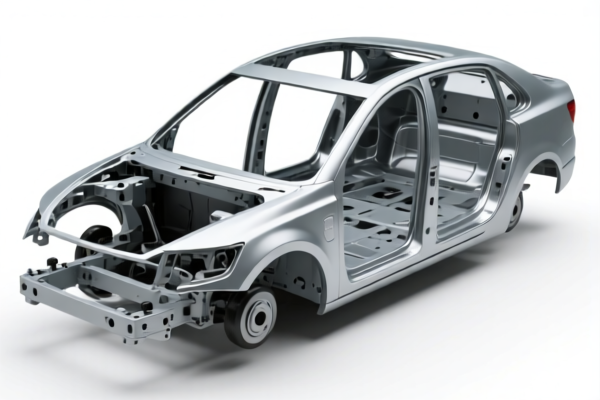
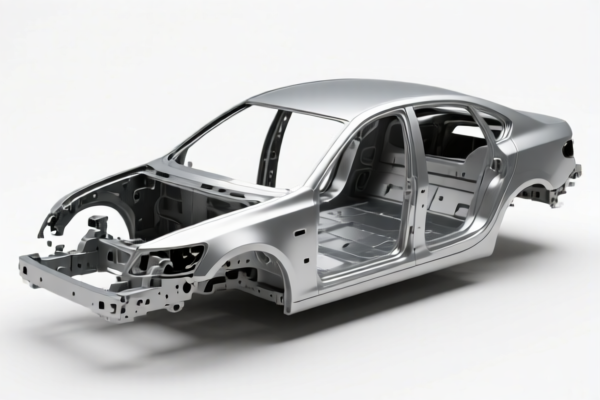
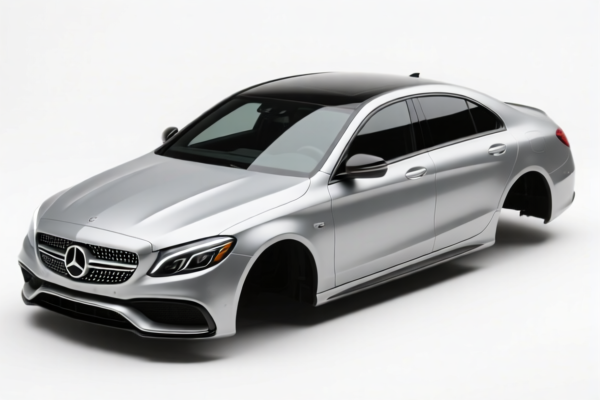
AI分析
🚗 Vehicle Body Parts (8708.21.00.00 vs. Potential Misclassifications)
🌐 HS Code Reference & Customs Clearance Guide | 2026 Latest Tariff Analysis | Professional Clearance Strategy
📌 I. Product Definition: Are You Sure These Are "Body Parts"?
"Vehicle Body Parts" (Vehicle Body Parts) is a broad term in international trade. In the Harmonized System (HS), this typically falls under Chapter 87: Vehicles Other Than Railway or Tramway Rolling Stock.
However, the specific HS Code you provided (8708.21.00.00) refers specifically to "Bumpers and parts thereof".
⚠️ Critical Distinction:
- If the product is indeed a bumper (front/rear impact protection),8708.21.00.00is correct.
- If the product is a general body panel (door, hood, fender, quarter panel) or general hardware,8708.21.00.00may be incorrect, leading to severe under-declaration penalties.
📦 II. HS Code Classification Details (Based on Provided Data)
The user input suggests 8708.21.00.00, but the provided <DATA> suggests five other potential classifications depending on the exact nature of the "Body Parts." Below is the detailed breakdown of why each might apply and the associated tax implications.
⚠️ Warning: The Data Provided Suggests Multiple Potential HS Codes
The <DATA> indicates that "Vehicle Body Parts" is being evaluated against several codes, implying ambiguity in the product description.
| HS Code | Product Description (from Data) | Relevance to "Vehicle Body Parts" |
|---|---|---|
| 8708.10.60.10 | Bumpers and parts thereof (Auto Body Parts) | ✅ High Match if product is a bumper. |
| 8302.30.60.00 | Mounting hardware, fittings, accessories for vehicles | ❌ Low Match unless it's purely hardware (e.g., brackets). |
| 8302.30.30.60 | Mounting hardware, fittings for cars | ❌ Low Match unless it's purely hardware. |
| 8708.29.51.10 | Other body parts and accessories | ✅ High Match if not a bumper (e.g., doors, hoods). |
| 8708.29.25.00 | Other body parts and accessories | ✅ High Match if not a bumper. |
💰 III. 2026 Latest Tariff Rate Breakdown (Including Additional Duties)
✅ Applicable Country: United States (US)
✅ Origin: China (CN) (Implied by the high "Additional Tariffs" mentioned in data)
✅ Effective Time: 2025-11-10 onwards (including subsequent imports)
🎯 1. 8708.10.60.10 — Bumpers and Parts (Steel/Aluminum/Copper)
Use if the part is a bumper and made of steel, aluminum, or copper.
| Item | Content |
|---|---|
| Base Rate | 2.5% |
| Section 301 Tariff | +25.0% |
| Section 232 Tariff | +50.0% (For Steel, Aluminum, Copper products) |
| Total Rate | 87.5% |
| Calculation | CIF Value × 87.5% |
| De Minimis Exemption | ❌ No (High duty prevents de minimis benefit) |
| Legal Basis | Section 301, Section 232, HTSUS 8708.10.60.10 |
📌 Explanation:
- This is the highest possible rate for body parts due to the combination of Section 301 (Trade War) and Section 232 (National Security on Steel/Aluminum). - Crucial: If the bumper is made of plastic, glass, or composite materials, the 50% Section 232 tariff does not apply, potentially lowering the rate to 27.5% (2.5% + 25%).
🎯 2. 8302.30.60.00 / 8302.30.30.60 — Mounting Hardware & Fittings
Use if the "body parts" are actually brackets, hinges, latches, or mounting clips.
| Item | Content |
|---|---|
| Base Rate | 2.0% - 3.5% |
| Section 301 Tariff | +25.0% |
| Section 232 Tariff | +50.0% (If Steel/Aluminum/Copper) |
| Total Rate | 87.0% (Steel/Alu) or 38.5% (Non-metal) |
| Calculation | CIF Value × [Total Rate] |
| De Minimis Exemption | ❌ No |
📌 Explanation:
- If these are plastic clips, the total rate is 38.5% (3.5% base + 25% 301 + no 232).
- If these are steel brackets, the total rate is 87.0% (2.0% base + 25% 301 + 50% 232).
🎯 3. 8708.29.51.10 / 8708.29.25.00 — Other Body Parts (Non-Bumpers)
Use if the product is a door, hood, fender, trunk lid, or general body panel (not a bumper).
| Item | Content |
|---|---|
| Base Rate | 2.5% |
| Section 301 Tariff | +25.0% |
| Section 232 Tariff | +10.0% (Standard for general auto parts under 122 Clause) |
| Total Rate | 2.5% + 35.0% = 37.5% (Approximate based on data format 2.5%+35.0%) |
| Calculation | CIF Value × 37.5% |
| De Minimis Exemption | ❌ No |
📌 Explanation:
- These codes are for general body components.
- The tax detail in the data shows2.5% base + 25% 301 + 10% 122 Clause.
- Note: The data shows2.5% <u></u>+35.0%, which likely means the total effective duty is 37.5% (2.5 + 35). This is significantly cheaper than bumpers (87.5%) if the parts are not made of steel/aluminum subject to Section 232.
🛠️ IV. Customs Clearance Practical Advice (Battle-Tested Pitfall Guide)
✅ 1. Essential Documentation (Do Not Miss)
| Document | Required? | Explanation |
|---|---|---|
| Product Specification Sheet | ✅ Yes | Must clearly state material (Steel, Plastic, Aluminum) to determine Section 232 applicability. |
| Product Photos | ✅ Yes | Clear images showing shape (Bumper vs. Panel vs. Bracket) to justify HS Code. |
| Commercial Invoice | ✅ Yes | Description must be specific (e.g., "Front Bumper Cover, Plastic, PP Material"). Avoid generic "Vehicle Body Parts." |
| Origin Certificate | ✅ Yes | To confirm Chinese origin and assess tariff liability. |
| Bill of Lading | ✅ Yes | To verify shipment details. |
✅ 2. Declaration Strategy (Key Tips)
🔥 "Material Matters, Shape Defines, Name Specifics!"
| Scenario | Correct HS Code | Why? |
|---|---|---|
| Plastic Bumper Cover | 8708.10.60.10 (or similar) |
It is a bumper. No Section 232 (50%) because it's not steel/aluminum. Total ~27.5%. |
| Steel Bumper Bracket | 8302.30.30.60 |
It is hardware. Subject to Section 232 (50%). Total ~87.0%. |
| Steel Door Panel | 8708.29.51.10 |
It is a body part, not a bumper. No Section 232 on auto parts unless specifically classified under steel products. Total ~37.5%. |
| Plastic Clip/Bolt | 8302.30.60.00 |
It is hardware. No Section 232. Total ~38.5%. |
📌 Critical Warning:
- Do NOT use "Vehicle Body Parts" as the sole description. Customs will reject it or misclassify it, leading to audits.
- Specify Material: "Steel" triggers Section 232. "Plastic" does not. This can save you 50% in duties.
✅ 3. Special Circumstances
| Situation | Handling Advice |
|---|---|
| Mixed Materials (e.g., Steel frame with plastic cover) | Declare the primary functional material. If the bumper is mostly plastic, argue for non-Section 232 classification. |
| Aftermarket Parts | Ensure they are not marked with OEM logos unless authorized. Counterfeit claims can lead to seizure. |
| Used Parts | Note: Section 301 and 232 duties still apply to used parts from China. |
| De Minimis ($800) | Not Applicable. High duties prevent de minimis exemption. Always file formal entry. |
🌍 V. Global Market Comparison (2026)
| Country | Recommended HS Code | Duty Rate (China Origin) | Notes |
|---|---|---|---|
| 🇺🇸 USA | 8708.10.60.10 (Bumper) |
87.5% (Steel/Alu) | Highest duty due to 301 + 232. |
| 🇺🇸 USA | 8708.29.51.10 (Body Panel) |
37.5% | Lower if not steel/aluminum hardware. |
| 🇨🇳 China | 8708.10.60.10 |
10% | Standard import duty for China into China? (N/A for export) |
| 🇪🇺 EU | 8708.21.00.00 |
4.5% + Countervailing Duties | Check for EU anti-subsidy measures on auto parts. |
📌 Conclusion:
- USA is the most expensive market for Chinese vehicle body parts due to Section 301 and Section 232.
- Material composition is the #1 factor in duty reduction. Plastic/Composite parts are significantly cheaper to import than Steel/Aluminum.
📌 VI. Common Errors & Pitfalls (Lessons Learned)
❌ Error 1: Classifying a Steel Bumper as a generic "Body Part" (8708.29)
👉 Consequence: Customs may reclassify to 8708.10 and add Section 232 (50%), leading to back-taxes + penalties.
❌ Error 2: Declaring Plastic Hardware as Steel to avoid paperwork
👉 Consequence: If tested and found to be plastic, you might save 50%, but if caught lying, you face fraud charges. Always be accurate.
❌ Error 3: Using "Vehicle Body Parts" in description
👉 Consequence: Customs may request additional info, causing delays and potential detention.
❌ Error 4: Ignoring Section 232 for Steel/Aluminum
👉 Consequence: Paying only 27.5% when you owe 77.5% or 87.5%.
✅ Correct Approach:
"Front Bumper Cover, Plastic (PP), For Toyota Camry, Model XYZ" → 8708.10.60.10 (No 232)
"Steel Bumper Reinforcement Bar, For Ford F-150" → 8708.10.60.10 (With 232)
🎯 VII. Conclusion: Precision Classification Saves Money!
🎯 Remember:
🔹 "Material is Key: Steel/Alu = 50% Extra. Plastic = Save Big!"
🔹 "Bumper vs. Panel: Bumpers have specific codes. Panels have others. Don't mix them!"
🔹 "301 + 232 + Base = The Total Cost. Plan for 87.5% for Steel Bumpers."
📌 Pro Tip:
If your parts are Plastic or Composite, ensure your invoice clearly states "Non-Steel, Non-Aluminum Material" to avoid unnecessary Section 232 duties.
Request a Pre-Ruling from CBP if the material is ambiguous.
📣 Act Now:
📞 Consult a customs broker with material-specific HS Code expertise.
🚀 Optimize your supply chain by sourcing non-steel components if possible.
💼 Your duty bill is as precise as your product description.
✨ Professional Customs Clearance Starts with Accurate Classification!
💼 Every Percent Saved is Pure Profit!
用户评价
关于 HS 编码归类
协调制度(HS)是由世界海关组织(WCO)制定的国际贸易商品分类标准。全球 200 多个国家采用 HS 系统作为海关关税、贸易统计和进出口监管的基础。
每个 HS 编码遵循以下层级结构:
- 章(2 位)——商品大类(例如:第 84 章:机器和机械设备)
- 品目(4 位)——章内的更具体分类
- 子目(6 位)——国际通用细分,所有 WCO 成员国统一使用
- 本国细分(8-10 位)——各国自行扩展的细分编码,如美国 HTSUS 10 位编码
正确的 HS 编码归类对于顺利通关、准确缴纳关税和遵守贸易法规至关重要。错误归类可能导致海关延误、多缴关税或罚款。
从CN进口到US时,适用的关税税率可能包括:
- 最惠国(MFN)税率——适用于 WTO 成员国的标准关税税率
- 普通税率——适用于无贸易协定国家
- 贸易救济关税——附加关税,如 301 条款(反倾销)、232 条款(国家安全)或反补贴税
本页内容仅供参考。如需正式归类,请咨询当地海关或持牌报关代理。