Vintage Dress
CN → US商品图片
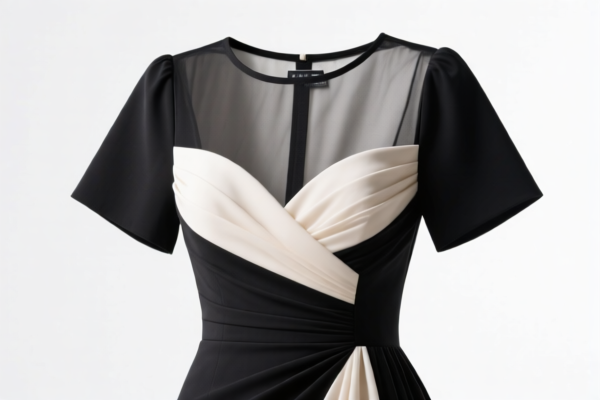

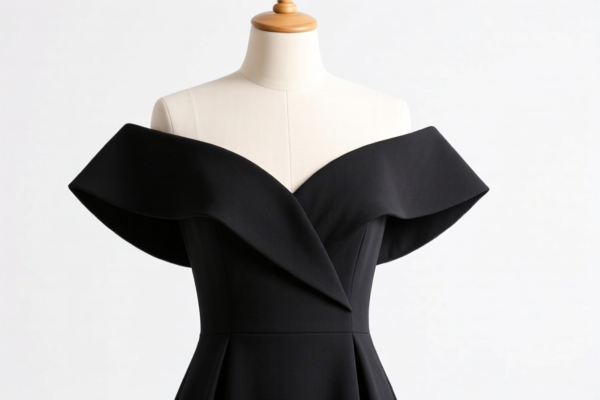
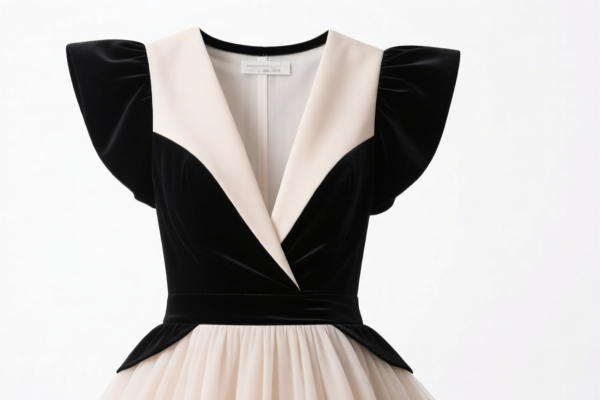
AI分析
👗 Vintage Dresses: A Fashionable Time-Traveler’s Guide to Customs Clearance
🌐 HS Code Reference & Customs Clearance Guide | 2026 Latest Tariff Analysis | Professional Entry Strategy
📌 I. Product Definition: What Makes a Dress “Vintage”?
A "Vintage Dress" in international trade usually refers to second-hand garments that have historical or collectible value, but from a customs perspective, it is often classified based on its material, style, and purpose. The key is whether it is new, second-hand, or antique.
⚠️ Critical Distinction:
- Second-Hand Clothing: Generally classified under HS Code 6309.00.00.00.
- New Vintage-Style Dresses: Classified under HS Codes for women’s dresses (e.g., 6204.42.00.00 for cotton, 6204.43.00.00 for synthetic fibers).
- Antiques (Over 100 years old): May qualify for duty-free treatment in some jurisdictions under HS Chapter 97, but requires proof of age.
📦 II. HS Code Classification Details (2026 Latest Tariff Authority Comparison)
| HS Code | Product Description | Applicable Scenario | Material/Type |
|---|---|---|---|
6309.00.00.00 |
Second-hand clothing | Used vintage dresses, thrift store exports | Any fabric, used condition |
6204.42.00.00 |
Women’s dresses, of cotton | New dresses with vintage style (cotton) | Cotton fabric |
6204.43.00.00 |
Women’s dresses, of synthetic fibers | New dresses with vintage style (polyester, etc.) | Synthetic fibers |
6204.44.00.00 |
Women’s dresses, of man-made fibers | New dresses with vintage style (rayon, viscose) | Man-made fibers |
6204.49.00.00 |
Women’s dresses, of other textiles | New dresses with vintage style (silk, wool, blends) | Other textiles |
🔍 Key Reminder:
- Used clothing must be clearly declared as “Second-Hand” to avoid misclassification.
- If the dress is new but has a vintage design, it should be classified under the appropriate Chapter 62 code based on material.
- Antiques (over 100 years old) are not covered by these codes and require separate documentation for potential duty-free entry.
💰 III. 2026 Latest Tariff Rate Details (Including Additional Taxes, Policy Additions)
✅ Applicable Country: United States (US)
✅ Country of Origin: China (CN)
✅ Effective Time: November 10, 2025 (including subsequent imports)
🎯 1. 6309.00.00.00 —— Second-Hand Clothing (Vintage Dresses)
| Item | Content |
|---|---|
| Base Tariff Rate | 0% (ad valorem) |
| USITC Additional Tax | +25% (from USITC Footnote 9903.88.01) |
| IEEPA Additional Tax | +10% (targeting China/Hong Kong products, from November 10, 2025) |
| Total Tariff Rate | 45% |
| Tax Calculation | CIF Value × 45% |
| Eligibility for De Minimis Exemption | ❌ No (deny_de_minimis) |
| Legal Basis Path | IEEPA:9903.01.25 → IEEPA:9903.01.24 → USITC:6309.00.00.00 → FOOTNOTE:9903.88.01 |
📌 Explanation:
- The “USITC Additional Tax 25%” is from the “Additional Tariffs” under Section 301 of the US Trade Act;
- The “IEEPA 10%” is the additional tariff on Chinese products under the International Emergency Economic Powers Act;
- Total 45%, which is considered a very high tariff, and must be anticipated in advance!
🎯 2. 6204.42.00.00 —— Women’s Dresses, of Cotton (New Vintage-Style)
| Item | Content |
|---|---|
| Base Tariff Rate | 16% |
| USITC Additional Tax | +25% |
| IEEPA Additional Tax | +10% |
| Total Tariff Rate | 51% |
| Tax Calculation | CIF Value × 51% |
| Eligibility for De Minimis Exemption | ❌ No |
| Legal Basis Path | IEEPA:9903.01.25 → IEEPA:9903.01.24 → USITC:6204.42.00.00 → FOOTNOTE:9903.88.01 |
📌 Note:
- Even if the dress is new, if it is made of cotton and imported from China, it is subject to the same high additional tariffs.
- Synthetic fiber dresses (6204.43.00.00) also face the same total rate of 51%.
🛠️ IV. Customs Clearance Practical Suggestions (Battlefield Pit-Avoidance Guide)
✅ 1. Preparation of Material Checklist (Essential)
| Material | Must Provide | Explanation |
|---|---|---|
| ✅ Product Specification Sheet | ✔️ | Includes size, material composition, style description |
| ✅ Photos of Products (including labels) | ✔️ | Clear images of tags, labels, and overall appearance |
| ✅ Certificate of Origin (CO) | ✔️ | If not from China, applicable preferential tariffs may apply |
| ✅ Commercial Invoice | ✔️ | Clearly state “Vintage Dress” or “Second-Hand Clothing” |
| ✅ Packing List | ✔️ | Detail the relationship between items to avoid split declarations |
✅ 2. Declaration Techniques (Key Mantra)
🔥 “Used is 6309, New is 6204, Material Determines Code!”
| Situation | Correct Declaration Method | Incorrect Practice |
|---|---|---|
| Second-Hand Vintage Dress | 6309.00.00.00 |
Declare as new dress → Higher tariff |
| New Vintage-Style Cotton Dress | 6204.42.00.00 |
Declare as second-hand → Misclassification penalty |
| New Vintage-Style Synthetic Dress | 6204.43.00.00 |
Declare as cotton → Misclassification penalty |
| Antique Dress (Over 100 Years) | Chapter 97 (Antiques) | Declare under Chapter 62/63 → Duty may not be exempted without proof |
✅ 3. Special Case Handling
| Situation | Handling Suggestions |
|---|---|
| OEM Vintage-Style Dresses | Provide customer orders + design drawings to avoid being deemed as “non-standard” |
| Mixed Lots (Used + New) | Must be declared separately; do not mix |
| Dresses with Embroidery/Beading | Still classified under the same HS code; no special code for decoration |
| Antique Dresses | Provide proof of age (e.g., appraisal, historical records) for potential duty-free treatment |
🌍 V. Global Major Market Customs Clearance Comparison (2026 Latest)
| Country/Region | Recommended HS Code | Tariff | Certification Requirements | Remarks |
|---|---|---|---|---|
| 🇺🇸 United States | 6309.00.00.00 (Used) |
45% (China origin) | None | High additional tariff |
| 🇨🇳 China | 6309.00.00.00 (Used) |
5% | None | No additional tariff |
| 🇪🇺 European Union | 6309.00.00.00 (Used) |
0% (if compliant) | CE (if applicable) | No additional tariff |
| 🇦🇺 Australia | 6309.00.00.00 (Used) |
5% | RCM | No additional tariff |
| 🇯🇵 Japan | 6309.00.00.00 (Used) |
0% | PSE | No additional tariff |
📌 Conclusion:
- The United States is the only major market imposing high additional tariffs on second-hand clothing from China;
- For new vintage-style dresses, the total tariff is also 51% under current policies;
- China-origin used clothing entering the US faces a 45% total tariff, which is extremely high. It is recommended to evaluate in advance whether to adjust the supply chain or source from other countries.
📌 VI. Common Errors & Pit-Avoidance Guide (Blood-Soaked Lessons)
❌ Error 1: Declaring second-hand dresses as new dresses
👉 Consequence: Tariff drops from 45% to 51% → Additional tax + penalty!
❌ Error 2: Declaring new vintage-style dresses as second-hand
👉 Consequence: Tariff drops from 51% to 45% → Risk of audit and back tax!
❌ Error 3: Failing to provide proof of age for antique dresses
👉 Consequence: Unable to enjoy duty-free treatment → Full tariff applies!
❌ Error 4: Using “Vintage Dress” as the only description without material or condition details
👉 Consequence: Customs cannot determine classification → Delay in release or return!
✅ Correct Practice:
“Second-Hand Vintage Dress, 1980s Style, Polyester Fabric, Size M, Used Condition”
OR
“New Women’s Dress, Vintage Style, 100% Cotton, Size L, New Condition”
🎯 VII. Conclusion: Professional Declaration, Save Time, Cut Costs, Boost Efficiency!
🎯 Remember the Mantra:
🔹 “Used is 6309, New is 6204, Material Determines Code!”
🔹 “HS Code Determines Destiny, Tariff Differs by 5 Points, One Step Wrong, Thousands in Tax!”
📌 Tips:
- If your vintage dresses are originating from Vietnam, Mexico, Thailand, Malaysia, you can apply for IEEPA Exemption, and the tariff is only 0%~5%;
- It is recommended to apply for an Advance Ruling in advance to avoid customs clearance risks.
📣 Act Immediately:
📞 Contact professional customs brokers + Provide product photos + Apply for HS Code Advance Ruling
🚀 Let your vintage dresses pass customs smoothly, efficiently go global, and double profits!
✨ Professional Customs Clearance Starts with Precise Classification!
💼 Every Penny of Your Cost Deserves to Be Calculated Precisely!
用户评价
关于 HS 编码归类
协调制度(HS)是由世界海关组织(WCO)制定的国际贸易商品分类标准。全球 200 多个国家采用 HS 系统作为海关关税、贸易统计和进出口监管的基础。
每个 HS 编码遵循以下层级结构:
- 章(2 位)——商品大类(例如:第 84 章:机器和机械设备)
- 品目(4 位)——章内的更具体分类
- 子目(6 位)——国际通用细分,所有 WCO 成员国统一使用
- 本国细分(8-10 位)——各国自行扩展的细分编码,如美国 HTSUS 10 位编码
正确的 HS 编码归类对于顺利通关、准确缴纳关税和遵守贸易法规至关重要。错误归类可能导致海关延误、多缴关税或罚款。
从CN进口到US时,适用的关税税率可能包括:
- 最惠国(MFN)税率——适用于 WTO 成员国的标准关税税率
- 普通税率——适用于无贸易协定国家
- 贸易救济关税——附加关税,如 301 条款(反倾销)、232 条款(国家安全)或反补贴税
本页内容仅供参考。如需正式归类,请咨询当地海关或持牌报关代理。