Vintage Dress
CN → USProduct Images
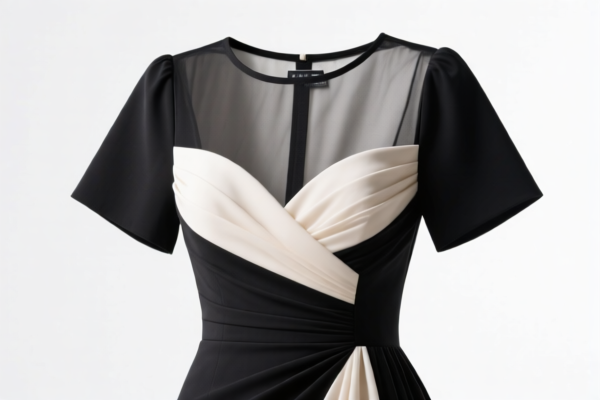

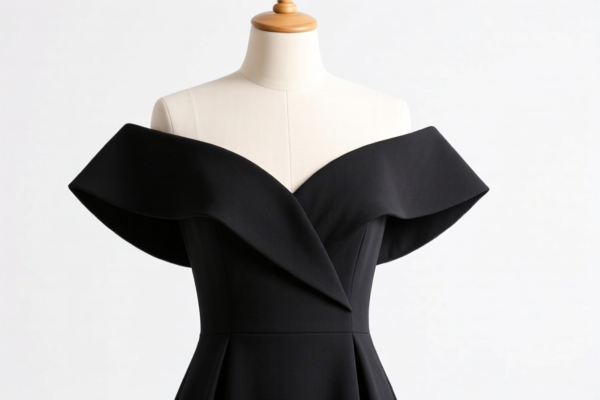
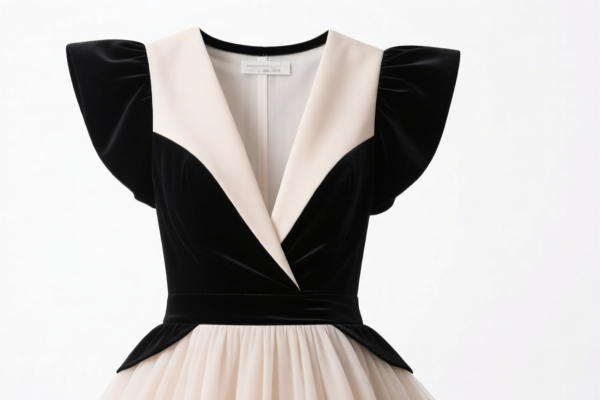
AI Analysis
👗 Vintage Dresses: A Fashionable Time-Traveler’s Guide to Customs Clearance
🌐 HS Code Reference & Customs Clearance Guide | 2026 Latest Tariff Analysis | Professional Entry Strategy
📌 I. Product Definition: What Makes a Dress “Vintage”?
A "Vintage Dress" in international trade usually refers to second-hand garments that have historical or collectible value, but from a customs perspective, it is often classified based on its material, style, and purpose. The key is whether it is new, second-hand, or antique.
⚠️ Critical Distinction:
- Second-Hand Clothing: Generally classified under HS Code 6309.00.00.00.
- New Vintage-Style Dresses: Classified under HS Codes for women’s dresses (e.g., 6204.42.00.00 for cotton, 6204.43.00.00 for synthetic fibers).
- Antiques (Over 100 years old): May qualify for duty-free treatment in some jurisdictions under HS Chapter 97, but requires proof of age.
📦 II. HS Code Classification Details (2026 Latest Tariff Authority Comparison)
| HS Code | Product Description | Applicable Scenario | Material/Type |
|---|---|---|---|
6309.00.00.00 |
Second-hand clothing | Used vintage dresses, thrift store exports | Any fabric, used condition |
6204.42.00.00 |
Women’s dresses, of cotton | New dresses with vintage style (cotton) | Cotton fabric |
6204.43.00.00 |
Women’s dresses, of synthetic fibers | New dresses with vintage style (polyester, etc.) | Synthetic fibers |
6204.44.00.00 |
Women’s dresses, of man-made fibers | New dresses with vintage style (rayon, viscose) | Man-made fibers |
6204.49.00.00 |
Women’s dresses, of other textiles | New dresses with vintage style (silk, wool, blends) | Other textiles |
🔍 Key Reminder:
- Used clothing must be clearly declared as “Second-Hand” to avoid misclassification.
- If the dress is new but has a vintage design, it should be classified under the appropriate Chapter 62 code based on material.
- Antiques (over 100 years old) are not covered by these codes and require separate documentation for potential duty-free entry.
💰 III. 2026 Latest Tariff Rate Details (Including Additional Taxes, Policy Additions)
✅ Applicable Country: United States (US)
✅ Country of Origin: China (CN)
✅ Effective Time: November 10, 2025 (including subsequent imports)
🎯 1. 6309.00.00.00 —— Second-Hand Clothing (Vintage Dresses)
| Item | Content |
|---|---|
| Base Tariff Rate | 0% (ad valorem) |
| USITC Additional Tax | +25% (from USITC Footnote 9903.88.01) |
| IEEPA Additional Tax | +10% (targeting China/Hong Kong products, from November 10, 2025) |
| Total Tariff Rate | 45% |
| Tax Calculation | CIF Value × 45% |
| Eligibility for De Minimis Exemption | ❌ No (deny_de_minimis) |
| Legal Basis Path | IEEPA:9903.01.25 → IEEPA:9903.01.24 → USITC:6309.00.00.00 → FOOTNOTE:9903.88.01 |
📌 Explanation:
- The “USITC Additional Tax 25%” is from the “Additional Tariffs” under Section 301 of the US Trade Act;
- The “IEEPA 10%” is the additional tariff on Chinese products under the International Emergency Economic Powers Act;
- Total 45%, which is considered a very high tariff, and must be anticipated in advance!
🎯 2. 6204.42.00.00 —— Women’s Dresses, of Cotton (New Vintage-Style)
| Item | Content |
|---|---|
| Base Tariff Rate | 16% |
| USITC Additional Tax | +25% |
| IEEPA Additional Tax | +10% |
| Total Tariff Rate | 51% |
| Tax Calculation | CIF Value × 51% |
| Eligibility for De Minimis Exemption | ❌ No |
| Legal Basis Path | IEEPA:9903.01.25 → IEEPA:9903.01.24 → USITC:6204.42.00.00 → FOOTNOTE:9903.88.01 |
📌 Note:
- Even if the dress is new, if it is made of cotton and imported from China, it is subject to the same high additional tariffs.
- Synthetic fiber dresses (6204.43.00.00) also face the same total rate of 51%.
🛠️ IV. Customs Clearance Practical Suggestions (Battlefield Pit-Avoidance Guide)
✅ 1. Preparation of Material Checklist (Essential)
| Material | Must Provide | Explanation |
|---|---|---|
| ✅ Product Specification Sheet | ✔️ | Includes size, material composition, style description |
| ✅ Photos of Products (including labels) | ✔️ | Clear images of tags, labels, and overall appearance |
| ✅ Certificate of Origin (CO) | ✔️ | If not from China, applicable preferential tariffs may apply |
| ✅ Commercial Invoice | ✔️ | Clearly state “Vintage Dress” or “Second-Hand Clothing” |
| ✅ Packing List | ✔️ | Detail the relationship between items to avoid split declarations |
✅ 2. Declaration Techniques (Key Mantra)
🔥 “Used is 6309, New is 6204, Material Determines Code!”
| Situation | Correct Declaration Method | Incorrect Practice |
|---|---|---|
| Second-Hand Vintage Dress | 6309.00.00.00 |
Declare as new dress → Higher tariff |
| New Vintage-Style Cotton Dress | 6204.42.00.00 |
Declare as second-hand → Misclassification penalty |
| New Vintage-Style Synthetic Dress | 6204.43.00.00 |
Declare as cotton → Misclassification penalty |
| Antique Dress (Over 100 Years) | Chapter 97 (Antiques) | Declare under Chapter 62/63 → Duty may not be exempted without proof |
✅ 3. Special Case Handling
| Situation | Handling Suggestions |
|---|---|
| OEM Vintage-Style Dresses | Provide customer orders + design drawings to avoid being deemed as “non-standard” |
| Mixed Lots (Used + New) | Must be declared separately; do not mix |
| Dresses with Embroidery/Beading | Still classified under the same HS code; no special code for decoration |
| Antique Dresses | Provide proof of age (e.g., appraisal, historical records) for potential duty-free treatment |
🌍 V. Global Major Market Customs Clearance Comparison (2026 Latest)
| Country/Region | Recommended HS Code | Tariff | Certification Requirements | Remarks |
|---|---|---|---|---|
| 🇺🇸 United States | 6309.00.00.00 (Used) |
45% (China origin) | None | High additional tariff |
| 🇨🇳 China | 6309.00.00.00 (Used) |
5% | None | No additional tariff |
| 🇪🇺 European Union | 6309.00.00.00 (Used) |
0% (if compliant) | CE (if applicable) | No additional tariff |
| 🇦🇺 Australia | 6309.00.00.00 (Used) |
5% | RCM | No additional tariff |
| 🇯🇵 Japan | 6309.00.00.00 (Used) |
0% | PSE | No additional tariff |
📌 Conclusion:
- The United States is the only major market imposing high additional tariffs on second-hand clothing from China;
- For new vintage-style dresses, the total tariff is also 51% under current policies;
- China-origin used clothing entering the US faces a 45% total tariff, which is extremely high. It is recommended to evaluate in advance whether to adjust the supply chain or source from other countries.
📌 VI. Common Errors & Pit-Avoidance Guide (Blood-Soaked Lessons)
❌ Error 1: Declaring second-hand dresses as new dresses
👉 Consequence: Tariff drops from 45% to 51% → Additional tax + penalty!
❌ Error 2: Declaring new vintage-style dresses as second-hand
👉 Consequence: Tariff drops from 51% to 45% → Risk of audit and back tax!
❌ Error 3: Failing to provide proof of age for antique dresses
👉 Consequence: Unable to enjoy duty-free treatment → Full tariff applies!
❌ Error 4: Using “Vintage Dress” as the only description without material or condition details
👉 Consequence: Customs cannot determine classification → Delay in release or return!
✅ Correct Practice:
“Second-Hand Vintage Dress, 1980s Style, Polyester Fabric, Size M, Used Condition”
OR
“New Women’s Dress, Vintage Style, 100% Cotton, Size L, New Condition”
🎯 VII. Conclusion: Professional Declaration, Save Time, Cut Costs, Boost Efficiency!
🎯 Remember the Mantra:
🔹 “Used is 6309, New is 6204, Material Determines Code!”
🔹 “HS Code Determines Destiny, Tariff Differs by 5 Points, One Step Wrong, Thousands in Tax!”
📌 Tips:
- If your vintage dresses are originating from Vietnam, Mexico, Thailand, Malaysia, you can apply for IEEPA Exemption, and the tariff is only 0%~5%;
- It is recommended to apply for an Advance Ruling in advance to avoid customs clearance risks.
📣 Act Immediately:
📞 Contact professional customs brokers + Provide product photos + Apply for HS Code Advance Ruling
🚀 Let your vintage dresses pass customs smoothly, efficiently go global, and double profits!
✨ Professional Customs Clearance Starts with Precise Classification!
💼 Every Penny of Your Cost Deserves to Be Calculated Precisely!
Customer Reviews
About HS Code Classification
The Harmonized System (HS) is an internationally standardized nomenclature developed by the World Customs Organization (WCO) to classify traded products. Over 200 countries use the HS system as the basis for customs tariffs, trade statistics, and import/export regulations.
Each HS code follows a hierarchical structure:
- Chapter (2 digits) — Broad category of goods (e.g., Chapter 84: Machinery and Mechanical Appliances)
- Heading (4 digits) — More specific grouping within the chapter
- Subheading (6 digits) — Internationally standardized breakdown, used by all WCO member countries
- National subdivisions (8-10 digits) — Country-specific extensions for further classification, such as US HTSUS 10-digit codes
Correct HS code classification is essential for smooth customs clearance, accurate duty payment, and compliance with trade regulations. Misclassification can lead to customs delays, overpayment of duties, or penalties.
When importing from CN to US, the applicable tariff rates may include:
- Most-Favored-Nation (MFN) rate — The standard duty rate applied to WTO members
- General rate — Applied to countries without trade agreements
- Trade remedy duties — Additional tariffs such as Section 301 (anti-dumping), Section 232 (national security), or countervailing duties
The information provided on this page is for reference purposes only. For official classification, please consult with your local customs authority or a licensed customs broker.