Vinyl Acetate Emulsion for Textiles
CN → US| HS编码 | 关税税率 | 原产国 | 目的国 | 文档 |
|---|---|---|---|---|
| 3905120000 | 39.0% | CN | US | 官方文档 |
| 3905210000 | 39.0% | CN | US | 官方文档 |
| 3506915000 | 37.1% | CN | US | 官方文档 |
| 3506990000 | 37.1% | CN | US | 官方文档 |
| 3506915000 | 37.1% | CN | US | 官方文档 |
商品图片


AI分析
🧪 Vinyl Acetate Emulsion for Textiles (Textile Adhesives & Binders)
🌐 HS Code Reference & Customs Clearance Guide | 2026 Latest Tariff Analysis | Professional Strategy for Chinese Origin Goods
📌 I. Product Definition & Classification: Do You Truly Understand "Vinyl Acetate Emulsion"?
Vinyl Acetate Emulsion is a water-based dispersion of polyvinyl acetate (PVAc) or vinyl acetate copolymers. In international trade, particularly for textile applications, it serves as a critical binder, adhesive, or sizing agent.
However, its classification is not straightforward. It falls into a complex intersection between Plastics (Chapter 39) and Prepared Rubber/Plastic Adhesives (Chapter 35). The key lies in its chemical state, purpose, and preparation method.
⚠️ Key Distinction Point:
- If it is a pure polymer dispersion intended for further processing or mixing → Often classified under Chapter 39 (Plastics).
- If it is formulated/prepared specifically as a glue/adhesive (mixed with fillers, thickeners, or other agents for immediate adhesive use) → Often classified under Chapter 35 (Prepared Adhesives).
📦 II. HS Code Classification Details (2026 Latest Tariff Authority Cross-Reference)
| HS Code | Product Description | Application Context | Tax Rate (China to US) | Legal Basis |
|---|---|---|---|---|
3905.12.00.00 |
Polyvinyl Acetate, in primary forms; dispersions in non-aqueous media OR water dispersions (Note: Specific chemical form matters) | Pure PVAc emulsion, unmodified, used as a raw material for further polymerization or blending | 39.0% | HTSUS 3905.12 + Section 301 + IEEPA |
3905.21.00.00 |
Copolymers of vinyl acetate, in primary forms; dispersions | Copolymer emulsions (e.g., EVA, VAE) in water dispersion form, used as base resins | 39.0% | HTSUS 3905.21 + Section 301 + IEEPA |
3506.91.50.00 |
Prepared adhesives; based on polymers of heading 3901 to 3914; for woodworking OR general polymer-based | Textile-grade VAE emulsions that are formulated/prepared (mixed with additives) for immediate adhesive/binder use in textiles | 37.1% | HTSUS 3506.91 + Section 301 + IEEPA |
3506.99.00.00 |
Prepared adhesives; other; other | Generic prepared polymer adhesives not specifically listed under 3506.91/92 | 37.1% | HTSUS 3506.99 + Section 301 + IEEPA |
🔍 Critical Note:
- HS Code3905.12.00.00&3905.21.00.00: These are Chapter 39 classifications. They cover the chemical substance (emulsion/dispersion) as a plastic material.
- HS Code3506.91.50.00&3506.99.00.00: These are Chapter 35 classifications. They cover the prepared adhesive (the functional product).
- For Textile Applications: If the emulsion is sold as a finished adhesive/binder for textiles (e.g., non-woven bonding, fiber sizing), Customs often prefers Chapter 35. If it is a raw chemical intermediate, Chapter 39 may apply.
- Tax Difference: Chapter 39 (39.0%) vs. Chapter 35 (37.1%). Chapter 35 is slightly cheaper but requires proof of "prepared adhesive" status.
💰 III. 2026 Latest Tariff Rate Breakdown (Detailed Add-ons & Policies)
✅ Applicable Country: United States (US)
✅ Origin: China (CN)
✅ Effective Date: November 10, 2025 onwards (including subsequent imports)
🎯 1. 3905.12.00.00 & 3905.21.00.00 — Polyvinyl Acetate/Vinyl Acetate Copolymers (Plastics Chapter)
| Item | Content |
|---|---|
| Base Tariff | 4.0% (ad valorem) |
| Section 301 Tariff | +25.0% (Under USITC Footnote 9903.88.01, for Chinese origin) |
| IEEPA Tariff | +10.0% (Under IEEPA Executive Order 14257, for Chinese origin) |
| Total Tariff Rate | 39.0% |
| Tax Calculation | CIF Value × 39.0% |
| De Minimis Exemption | ❌ Not Eligible (deny_de_minimis) |
| Legal Path | USITC:3905.12.00.00 → SECTION_301:9903.88.01 → IEEPA:9903.01.24 |
📌 Explanation:
- These HS codes fall under Section 301 (List 3/4A products), triggering a 25% surcharge.
- Additionally, IEEPA 10% applies to all Chinese-origin goods under the latest executive orders.
- Total: 4.0% + 25.0% + 10.0% = 39.0%.
🎯 2. 3506.91.50.00 & 3506.99.00.00 — Prepared Adhesives (Chapter 35)
| Item | Content |
|---|---|
| Base Tariff | 2.1% (ad valorem) |
| Section 301 Tariff | +25.0% (Under USITC Footnote 9903.88.01, for Chinese origin) |
| IEEPA Tariff | +10.0% (Under IEEPA Executive Order 14257, for Chinese origin) |
| Total Tariff Rate | 37.1% |
| Tax Calculation | CIF Value × 37.1% |
| De Minimis Exemption | ❌ Not Eligible (deny_de_minimis) |
| Legal Path | USITC:3506.91.50.00 → SECTION_301:9903.88.01 → IEEPA:9903.01.24 |
📌 Explanation:
- Chapter 35 adhesives have a lower base rate (2.1%) compared to Chapter 39 (4.0%).
- The Section 301 (25%) and IEEPA (10%) surcharges remain the same.
- Total: 2.1% + 25.0% + 10.0% = 37.1%.
- Savings: Choosing Chapter 35 can save 1.9% on the CIF value.
🛠️ IV. Customs Clearance Practical Advice (Avoid Pitfalls)
✅ 1. Documentation Checklist (Mandatory)
| Document | Required | Explanation |
|---|---|---|
| ✅ Technical Data Sheet (TDS) | ✔️ | Must specify: Chemical composition, % solids, pH, viscosity, intended use (e.g., "Textile Binder"). |
| ✅ Formula/Composition List | ✔️ | Detailed breakdown of ingredients (Vinyl Acetate, Water, Additives) to prove if it's "Prepared Adhesive" or "Raw Polymer". |
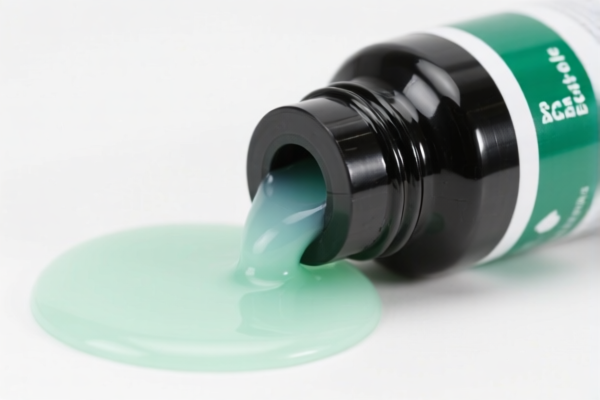
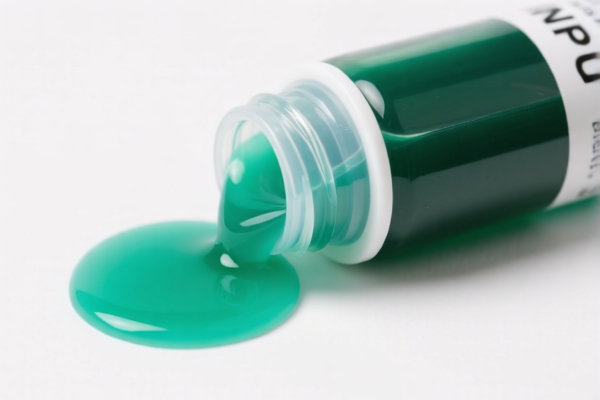
| ✅ Product Photographs | ✔️ | Show container, label, MSDS. |
| ✅ MSDS (SDS) | ✔️ | Safety Data Sheet, especially for flammability and environmental compliance. |
| ✅ Commercial Invoice | ✔️ | Clearly state: "Vinyl Acetate Emulsion for Textile Adhesive/Binder, HS Code: XXXX". |
| ✅ Certificate of Origin (CO) | ✔️ | To confirm Chinese origin (if applicable) and avoid misdeclaration. |
✅ 2. Declaration Strategy (Key Mantra)
🔥 “Raw Polymer → Ch39; Prepared Glue → Ch35. Use Case Matters!”
| Scenario | Correct HS Code | Incorrect HS Code | Consequence |
|---|---|---|---|
| Pure PVAc Emulsion (no additives, sold as raw material) | 3905.12.00.00 / 3905.21.00.00 |
3506.91.50.00 |
Risk of reclassification + penalty if proved to be "prepared". |
| Textile VAE Emulsion (formulated with thickeners/fillers, ready for use) | 3506.91.50.00 |
3905.12.00.00 |
Overpaid tax (39.0% vs 37.1%). Small savings, but better to claim correct duty. |
| Generic Polymer Adhesive (not specific to woodworking/textile) | 3506.99.00.00 |
3905.xx |
Risk of audit if not clearly "prepared". |
📌 Critical Reminder:
- If you declare as Chapter 39, you must prove it is a primary form (raw chemical).
- If you declare as Chapter 35, you must prove it is a prepared adhesive (formulated for specific use, e.g., textile bonding).
- For Textile Applications: Most commercial VAE emulsions are formulated with additives for stability, viscosity, and bonding performance. Therefore,3506.91.50.00is often more accurate and cost-effective.
✅ 3. Special Handling
| Situation | Advice |
|---|---|
| OEM Custom Formulation | Provide customer specs + formulation details. Prove it is custom-prepared for textile use → Supports Ch35. |
| Bulk Tanker vs. Drum | Classification depends on product nature, not packaging. Ensure documentation matches product specs. |
| Mixed Shipments | If shipment contains both raw PVAc and prepared adhesive, split declarations are mandatory. Do not mix. |
| Environmental Compliance | Vinyl Acetate Emulsions may contain VOCs. Ensure EPA/California CARB compliance for US import. Provide VOC content declaration. |
🌍 V. Global Market Comparison (2026 Latest)
| Country/Region | Recommended HS Code | Tariff (China Origin) | Certification | Notes |
|---|---|---|---|---|
| 🇺🇸 USA | 3506.91.50.00 or 3905.12.00.00 |
37.1% (Ch35) or 39.0% (Ch39) | VOC Compliance + SDS | High scrutiny on "prepared" vs "raw". |
| 🇨🇳 China | 3506.91.50.00 or 3905.12.00.00 |
2.1% (Ch35) or 4.0% (Ch39) | None | Low base tariff, no Section 301. |
| 🇪🇺 EU | 3905.12.00 or 3506.91 |
~2.5% (Ch39) or ~3.5% (Ch35) | REACH + CLP | No Section 301. REACH registration required. |
| 🇦🇺 Australia | 3506.91.00 |
5.0% | AICIS | No Section 301. |
| 🇯🇵 Japan | 3506.91 |
3.2% | Fertilizer Law (if applicable) | No Section 301. |
📌 Conclusion:
- USA is the most expensive market due to Section 301 + IEEPA.
- EU/Australia/Japan have no punitive tariffs, but regulatory compliance (REACH, AICIS) is strict.
- Optimization: For US imports, claim3506.91.50.00if the product is a prepared textile adhesive to save 1.9%.
📌 VI. Common Mistakes & Pitfalls (Lessons Learned)
❌ Mistake 1: Declaring "Vinyl Acetate Emulsion" generically without specifying chemical form vs. prepared adhesive.
👉 Consequence: Customs may reclassify to the wrong chapter, leading to audit, back taxes, and penalties.
❌ Mistake 2: Assuming all emulsions are Ch39.
👉 Consequence: Overpaying 1.9% tariff. If the product is formulated for immediate use (e.g., textile bonding), Ch35 is more accurate.
❌ Mistake 3: Ignoring VOC/EPA compliance.
👉 Consequence: Cargo detained at port due to environmental violations. Vinyl Acetate Emulsions can have high VOC content.
❌ Mistake 4: Not providing Technical Data Sheet (TDS).
👉 Consequence: Customs cannot verify "prepared" status → Delayed clearance or default to Ch39 (higher base rate).
✅ Correct Approach:
“Prepared Polyvinyl Acetate Emulsion Adhesive for Textile Bonding, Formulated with Thickeners and Stabilizers, HS Code: 3506.91.50.00, VOC: XX g/L”
🎯 VII. Conclusion: Precision in Classification, Profit in Clearance
🎯 Key Takeaway:
🔹 “Raw Polymer → Ch39 (39.0%); Prepared Textile Adhesive → Ch35 (37.1%).”
🔹 “1.9% Savings per CIF Value is Significant for Bulk Shipments!”
🔹 “Documentation is Key: TDS + Formula = Proof of Prepared Status.”
📌 Pro Tip:
- If your product is custom-formulated for textile mills, explicitly state "Prepared Adhesive for Textile Use" on the invoice.
- Apply for an Advance Ruling (APA) from US Customs if unsure. This provides legal certainty for future shipments.
- Monitor IEEPA updates: Tariff policies may change. Stay compliant!
📣 Immediate Action:
📞 Consult a Licensed Customs Broker
📄 Prepare TDS + Formula + VOC Declaration
🚀 Optimize HS Code Selection to Save 1.9% on Every Shipment
✨ Professional Customs Clearance Starts with Accurate Classification!
💼 Every Percent Matters in Global Trade!
用户评价
关于 HS 编码归类
协调制度(HS)是由世界海关组织(WCO)制定的国际贸易商品分类标准。全球 200 多个国家采用 HS 系统作为海关关税、贸易统计和进出口监管的基础。
每个 HS 编码遵循以下层级结构:
- 章(2 位)——商品大类(例如:第 84 章:机器和机械设备)
- 品目(4 位)——章内的更具体分类
- 子目(6 位)——国际通用细分,所有 WCO 成员国统一使用
- 本国细分(8-10 位)——各国自行扩展的细分编码,如美国 HTSUS 10 位编码
正确的 HS 编码归类对于顺利通关、准确缴纳关税和遵守贸易法规至关重要。错误归类可能导致海关延误、多缴关税或罚款。
从CN进口到US时,适用的关税税率可能包括:
- 最惠国(MFN)税率——适用于 WTO 成员国的标准关税税率
- 普通税率——适用于无贸易协定国家
- 贸易救济关税——附加关税,如 301 条款(反倾销)、232 条款(国家安全)或反补贴税
本页内容仅供参考。如需正式归类,请咨询当地海关或持牌报关代理。