Vinyl Acetate Emulsion for Textiles
CN → US| HS Code | Tariff Rate | Origin | Destination | Doc |
|---|---|---|---|---|
| 3905120000 | 39.0% | CN | US | Official Doc |
| 3905210000 | 39.0% | CN | US | Official Doc |
| 3506915000 | 37.1% | CN | US | Official Doc |
| 3506990000 | 37.1% | CN | US | Official Doc |
| 3506915000 | 37.1% | CN | US | Official Doc |
Product Images

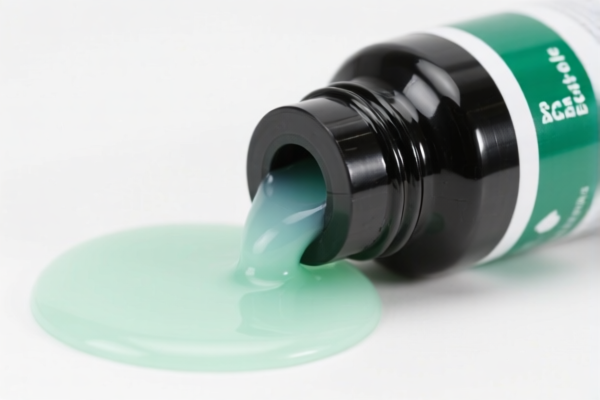

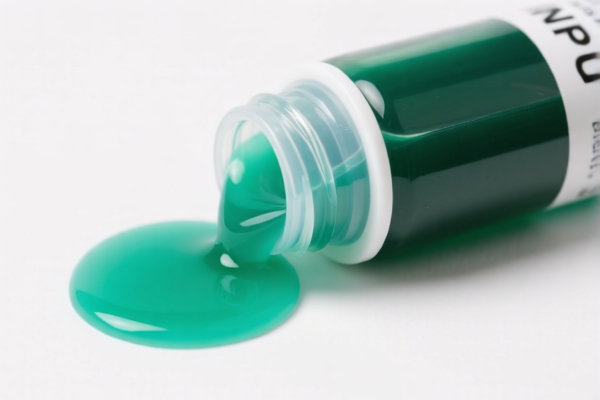
AI Analysis
🧪 Vinyl Acetate Emulsion for Textiles (Textile Adhesives & Binders)
🌐 HS Code Reference & Customs Clearance Guide | 2026 Latest Tariff Analysis | Professional Strategy for Chinese Origin Goods
📌 I. Product Definition & Classification: Do You Truly Understand "Vinyl Acetate Emulsion"?
Vinyl Acetate Emulsion is a water-based dispersion of polyvinyl acetate (PVAc) or vinyl acetate copolymers. In international trade, particularly for textile applications, it serves as a critical binder, adhesive, or sizing agent.
However, its classification is not straightforward. It falls into a complex intersection between Plastics (Chapter 39) and Prepared Rubber/Plastic Adhesives (Chapter 35). The key lies in its chemical state, purpose, and preparation method.
⚠️ Key Distinction Point:
- If it is a pure polymer dispersion intended for further processing or mixing → Often classified under Chapter 39 (Plastics).
- If it is formulated/prepared specifically as a glue/adhesive (mixed with fillers, thickeners, or other agents for immediate adhesive use) → Often classified under Chapter 35 (Prepared Adhesives).
📦 II. HS Code Classification Details (2026 Latest Tariff Authority Cross-Reference)
| HS Code | Product Description | Application Context | Tax Rate (China to US) | Legal Basis |
|---|---|---|---|---|
3905.12.00.00 |
Polyvinyl Acetate, in primary forms; dispersions in non-aqueous media OR water dispersions (Note: Specific chemical form matters) | Pure PVAc emulsion, unmodified, used as a raw material for further polymerization or blending | 39.0% | HTSUS 3905.12 + Section 301 + IEEPA |
3905.21.00.00 |
Copolymers of vinyl acetate, in primary forms; dispersions | Copolymer emulsions (e.g., EVA, VAE) in water dispersion form, used as base resins | 39.0% | HTSUS 3905.21 + Section 301 + IEEPA |
3506.91.50.00 |
Prepared adhesives; based on polymers of heading 3901 to 3914; for woodworking OR general polymer-based | Textile-grade VAE emulsions that are formulated/prepared (mixed with additives) for immediate adhesive/binder use in textiles | 37.1% | HTSUS 3506.91 + Section 301 + IEEPA |
3506.99.00.00 |
Prepared adhesives; other; other | Generic prepared polymer adhesives not specifically listed under 3506.91/92 | 37.1% | HTSUS 3506.99 + Section 301 + IEEPA |
🔍 Critical Note:
- HS Code3905.12.00.00&3905.21.00.00: These are Chapter 39 classifications. They cover the chemical substance (emulsion/dispersion) as a plastic material.
- HS Code3506.91.50.00&3506.99.00.00: These are Chapter 35 classifications. They cover the prepared adhesive (the functional product).
- For Textile Applications: If the emulsion is sold as a finished adhesive/binder for textiles (e.g., non-woven bonding, fiber sizing), Customs often prefers Chapter 35. If it is a raw chemical intermediate, Chapter 39 may apply.
- Tax Difference: Chapter 39 (39.0%) vs. Chapter 35 (37.1%). Chapter 35 is slightly cheaper but requires proof of "prepared adhesive" status.
💰 III. 2026 Latest Tariff Rate Breakdown (Detailed Add-ons & Policies)
✅ Applicable Country: United States (US)
✅ Origin: China (CN)
✅ Effective Date: November 10, 2025 onwards (including subsequent imports)
🎯 1. 3905.12.00.00 & 3905.21.00.00 — Polyvinyl Acetate/Vinyl Acetate Copolymers (Plastics Chapter)
| Item | Content |
|---|---|
| Base Tariff | 4.0% (ad valorem) |
| Section 301 Tariff | +25.0% (Under USITC Footnote 9903.88.01, for Chinese origin) |
| IEEPA Tariff | +10.0% (Under IEEPA Executive Order 14257, for Chinese origin) |
| Total Tariff Rate | 39.0% |
| Tax Calculation | CIF Value × 39.0% |
| De Minimis Exemption | ❌ Not Eligible (deny_de_minimis) |
| Legal Path | USITC:3905.12.00.00 → SECTION_301:9903.88.01 → IEEPA:9903.01.24 |
📌 Explanation:
- These HS codes fall under Section 301 (List 3/4A products), triggering a 25% surcharge.
- Additionally, IEEPA 10% applies to all Chinese-origin goods under the latest executive orders.
- Total: 4.0% + 25.0% + 10.0% = 39.0%.
🎯 2. 3506.91.50.00 & 3506.99.00.00 — Prepared Adhesives (Chapter 35)
| Item | Content |
|---|---|
| Base Tariff | 2.1% (ad valorem) |
| Section 301 Tariff | +25.0% (Under USITC Footnote 9903.88.01, for Chinese origin) |
| IEEPA Tariff | +10.0% (Under IEEPA Executive Order 14257, for Chinese origin) |
| Total Tariff Rate | 37.1% |
| Tax Calculation | CIF Value × 37.1% |
| De Minimis Exemption | ❌ Not Eligible (deny_de_minimis) |
| Legal Path | USITC:3506.91.50.00 → SECTION_301:9903.88.01 → IEEPA:9903.01.24 |
📌 Explanation:
- Chapter 35 adhesives have a lower base rate (2.1%) compared to Chapter 39 (4.0%).
- The Section 301 (25%) and IEEPA (10%) surcharges remain the same.
- Total: 2.1% + 25.0% + 10.0% = 37.1%.
- Savings: Choosing Chapter 35 can save 1.9% on the CIF value.
🛠️ IV. Customs Clearance Practical Advice (Avoid Pitfalls)
✅ 1. Documentation Checklist (Mandatory)
| Document | Required | Explanation |
|---|---|---|
| ✅ Technical Data Sheet (TDS) | ✔️ | Must specify: Chemical composition, % solids, pH, viscosity, intended use (e.g., "Textile Binder"). |
| ✅ Formula/Composition List | ✔️ | Detailed breakdown of ingredients (Vinyl Acetate, Water, Additives) to prove if it's "Prepared Adhesive" or "Raw Polymer". |
| ✅ Product Photographs | ✔️ | Show container, label, MSDS. |
| ✅ MSDS (SDS) | ✔️ | Safety Data Sheet, especially for flammability and environmental compliance. |
| ✅ Commercial Invoice | ✔️ | Clearly state: "Vinyl Acetate Emulsion for Textile Adhesive/Binder, HS Code: XXXX". |
| ✅ Certificate of Origin (CO) | ✔️ | To confirm Chinese origin (if applicable) and avoid misdeclaration. |
✅ 2. Declaration Strategy (Key Mantra)
🔥 “Raw Polymer → Ch39; Prepared Glue → Ch35. Use Case Matters!”
| Scenario | Correct HS Code | Incorrect HS Code | Consequence |
|---|---|---|---|
| Pure PVAc Emulsion (no additives, sold as raw material) | 3905.12.00.00 / 3905.21.00.00 |
3506.91.50.00 |
Risk of reclassification + penalty if proved to be "prepared". |
| Textile VAE Emulsion (formulated with thickeners/fillers, ready for use) | 3506.91.50.00 |
3905.12.00.00 |
Overpaid tax (39.0% vs 37.1%). Small savings, but better to claim correct duty. |
| Generic Polymer Adhesive (not specific to woodworking/textile) | 3506.99.00.00 |
3905.xx |
Risk of audit if not clearly "prepared". |
📌 Critical Reminder:
- If you declare as Chapter 39, you must prove it is a primary form (raw chemical).
- If you declare as Chapter 35, you must prove it is a prepared adhesive (formulated for specific use, e.g., textile bonding).
- For Textile Applications: Most commercial VAE emulsions are formulated with additives for stability, viscosity, and bonding performance. Therefore,3506.91.50.00is often more accurate and cost-effective.
✅ 3. Special Handling
| Situation | Advice |
|---|---|
| OEM Custom Formulation | Provide customer specs + formulation details. Prove it is custom-prepared for textile use → Supports Ch35. |
| Bulk Tanker vs. Drum | Classification depends on product nature, not packaging. Ensure documentation matches product specs. |
| Mixed Shipments | If shipment contains both raw PVAc and prepared adhesive, split declarations are mandatory. Do not mix. |
| Environmental Compliance | Vinyl Acetate Emulsions may contain VOCs. Ensure EPA/California CARB compliance for US import. Provide VOC content declaration. |
🌍 V. Global Market Comparison (2026 Latest)
| Country/Region | Recommended HS Code | Tariff (China Origin) | Certification | Notes |
|---|---|---|---|---|
| 🇺🇸 USA | 3506.91.50.00 or 3905.12.00.00 |
37.1% (Ch35) or 39.0% (Ch39) | VOC Compliance + SDS | High scrutiny on "prepared" vs "raw". |
| 🇨🇳 China | 3506.91.50.00 or 3905.12.00.00 |
2.1% (Ch35) or 4.0% (Ch39) | None | Low base tariff, no Section 301. |
| 🇪🇺 EU | 3905.12.00 or 3506.91 |
~2.5% (Ch39) or ~3.5% (Ch35) | REACH + CLP | No Section 301. REACH registration required. |
| 🇦🇺 Australia | 3506.91.00 |
5.0% | AICIS | No Section 301. |
| 🇯🇵 Japan | 3506.91 |
3.2% | Fertilizer Law (if applicable) | No Section 301. |
📌 Conclusion:
- USA is the most expensive market due to Section 301 + IEEPA.
- EU/Australia/Japan have no punitive tariffs, but regulatory compliance (REACH, AICIS) is strict.
- Optimization: For US imports, claim3506.91.50.00if the product is a prepared textile adhesive to save 1.9%.
📌 VI. Common Mistakes & Pitfalls (Lessons Learned)
❌ Mistake 1: Declaring "Vinyl Acetate Emulsion" generically without specifying chemical form vs. prepared adhesive.
👉 Consequence: Customs may reclassify to the wrong chapter, leading to audit, back taxes, and penalties.
❌ Mistake 2: Assuming all emulsions are Ch39.
👉 Consequence: Overpaying 1.9% tariff. If the product is formulated for immediate use (e.g., textile bonding), Ch35 is more accurate.
❌ Mistake 3: Ignoring VOC/EPA compliance.
👉 Consequence: Cargo detained at port due to environmental violations. Vinyl Acetate Emulsions can have high VOC content.
❌ Mistake 4: Not providing Technical Data Sheet (TDS).
👉 Consequence: Customs cannot verify "prepared" status → Delayed clearance or default to Ch39 (higher base rate).
✅ Correct Approach:
“Prepared Polyvinyl Acetate Emulsion Adhesive for Textile Bonding, Formulated with Thickeners and Stabilizers, HS Code: 3506.91.50.00, VOC: XX g/L”
🎯 VII. Conclusion: Precision in Classification, Profit in Clearance
🎯 Key Takeaway:
🔹 “Raw Polymer → Ch39 (39.0%); Prepared Textile Adhesive → Ch35 (37.1%).”
🔹 “1.9% Savings per CIF Value is Significant for Bulk Shipments!”
🔹 “Documentation is Key: TDS + Formula = Proof of Prepared Status.”
📌 Pro Tip:
- If your product is custom-formulated for textile mills, explicitly state "Prepared Adhesive for Textile Use" on the invoice.
- Apply for an Advance Ruling (APA) from US Customs if unsure. This provides legal certainty for future shipments.
- Monitor IEEPA updates: Tariff policies may change. Stay compliant!
📣 Immediate Action:
📞 Consult a Licensed Customs Broker
📄 Prepare TDS + Formula + VOC Declaration
🚀 Optimize HS Code Selection to Save 1.9% on Every Shipment
✨ Professional Customs Clearance Starts with Accurate Classification!
💼 Every Percent Matters in Global Trade!
Customer Reviews
About HS Code Classification
The Harmonized System (HS) is an internationally standardized nomenclature developed by the World Customs Organization (WCO) to classify traded products. Over 200 countries use the HS system as the basis for customs tariffs, trade statistics, and import/export regulations.
Each HS code follows a hierarchical structure:
- Chapter (2 digits) — Broad category of goods (e.g., Chapter 84: Machinery and Mechanical Appliances)
- Heading (4 digits) — More specific grouping within the chapter
- Subheading (6 digits) — Internationally standardized breakdown, used by all WCO member countries
- National subdivisions (8-10 digits) — Country-specific extensions for further classification, such as US HTSUS 10-digit codes
Correct HS code classification is essential for smooth customs clearance, accurate duty payment, and compliance with trade regulations. Misclassification can lead to customs delays, overpayment of duties, or penalties.
When importing from CN to US, the applicable tariff rates may include:
- Most-Favored-Nation (MFN) rate — The standard duty rate applied to WTO members
- General rate — Applied to countries without trade agreements
- Trade remedy duties — Additional tariffs such as Section 301 (anti-dumping), Section 232 (national security), or countervailing duties
The information provided on this page is for reference purposes only. For official classification, please consult with your local customs authority or a licensed customs broker.