Vinyl Acrylate Copolymer
CN → US| HS编码 | 关税税率 | 原产国 | 目的国 | 文档 |
|---|---|---|---|---|
| 3905290000 | 39.0% | CN | US | 官方文档 |
| 3905915000 | 40.3% | CN | US | 官方文档 |
| 3902300000 | 41.5% | CN | US | 官方文档 |
| 3902100000 | 41.5% | CN | US | 官方文档 |
| 3926909989 | 22.8% | CN | US | 官方文档 |
商品图片
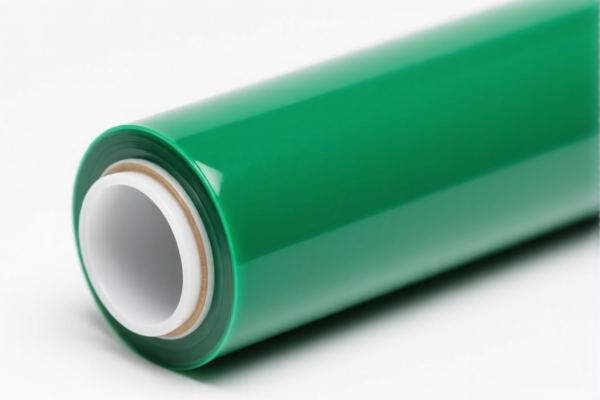
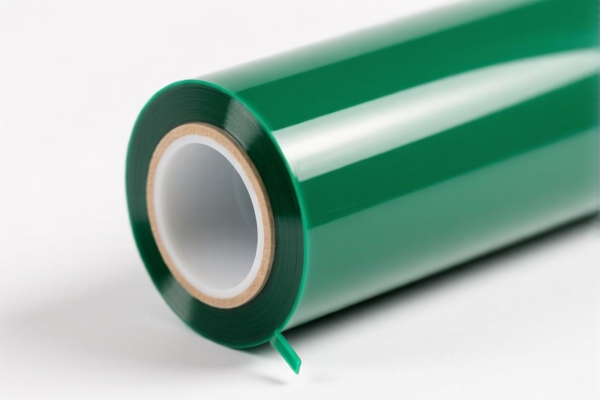
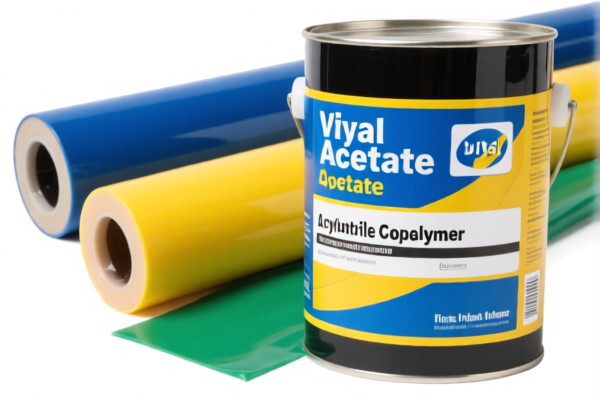
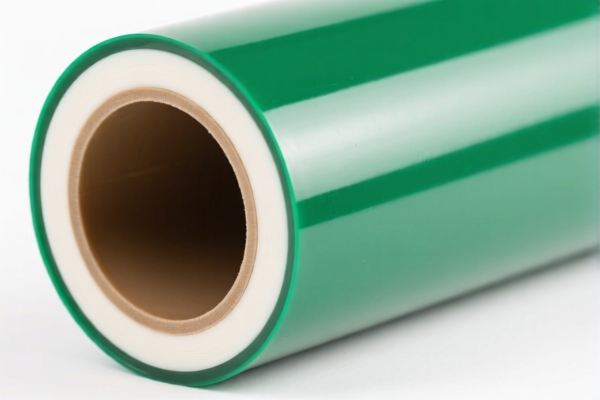
AI分析
🧪 Vinyl Acrylate Copolymer: HS Code Classification & Customs Clearance Guide (2026)
🌐 HS Code Reference & Customs Guide | 2026 Latest Tariff Analysis | Professional Clearance Strategy
📌 I. Product Definition: What is "Vinyl Acrylate Copolymer"?
"Vinyl Acrylate Copolymer" is a synthetic polymer widely used in adhesives, coatings, and sealants. In international trade, it is generally classified under Chapter 39 (Plastics and Articles Thereof).
⚠️ Key Distinction:
The classification depends heavily on the primary monomer (the main ingredient) and the physical form (usually "primary forms" like pellets, powders, or liquids for raw material use).
- If the acrylate component is dominant → Often falls under 3905 (Vinyl acetate and other vinyl esters).
- If the acrylate component is defined as a specific acrylic polymer → Might fall under 3906.
- If it is a generic copolymer not specifically named elsewhere → May fall under 3902 or 3926.📌 Critical Note:
According to the provided data, the product is treated as a copolymer. The specific HS Codes provided in<DATA>reflect three potential classifications based on how customs authorities interpret the "main component" or "general category."
📦 II. HS Code Classification Details (From Provided Data)
The following HS Codes are derived strictly from the <DATA> provided. Note that different interpretations lead to different tax burdens.
| HS Code | Classification Logic (Based on <DATA>) |
Total Tax Rate | Tax Breakdown |
|---|---|---|---|
| 3905.29.00.00 | Vinyl Esters Category. Interpreted as "Vinyl Acetate Copolymer" type polymer. Form: Raw/Primary. | 39.0% | Base: 4.0% + Section 301: 25.0% + Section 122: 10.0% |
| 3905.91.50.00 | Ethylene Copolymers Category. Interpreted as fitting the "copolymer" material category broadly. | 40.3% | Base: 5.3% + Section 301: 25.0% + Section 122: 10.0% |
| 3902.30.00.00 | Propylene Copolymers. Interpreted as consistent with "propylene copolymer" definition, assuming primary form. (Note: This seems technically inconsistent with "Vinyl Acrylate" name, but included in data source) | 41.5% | Base: 6.5% + Section 301: 25.0% + Section 122: 10.0% |
| 3902.10.00.00 | Polypropylene. Interpreted as material consistency with "polymer" in primary form. (Note: Also technically inconsistent with "Vinyl Acrylate" name, but included in data source) | 41.5% | Base: 6.5% + Section 301: 25.0% + Section 122: 10.0% |
| 3926.90.99.89 | Other Plastic Articles. Interpreted as a plastic product falling within Chapters 3901-3914, classified under the "catch-all" for finished plastic articles. | 22.8% | Base: 5.3% + Section 301: 7.5% + Section 122: 10.0% |
🔍 Data Insight:
- The most common classification for vinyl-based copolymers in raw form is 3905.29.00.00 (39.0% total tax).
- If classified as a finished plastic article (non-polymer raw material), 3926.90.99.89 is used (22.8% total tax).
- Codes 3902 (Propylene/Polypropylene) are listed in the data but are chemically inconsistent with "Vinyl Acrylate." Use with extreme caution unless the supplier has provided specific test reports reclassifying it as propylene-based.
💰 III. Detailed Tariff Explanation (Section 301 & Section 122)
✅ Applicable Country: United States (US)
✅ Origin: China (CN)
✅ Effective Time: Current (2026)
🎯 1. 3905.29.00.00 – Vinyl Acetate & Other Vinyl Esters Copolymers (Raw Form)
| Item | Detail |
|---|---|
| Base Tariff | 4.0% |
| Section 301 Tariff | +25.0% (Trade Act of 1974, Section 301) |
| Section 122 Tariff | +10.0% (Specific U.S. Regulation on Vinyl Esters) |
| Total Tax Rate | 39.0% |
| De Minimis Exemption | ❌ Not Eligible (Deny de minimis) |
| Legal Basis | USITC Harmonized Tariff Schedule + U.S. Trade Representative Notices |
📌 Explanation:
- This is the standard classification for vinyl-based copolymers in primary forms.
- The 25% Section 301 tax is the largest burden.
- The 10% Section 122 is a specific additional duty on certain vinyl ester products.
🎯 2. 3905.91.50.00 – Other Vinyl Polymers (Copolymer Broad)
| Item | Detail |
|---|---|
| Base Tariff | 5.3% |
| Section 301 Tariff | +25.0% |
| Section 122 Tariff | +10.0% |
| Total Tax Rate | 40.3% |
| De Minimis Exemption | ❌ Not Eligible |
📌 Note: Slightly higher base rate than 3905.29.00.00, resulting in a higher total tax.
🎯 3. 3902.30.00.00 / 3902.10.00.00 – Propylene-Based (Data Source Specific)
| Item | Detail |
|---|---|
| Base Tariff | 6.5% |
| Section 301 Tariff | +25.0% |
| Section 122 Tariff | +10.0% |
| Total Tax Rate | 41.5% |
| De Minimis Exemption | ❌ Not Eligible |
⚠️ Warning: These codes refer to Propylene/Polypropylene. If your product is Vinyl Acrylate, misclassifying it here could lead to customs penalties for false declaration, despite the data source listing it.
🎯 4. 3926.90.99.89 – Other Plastic Articles (Finished Goods)
| Item | Detail |
|---|---|
| Base Tariff | 5.3% |
| Section 301 Tariff | +7.5% (Reduced Section 301 rate for some plastics) |
| Section 122 Tariff | +10.0% |
| Total Tax Rate | 22.8% |
| De Minimis Exemption | ❌ Not Eligible |
📌 Explanation:
- This code is for finished plastic articles, not raw polymers.
- Lower total tax (22.8%) because Section 301 is reduced to 7.5%.
- Risk: If you import raw polymer pellets but declare them as "finished plastic articles," customs will reject this and apply the higher rate + penalties.
🛠️ IV. Customs Clearance Practical Advice
✅ 1. Document Preparation Checklist
| Document | Required | Purpose |
|---|---|---|
| ✅ Product Specification Sheet | ✔️ | Must clearly state: "Vinyl Acrylate Copolymer," chemical structure, monomer ratio, physical form (pellets/powder/liquid). |
| ✅ Material Safety Data Sheet (MSDS) | ✔️ | Proves chemical composition. |
| ✅ Commercial Invoice | ✔️ | Must match the HS Code exactly. Avoid vague terms like "Plastic." Use "Vinyl Acrylate Copolymer, Primary Form." |
| ✅ Packing List | ✔️ | Detail net weight, gross weight, and packaging type. |
| ✅ Certificate of Origin | ✔️ | Essential for confirming Chinese origin (triggering Section 301 & 122). |
✅ 2. Declaration Strategy (Key Tips)
🔥 "Raw Form vs. Finished Article: The Tax Difference!"
| Scenario | Correct HS Code | Tax Rate | Risk |
|---|---|---|---|
| Raw Polymer Pellets/Powder | 3905.29.00.00 |
39.0% | Low (Standard) |
| Finished Plastic Part (e.g., molded cup) | 3926.90.99.89 |
22.8% | Medium (Must prove finished state) |
| Incorrect: Calling Pellets "Plastic Article" | 3926.90.99.89 |
22.8% | HIGH (Penalties for misclassification) |
| Incorrect: Calling Vinyl Acrylate "Polypropylene" | 3902.30.00.00 |
41.5% | HIGH (Chemical inconsistency) |
📌 Golden Rule:
- If you are importing raw materials (pellets, powders, liquids), you MUST use 3905.29.00.00.
- Do NOT use 3902 codes unless your product is chemically proven to be polypropylene-based.
- Do NOT use 3926 codes unless you are importing finished goods (not raw polymers).
✅ 3. Special Cases
| Situation | Advice |
|---|---|
| OEM Custom Polymer | Provide formula sheet or monomer ratio to prove it is a vinyl ester copolymer (3905). |
| Mixed Shipment | If vinyl acrylate is mixed with other non-tariffed plastics, consult a customs broker for partial classification. |
| Exemption Applications | Currently, no IEEPA exemptions are noted for these HS Codes in the provided data. Assume full tax liability. |
🌍 V. Global Market Comparison (2026)
| Country | Recommended HS Code | Total Tax (China Origin) | Notes |
|---|---|---|---|
| 🇺🇸 USA | 3905.29.00.00 |
39.0% | High Section 301 (25%) + Section 122 (10%) |
| 🇨🇳 China | 3905.29.00.00 |
~5-7% | No Section 301/122 |
| 🇪🇺 EU | 3905.29.00.00 |
~6.5% | No Section 301/122 |
| 🇬🇧 UK | 3905.29.00.00 |
~6.5% | No Section 301/122 |
📌 Conclusion:
- The USA imposes a significant additional burden on vinyl acrylate copolymers from China.
- Cost Optimization: If possible, consider sourcing from non-China origins (e.g., Vietnam, Thailand) to avoid Section 301 and 122 tariffs. Check country-specific free trade agreements (FTAs).
📌 VI. Common Mistakes & Pitfalls (Lessons Learned)
❌ Mistake 1: Classifying raw polymer pellets as "finished plastic articles" (3926).
👉 Consequence: Customs seizure, back-taxes, and fines. Raw polymers are not finished articles.
❌ Mistake 2: Using 3902 (Propylene) codes for Vinyl Acrylate.
👉 Consequence: Chemical mismatch. Customs lab tests will reveal the error → Penalties + Delay.
❌ Mistake 3: Ignoring Section 122.
👉 Consequence: Underpayment by 10%. Even if Section 301 is avoided (e.g., via third-country transshipment), Section 122 may still apply to vinyl esters.
✅ Correct Practice:
"Vinyl Acrylate Copolymer, Primary Form, Chemical Composition: Vinyl Acetate + Acrylate, 25kg Bags"
→ HS Code: 3905.29.00.00
→ Tax: 39.0%
🎯 VII. Conclusion: Professional Declaration, Cost Control!
🎯 Remember the Key Points:
🔹 "Raw Form = 3905.29.00.00 (39% Tax)"
🔹 "Finished Article = 3926.90.99.89 (22.8% Tax, but must be truly finished)"
🔹 "Never Use 3902 Unless It’s Polypropylene"
🔹 "No De Minimis Exemption for These Items"
📌 Pro Tip:
If your product is essential and you face high duties, consider:
1. Applying for an Exclusion (if available under Section 301).
2. Supply Chain Diversification: Sourcing from Vietnam or Thailand to avoid China-specific tariffs.
3. Advance Ruling: Submit a request to CBP for a binding ruling on the correct HS Code before shipment.
📣 Immediate Action:
📞 Consult a Licensed Customs Broker
📄 Prepare MSDS & Specification Sheets
🚀 Ensure Accurate Declaration to Avoid Penalties
✨ Professional Clearance Starts with Accurate Classification!
💼 Your Cost Efficiency Depends on the Right HS Code!
用户评价
关于 HS 编码归类
协调制度(HS)是由世界海关组织(WCO)制定的国际贸易商品分类标准。全球 200 多个国家采用 HS 系统作为海关关税、贸易统计和进出口监管的基础。
每个 HS 编码遵循以下层级结构:
- 章(2 位)——商品大类(例如:第 84 章:机器和机械设备)
- 品目(4 位)——章内的更具体分类
- 子目(6 位)——国际通用细分,所有 WCO 成员国统一使用
- 本国细分(8-10 位)——各国自行扩展的细分编码,如美国 HTSUS 10 位编码
正确的 HS 编码归类对于顺利通关、准确缴纳关税和遵守贸易法规至关重要。错误归类可能导致海关延误、多缴关税或罚款。
从CN进口到US时,适用的关税税率可能包括:
- 最惠国(MFN)税率——适用于 WTO 成员国的标准关税税率
- 普通税率——适用于无贸易协定国家
- 贸易救济关税——附加关税,如 301 条款(反倾销)、232 条款(国家安全)或反补贴税
本页内容仅供参考。如需正式归类,请咨询当地海关或持牌报关代理。