Vinyl Acrylate Copolymer
CN → US| HS Code | Tariff Rate | Origin | Destination | Doc |
|---|---|---|---|---|
| 3905290000 | 39.0% | CN | US | Official Doc |
| 3905915000 | 40.3% | CN | US | Official Doc |
| 3902300000 | 41.5% | CN | US | Official Doc |
| 3902100000 | 41.5% | CN | US | Official Doc |
| 3926909989 | 22.8% | CN | US | Official Doc |
Product Images
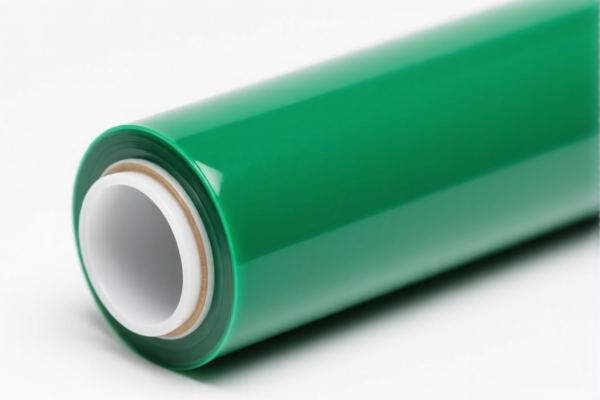
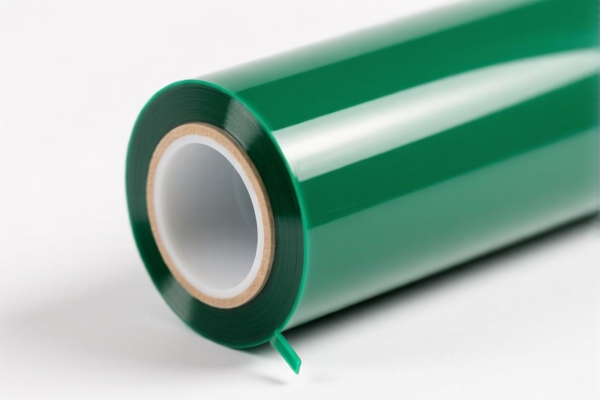
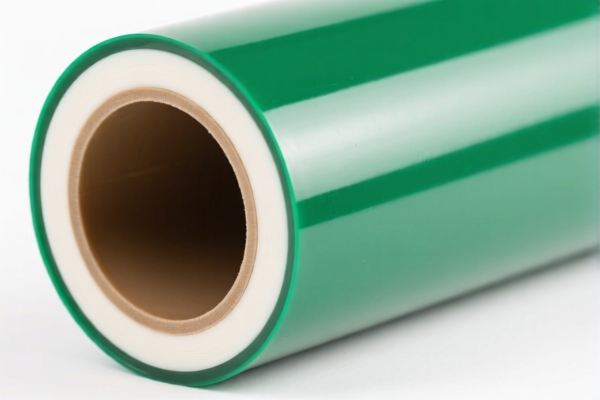
AI Analysis
🧪 Vinyl Acrylate Copolymer: HS Code Classification & Customs Clearance Guide (2026)
🌐 HS Code Reference & Customs Guide | 2026 Latest Tariff Analysis | Professional Clearance Strategy
📌 I. Product Definition: What is "Vinyl Acrylate Copolymer"?
"Vinyl Acrylate Copolymer" is a synthetic polymer widely used in adhesives, coatings, and sealants. In international trade, it is generally classified under Chapter 39 (Plastics and Articles Thereof).
⚠️ Key Distinction:
The classification depends heavily on the primary monomer (the main ingredient) and the physical form (usually "primary forms" like pellets, powders, or liquids for raw material use).
- If the acrylate component is dominant → Often falls under 3905 (Vinyl acetate and other vinyl esters).
- If the acrylate component is defined as a specific acrylic polymer → Might fall under 3906.
- If it is a generic copolymer not specifically named elsewhere → May fall under 3902 or 3926.📌 Critical Note:
According to the provided data, the product is treated as a copolymer. The specific HS Codes provided in<DATA>reflect three potential classifications based on how customs authorities interpret the "main component" or "general category."
📦 II. HS Code Classification Details (From Provided Data)
The following HS Codes are derived strictly from the <DATA> provided. Note that different interpretations lead to different tax burdens.
| HS Code | Classification Logic (Based on <DATA>) |
Total Tax Rate | Tax Breakdown |
|---|---|---|---|
| 3905.29.00.00 | Vinyl Esters Category. Interpreted as "Vinyl Acetate Copolymer" type polymer. Form: Raw/Primary. | 39.0% | Base: 4.0% + Section 301: 25.0% + Section 122: 10.0% |
| 3905.91.50.00 | Ethylene Copolymers Category. Interpreted as fitting the "copolymer" material category broadly. | 40.3% | Base: 5.3% + Section 301: 25.0% + Section 122: 10.0% |
| 3902.30.00.00 | Propylene Copolymers. Interpreted as consistent with "propylene copolymer" definition, assuming primary form. (Note: This seems technically inconsistent with "Vinyl Acrylate" name, but included in data source) | 41.5% | Base: 6.5% + Section 301: 25.0% + Section 122: 10.0% |
| 3902.10.00.00 | Polypropylene. Interpreted as material consistency with "polymer" in primary form. (Note: Also technically inconsistent with "Vinyl Acrylate" name, but included in data source) | 41.5% | Base: 6.5% + Section 301: 25.0% + Section 122: 10.0% |
| 3926.90.99.89 | Other Plastic Articles. Interpreted as a plastic product falling within Chapters 3901-3914, classified under the "catch-all" for finished plastic articles. | 22.8% | Base: 5.3% + Section 301: 7.5% + Section 122: 10.0% |
🔍 Data Insight:
- The most common classification for vinyl-based copolymers in raw form is 3905.29.00.00 (39.0% total tax).
- If classified as a finished plastic article (non-polymer raw material), 3926.90.99.89 is used (22.8% total tax).
- Codes 3902 (Propylene/Polypropylene) are listed in the data but are chemically inconsistent with "Vinyl Acrylate." Use with extreme caution unless the supplier has provided specific test reports reclassifying it as propylene-based.
💰 III. Detailed Tariff Explanation (Section 301 & Section 122)
✅ Applicable Country: United States (US)
✅ Origin: China (CN)
✅ Effective Time: Current (2026)
🎯 1. 3905.29.00.00 – Vinyl Acetate & Other Vinyl Esters Copolymers (Raw Form)
| Item | Detail |
|---|---|
| Base Tariff | 4.0% |
| Section 301 Tariff | +25.0% (Trade Act of 1974, Section 301) |
| Section 122 Tariff | +10.0% (Specific U.S. Regulation on Vinyl Esters) |
| Total Tax Rate | 39.0% |
| De Minimis Exemption | ❌ Not Eligible (Deny de minimis) |
| Legal Basis | USITC Harmonized Tariff Schedule + U.S. Trade Representative Notices |
📌 Explanation:
- This is the standard classification for vinyl-based copolymers in primary forms.
- The 25% Section 301 tax is the largest burden.
- The 10% Section 122 is a specific additional duty on certain vinyl ester products.
🎯 2. 3905.91.50.00 – Other Vinyl Polymers (Copolymer Broad)
| Item | Detail |
|---|---|
| Base Tariff | 5.3% |
| Section 301 Tariff | +25.0% |
| Section 122 Tariff | +10.0% |
| Total Tax Rate | 40.3% |
| De Minimis Exemption | ❌ Not Eligible |
📌 Note: Slightly higher base rate than 3905.29.00.00, resulting in a higher total tax.
🎯 3. 3902.30.00.00 / 3902.10.00.00 – Propylene-Based (Data Source Specific)
| Item | Detail |
|---|---|
| Base Tariff | 6.5% |
| Section 301 Tariff | +25.0% |
| Section 122 Tariff | +10.0% |
| Total Tax Rate | 41.5% |
| De Minimis Exemption | ❌ Not Eligible |
⚠️ Warning: These codes refer to Propylene/Polypropylene. If your product is Vinyl Acrylate, misclassifying it here could lead to customs penalties for false declaration, despite the data source listing it.
🎯 4. 3926.90.99.89 – Other Plastic Articles (Finished Goods)
| Item | Detail |
|---|---|
| Base Tariff | 5.3% |
| Section 301 Tariff | +7.5% (Reduced Section 301 rate for some plastics) |
| Section 122 Tariff | +10.0% |
| Total Tax Rate | 22.8% |
| De Minimis Exemption | ❌ Not Eligible |
📌 Explanation:
- This code is for finished plastic articles, not raw polymers.
- Lower total tax (22.8%) because Section 301 is reduced to 7.5%.
- Risk: If you import raw polymer pellets but declare them as "finished plastic articles," customs will reject this and apply the higher rate + penalties.
🛠️ IV. Customs Clearance Practical Advice
✅ 1. Document Preparation Checklist
| Document | Required | Purpose |
|---|---|---|
| ✅ Product Specification Sheet | ✔️ | Must clearly state: "Vinyl Acrylate Copolymer," chemical structure, monomer ratio, physical form (pellets/powder/liquid). |
| ✅ Material Safety Data Sheet (MSDS) | ✔️ | Proves chemical composition. |
| ✅ Commercial Invoice | ✔️ | Must match the HS Code exactly. Avoid vague terms like "Plastic." Use "Vinyl Acrylate Copolymer, Primary Form." |
| ✅ Packing List | ✔️ | Detail net weight, gross weight, and packaging type. |
| ✅ Certificate of Origin | ✔️ | Essential for confirming Chinese origin (triggering Section 301 & 122). |
✅ 2. Declaration Strategy (Key Tips)
🔥 "Raw Form vs. Finished Article: The Tax Difference!"
| Scenario | Correct HS Code | Tax Rate | Risk |
|---|---|---|---|
| Raw Polymer Pellets/Powder | 3905.29.00.00 |
39.0% | Low (Standard) |
| Finished Plastic Part (e.g., molded cup) | 3926.90.99.89 |
22.8% | Medium (Must prove finished state) |
| Incorrect: Calling Pellets "Plastic Article" | 3926.90.99.89 |
22.8% | HIGH (Penalties for misclassification) |
| Incorrect: Calling Vinyl Acrylate "Polypropylene" | 3902.30.00.00 |
41.5% | HIGH (Chemical inconsistency) |
📌 Golden Rule:
- If you are importing raw materials (pellets, powders, liquids), you MUST use 3905.29.00.00.
- Do NOT use 3902 codes unless your product is chemically proven to be polypropylene-based.
- Do NOT use 3926 codes unless you are importing finished goods (not raw polymers).
✅ 3. Special Cases
| Situation | Advice |
|---|---|
| OEM Custom Polymer | Provide formula sheet or monomer ratio to prove it is a vinyl ester copolymer (3905). |
| Mixed Shipment | If vinyl acrylate is mixed with other non-tariffed plastics, consult a customs broker for partial classification. |
| Exemption Applications | Currently, no IEEPA exemptions are noted for these HS Codes in the provided data. Assume full tax liability. |
🌍 V. Global Market Comparison (2026)
| Country | Recommended HS Code | Total Tax (China Origin) | Notes |
|---|---|---|---|
| 🇺🇸 USA | 3905.29.00.00 |
39.0% | High Section 301 (25%) + Section 122 (10%) |
| 🇨🇳 China | 3905.29.00.00 |
~5-7% | No Section 301/122 |
| 🇪🇺 EU | 3905.29.00.00 |
~6.5% | No Section 301/122 |
| 🇬🇧 UK | 3905.29.00.00 |
~6.5% | No Section 301/122 |
📌 Conclusion:
- The USA imposes a significant additional burden on vinyl acrylate copolymers from China.
- Cost Optimization: If possible, consider sourcing from non-China origins (e.g., Vietnam, Thailand) to avoid Section 301 and 122 tariffs. Check country-specific free trade agreements (FTAs).
📌 VI. Common Mistakes & Pitfalls (Lessons Learned)
❌ Mistake 1: Classifying raw polymer pellets as "finished plastic articles" (3926).
👉 Consequence: Customs seizure, back-taxes, and fines. Raw polymers are not finished articles.
❌ Mistake 2: Using 3902 (Propylene) codes for Vinyl Acrylate.
👉 Consequence: Chemical mismatch. Customs lab tests will reveal the error → Penalties + Delay.
❌ Mistake 3: Ignoring Section 122.
👉 Consequence: Underpayment by 10%. Even if Section 301 is avoided (e.g., via third-country transshipment), Section 122 may still apply to vinyl esters.
✅ Correct Practice:
"Vinyl Acrylate Copolymer, Primary Form, Chemical Composition: Vinyl Acetate + Acrylate, 25kg Bags"
→ HS Code: 3905.29.00.00
→ Tax: 39.0%
🎯 VII. Conclusion: Professional Declaration, Cost Control!
🎯 Remember the Key Points:
🔹 "Raw Form = 3905.29.00.00 (39% Tax)"
🔹 "Finished Article = 3926.90.99.89 (22.8% Tax, but must be truly finished)"
🔹 "Never Use 3902 Unless It’s Polypropylene"
🔹 "No De Minimis Exemption for These Items"
📌 Pro Tip:
If your product is essential and you face high duties, consider:
1. Applying for an Exclusion (if available under Section 301).
2. Supply Chain Diversification: Sourcing from Vietnam or Thailand to avoid China-specific tariffs.
3. Advance Ruling: Submit a request to CBP for a binding ruling on the correct HS Code before shipment.
📣 Immediate Action:
📞 Consult a Licensed Customs Broker
📄 Prepare MSDS & Specification Sheets
🚀 Ensure Accurate Declaration to Avoid Penalties
✨ Professional Clearance Starts with Accurate Classification!
💼 Your Cost Efficiency Depends on the Right HS Code!
Customer Reviews
About HS Code Classification
The Harmonized System (HS) is an internationally standardized nomenclature developed by the World Customs Organization (WCO) to classify traded products. Over 200 countries use the HS system as the basis for customs tariffs, trade statistics, and import/export regulations.
Each HS code follows a hierarchical structure:
- Chapter (2 digits) — Broad category of goods (e.g., Chapter 84: Machinery and Mechanical Appliances)
- Heading (4 digits) — More specific grouping within the chapter
- Subheading (6 digits) — Internationally standardized breakdown, used by all WCO member countries
- National subdivisions (8-10 digits) — Country-specific extensions for further classification, such as US HTSUS 10-digit codes
Correct HS code classification is essential for smooth customs clearance, accurate duty payment, and compliance with trade regulations. Misclassification can lead to customs delays, overpayment of duties, or penalties.
When importing from CN to US, the applicable tariff rates may include:
- Most-Favored-Nation (MFN) rate — The standard duty rate applied to WTO members
- General rate — Applied to countries without trade agreements
- Trade remedy duties — Additional tariffs such as Section 301 (anti-dumping), Section 232 (national security), or countervailing duties
The information provided on this page is for reference purposes only. For official classification, please consult with your local customs authority or a licensed customs broker.