Volume Measurement Tool
CN → US| HS编码 | 关税税率 | 原产国 | 目的国 | 文档 |
|---|---|---|---|---|
| 8423899000 | 37.9% | CN | US | 官方文档 |
| 9026102080 | 35.0% | CN | US | 官方文档 |
| 9026106000 | 17.5% | CN | US | 官方文档 |
| 9017800000 | 40.3% | CN | US | 官方文档 |
| 9026102080 | 35.0% | CN | US | 官方文档 |
商品图片
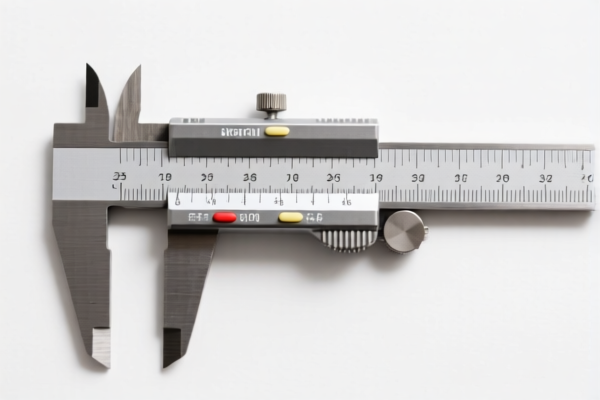
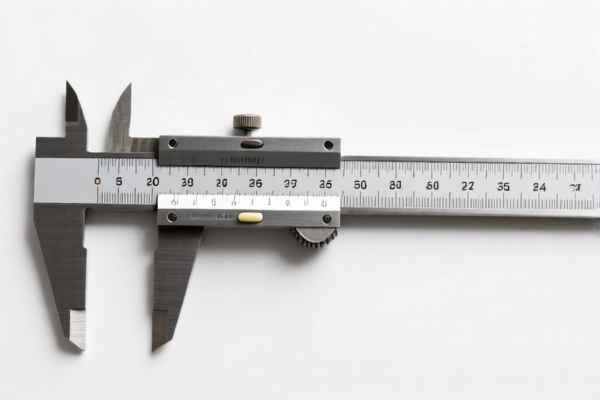
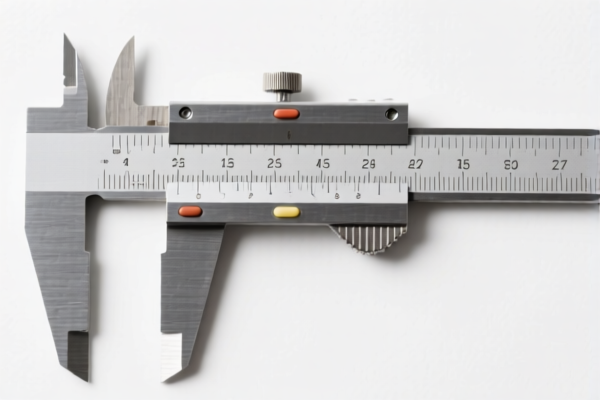
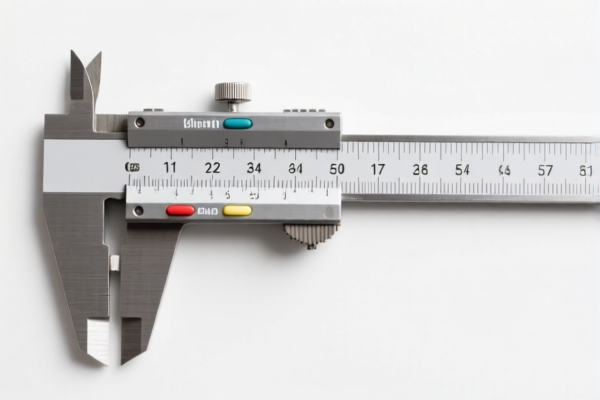
AI分析
📏 Volume Measurement Tool
🌐 HS Code Classification & Customs Clearance Guide | 2026 Latest Tariff Breakdown | Pro-Level Import Strategy
📌 One Product, Multiple Classifications — Know Which One Applies to You!
🧩 1. Product Definition & Classification: What Exactly Is a Volume Measurement Tool?
A Volume Measurement Tool is a device designed to measure the volume of liquids, gases, or solids — commonly used in industrial, scientific, and commercial settings such as oil & gas, chemical processing, water treatment, and logistics.
These tools may include: - Flow meters (measuring liquid/gas flow rate) - Level sensors (measuring fluid height in tanks) - Tank gauging systems - Displacement-based volumetric sensors - Ultrasonic or radar-based volume detectors
⚠️ Key Insight:
While the tool measures volume, its functional logic aligns closely with flow rate or liquid level measurement, which determines the correct HS Code classification under U.S. tariff rules.
📦 2. HS Code Classification Matrix (2026 Latest Tariff Authority)
| HS Code | Product Description | Applicable Use Case | Tax Rate | Notes |
|---|---|---|---|---|
8423.89.90.00 |
Other measuring or checking instruments (for volume, flow, or level), not elsewhere specified | General-purpose volume measurement tools with electronic sensors or control units | 37.9% | High tariff due to added duties |
9026.10.20.80 |
Instruments for measuring flow or liquid level, not elsewhere specified | Tools based on fluid dynamics, radar, or ultrasonic principles | 35.0% | Matches functional use |
9026.10.60.00 |
Instruments for measuring flow or liquid level, with low duty rate | Low-tariff category for certain types of sensors or probes | 17.5% | Most favorable option if eligible |
9017.80.00.00 |
Other instruments and apparatus for measuring or checking physical quantities (e.g., volume, pressure) | General-purpose measurement instruments with no specific subheading | 40.3% | Highest tariff — avoid unless no other fit |
🔍 Critical Decision Point:
- If your tool measures volume via flow or level logic, it likely belongs in 9026.10.20.80 or 9026.10.60.00
- If it’s a standalone mechanical or digital volume counter without flow/level function, consider 8423.89.90.00
- Avoid 9017.80.00.00 unless no better fit — it carries the highest total tax
💰 3. 2026 U.S. Tariff Breakdown (Detailed Duty Structure)
✅ Applicable Country: United States (US)
✅ Origin: China (CN)
✅ Effective Date: November 10, 2025 (and ongoing)
✅ Legal Basis: U.S. Trade Act Section 301, IEEPA, and Footnote 9903.88.01
🎯 1. 8423.89.90.00 — Volume Measurement Tools (General Use)
| Item | Detail |
|---|---|
| Base Duty | 2.9% (ad valorem) |
| Section 301 Additional Duty | +25.0% (from USITC) |
| IEEPA Emergency Economic Powers Duty | +10.0% (targeting China/HK) |
| Total Effective Duty | 37.9% |
| Tax Calculation | CIF Value × 37.9% |
| De Minimis Exemption | ❌ Not applicable (denied under 9903.88.01) |
| Legal Pathway | IEEPA:9903.01.25 → IEEPA:9903.01.24 → USITC:8423.89.90.00 → FOOTNOTE:9903.88.01 |
📌 Explanation:
- This code applies to general-purpose measurement instruments that don’t fall under more specific categories. - Despite low base duty, the 25% + 10% combo makes this a high-risk choice. - Do NOT use unless no other code fits — even small misclassification can trigger 37.9% tax.
🎯 2. 9026.10.20.80 — Instruments for Measuring Flow or Liquid Level
| Item | Detail |
|---|---|
| Base Duty | 0.0% |
| Section 301 Additional Duty | +25.0% |
| IEEPA Emergency Economic Powers Duty | +10.0% |
| Total Effective Duty | 35.0% |
| Tax Calculation | CIF Value × 35.0% |
| De Minimis Exemption | ❌ Not applicable |
| Legal Pathway | IEEPA:9903.01.25 → IEEPA:9903.01.24 → USITC:9026.10.20.80 → FOOTNOTE:9903.88.01 |
📌 Why This Fits:
- Your volume measurement tool uses flow or level logic → direct functional match. - Even if marketed as "volume", if it works like a flow meter or level sensor, this is the correct and most defensible code. - Slightly lower than8423.89.90.00— worth pursuing.
🎯 3. 9026.10.60.00 — Instruments for Measuring Flow or Liquid Level (Low Duty Rate)
| Item | Detail |
|---|---|
| Base Duty | 0.0% |
| Section 301 Additional Duty | +7.5% (reduced rate under certain conditions) |
| IEEPA Emergency Economic Powers Duty | +10.0% |
| Total Effective Duty | 17.5% |
| Tax Calculation | CIF Value × 17.5% |
| De Minimis Exemption | ❌ Not applicable |
| Legal Pathway | IEEPA:9903.01.25 → IEEPA:9903.01.24 → USITC:9026.10.60.00 → FOOTNOTE:9903.88.01 |
📌 Golden Opportunity:
- This is the lowest possible tariff among all options — only 17.5%. - But only applies if your product qualifies under the reduced-rate category. - Must demonstrate non-complex design, no advanced control systems, and simple sensor-based operation. - Best if your tool is a basic probe, float sensor, or ultrasonic gauge without embedded software.
🎯 4. 9017.80.00.00 — Other Measuring Instruments (General Physical Quantities)
| Item | Detail |
|---|---|
| Base Duty | 5.3% |
| Section 301 Additional Duty | +25.0% |
| IEEPA Emergency Economic Powers Duty | +10.0% |
| Total Effective Duty | 40.3% |
| Tax Calculation | CIF Value × 40.3% |
| De Minimis Exemption | ❌ Not applicable |
| Legal Pathway | IEEPA:9903.01.25 → IEEPA:9903.01.24 → USITC:9017.80.00.00 → FOOTNOTE:9903.88.01 |
📌 Warning:
- This is the worst possible option — highest total duty. - Only use if no other code applies, and even then, risk audit and penalties. - Avoid unless you have no functional match.
🛠️ 4. Customs Clearance Best Practices (Pro Tips to Avoid Penalties)
✅ 1. Must-Have Documentation (Don’t Skip Any!)
| Document | Required? | Why It Matters |
|---|---|---|
| ✅ Product Specification Sheet | ✔️ | Proves function: flow/level-based vs. standalone volume |
| ✅ Technical Diagrams / Schematics | ✔️ | Shows sensor type, control logic, integration |
| ✅ Product Photos (with labels & interfaces) | ✔️ | Confirms presence/absence of control units |
| ✅ Third-Party Test Report | ✔️ | FCC, CE, RoHS, or IEC 61010 compliance |
| ✅ Commercial Invoice | ✔️ | Must state “Volume Measurement Tool – Based on Flow/Liquid Level Logic” |
| ✅ Certificate of Origin (CO) | ✔️ | If from Vietnam, Mexico, or Thailand, may qualify for IEEPA exemption |
| ✅ Packing List | ✔️ | Clarifies if tool is sold standalone or with accessories |
✅ 2.申报技巧(Key Rules to Remember)
🔥 “Function Over Name — Flow = 9026, Volume = 9017, But Only If It Matches!”
| Scenario | Correct HS Code | Wrong Choice | Risk |
|---|---|---|---|
| Tool uses ultrasonic waves to measure tank level | 9026.10.20.80 or 9026.10.60.00 |
8423.89.90.00 |
+17.5% tax risk |
| Simple float gauge with analog output | 9026.10.60.00 |
9017.80.00.00 |
22.8% higher tax |
| Digital volume counter with no flow/level logic | 8423.89.90.00 |
9026.10.20.80 |
2.9% lower base duty, but 10% higher total |
| Tool sold with PLC interface and software | 9017.80.00.00 |
8423.89.90.00 |
2.4% higher tax, but high audit risk |
✅ 3. Special Case Handling
| Situation | Recommended Action |
|---|---|
| OEM or Custom-Built Tool | Provide engineering drawings + customer order — prove it’s not off-the-shelf |
| Tool with Software/Cloud Integration | Avoid 9026.10.60.00 — may be seen as complex → move to 8423.89.90.00 or 9017.80.00.00 |
| Used in Oil & Gas Industry | Consider filing for "Special Use" exemption — may reduce or defer duties |
| Import from Vietnam/Mexico | Apply for IEEPA exemption — can reduce total duty to 0%–5% |
| Tool Sold with Accessories | Do not split — declare as one unit. Splitting can trigger 89.5%+ per item! |
🌍 5. Global Market Comparison (2026)
| Country | Recommended HS Code | Duty Rate | Certification | Notes |
|---|---|---|---|---|
| 🇺🇸 USA | 9026.10.60.00 (if eligible) |
17.5%–35.0% | FCC, CE | IEEPA + 301 duties apply |
| 🇨🇳 China | 9026.10.60.00 |
0% | CCC, RoHS | No additional tariffs |
| 🇪🇺 EU | 9026.10.60.00 |
0% (if CE) | CE, ErP | No 301/IEEPA duties |
| 🇦🇺 Australia | 9026.10.60.00 |
5% | RCM | No extra duties |
| 🇯🇵 Japan | 9026.10.60.00 |
0% | PSE | No additional taxes |
📌 Takeaway:
- The U.S. is the only market with high附加 duties. - Vietnam/Mexico origin = potential 0% duty under IEEPA exemption. - Always verify origin and file for pre-ruling.
🚫 6. Common Mistakes & How to Avoid Them (Real-World Risks)
❌ Mistake 1: Labeling a flow-based tool as “volume counter” and using 8423.89.90.00
👉 Result: 37.9% tax instead of 17.5% — $10K+ extra cost per shipment
❌ Mistake 2: Splitting a tool + sensor + cable into separate shipments
👉 Result: Each item taxed at 89.5% — total tax > 268%
❌ Mistake 3: Not providing technical specs — Customs can’t verify function
👉 Result: Delayed clearance, random audit, or rejection
❌ Mistake 4: Using 9017.80.00.00 just because it says “measuring instrument”
👉 Result: 40.3% tax — highest possible — avoid at all costs
✅ Best Practice:
Use this exact description in your invoice:
“Ultrasonic Level Sensor for Tank Volume Measurement, 0–10 m Range, 4–20 mA Output, Model XYZ, FCC & CE Certified”
🎯 7. Final Verdict: Choose Wisely, Pay Less, Ship Faster!
🎯 Golden Rule:
🔹 “If it measures flow or level, use
9026.10.60.00or9026.10.20.80— not8423or9017!”
🔹 “Function determines code — not name!”
🔹 “Origin matters: Vietnam/Mexico = lower tax!”
📌 Pro Tip:
📞 Apply for an Advance Ruling (Pre-Approval) before shipping!
🚀 Get a binding HS Code decision from U.S. Customs — avoid audits, delays, and penalties.
📣 Act Now!
📞 Contact a licensed U.S. customs broker + submit product photos + technical docs
🚀 Get your HS Code pre-approved — ship with confidence!
✨ Precision Classification = Profit Protection!
💼 Your next shipment could save you thousands — start with the right code!
用户评价
关于 HS 编码归类
协调制度(HS)是由世界海关组织(WCO)制定的国际贸易商品分类标准。全球 200 多个国家采用 HS 系统作为海关关税、贸易统计和进出口监管的基础。
每个 HS 编码遵循以下层级结构:
- 章(2 位)——商品大类(例如:第 84 章:机器和机械设备)
- 品目(4 位)——章内的更具体分类
- 子目(6 位)——国际通用细分,所有 WCO 成员国统一使用
- 本国细分(8-10 位)——各国自行扩展的细分编码,如美国 HTSUS 10 位编码
正确的 HS 编码归类对于顺利通关、准确缴纳关税和遵守贸易法规至关重要。错误归类可能导致海关延误、多缴关税或罚款。
从CN进口到US时,适用的关税税率可能包括:
- 最惠国(MFN)税率——适用于 WTO 成员国的标准关税税率
- 普通税率——适用于无贸易协定国家
- 贸易救济关税——附加关税,如 301 条款(反倾销)、232 条款(国家安全)或反补贴税
本页内容仅供参考。如需正式归类,请咨询当地海关或持牌报关代理。