Volume Measurement Tool
CN → US| HS Code | Tariff Rate | Origin | Destination | Doc |
|---|---|---|---|---|
| 8423899000 | 37.9% | CN | US | Official Doc |
| 9026102080 | 35.0% | CN | US | Official Doc |
| 9026106000 | 17.5% | CN | US | Official Doc |
| 9017800000 | 40.3% | CN | US | Official Doc |
| 9026102080 | 35.0% | CN | US | Official Doc |
Product Images
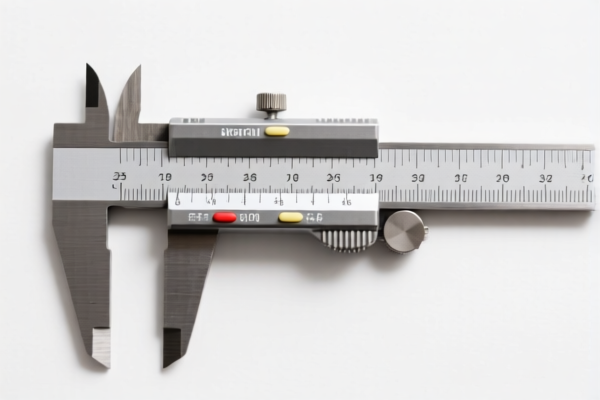
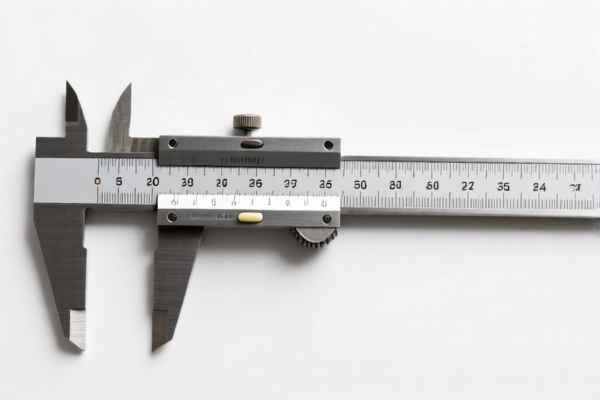
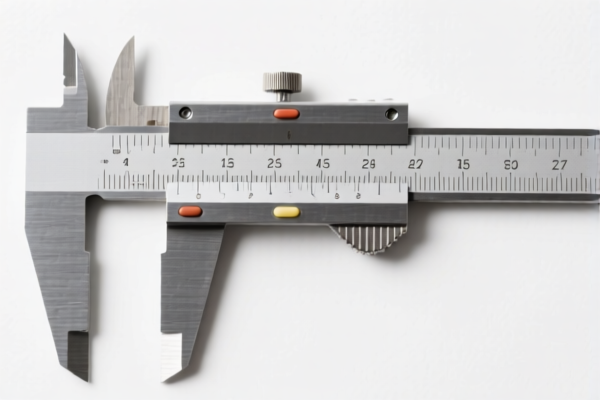
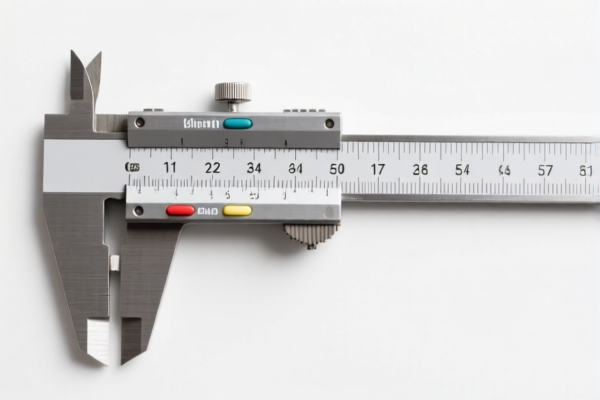
AI Analysis
📏 Volume Measurement Tool
🌐 HS Code Classification & Customs Clearance Guide | 2026 Latest Tariff Breakdown | Pro-Level Import Strategy
📌 One Product, Multiple Classifications — Know Which One Applies to You!
🧩 1. Product Definition & Classification: What Exactly Is a Volume Measurement Tool?
A Volume Measurement Tool is a device designed to measure the volume of liquids, gases, or solids — commonly used in industrial, scientific, and commercial settings such as oil & gas, chemical processing, water treatment, and logistics.
These tools may include: - Flow meters (measuring liquid/gas flow rate) - Level sensors (measuring fluid height in tanks) - Tank gauging systems - Displacement-based volumetric sensors - Ultrasonic or radar-based volume detectors
⚠️ Key Insight:
While the tool measures volume, its functional logic aligns closely with flow rate or liquid level measurement, which determines the correct HS Code classification under U.S. tariff rules.
📦 2. HS Code Classification Matrix (2026 Latest Tariff Authority)
| HS Code | Product Description | Applicable Use Case | Tax Rate | Notes |
|---|---|---|---|---|
8423.89.90.00 |
Other measuring or checking instruments (for volume, flow, or level), not elsewhere specified | General-purpose volume measurement tools with electronic sensors or control units | 37.9% | High tariff due to added duties |
9026.10.20.80 |
Instruments for measuring flow or liquid level, not elsewhere specified | Tools based on fluid dynamics, radar, or ultrasonic principles | 35.0% | Matches functional use |
9026.10.60.00 |
Instruments for measuring flow or liquid level, with low duty rate | Low-tariff category for certain types of sensors or probes | 17.5% | Most favorable option if eligible |
9017.80.00.00 |
Other instruments and apparatus for measuring or checking physical quantities (e.g., volume, pressure) | General-purpose measurement instruments with no specific subheading | 40.3% | Highest tariff — avoid unless no other fit |
🔍 Critical Decision Point:
- If your tool measures volume via flow or level logic, it likely belongs in 9026.10.20.80 or 9026.10.60.00
- If it’s a standalone mechanical or digital volume counter without flow/level function, consider 8423.89.90.00
- Avoid 9017.80.00.00 unless no better fit — it carries the highest total tax
💰 3. 2026 U.S. Tariff Breakdown (Detailed Duty Structure)
✅ Applicable Country: United States (US)
✅ Origin: China (CN)
✅ Effective Date: November 10, 2025 (and ongoing)
✅ Legal Basis: U.S. Trade Act Section 301, IEEPA, and Footnote 9903.88.01
🎯 1. 8423.89.90.00 — Volume Measurement Tools (General Use)
| Item | Detail |
|---|---|
| Base Duty | 2.9% (ad valorem) |
| Section 301 Additional Duty | +25.0% (from USITC) |
| IEEPA Emergency Economic Powers Duty | +10.0% (targeting China/HK) |
| Total Effective Duty | 37.9% |
| Tax Calculation | CIF Value × 37.9% |
| De Minimis Exemption | ❌ Not applicable (denied under 9903.88.01) |
| Legal Pathway | IEEPA:9903.01.25 → IEEPA:9903.01.24 → USITC:8423.89.90.00 → FOOTNOTE:9903.88.01 |
📌 Explanation:
- This code applies to general-purpose measurement instruments that don’t fall under more specific categories. - Despite low base duty, the 25% + 10% combo makes this a high-risk choice. - Do NOT use unless no other code fits — even small misclassification can trigger 37.9% tax.
🎯 2. 9026.10.20.80 — Instruments for Measuring Flow or Liquid Level
| Item | Detail |
|---|---|
| Base Duty | 0.0% |
| Section 301 Additional Duty | +25.0% |
| IEEPA Emergency Economic Powers Duty | +10.0% |
| Total Effective Duty | 35.0% |
| Tax Calculation | CIF Value × 35.0% |
| De Minimis Exemption | ❌ Not applicable |
| Legal Pathway | IEEPA:9903.01.25 → IEEPA:9903.01.24 → USITC:9026.10.20.80 → FOOTNOTE:9903.88.01 |
📌 Why This Fits:
- Your volume measurement tool uses flow or level logic → direct functional match. - Even if marketed as "volume", if it works like a flow meter or level sensor, this is the correct and most defensible code. - Slightly lower than8423.89.90.00— worth pursuing.
🎯 3. 9026.10.60.00 — Instruments for Measuring Flow or Liquid Level (Low Duty Rate)
| Item | Detail |
|---|---|
| Base Duty | 0.0% |
| Section 301 Additional Duty | +7.5% (reduced rate under certain conditions) |
| IEEPA Emergency Economic Powers Duty | +10.0% |
| Total Effective Duty | 17.5% |
| Tax Calculation | CIF Value × 17.5% |
| De Minimis Exemption | ❌ Not applicable |
| Legal Pathway | IEEPA:9903.01.25 → IEEPA:9903.01.24 → USITC:9026.10.60.00 → FOOTNOTE:9903.88.01 |
📌 Golden Opportunity:
- This is the lowest possible tariff among all options — only 17.5%. - But only applies if your product qualifies under the reduced-rate category. - Must demonstrate non-complex design, no advanced control systems, and simple sensor-based operation. - Best if your tool is a basic probe, float sensor, or ultrasonic gauge without embedded software.
🎯 4. 9017.80.00.00 — Other Measuring Instruments (General Physical Quantities)
| Item | Detail |
|---|---|
| Base Duty | 5.3% |
| Section 301 Additional Duty | +25.0% |
| IEEPA Emergency Economic Powers Duty | +10.0% |
| Total Effective Duty | 40.3% |
| Tax Calculation | CIF Value × 40.3% |
| De Minimis Exemption | ❌ Not applicable |
| Legal Pathway | IEEPA:9903.01.25 → IEEPA:9903.01.24 → USITC:9017.80.00.00 → FOOTNOTE:9903.88.01 |
📌 Warning:
- This is the worst possible option — highest total duty. - Only use if no other code applies, and even then, risk audit and penalties. - Avoid unless you have no functional match.
🛠️ 4. Customs Clearance Best Practices (Pro Tips to Avoid Penalties)
✅ 1. Must-Have Documentation (Don’t Skip Any!)
| Document | Required? | Why It Matters |
|---|---|---|
| ✅ Product Specification Sheet | ✔️ | Proves function: flow/level-based vs. standalone volume |
| ✅ Technical Diagrams / Schematics | ✔️ | Shows sensor type, control logic, integration |
| ✅ Product Photos (with labels & interfaces) | ✔️ | Confirms presence/absence of control units |
| ✅ Third-Party Test Report | ✔️ | FCC, CE, RoHS, or IEC 61010 compliance |
| ✅ Commercial Invoice | ✔️ | Must state “Volume Measurement Tool – Based on Flow/Liquid Level Logic” |
| ✅ Certificate of Origin (CO) | ✔️ | If from Vietnam, Mexico, or Thailand, may qualify for IEEPA exemption |
| ✅ Packing List | ✔️ | Clarifies if tool is sold standalone or with accessories |
✅ 2.申报技巧(Key Rules to Remember)
🔥 “Function Over Name — Flow = 9026, Volume = 9017, But Only If It Matches!”
| Scenario | Correct HS Code | Wrong Choice | Risk |
|---|---|---|---|
| Tool uses ultrasonic waves to measure tank level | 9026.10.20.80 or 9026.10.60.00 |
8423.89.90.00 |
+17.5% tax risk |
| Simple float gauge with analog output | 9026.10.60.00 |
9017.80.00.00 |
22.8% higher tax |
| Digital volume counter with no flow/level logic | 8423.89.90.00 |
9026.10.20.80 |
2.9% lower base duty, but 10% higher total |
| Tool sold with PLC interface and software | 9017.80.00.00 |
8423.89.90.00 |
2.4% higher tax, but high audit risk |
✅ 3. Special Case Handling
| Situation | Recommended Action |
|---|---|
| OEM or Custom-Built Tool | Provide engineering drawings + customer order — prove it’s not off-the-shelf |
| Tool with Software/Cloud Integration | Avoid 9026.10.60.00 — may be seen as complex → move to 8423.89.90.00 or 9017.80.00.00 |
| Used in Oil & Gas Industry | Consider filing for "Special Use" exemption — may reduce or defer duties |
| Import from Vietnam/Mexico | Apply for IEEPA exemption — can reduce total duty to 0%–5% |
| Tool Sold with Accessories | Do not split — declare as one unit. Splitting can trigger 89.5%+ per item! |
🌍 5. Global Market Comparison (2026)
| Country | Recommended HS Code | Duty Rate | Certification | Notes |
|---|---|---|---|---|
| 🇺🇸 USA | 9026.10.60.00 (if eligible) |
17.5%–35.0% | FCC, CE | IEEPA + 301 duties apply |
| 🇨🇳 China | 9026.10.60.00 |
0% | CCC, RoHS | No additional tariffs |
| 🇪🇺 EU | 9026.10.60.00 |
0% (if CE) | CE, ErP | No 301/IEEPA duties |
| 🇦🇺 Australia | 9026.10.60.00 |
5% | RCM | No extra duties |
| 🇯🇵 Japan | 9026.10.60.00 |
0% | PSE | No additional taxes |
📌 Takeaway:
- The U.S. is the only market with high附加 duties. - Vietnam/Mexico origin = potential 0% duty under IEEPA exemption. - Always verify origin and file for pre-ruling.
🚫 6. Common Mistakes & How to Avoid Them (Real-World Risks)
❌ Mistake 1: Labeling a flow-based tool as “volume counter” and using 8423.89.90.00
👉 Result: 37.9% tax instead of 17.5% — $10K+ extra cost per shipment
❌ Mistake 2: Splitting a tool + sensor + cable into separate shipments
👉 Result: Each item taxed at 89.5% — total tax > 268%
❌ Mistake 3: Not providing technical specs — Customs can’t verify function
👉 Result: Delayed clearance, random audit, or rejection
❌ Mistake 4: Using 9017.80.00.00 just because it says “measuring instrument”
👉 Result: 40.3% tax — highest possible — avoid at all costs
✅ Best Practice:
Use this exact description in your invoice:
“Ultrasonic Level Sensor for Tank Volume Measurement, 0–10 m Range, 4–20 mA Output, Model XYZ, FCC & CE Certified”
🎯 7. Final Verdict: Choose Wisely, Pay Less, Ship Faster!
🎯 Golden Rule:
🔹 “If it measures flow or level, use
9026.10.60.00or9026.10.20.80— not8423or9017!”
🔹 “Function determines code — not name!”
🔹 “Origin matters: Vietnam/Mexico = lower tax!”
📌 Pro Tip:
📞 Apply for an Advance Ruling (Pre-Approval) before shipping!
🚀 Get a binding HS Code decision from U.S. Customs — avoid audits, delays, and penalties.
📣 Act Now!
📞 Contact a licensed U.S. customs broker + submit product photos + technical docs
🚀 Get your HS Code pre-approved — ship with confidence!
✨ Precision Classification = Profit Protection!
💼 Your next shipment could save you thousands — start with the right code!
Customer Reviews
About HS Code Classification
The Harmonized System (HS) is an internationally standardized nomenclature developed by the World Customs Organization (WCO) to classify traded products. Over 200 countries use the HS system as the basis for customs tariffs, trade statistics, and import/export regulations.
Each HS code follows a hierarchical structure:
- Chapter (2 digits) — Broad category of goods (e.g., Chapter 84: Machinery and Mechanical Appliances)
- Heading (4 digits) — More specific grouping within the chapter
- Subheading (6 digits) — Internationally standardized breakdown, used by all WCO member countries
- National subdivisions (8-10 digits) — Country-specific extensions for further classification, such as US HTSUS 10-digit codes
Correct HS code classification is essential for smooth customs clearance, accurate duty payment, and compliance with trade regulations. Misclassification can lead to customs delays, overpayment of duties, or penalties.
When importing from CN to US, the applicable tariff rates may include:
- Most-Favored-Nation (MFN) rate — The standard duty rate applied to WTO members
- General rate — Applied to countries without trade agreements
- Trade remedy duties — Additional tariffs such as Section 301 (anti-dumping), Section 232 (national security), or countervailing duties
The information provided on this page is for reference purposes only. For official classification, please consult with your local customs authority or a licensed customs broker.