Vulcanized Rubber Pipes with Fittings
CN → US| HS编码 | 关税税率 | 原产国 | 目的国 | 文档 |
|---|---|---|---|---|
| 4016990300 | 38.0% | CN | US | 官方文档 |
| 4016935020 | 37.5% | CN | US | 官方文档 |
| 4009120020 | 20.0% | CN | US | 官方文档 |
| 4009120050 | 20.0% | CN | US | 官方文档 |
商品图片
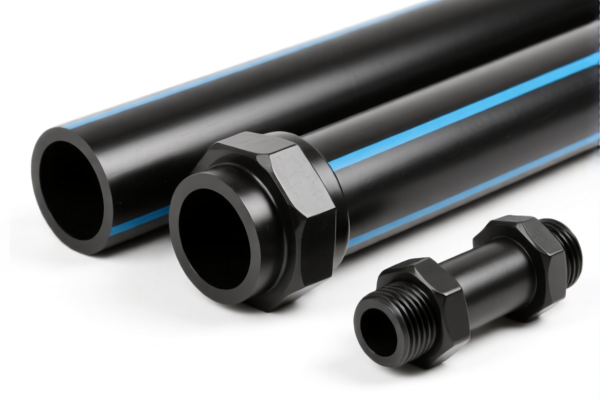
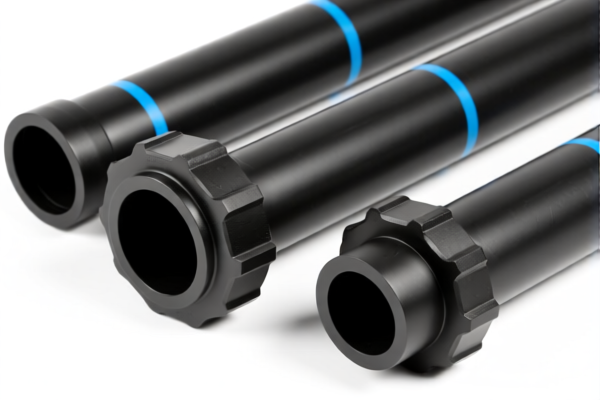
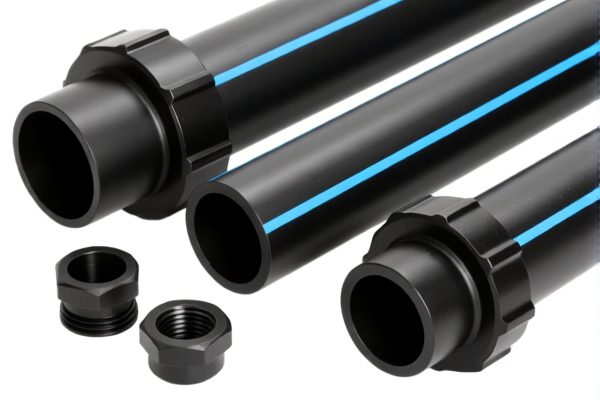
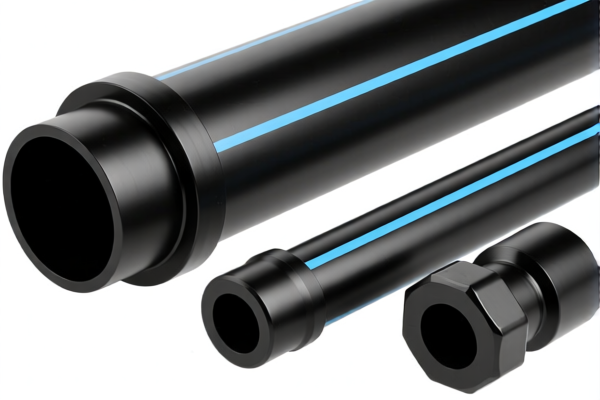
AI分析
🛢️ Vulcanized Rubber Pipes with Fittings (硫化橡胶管带配件)
🌐 HS Code Reference & Clearance Guide | 2026 Latest Tariff Analysis | Professional Customs Strategy
📌 I. Product Definition & Classification: What Exactly Are You Importing?
"Vulcanized Rubber Pipes with Fittings" is a broad commercial term that often masks critical classification differences. In international trade, the distinction lies not just in the material (rubber), but in the form factor (pipe vs. loose accessory) and function (structural component vs. connection joint).
1. Vulcanized Rubber Pipes & Hoses (The "Pipe" Category)
These are flexible conduits used for fluid transport (water, air, oil, chemicals).
Key Feature: Continuous length or specific shaped tubing.
Classification Logic: Falls under Chapter 40, Heading 4009 (Pipes, tubes, and hoses).
2. Rubber Fittings & Accessories (The "Accessory" Category)
These are components used to connect, secure, or adapt the pipes. They are not the pipe itself.
Key Feature: Clamps, flanges, couplings, adapters, seals.
Classification Logic: Falls under Chapter 40, Heading 4016 (Other articles of vulcanized rubber).
⚠️ Critical Distinction:
- If the item is a hose with pre-attached ends/joints intended for immediate use, it may still be classified as a Pipe (4009) depending on the specific design and USITC rulings.
- If the item is a loose coupling or clamp sold separately, it is an Accessory (4016).
- Misclassification Risk: Declaring a loose fitting as a "pipe" to avoid higher accessory taxes is a common audit trigger.
📦 II. HS Code Classification Details (Based on Provided Data)
The following HS Codes are derived directly from the provided dataset <DATA>. They represent the most likely classifications for "Vulcanized Rubber Pipes with Fittings" based on specific material matches and form factors.
| HS Code | Product Description & Summary | Key Matching Criteria | Tax Rate |
|---|---|---|---|
4016.99.03.00 |
Rubber Pipe/Accessory Parts "Sulfurized rubber pipe belt accessories, matching material and accessory form" |
Matches general rubber accessories where material and form do not fit specific sub-headings like clamps or seals. | 38.0% |
4016.93.50.20 |
Other Rubber Accessories "Sulfurized rubber accessories, default matching under other categories" |
Generic sulfurized rubber parts not specifically listed elsewhere (e.g., gaskets, diaphragms, general mounts). | 37.5% |
4009.12.00.20 |
Rubber Hose Joint/Adapter "Rubber hose joint, belongs to pipeline accessories, no obvious material conflict" |
Specifically a joint/fitting made of rubber. Classified under Heading 4009 (Pipes) but as a specific sub-type of joint. | 20.0% |
4009.12.00.50 |
Rubber Hose Joint "Rubber hose joint, form and material both match sulfurized rubber category" |
Similar to above, but emphasizes that both the form (joint) and material (vulcanized rubber) align with this specific sub-heading. | 20.0% |
🔍 Analysis of Differences:
- Why 38% vs. 20%?
The4016codes (38.0%/37.5%) are classified as "Other Articles" (accessories/parts).
The4009codes (20.0%) are classified under "Pipes, tubes, and hoses", but specifically for joints/connectors.
- Strategic Insight: If your product is a rubber hose connector/joint, it is significantly cheaper to classify under 4009.12 (20%) than as a generic rubber accessory under 4016 (38%). However, this requires strict adherence to the definition of a "joint" vs. a "general part."
💰 III. 2026 Latest Tariff Rate Breakdown (Detailed Tax Clauses)
✅ Applicable Country: United States (US)
✅ Origin: China (CN)
✅ Effective Date: Current trade policy (Post-2025 adjustments)
🎯 1. 4016.99.03.00 — Rubber Pipe Belt Accessories
| Item | Detail |
|---|---|
| Base Tariff (MFN) | 3.0% |
| Section 301 (Trade War) | +25.0% |
| Section 122 (Countervailing/Other) | +10.0% |
| Total Tax Rate | 38.0% |
| Calculation | CIF Value × 38.0% |
| De Minimis Exemption | ❌ Not Eligible |
| Legal Basis Path | HTS:4016.99.03 → Section 301: Footnote 9903.01.01 → Section 122: HTS Note 122 |
📌 Explanation:
- This is a high-cost category. The 3.0% base is standard for rubber articles, but the 25% Section 301 tariff and 10% Section 122 tariff drive the total to 38%.
- Risk: Customs may scrutinize whether the item truly qualifies as "pipe belt accessories" or if it should be a different accessory code.
🎯 2. 4016.93.50.20 — Other Sulfurized Rubber Accessories
| Item | Detail |
|---|---|
| Base Tariff (MFN) | 2.5% |
| Section 301 (Trade War) | +25.0% |
| Section 122 | +10.0% |
| Total Tax Rate | 37.5% |
| Calculation | CIF Value × 37.5% |
| De Minimis Exemption | ❌ Not Eligible |
| Legal Basis Path | HTS:4016.93.50 → Section 301: Footnote 9903.01.01 |
📌 Explanation:
- Slightly lower base rate (2.5%) than the previous code, but the same punitive tariffs (25% + 10%) apply.
- Used for rubber parts that are not specifically hoses, belts, or simple gaskets.
🎯 3. & 4. 4009.12.00.20 & 4009.12.00.50 — Rubber Hose Joints
| Item | Detail |
|---|---|
| Base Tariff (MFN) | 2.5% |
| Section 301 (Trade War) | +7.5% (Note: Reduced compared to general rubber accessories) |
| Section 122 | +10.0% |
| Total Tax Rate | 20.0% |
| Calculation | CIF Value × 20.0% |
| De Minimis Exemption | ❌ Not Eligible |
| Legal Basis Path | HTS:4009.12.00 → Section 301: Footnote 9903.01.01 (Special Rate) → Section 122 |
📌 Explanation:
- This is the optimal classification IF the product is a "joint/connector".
- The Section 301 tariff is only 7.5% (instead of 25%) for these specific hose joints.
- Why? USITC may view hose joints as integral to the pipe system rather than general rubber accessories, resulting in lower punitive tariffs.
- Caution: You must prove the item is a "joint" (used to connect pipes) and not a "clamp" or "flange" which might fall under 4016.
🛠️ IV. Customs Clearance Practical Advice (Pitfall Avoidance Guide)
✅ 1. Documentation Checklist (Non-Negotiable)
| Document | Required | Reason |
|---|---|---|
| ✅ Product Specification Sheet | ✔️ | Must explicitly state: "Vulcanized Rubber," "Hose Joint," or "Pipe Accessory." |
| ✅ Technical Drawing | ✔️ | Show how the part connects to a pipe. Is it a joint (4009) or a general part (4016)? |
| ✅ Commercial Invoice | ✔️ | Use precise HTS descriptions: "Rubber Hose Connector, Vulcanized, for Industrial Use" NOT just "Rubber Parts." |
| ✅ Material Declaration | ✔️ | Confirm sulfur/vulcanization process. Unvulcanized rubber has different rules. |
| ✅ Packaging List | ✔️ | Clearly separate pipes from fittings if shipped together. |
✅ 2. Declaration Strategy (Key Mantras)
🔥 "Form Defines Code: Joint is Pipe, Clamp is Accessory!"
| Scenario | Correct Classification | Incorrect Classification | Risk |
|---|---|---|---|
| Rubber Hose Connector (connects two pipes) | 4009.12.00.50 (20%) |
4016.99.03.00 (38%) |
18% Tax Difference! |
| Rubber Clamp (holds pipe to wall) | 4016.93.50.20 (37.5%) |
4009... (20%) |
Audit for misclassification; penalty + back taxes |
| Loose Rubber Gasket | 4016.99.03.00 (38%) |
4009... (20%) |
Gaskets are typically 4016, not 4009 pipes |
| Pre-assembled Hose with Ends | 4009.12.00.50 (20%) |
4016... (37.5%) |
If ends are integral, it’s still a "hose" product |
✅ 3. Special Handling Tips
| Situation | Advice |
|---|---|
| Mixed Shipment | If pipes (4009) and clamps (4016) are in one box, declare separately. Do not lump them under the highest rate. |
| "Universal" Fittings | If a fitting can be used for multiple pipe types, emphasize its design as a connector to aim for 4009.12. |
| Customs Inquiry | If asked, provide photos showing the internal ribbing/sealing surface typical of hose joints, not just a simple rubber block. |
| Origin Marking | Ensure "Made in China" is visible. Section 301 taxes apply regardless of packaging country if the manufacturing occurred in China. |
🌍 V. Global Market Comparison (2026 Snapshot)
| Market | Recommended HS Code | Est. Total Duty | Notes |
|---|---|---|---|
| 🇺🇸 USA | 4009.12.00.50 |
20.0% | Best for joints. High scrutiny on Section 301 applicability. |
| 🇺🇸 USA | 4016.99.03.00 |
38.0% | For general accessories. Avoid if product is a joint. |
| 🇨🇳 China | 4009.12.00.20 |
Varies (Low) | Export incentives may apply. Check local rebate rules. |
| 🇪🇺 EU | 4009.12.00 |
~3-4% | No Section 301/122 equivalents. Much lower duty burden. |
| 🇬🇧 UK | 4009.12.00 |
~3-4% | Post-Brexit, tariffs align closely with EU for rubber goods. |
📌 Conclusion for US Importers:
- Aggressively pursue4009.12.00.50(20%) if your product is a hose joint/connector.
- The 18% tax saving (38% vs. 20%) is substantial.
- However, you must defend this classification with technical drawings proving it is a "joint" and not a "clamp" or "mount."
📌 VI. Common Errors & Pitfalls (Lessons Learned)
❌ Error 1: Labeling a Rubber Clamp as a "Hose Joint"
👉 Result: Customs flags it as a clamp (4016), reclassifies to 37.5-38%, and issues a penalty.
✅ Fix: Be honest. If it’s a clamp, declare it as such. Consider redesigning to integrate sealing features to qualify as a joint.
❌ Error 2: Using vague terms like "Rubber Parts" on Invoice
👉 Result: Customs defaults to highest duty rate (38%) due to ambiguity.
✅ Fix: Use specific terms: "Vulcanized Rubber Hose Connector, Inner Diameter XXmm, Outer Diameter YYmm."
❌ Error 3: Ignoring Section 122 (10%)
👉 Result: Unexpected 10% hit on top of Section 301.
✅ Fix: Factor 38% or 20% into your landed cost calculation immediately.
🎯 VII. Final Recommendation: Cost Optimization Strategy
🎯 Strategic Action Plan:
-
Audit Product Design:
- Can the fitting be redesigned to clearly function as a connector/joint? → Aim for 4009.12 (20%).
- If it’s a clamp, bracket, or seal → Accept 4016 (37.5-38%) or seek alternatives.
-
Pre-Ruling Application:
- File an Advance Ruling Request with US Customs and Border Protection (CBP). Submit technical drawings showing the item is a "joint" under HTS 4009.12. This locks in the 20% rate and prevents future audits.
-
Invoice Precision:
- Never write "Rubber Parts." Write: "Vulcanized Rubber Hose Joint, Model XYZ, for Industrial Fluid Transfer."
📌 Pro Tip:
If you are importing large volumes, the 18% difference between 38% and 20% can amount to hundreds of thousands of dollars. Invest in a professional customs broker to validate the 4009 classification before shipment.
📣 Immediate Next Step:
📞 Contact a Customs Broker
📄 Provide Technical Drawings
🚀 Apply for CBP Advance Ruling
💼 Secure the 20% Rate, Not the 38% Rate!
✨ Precision in Classification = Profit in Pocket!
💼 Don’t let vague descriptions cost you 18% of your revenue.
用户评价
关于 HS 编码归类
协调制度(HS)是由世界海关组织(WCO)制定的国际贸易商品分类标准。全球 200 多个国家采用 HS 系统作为海关关税、贸易统计和进出口监管的基础。
每个 HS 编码遵循以下层级结构:
- 章(2 位)——商品大类(例如:第 84 章:机器和机械设备)
- 品目(4 位)——章内的更具体分类
- 子目(6 位)——国际通用细分,所有 WCO 成员国统一使用
- 本国细分(8-10 位)——各国自行扩展的细分编码,如美国 HTSUS 10 位编码
正确的 HS 编码归类对于顺利通关、准确缴纳关税和遵守贸易法规至关重要。错误归类可能导致海关延误、多缴关税或罚款。
从CN进口到US时,适用的关税税率可能包括:
- 最惠国(MFN)税率——适用于 WTO 成员国的标准关税税率
- 普通税率——适用于无贸易协定国家
- 贸易救济关税——附加关税,如 301 条款(反倾销)、232 条款(国家安全)或反补贴税
本页内容仅供参考。如需正式归类,请咨询当地海关或持牌报关代理。