Vulcanized Rubber Pipes with Fittings
CN → US| HS Code | Tariff Rate | Origin | Destination | Doc |
|---|---|---|---|---|
| 4016990300 | 38.0% | CN | US | Official Doc |
| 4016935020 | 37.5% | CN | US | Official Doc |
| 4009120020 | 20.0% | CN | US | Official Doc |
| 4009120050 | 20.0% | CN | US | Official Doc |
Product Images
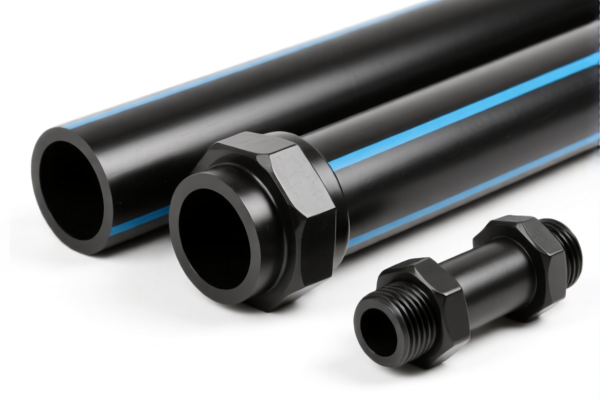
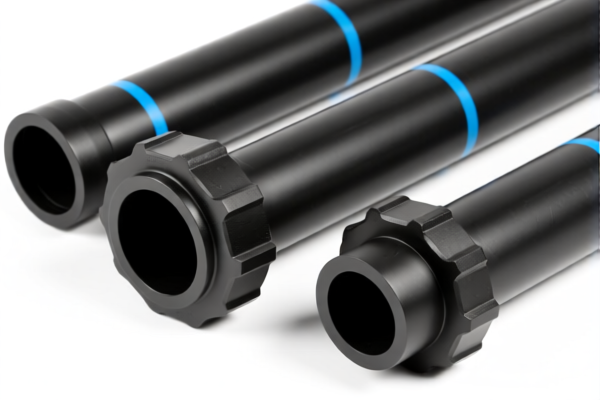
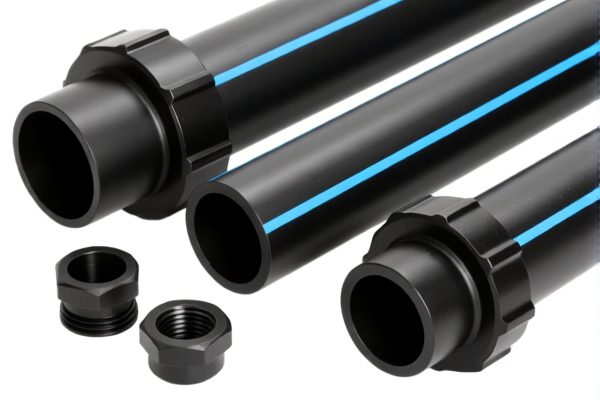
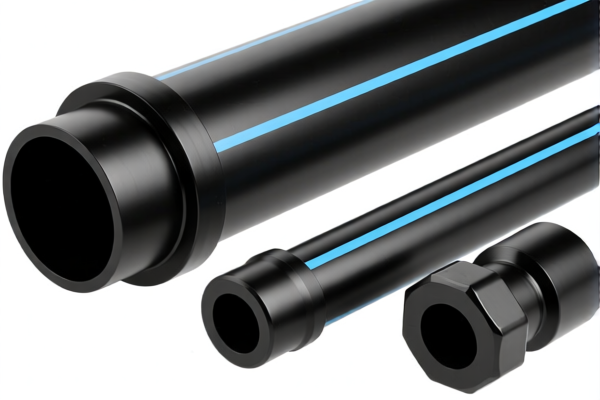
AI Analysis
🛢️ Vulcanized Rubber Pipes with Fittings (硫化橡胶管带配件)
🌐 HS Code Reference & Clearance Guide | 2026 Latest Tariff Analysis | Professional Customs Strategy
📌 I. Product Definition & Classification: What Exactly Are You Importing?
"Vulcanized Rubber Pipes with Fittings" is a broad commercial term that often masks critical classification differences. In international trade, the distinction lies not just in the material (rubber), but in the form factor (pipe vs. loose accessory) and function (structural component vs. connection joint).
1. Vulcanized Rubber Pipes & Hoses (The "Pipe" Category)
These are flexible conduits used for fluid transport (water, air, oil, chemicals).
Key Feature: Continuous length or specific shaped tubing.
Classification Logic: Falls under Chapter 40, Heading 4009 (Pipes, tubes, and hoses).
2. Rubber Fittings & Accessories (The "Accessory" Category)
These are components used to connect, secure, or adapt the pipes. They are not the pipe itself.
Key Feature: Clamps, flanges, couplings, adapters, seals.
Classification Logic: Falls under Chapter 40, Heading 4016 (Other articles of vulcanized rubber).
⚠️ Critical Distinction:
- If the item is a hose with pre-attached ends/joints intended for immediate use, it may still be classified as a Pipe (4009) depending on the specific design and USITC rulings.
- If the item is a loose coupling or clamp sold separately, it is an Accessory (4016).
- Misclassification Risk: Declaring a loose fitting as a "pipe" to avoid higher accessory taxes is a common audit trigger.
📦 II. HS Code Classification Details (Based on Provided Data)
The following HS Codes are derived directly from the provided dataset <DATA>. They represent the most likely classifications for "Vulcanized Rubber Pipes with Fittings" based on specific material matches and form factors.
| HS Code | Product Description & Summary | Key Matching Criteria | Tax Rate |
|---|---|---|---|
4016.99.03.00 |
Rubber Pipe/Accessory Parts "Sulfurized rubber pipe belt accessories, matching material and accessory form" |
Matches general rubber accessories where material and form do not fit specific sub-headings like clamps or seals. | 38.0% |
4016.93.50.20 |
Other Rubber Accessories "Sulfurized rubber accessories, default matching under other categories" |
Generic sulfurized rubber parts not specifically listed elsewhere (e.g., gaskets, diaphragms, general mounts). | 37.5% |
4009.12.00.20 |
Rubber Hose Joint/Adapter "Rubber hose joint, belongs to pipeline accessories, no obvious material conflict" |
Specifically a joint/fitting made of rubber. Classified under Heading 4009 (Pipes) but as a specific sub-type of joint. | 20.0% |
4009.12.00.50 |
Rubber Hose Joint "Rubber hose joint, form and material both match sulfurized rubber category" |
Similar to above, but emphasizes that both the form (joint) and material (vulcanized rubber) align with this specific sub-heading. | 20.0% |
🔍 Analysis of Differences:
- Why 38% vs. 20%?
The4016codes (38.0%/37.5%) are classified as "Other Articles" (accessories/parts).
The4009codes (20.0%) are classified under "Pipes, tubes, and hoses", but specifically for joints/connectors.
- Strategic Insight: If your product is a rubber hose connector/joint, it is significantly cheaper to classify under 4009.12 (20%) than as a generic rubber accessory under 4016 (38%). However, this requires strict adherence to the definition of a "joint" vs. a "general part."
💰 III. 2026 Latest Tariff Rate Breakdown (Detailed Tax Clauses)
✅ Applicable Country: United States (US)
✅ Origin: China (CN)
✅ Effective Date: Current trade policy (Post-2025 adjustments)
🎯 1. 4016.99.03.00 — Rubber Pipe Belt Accessories
| Item | Detail |
|---|---|
| Base Tariff (MFN) | 3.0% |
| Section 301 (Trade War) | +25.0% |
| Section 122 (Countervailing/Other) | +10.0% |
| Total Tax Rate | 38.0% |
| Calculation | CIF Value × 38.0% |
| De Minimis Exemption | ❌ Not Eligible |
| Legal Basis Path | HTS:4016.99.03 → Section 301: Footnote 9903.01.01 → Section 122: HTS Note 122 |
📌 Explanation:
- This is a high-cost category. The 3.0% base is standard for rubber articles, but the 25% Section 301 tariff and 10% Section 122 tariff drive the total to 38%.
- Risk: Customs may scrutinize whether the item truly qualifies as "pipe belt accessories" or if it should be a different accessory code.
🎯 2. 4016.93.50.20 — Other Sulfurized Rubber Accessories
| Item | Detail |
|---|---|
| Base Tariff (MFN) | 2.5% |
| Section 301 (Trade War) | +25.0% |
| Section 122 | +10.0% |
| Total Tax Rate | 37.5% |
| Calculation | CIF Value × 37.5% |
| De Minimis Exemption | ❌ Not Eligible |
| Legal Basis Path | HTS:4016.93.50 → Section 301: Footnote 9903.01.01 |
📌 Explanation:
- Slightly lower base rate (2.5%) than the previous code, but the same punitive tariffs (25% + 10%) apply.
- Used for rubber parts that are not specifically hoses, belts, or simple gaskets.
🎯 3. & 4. 4009.12.00.20 & 4009.12.00.50 — Rubber Hose Joints
| Item | Detail |
|---|---|
| Base Tariff (MFN) | 2.5% |
| Section 301 (Trade War) | +7.5% (Note: Reduced compared to general rubber accessories) |
| Section 122 | +10.0% |
| Total Tax Rate | 20.0% |
| Calculation | CIF Value × 20.0% |
| De Minimis Exemption | ❌ Not Eligible |
| Legal Basis Path | HTS:4009.12.00 → Section 301: Footnote 9903.01.01 (Special Rate) → Section 122 |
📌 Explanation:
- This is the optimal classification IF the product is a "joint/connector".
- The Section 301 tariff is only 7.5% (instead of 25%) for these specific hose joints.
- Why? USITC may view hose joints as integral to the pipe system rather than general rubber accessories, resulting in lower punitive tariffs.
- Caution: You must prove the item is a "joint" (used to connect pipes) and not a "clamp" or "flange" which might fall under 4016.
🛠️ IV. Customs Clearance Practical Advice (Pitfall Avoidance Guide)
✅ 1. Documentation Checklist (Non-Negotiable)
| Document | Required | Reason |
|---|---|---|
| ✅ Product Specification Sheet | ✔️ | Must explicitly state: "Vulcanized Rubber," "Hose Joint," or "Pipe Accessory." |
| ✅ Technical Drawing | ✔️ | Show how the part connects to a pipe. Is it a joint (4009) or a general part (4016)? |
| ✅ Commercial Invoice | ✔️ | Use precise HTS descriptions: "Rubber Hose Connector, Vulcanized, for Industrial Use" NOT just "Rubber Parts." |
| ✅ Material Declaration | ✔️ | Confirm sulfur/vulcanization process. Unvulcanized rubber has different rules. |
| ✅ Packaging List | ✔️ | Clearly separate pipes from fittings if shipped together. |
✅ 2. Declaration Strategy (Key Mantras)
🔥 "Form Defines Code: Joint is Pipe, Clamp is Accessory!"
| Scenario | Correct Classification | Incorrect Classification | Risk |
|---|---|---|---|
| Rubber Hose Connector (connects two pipes) | 4009.12.00.50 (20%) |
4016.99.03.00 (38%) |
18% Tax Difference! |
| Rubber Clamp (holds pipe to wall) | 4016.93.50.20 (37.5%) |
4009... (20%) |
Audit for misclassification; penalty + back taxes |
| Loose Rubber Gasket | 4016.99.03.00 (38%) |
4009... (20%) |
Gaskets are typically 4016, not 4009 pipes |
| Pre-assembled Hose with Ends | 4009.12.00.50 (20%) |
4016... (37.5%) |
If ends are integral, it’s still a "hose" product |
✅ 3. Special Handling Tips
| Situation | Advice |
|---|---|
| Mixed Shipment | If pipes (4009) and clamps (4016) are in one box, declare separately. Do not lump them under the highest rate. |
| "Universal" Fittings | If a fitting can be used for multiple pipe types, emphasize its design as a connector to aim for 4009.12. |
| Customs Inquiry | If asked, provide photos showing the internal ribbing/sealing surface typical of hose joints, not just a simple rubber block. |
| Origin Marking | Ensure "Made in China" is visible. Section 301 taxes apply regardless of packaging country if the manufacturing occurred in China. |
🌍 V. Global Market Comparison (2026 Snapshot)
| Market | Recommended HS Code | Est. Total Duty | Notes |
|---|---|---|---|
| 🇺🇸 USA | 4009.12.00.50 |
20.0% | Best for joints. High scrutiny on Section 301 applicability. |
| 🇺🇸 USA | 4016.99.03.00 |
38.0% | For general accessories. Avoid if product is a joint. |
| 🇨🇳 China | 4009.12.00.20 |
Varies (Low) | Export incentives may apply. Check local rebate rules. |
| 🇪🇺 EU | 4009.12.00 |
~3-4% | No Section 301/122 equivalents. Much lower duty burden. |
| 🇬🇧 UK | 4009.12.00 |
~3-4% | Post-Brexit, tariffs align closely with EU for rubber goods. |
📌 Conclusion for US Importers:
- Aggressively pursue4009.12.00.50(20%) if your product is a hose joint/connector.
- The 18% tax saving (38% vs. 20%) is substantial.
- However, you must defend this classification with technical drawings proving it is a "joint" and not a "clamp" or "mount."
📌 VI. Common Errors & Pitfalls (Lessons Learned)
❌ Error 1: Labeling a Rubber Clamp as a "Hose Joint"
👉 Result: Customs flags it as a clamp (4016), reclassifies to 37.5-38%, and issues a penalty.
✅ Fix: Be honest. If it’s a clamp, declare it as such. Consider redesigning to integrate sealing features to qualify as a joint.
❌ Error 2: Using vague terms like "Rubber Parts" on Invoice
👉 Result: Customs defaults to highest duty rate (38%) due to ambiguity.
✅ Fix: Use specific terms: "Vulcanized Rubber Hose Connector, Inner Diameter XXmm, Outer Diameter YYmm."
❌ Error 3: Ignoring Section 122 (10%)
👉 Result: Unexpected 10% hit on top of Section 301.
✅ Fix: Factor 38% or 20% into your landed cost calculation immediately.
🎯 VII. Final Recommendation: Cost Optimization Strategy
🎯 Strategic Action Plan:
-
Audit Product Design:
- Can the fitting be redesigned to clearly function as a connector/joint? → Aim for 4009.12 (20%).
- If it’s a clamp, bracket, or seal → Accept 4016 (37.5-38%) or seek alternatives.
-
Pre-Ruling Application:
- File an Advance Ruling Request with US Customs and Border Protection (CBP). Submit technical drawings showing the item is a "joint" under HTS 4009.12. This locks in the 20% rate and prevents future audits.
-
Invoice Precision:
- Never write "Rubber Parts." Write: "Vulcanized Rubber Hose Joint, Model XYZ, for Industrial Fluid Transfer."
📌 Pro Tip:
If you are importing large volumes, the 18% difference between 38% and 20% can amount to hundreds of thousands of dollars. Invest in a professional customs broker to validate the 4009 classification before shipment.
📣 Immediate Next Step:
📞 Contact a Customs Broker
📄 Provide Technical Drawings
🚀 Apply for CBP Advance Ruling
💼 Secure the 20% Rate, Not the 38% Rate!
✨ Precision in Classification = Profit in Pocket!
💼 Don’t let vague descriptions cost you 18% of your revenue.
Customer Reviews
About HS Code Classification
The Harmonized System (HS) is an internationally standardized nomenclature developed by the World Customs Organization (WCO) to classify traded products. Over 200 countries use the HS system as the basis for customs tariffs, trade statistics, and import/export regulations.
Each HS code follows a hierarchical structure:
- Chapter (2 digits) — Broad category of goods (e.g., Chapter 84: Machinery and Mechanical Appliances)
- Heading (4 digits) — More specific grouping within the chapter
- Subheading (6 digits) — Internationally standardized breakdown, used by all WCO member countries
- National subdivisions (8-10 digits) — Country-specific extensions for further classification, such as US HTSUS 10-digit codes
Correct HS code classification is essential for smooth customs clearance, accurate duty payment, and compliance with trade regulations. Misclassification can lead to customs delays, overpayment of duties, or penalties.
When importing from CN to US, the applicable tariff rates may include:
- Most-Favored-Nation (MFN) rate — The standard duty rate applied to WTO members
- General rate — Applied to countries without trade agreements
- Trade remedy duties — Additional tariffs such as Section 301 (anti-dumping), Section 232 (national security), or countervailing duties
The information provided on this page is for reference purposes only. For official classification, please consult with your local customs authority or a licensed customs broker.