Wall Cleaning Mop
CN → US| HS编码 | 关税税率 | 原产国 | 目的国 | 文档 |
|---|---|---|---|---|
| 5601220091 | 41.3% | CN | US | 官方文档 |
| 5601210090 | 38.6% | CN | US | 官方文档 |
| 3924905650 | 20.9% | CN | US | 官方文档 |
| 3924104000 | 13.4% | CN | US | 官方文档 |
| 9603908050 | 70.3% | CN | US | 官方文档 |
商品图片

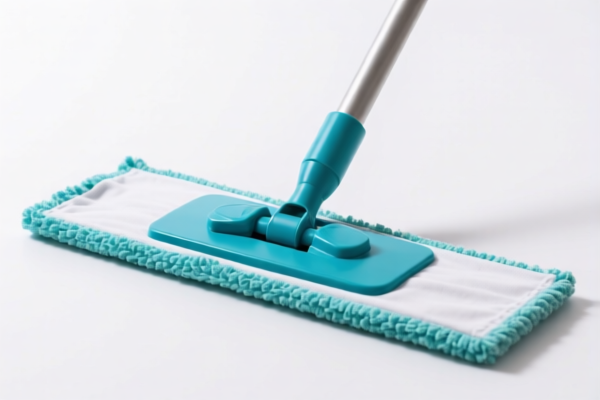
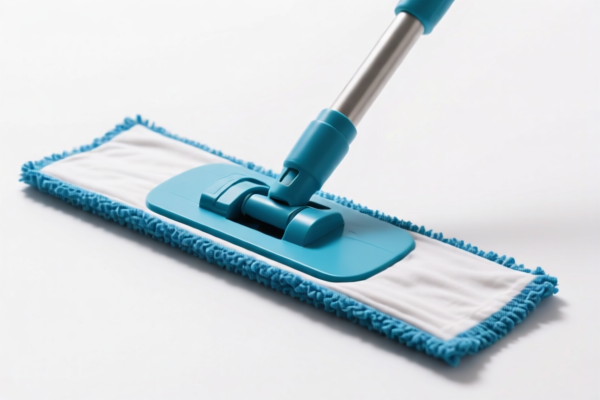

AI分析
🧹 Wall Cleaning Mop (Wall Mop / Wall Scrubber)
🌐 HS Code Reference & Customs Clearance Guide | 2026 Tax Regime Analysis | Strategic Entry Protocol
📌 I. Product Definition & Classification: What is a "Wall Cleaning Mop"?
A Wall Cleaning Mop is a specialized manual tool designed for vertical surface cleaning, dust removal, or stain scrubbing on walls, windows, or high-access areas. In international trade, it is often confused with floor cleaning tools or general textile articles, leading to misclassification risks.
Key Distinction: * Textile Composition: Is the cleaning head made of textile fibers (e.g., microfiber, cotton, synthetic flock) or plastic bristles? * Function: Is it primarily for floor sweeping (excluded from this guide) or wall/vertical cleaning? * Material: Is the frame/body primarily Plastic (Chapter 39) or Bristle/Fabric (Chapter 96)?
⚠️ Critical Classification Trap:
- If the product is a hand-operated sweeper or floor mop with a long handle and textile head, it might fall under 9603.90.80.50 (Other brooms/brushes).
- If the product is purely a textile wadding (fluff/fiber) used for cleaning, it falls under 5601.21.00.90 or 5601.22.00.91.
- If the product is a plastic tool with a cleaning pad, it could be 3924.90.56.50 (Plastic household articles) OR 3924.10.40.00 (Plastic tableware/kitchenware).
- Note: The data provided indicates a 60.3% total tax rate for a specific brush-like item (9603), which is the most likely classification for a "Wall Cleaning Mop" if it has a distinct brush/broom structure.
📦 II. HS Code Classification Details (Based on Provided Data)
| HS Code | Product Description | Material Composition | Likely Application |
|---|---|---|---|
| 3924.90.56.50 | Tableware, kitchenware, other household articles... of plastics: Other: Other Other | Plastic | Plastic mop frames, handles, or all-plastic cleaning tools used in general household contexts. |
| 3924.10.40.00 | Tableware, kitchenware... of plastics: Tableware and kitchenware: Other | Plastic | Plastic tools classified strictly as "kitchenware" (e.g., plastic sponges, small scrubbers for pots/pans). |
| 5601.22.00.91 | Wadding of textile materials... Of man-made fibers Other | Man-made Fibers | Refill pads or heads made of synthetic flocked material (microfiber, polyester). |
| 5601.21.00.90 | Wadding of textile materials... Of cotton Other | Cotton | Refill pads or heads made of natural cotton fibers. |
| 9603.90.80.50 | Brooms, brushes... hand-operated mechanical floor sweepers... Other: Other Other | Mixed (Plastic/Textile/Bristle) | High-Risk Category: The mop is considered a "brush" or "squeegee" with a handle. |
🔍 Focus Analysis:
The product "Wall Cleaning Mop" typically consists of a handle + a cleaning head. * If the head is a brush/scrubber, it falls under 9603.90.80.50 (Highest Tax). * If the head is a textile wadding pad sold separately or as part of a kit, it falls under 5601. * If the entire tool is plastic and not strictly "tableware," it falls under 3924.90.
💰 III. 2026 Tax Rate Breakdown (Detailed & Strategic)
✅ Origin: China (CN)
✅ Destination: United States (US)
✅ Effective Date: As per current data (includes Section 301 & Steel/Aluminum surcharges)
🎯 1. 9603.90.80.50 – The "Brush/Broom" Category (Highest Risk)
This is the most likely classification for a rigid "Wall Cleaning Mop" with a brush head.
| Item | Detail |
|---|---|
| Base Tariff | 2.8% (Standard MFN) |
| Section 301 Surcharge | 7.5% (Additional China tariff) |
| Steel/Aluminum/Copper Surcharge | 50% (If any metal parts like the handle are steel, aluminum, or copper) |
| Total Tax Rate | 60.3% |
| Tax Calculation | CIF Value × 60.3% |
| De Minimis Exemption | ❌ NO (Not eligible for $800 exemption) |
| Legal Path | HTSUS 9603.90.80.50 + Section 301 + Steel/Aluminum Add-on |
📌 Why 60.3%?
The high tax is a compound penalty:
1. Base: 2.8%
2. 301: 7.5% (Standard China surcharge)
3. Material Penalty: If the mop has a steel or aluminum handle (common for rigidity), an additional 50% is slapped on top of the total value (or the specific component value, depending on CBP interpretation).
Result: 2.8 + 7.5 + 50 = 60.3%.
🎯 2. 3924.90.56.50 – Plastic Household Article
If the mop is entirely plastic and not classified as a "brush".
| Item | Detail |
|---|---|
| Base Tariff | 0.0% |
| Section 301 Surcharge | 0.0% |
| Total Tax Rate | 0.0% |
| Tax Calculation | CIF Value × 0% |
| De Minimis Exemption | ✅ YES (Potentially eligible if under $800) |
📌 Strategy:
If the product is all-plastic (no steel/aluminum parts) and does not fit the "brush" definition, this is the sweet spot.
🎯 3. 5601.21.00.90 / 5601.22.00.91 – Textile Wadding (Pad Only)
If shipping only the cleaning heads/pads.
| Item | Detail |
|---|---|
| Base Tariff | 0.0% |
| Section 301 Surcharge | 0.0% |
| Total Tax Rate | 0.0% |
| Tax Calculation | CIF Value × 0% |
📌 Strategy:
Decouple the parts! Ship the mop handle separately (as plastic) or as a "brush" (high tax) and the cleaning heads as "wadding" (0% tax).
🛠️ IV. Customs Clearance Practical Advice (Action Plan)
✅ 1. Material Declaration is King
- The Problem: A "Wall Cleaning Mop" with a metal core inside the plastic handle triggers the 50% Steel/Aluminum surcharge.
- The Fix:
- Option A: Design the handle as 100% Plastic (no metal reinforcement). This avoids the 50% surcharge.
- Option B: If metal is required, declare the value of the metal component separately (if possible) to minimize the taxable base, though this is complex.
- Option C: Ship the "Mop" as a plastic household article (3924.90.56.50) if it can be argued it is not a "brush" (e.g., it's a flat plastic squeegee).
✅ 2. HS Code Strategy Matrix
| Product Configuration | Recommended HS Code | Est. Tax Rate | Action |
|---|---|---|---|
| All Plastic Handle + Plastic Head | 3924.90.56.50 |
0.0% | ✅ Best Choice |
| Metal Handle + Plastic Head | 9603.90.80.50 |
60.3% | ❌ Avoid or re-engineer |
| Metal Handle + Metal Scraper | 9603.90.80.50 |
60.3% | ❌ Avoid |
| Cleaning Pad Only (Textile) | 5601.22.00.91 |
0.0% | ✅ Best for Consumables |
| Cleaning Pad Only (Cotton) | 5601.21.00.90 |
0.0% | ✅ Best for Consumables |
✅ 3. Documentation Checklist for Low-Tax Entry
| Document | Requirement | Why? |
|---|---|---|
| Product Spec Sheet | Must state "100% Plastic Construction" | To avoid the 50% metal surcharge |
| Bill of Materials (BOM) | List all components | To prove no steel/aluminum content |
| Photos | Show handle, joints, and no metal cores | Visual proof for Customs officers |
| Invoice Description | "Plastic Wall Cleaning Tool" | Avoid words like "Broom", "Brush", "Steel" |
✅ 4. Clever Workarounds (Supply Chain Strategy)
💡 Pro Tip: Split Shipping
Do NOT ship the handle and the cleaning pad as a single "kit" if the handle has metal. * Shipment A: Cleaning Pads (HS 5601.22.00.91) → 0% Tax
Shipment B: Handle (HS 3924.90.56.50) → 0% Tax (If all plastic)
Result: Avoid the 60.3% tax on the combined assembly.
🌍 V. Global Market Comparison (2026 Context)
| Market | Recommended HS Code | Tax Impact | Strategy |
|---|---|---|---|
| 🇺🇸 USA | 3924.90.56.50 |
0.0% | Must avoid metal handles and "Brush" classification. |
| 🇪🇺 EU | 9603.90 |
Low (1.7%) | Less aggressive on Section 301, but watch "Metal" rules. |
| 🇨🇦 Canada | 9603.90 |
Low (~5%) | Monitor "Steel" surcharges similar to US. |
| 🇦🇺 Australia | 9603.90 |
Low (~5%) | Standard duty rates apply. |
📌 VI. Common Pitfalls & Avoidance Guide
❌ Mistake 1: Calling it a "Broom" or "Brush"
👉 Consequence: Classifies under 9603.90.80.50 → 60.3% Tax.
✅ Fix: Call it a "Wall Cleaning Tool" or "Plastic Scrubber."
❌ Mistake 2: Using a Metal Handle
👉 Consequence: Triggers the 50% Steel/Aluminum surcharge.
✅ Fix: Switch to high-density plastic or fiberglass (non-ferrous) handles.
❌ Mistake 3: Bundling Pads and Handles
👉 Consequence: The whole kit inherits the high tax of the handle.
✅ Fix: Sell pads and handles as separate SKUs.
🎯 VII. Conclusion: Cost Optimization Strategy
🚀 Final Strategy for "Wall Cleaning Mop":
1. Redesign: Ensure the product is 100% Plastic (no steel/aluminum cores).
2. Classification: Target HS Code 3924.90.56.50 (Plastic Household Article).
3. Tax Result: 0.0% Total Duty (vs. 60.3% for "Brush" categories).
4. Shipping: Separate the textile pads (5601) from the handles to ensure 0% tax on all components.💡 Remember:
"In the eyes of US Customs, a Plastic tool is free. A Metal tool with a brush head is a 60.3% Tax Trap."
✨ Professional Customs Clearance Starts with Precise Material Design!
💼 Save 60% in duty by changing one component!
用户评价
关于 HS 编码归类
协调制度(HS)是由世界海关组织(WCO)制定的国际贸易商品分类标准。全球 200 多个国家采用 HS 系统作为海关关税、贸易统计和进出口监管的基础。
每个 HS 编码遵循以下层级结构:
- 章(2 位)——商品大类(例如:第 84 章:机器和机械设备)
- 品目(4 位)——章内的更具体分类
- 子目(6 位)——国际通用细分,所有 WCO 成员国统一使用
- 本国细分(8-10 位)——各国自行扩展的细分编码,如美国 HTSUS 10 位编码
正确的 HS 编码归类对于顺利通关、准确缴纳关税和遵守贸易法规至关重要。错误归类可能导致海关延误、多缴关税或罚款。
从CN进口到US时,适用的关税税率可能包括:
- 最惠国(MFN)税率——适用于 WTO 成员国的标准关税税率
- 普通税率——适用于无贸易协定国家
- 贸易救济关税——附加关税,如 301 条款(反倾销)、232 条款(国家安全)或反补贴税
本页内容仅供参考。如需正式归类,请咨询当地海关或持牌报关代理。