Wall Cleaning Mop
CN → US| HS Code | Tariff Rate | Origin | Destination | Doc |
|---|---|---|---|---|
| 5601220091 | 41.3% | CN | US | Official Doc |
| 5601210090 | 38.6% | CN | US | Official Doc |
| 3924905650 | 20.9% | CN | US | Official Doc |
| 3924104000 | 13.4% | CN | US | Official Doc |
| 9603908050 | 70.3% | CN | US | Official Doc |
Product Images

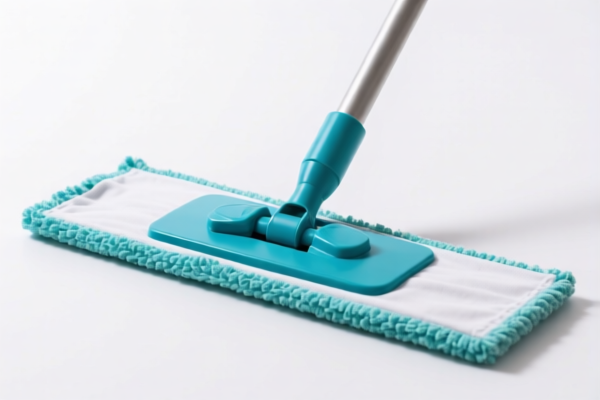
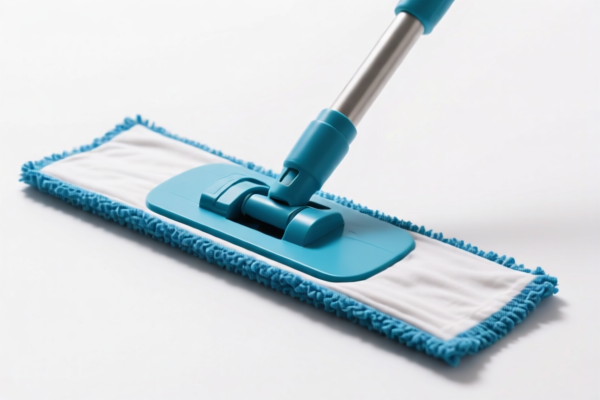

AI Analysis
🧹 Wall Cleaning Mop (Wall Mop / Wall Scrubber)
🌐 HS Code Reference & Customs Clearance Guide | 2026 Tax Regime Analysis | Strategic Entry Protocol
📌 I. Product Definition & Classification: What is a "Wall Cleaning Mop"?
A Wall Cleaning Mop is a specialized manual tool designed for vertical surface cleaning, dust removal, or stain scrubbing on walls, windows, or high-access areas. In international trade, it is often confused with floor cleaning tools or general textile articles, leading to misclassification risks.
Key Distinction: * Textile Composition: Is the cleaning head made of textile fibers (e.g., microfiber, cotton, synthetic flock) or plastic bristles? * Function: Is it primarily for floor sweeping (excluded from this guide) or wall/vertical cleaning? * Material: Is the frame/body primarily Plastic (Chapter 39) or Bristle/Fabric (Chapter 96)?
⚠️ Critical Classification Trap:
- If the product is a hand-operated sweeper or floor mop with a long handle and textile head, it might fall under 9603.90.80.50 (Other brooms/brushes).
- If the product is purely a textile wadding (fluff/fiber) used for cleaning, it falls under 5601.21.00.90 or 5601.22.00.91.
- If the product is a plastic tool with a cleaning pad, it could be 3924.90.56.50 (Plastic household articles) OR 3924.10.40.00 (Plastic tableware/kitchenware).
- Note: The data provided indicates a 60.3% total tax rate for a specific brush-like item (9603), which is the most likely classification for a "Wall Cleaning Mop" if it has a distinct brush/broom structure.
📦 II. HS Code Classification Details (Based on Provided Data)
| HS Code | Product Description | Material Composition | Likely Application |
|---|---|---|---|
| 3924.90.56.50 | Tableware, kitchenware, other household articles... of plastics: Other: Other Other | Plastic | Plastic mop frames, handles, or all-plastic cleaning tools used in general household contexts. |
| 3924.10.40.00 | Tableware, kitchenware... of plastics: Tableware and kitchenware: Other | Plastic | Plastic tools classified strictly as "kitchenware" (e.g., plastic sponges, small scrubbers for pots/pans). |
| 5601.22.00.91 | Wadding of textile materials... Of man-made fibers Other | Man-made Fibers | Refill pads or heads made of synthetic flocked material (microfiber, polyester). |
| 5601.21.00.90 | Wadding of textile materials... Of cotton Other | Cotton | Refill pads or heads made of natural cotton fibers. |
| 9603.90.80.50 | Brooms, brushes... hand-operated mechanical floor sweepers... Other: Other Other | Mixed (Plastic/Textile/Bristle) | High-Risk Category: The mop is considered a "brush" or "squeegee" with a handle. |
🔍 Focus Analysis:
The product "Wall Cleaning Mop" typically consists of a handle + a cleaning head. * If the head is a brush/scrubber, it falls under 9603.90.80.50 (Highest Tax). * If the head is a textile wadding pad sold separately or as part of a kit, it falls under 5601. * If the entire tool is plastic and not strictly "tableware," it falls under 3924.90.
💰 III. 2026 Tax Rate Breakdown (Detailed & Strategic)
✅ Origin: China (CN)
✅ Destination: United States (US)
✅ Effective Date: As per current data (includes Section 301 & Steel/Aluminum surcharges)
🎯 1. 9603.90.80.50 – The "Brush/Broom" Category (Highest Risk)
This is the most likely classification for a rigid "Wall Cleaning Mop" with a brush head.
| Item | Detail |
|---|---|
| Base Tariff | 2.8% (Standard MFN) |
| Section 301 Surcharge | 7.5% (Additional China tariff) |
| Steel/Aluminum/Copper Surcharge | 50% (If any metal parts like the handle are steel, aluminum, or copper) |
| Total Tax Rate | 60.3% |
| Tax Calculation | CIF Value × 60.3% |
| De Minimis Exemption | ❌ NO (Not eligible for $800 exemption) |
| Legal Path | HTSUS 9603.90.80.50 + Section 301 + Steel/Aluminum Add-on |
📌 Why 60.3%?
The high tax is a compound penalty:
1. Base: 2.8%
2. 301: 7.5% (Standard China surcharge)
3. Material Penalty: If the mop has a steel or aluminum handle (common for rigidity), an additional 50% is slapped on top of the total value (or the specific component value, depending on CBP interpretation).
Result: 2.8 + 7.5 + 50 = 60.3%.
🎯 2. 3924.90.56.50 – Plastic Household Article
If the mop is entirely plastic and not classified as a "brush".
| Item | Detail |
|---|---|
| Base Tariff | 0.0% |
| Section 301 Surcharge | 0.0% |
| Total Tax Rate | 0.0% |
| Tax Calculation | CIF Value × 0% |
| De Minimis Exemption | ✅ YES (Potentially eligible if under $800) |
📌 Strategy:
If the product is all-plastic (no steel/aluminum parts) and does not fit the "brush" definition, this is the sweet spot.
🎯 3. 5601.21.00.90 / 5601.22.00.91 – Textile Wadding (Pad Only)
If shipping only the cleaning heads/pads.
| Item | Detail |
|---|---|
| Base Tariff | 0.0% |
| Section 301 Surcharge | 0.0% |
| Total Tax Rate | 0.0% |
| Tax Calculation | CIF Value × 0% |
📌 Strategy:
Decouple the parts! Ship the mop handle separately (as plastic) or as a "brush" (high tax) and the cleaning heads as "wadding" (0% tax).
🛠️ IV. Customs Clearance Practical Advice (Action Plan)
✅ 1. Material Declaration is King
- The Problem: A "Wall Cleaning Mop" with a metal core inside the plastic handle triggers the 50% Steel/Aluminum surcharge.
- The Fix:
- Option A: Design the handle as 100% Plastic (no metal reinforcement). This avoids the 50% surcharge.
- Option B: If metal is required, declare the value of the metal component separately (if possible) to minimize the taxable base, though this is complex.
- Option C: Ship the "Mop" as a plastic household article (3924.90.56.50) if it can be argued it is not a "brush" (e.g., it's a flat plastic squeegee).
✅ 2. HS Code Strategy Matrix
| Product Configuration | Recommended HS Code | Est. Tax Rate | Action |
|---|---|---|---|
| All Plastic Handle + Plastic Head | 3924.90.56.50 |
0.0% | ✅ Best Choice |
| Metal Handle + Plastic Head | 9603.90.80.50 |
60.3% | ❌ Avoid or re-engineer |
| Metal Handle + Metal Scraper | 9603.90.80.50 |
60.3% | ❌ Avoid |
| Cleaning Pad Only (Textile) | 5601.22.00.91 |
0.0% | ✅ Best for Consumables |
| Cleaning Pad Only (Cotton) | 5601.21.00.90 |
0.0% | ✅ Best for Consumables |
✅ 3. Documentation Checklist for Low-Tax Entry
| Document | Requirement | Why? |
|---|---|---|
| Product Spec Sheet | Must state "100% Plastic Construction" | To avoid the 50% metal surcharge |
| Bill of Materials (BOM) | List all components | To prove no steel/aluminum content |
| Photos | Show handle, joints, and no metal cores | Visual proof for Customs officers |
| Invoice Description | "Plastic Wall Cleaning Tool" | Avoid words like "Broom", "Brush", "Steel" |
✅ 4. Clever Workarounds (Supply Chain Strategy)
💡 Pro Tip: Split Shipping
Do NOT ship the handle and the cleaning pad as a single "kit" if the handle has metal. * Shipment A: Cleaning Pads (HS 5601.22.00.91) → 0% Tax
Shipment B: Handle (HS 3924.90.56.50) → 0% Tax (If all plastic)
Result: Avoid the 60.3% tax on the combined assembly.
🌍 V. Global Market Comparison (2026 Context)
| Market | Recommended HS Code | Tax Impact | Strategy |
|---|---|---|---|
| 🇺🇸 USA | 3924.90.56.50 |
0.0% | Must avoid metal handles and "Brush" classification. |
| 🇪🇺 EU | 9603.90 |
Low (1.7%) | Less aggressive on Section 301, but watch "Metal" rules. |
| 🇨🇦 Canada | 9603.90 |
Low (~5%) | Monitor "Steel" surcharges similar to US. |
| 🇦🇺 Australia | 9603.90 |
Low (~5%) | Standard duty rates apply. |
📌 VI. Common Pitfalls & Avoidance Guide
❌ Mistake 1: Calling it a "Broom" or "Brush"
👉 Consequence: Classifies under 9603.90.80.50 → 60.3% Tax.
✅ Fix: Call it a "Wall Cleaning Tool" or "Plastic Scrubber."
❌ Mistake 2: Using a Metal Handle
👉 Consequence: Triggers the 50% Steel/Aluminum surcharge.
✅ Fix: Switch to high-density plastic or fiberglass (non-ferrous) handles.
❌ Mistake 3: Bundling Pads and Handles
👉 Consequence: The whole kit inherits the high tax of the handle.
✅ Fix: Sell pads and handles as separate SKUs.
🎯 VII. Conclusion: Cost Optimization Strategy
🚀 Final Strategy for "Wall Cleaning Mop":
1. Redesign: Ensure the product is 100% Plastic (no steel/aluminum cores).
2. Classification: Target HS Code 3924.90.56.50 (Plastic Household Article).
3. Tax Result: 0.0% Total Duty (vs. 60.3% for "Brush" categories).
4. Shipping: Separate the textile pads (5601) from the handles to ensure 0% tax on all components.💡 Remember:
"In the eyes of US Customs, a Plastic tool is free. A Metal tool with a brush head is a 60.3% Tax Trap."
✨ Professional Customs Clearance Starts with Precise Material Design!
💼 Save 60% in duty by changing one component!
Customer Reviews
About HS Code Classification
The Harmonized System (HS) is an internationally standardized nomenclature developed by the World Customs Organization (WCO) to classify traded products. Over 200 countries use the HS system as the basis for customs tariffs, trade statistics, and import/export regulations.
Each HS code follows a hierarchical structure:
- Chapter (2 digits) — Broad category of goods (e.g., Chapter 84: Machinery and Mechanical Appliances)
- Heading (4 digits) — More specific grouping within the chapter
- Subheading (6 digits) — Internationally standardized breakdown, used by all WCO member countries
- National subdivisions (8-10 digits) — Country-specific extensions for further classification, such as US HTSUS 10-digit codes
Correct HS code classification is essential for smooth customs clearance, accurate duty payment, and compliance with trade regulations. Misclassification can lead to customs delays, overpayment of duties, or penalties.
When importing from CN to US, the applicable tariff rates may include:
- Most-Favored-Nation (MFN) rate — The standard duty rate applied to WTO members
- General rate — Applied to countries without trade agreements
- Trade remedy duties — Additional tariffs such as Section 301 (anti-dumping), Section 232 (national security), or countervailing duties
The information provided on this page is for reference purposes only. For official classification, please consult with your local customs authority or a licensed customs broker.