Wardrobe Rod
CN → US| HS编码 | 关税税率 | 原产国 | 目的国 | 文档 |
|---|---|---|---|---|
| 7326200020 | 88.9% | CN | US | 官方文档 |
| 7326908688 | 87.9% | CN | US | 官方文档 |
| 4421999880 | 38.3% | CN | US | 官方文档 |
| 6307909875 | 24.5% | CN | US | 官方文档 |
| 6307909891 | 24.5% | CN | US | 官方文档 |
商品图片
AI分析
🧺 Wardrobe Rod (Clothes Hanger Rods & Garment Holders)
🌐 HS Code Reference & Customs Clearance Guide | 2026 Latest Tariff Breakdown | Strategic Clearance Strategy
📌 Part 1: Product Definition & Classification: Do You Really Know What a "Wardrobe Rod" Is?
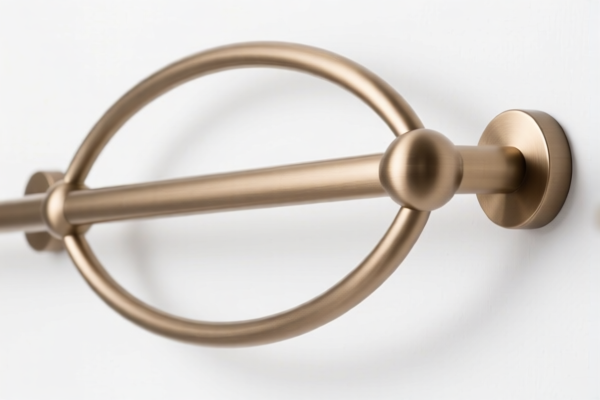
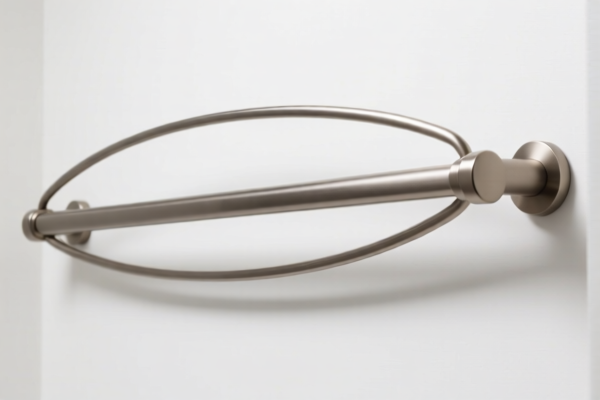
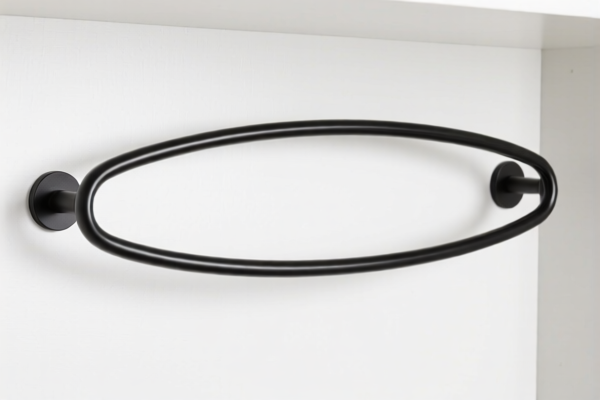
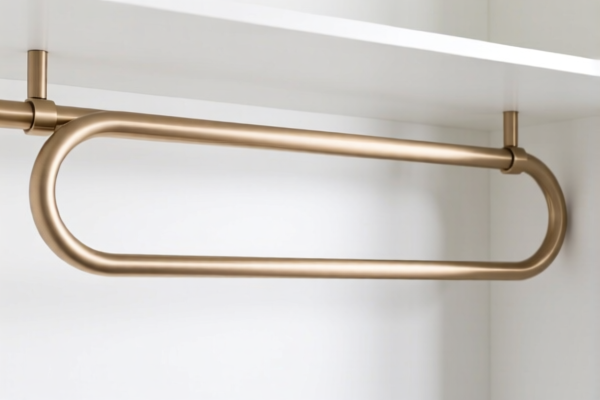
A Wardrobe Rod is a functional hardware component used in closets, cabinets, and storage systems to hang clothes. In international trade, its classification is highly sensitive to material composition. It is not a single HS Code but falls into two distinct categories:
Metal Rods (Steel/Iron): Structural, rigid, or semi-rigid bars made of steel or iron. These are classified under Chapter 73 (Articles of Iron or Steel).
Fabric/Textile Rods: Flexible, soft rods made of fabric, often used for lightweight clothes or decorative purposes. These are classified under Chapter 63 (Other Made Up Textile Articles).
Wooden Rods: Less common but possible; classified under Chapter 44 (Wood and articles of wood).
⚠️ Key Distinction Point:
- If the product is metal (steel/iron) → It attracts high punitive tariffs (88.9%).
- If the product is fabric/textile → It enjoys lower punitive tariffs (24.5%).
- Do not misdeclare a metal rod as fabric to save tax; this is a common customs red flag leading to audits and penalties.
📦 Part 2: HS Code Classification Details (2026 Latest Tariff Authority Reference)
| HS Code | Product Description | Applicable Scenario | Material Logic |
|---|---|---|---|
7326.20.00.20 |
Iron/Steel articles, specifically Clothes Hanger Rods (Metal bars) | Metal closet rods, steel pipes used for hanging clothes | ✅ Metal (Iron/Steel) |
7326.90.86.88 |
Other articles of iron or steel, not elsewhere specified | Metal rods that don't fit specific sub-categories of 7326.20 | ✅ Metal (Iron/Steel) |
4421.99.98.80 |
Other made-up wooden articles | Wooden closet rods or hanging bars | ✅ Wood |
6307.90.98.75 |
Other made-up textile articles, including Fabric Hangers/Rods | Rods made of fabric, textiles, or woven material | ✅ Textile/Fabric |
6307.90.98.91 |
Other made-up textile articles (General) | Fabric-based hanging accessories not elsewhere specified | ✅ Textile/Fabric |
🔍 Critical Reminder:
- Metal rods are subject to Section 301 Duties + Section 122 Duties + Aluminum/Steel Duties, resulting in massive tax rates (~88.9%).
- Fabric rods avoid the heavy steel/iron penalties, resulting in significantly lower rates (~24.5%).
- Misclassification Risk: Customs will check the Bill of Lading, Commercial Invoice, and Product Samples. If a "fabric rod" is found to have a metal core, it will be reclassified as metal.
💰 Part 3: 2026 Latest Tariff Rate Breakdown (Including Surcharges & Policy Add-ons)
✅ Applicable Country: United States (US)
✅ Origin: China (CN)
✅ Effective Date: 2025/2026 Tariff Schedule
🎯 1. 7326.20.00.20 & 7326.90.86.88 —— Metal Wardrobe Rods (Steel/Iron)
| Item | Content |
|---|---|
| Base Duty Rate | 3.9% (7326.20) / 2.9% (7326.90) |
| Section 301 Surcharge | +25% |
| Section 122 Surcharge | +10% |
| Aluminum/Steel/Copper Surcharge | +50% |
| Total Effective Tax Rate | 88.9% (for 7326.20) / 87.9% (for 7326.90) |
| Tax Calculation | CIF Value × ~88% |
| De Minimis Exemption | ❌ NOT ELIGIBLE (High-value punitive tariffs exclude small shipments) |
| Legal Basis Path | USITC:7326.20.00.20 → Section 301: Footnote 9903.88.01 → Section 122 → Aluminum/Steel Duty |
📌 Explanation:
- 88.9% is an extremely high tariff burden. This is due to the cumulative effect of:
1. Base Duty: Basic import tax for steel articles.
2. Section 301: 25% on Chinese steel/iron goods.
3. Section 122: 10% on national security grounds.
4. Aluminum/Steel Duty: Additional 50% for specific steel products.
- Cost Impact: For a $1,000 shipment, you pay ~$880 in taxes alone. This makes metal rods unprofitable for direct export to the US without duty mitigation.
🎯 2. 4421.99.98.80 —— Wooden Wardrobe Rods
| Item | Content |
|---|---|
| Base Duty Rate | 3.3% |
| Section 301 Surcharge | +25% |
| Section 122 Surcharge | +10% |
| Total Effective Tax Rate | 38.3% |
| Tax Calculation | CIF Value × 38.3% |
| De Minimis Exemption | ❌ NOT ELIGIBLE (Subject to Section 301) |
| Legal Basis Path | USITC:4421.99.98.80 → Section 301 → Section 122 |
📌 Note:
- Wooden rods are not subject to the 50% steel/aluminum surcharge, resulting in a much lower rate (~38.3%).
- This is a cost-effective alternative if the design allows for wood construction.
🎯 3. 6307.90.98.75 & 6307.90.98.91 —— Fabric/Textile Wardrobe Rods
| Item | Content |
|---|---|
| Base Duty Rate | 7.0% |
| Section 301 Surcharge | +7.5% (Reduced rate for certain textile/footwear/apparel accessories under specific trade actions) |
| Section 122 Surcharge | +10% |
| Total Effective Tax Rate | 24.5% |
| Tax Calculation | CIF Value × 24.5% |
| De Minimis Exemption | ❌ NOT ELIGIBLE (But significantly lower than metal) |
| Legal Basis Path | USITC:6307.90.98.75 → Section 301 → Section 122 |
📌 Note:
- Fabric rods fall under Chapter 63 (Other Made Up Textile Articles).
- They do not attract the 50% steel/aluminum surcharge.
- The Section 301 rate for textiles is often lower than for steel products (7.5% vs 25%).
- Strategic Advantage: This is the lowest tax rate among the options (~24.5%). If your product can be made of fabric (e.g., soft hanger rods, fabric-covered rods), this is the optimal classification.
🛠️ Part 4: Customs Clearance Practical Advice (Live Pitfall Avoidance Guide)
✅ 1. Documentation Checklist (Mandatory)
| Document | Required | Description |
|---|---|---|
| ✅ Product Specification Sheet | ✔️ | Must explicitly state material composition (e.g., "100% Polyester Fabric" vs. "Carbon Steel"). |
| ✅ Product Photos | ✔️ | Clear images showing cross-section (if possible) to prove material. |
| ✅ Commercial Invoice | ✔️ | Description must match HS Code logic (e.g., "Fabric Clothes Rod" not just "Wardrobe Rod"). |
| ✅ Bill of Lading | ✔️ | Must not contradict the HS Code. |
| ✅ Third-Party Test Report | ✔️ | For fabric rods, proof of textile content (e.g., from SGS, BV) is crucial. |
| ✅ Packaging List | ✔️ | Shows units, weight, and dimensions. |
✅ 2. Declaration Strategy (Key Mnemonics)
🔥 “Material Dictates Tax: Steel is Heavy, Fabric is Light!”
| Scenario | Correct Declaration | Wrong Action | Result |
|---|---|---|---|
| Metal Rod | 7326.20.00.20 |
Declare as "Fabric" | Penalty, Seizure, Back Taxes |
| Fabric Rod | 6307.90.98.75 |
Declare as "Steel" | Overpay ~64% in taxes! |
| Wooden Rod | 4421.99.98.80 |
Declare as "Fabric" | Audit Risk |
| Mixed Material | Declare as Steel (if metal core exists) | Declare as "Fabric" | High Risk |
✅ 3. Special Situations Handling
| Situation | Recommendation |
|---|---|
| Metal Rod with Fabric Cover | If the metal core is structural, it is Steel (7326...). The fabric is incidental. Do not try to classify as textile. |
| OEM Custom Design | Provide design files to prove material intent. If designed as fabric, ensure the final product matches. |
| Drop Shipping / Small Parcels | De Minimis (Section 321) does NOT apply to Section 301/122 duties. Small shipments of metal rods still face 88.9% tax. |
| Supply Chain Shift | If exporting to the US, consider sourcing from Vietnam or Mexico (if rules of origin allow) to avoid Section 301/122 surcharges. |
🌍 Part 5: Global Market Clearance Comparison (2026 Latest)
| Country/Region | Recommended HS Code | Estimated Tax (China Origin) | Certification Requirements | Notes |
|---|---|---|---|---|
| 🇺🇸 USA | 6307.90.98.75 (Fabric) |
24.5% | None specific | Avoid 7326 (88.9%) if possible. |
| 🇺🇸 USA | 7326.20.00.20 (Metal) |
88.9% | None specific | Extremely high cost. |
| 🇪🇺 EU | 7326.20.00 (Metal) |
~6.5% (No Section 301) | CE (if applicable) | EU has no Section 301, but anti-dumping may apply. |
| 🇨🇳 China | 7326.20.00 (Metal) |
~3-5% | CCC (if applicable) | Low import tax, but high export tax on some steel. |
| 🇬🇧 UK | 7326.20.00 (Metal) |
~6.5% | UKCA | Post-Brexit rules apply. |
📌 Conclusion:
- The US is the most punitive market for metal wardrobe rods due to Section 301, Section 122, and Steel/Aluminum duties.
- Fabric rods (6307...) are the only cost-effective option for the US market among these choices.
- Wooden rods are a middle ground (~38.3%).
📌 Part 6: Common Errors & Pitfall Avoidance (Lessons Learned)
❌ Error 1: Declaring a steel rod as a "Fabric Clothes Hanger" to save tax.
👉 Consequence: Customs inspect package, find steel core → Confiscation + 200% Penalty + Back Taxes.
❌ Error 2: Declaring a fabric rod as "Steel" due to confusion.
👉 Consequence: Overpaying 64.4% in taxes unnecessarily.
❌ Error 3: Ignoring Section 122 duties.
👉 Consequence: Even if you clear Section 301, Section 122 (10%) still applies to most Chinese imports for national security reasons.
❌ Error 4: Assuming De Minimis ($800) exempts tariffs.
👉 Consequence: Incorrect. Section 301 and Section 122 duties apply even to small parcels.
✅ Correct Practice:
“Fabric Clothes Rod, 100% Polyester, Flexible, For Closet Use, Model ABC, No Metal Core”
🎯 Part 7: Conclusion: Professional Classification Saves Money!
🎯 Remember the Mantra:
🔹 “Steel is Expensive (88%), Fabric is Cheap (24%), Wood is Middle (38%).”
🔹 “HS Code Defines Your Profit Margin. One Digit Change = Thousands Saved.”
📌 Pro Tip:
- If your product is metal, consider re-engineering to use fabric or plastic (check plastic HS Codes for lower rates) for the US market.
- Apply for an Advance Ruling from US Customs (CBP) if the material composition is ambiguous.
- For metal rods, calculate if the margin can absorb 88.9% tax. If not, do not export to the US without duty mitigation strategies (e.g., third-country processing).
📣 Immediate Action:
📞 Contact a licensed customs broker + Provide Material Samples + Apply for HS Code Advance Ruling
🚀 Let your Wardrobe Rods, Clear Smoothly, Maximize Profits, and Avoid Pitfalls!
✨ Professional Clearance Starts with Accurate Classification!
💼 Every Dollar of Tax Saved is Pure Profit!
用户评价
关于 HS 编码归类
协调制度(HS)是由世界海关组织(WCO)制定的国际贸易商品分类标准。全球 200 多个国家采用 HS 系统作为海关关税、贸易统计和进出口监管的基础。
每个 HS 编码遵循以下层级结构:
- 章(2 位)——商品大类(例如:第 84 章:机器和机械设备)
- 品目(4 位)——章内的更具体分类
- 子目(6 位)——国际通用细分,所有 WCO 成员国统一使用
- 本国细分(8-10 位)——各国自行扩展的细分编码,如美国 HTSUS 10 位编码
正确的 HS 编码归类对于顺利通关、准确缴纳关税和遵守贸易法规至关重要。错误归类可能导致海关延误、多缴关税或罚款。
从CN进口到US时,适用的关税税率可能包括:
- 最惠国(MFN)税率——适用于 WTO 成员国的标准关税税率
- 普通税率——适用于无贸易协定国家
- 贸易救济关税——附加关税,如 301 条款(反倾销)、232 条款(国家安全)或反补贴税
本页内容仅供参考。如需正式归类,请咨询当地海关或持牌报关代理。