Wardrobe Rod
CN → US| HS Code | Tariff Rate | Origin | Destination | Doc |
|---|---|---|---|---|
| 7326200020 | 88.9% | CN | US | Official Doc |
| 7326908688 | 87.9% | CN | US | Official Doc |
| 4421999880 | 38.3% | CN | US | Official Doc |
| 6307909875 | 24.5% | CN | US | Official Doc |
| 6307909891 | 24.5% | CN | US | Official Doc |
Product Images
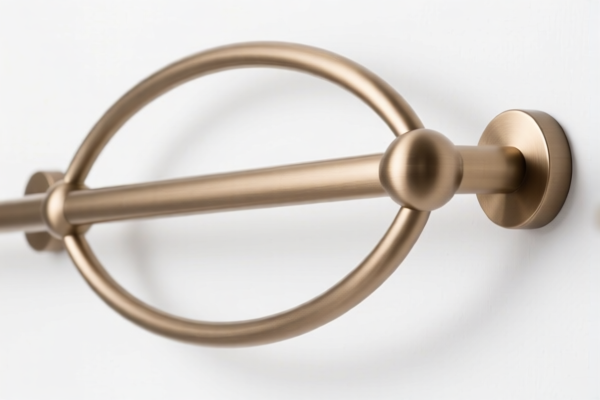
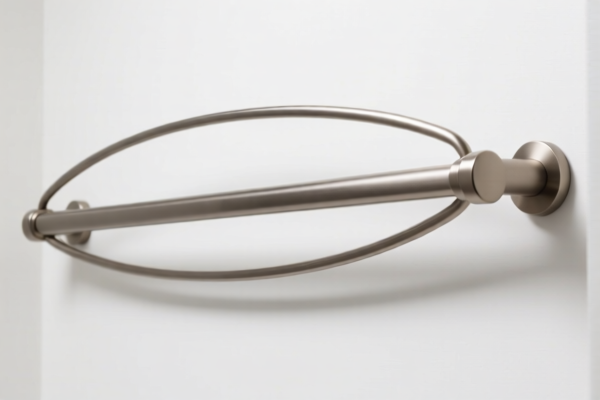
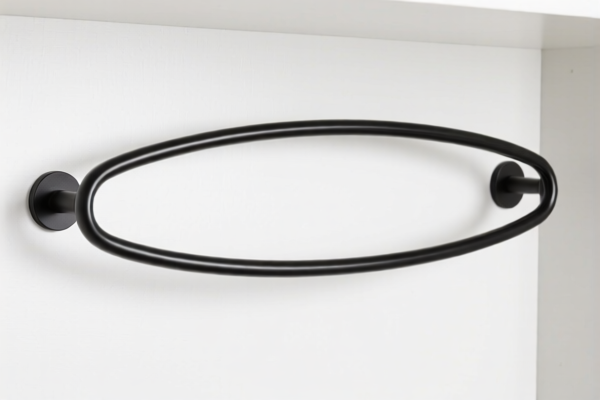
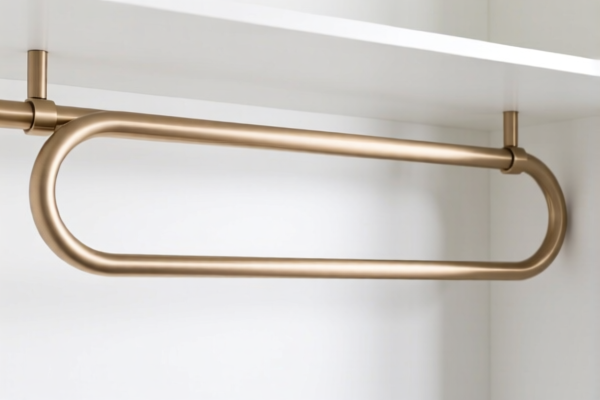
AI Analysis
🧺 Wardrobe Rod (Clothes Hanger Rods & Garment Holders)
🌐 HS Code Reference & Customs Clearance Guide | 2026 Latest Tariff Breakdown | Strategic Clearance Strategy
📌 Part 1: Product Definition & Classification: Do You Really Know What a "Wardrobe Rod" Is?
A Wardrobe Rod is a functional hardware component used in closets, cabinets, and storage systems to hang clothes. In international trade, its classification is highly sensitive to material composition. It is not a single HS Code but falls into two distinct categories:
Metal Rods (Steel/Iron): Structural, rigid, or semi-rigid bars made of steel or iron. These are classified under Chapter 73 (Articles of Iron or Steel).
Fabric/Textile Rods: Flexible, soft rods made of fabric, often used for lightweight clothes or decorative purposes. These are classified under Chapter 63 (Other Made Up Textile Articles).
Wooden Rods: Less common but possible; classified under Chapter 44 (Wood and articles of wood).
⚠️ Key Distinction Point:
- If the product is metal (steel/iron) → It attracts high punitive tariffs (88.9%).
- If the product is fabric/textile → It enjoys lower punitive tariffs (24.5%).
- Do not misdeclare a metal rod as fabric to save tax; this is a common customs red flag leading to audits and penalties.
📦 Part 2: HS Code Classification Details (2026 Latest Tariff Authority Reference)
| HS Code | Product Description | Applicable Scenario | Material Logic |
|---|---|---|---|
7326.20.00.20 |
Iron/Steel articles, specifically Clothes Hanger Rods (Metal bars) | Metal closet rods, steel pipes used for hanging clothes | ✅ Metal (Iron/Steel) |
7326.90.86.88 |
Other articles of iron or steel, not elsewhere specified | Metal rods that don't fit specific sub-categories of 7326.20 | ✅ Metal (Iron/Steel) |
4421.99.98.80 |
Other made-up wooden articles | Wooden closet rods or hanging bars | ✅ Wood |
6307.90.98.75 |
Other made-up textile articles, including Fabric Hangers/Rods | Rods made of fabric, textiles, or woven material | ✅ Textile/Fabric |
6307.90.98.91 |
Other made-up textile articles (General) | Fabric-based hanging accessories not elsewhere specified | ✅ Textile/Fabric |
🔍 Critical Reminder:
- Metal rods are subject to Section 301 Duties + Section 122 Duties + Aluminum/Steel Duties, resulting in massive tax rates (~88.9%).
- Fabric rods avoid the heavy steel/iron penalties, resulting in significantly lower rates (~24.5%).
- Misclassification Risk: Customs will check the Bill of Lading, Commercial Invoice, and Product Samples. If a "fabric rod" is found to have a metal core, it will be reclassified as metal.
💰 Part 3: 2026 Latest Tariff Rate Breakdown (Including Surcharges & Policy Add-ons)
✅ Applicable Country: United States (US)
✅ Origin: China (CN)
✅ Effective Date: 2025/2026 Tariff Schedule
🎯 1. 7326.20.00.20 & 7326.90.86.88 —— Metal Wardrobe Rods (Steel/Iron)
| Item | Content |
|---|---|
| Base Duty Rate | 3.9% (7326.20) / 2.9% (7326.90) |
| Section 301 Surcharge | +25% |
| Section 122 Surcharge | +10% |
| Aluminum/Steel/Copper Surcharge | +50% |
| Total Effective Tax Rate | 88.9% (for 7326.20) / 87.9% (for 7326.90) |
| Tax Calculation | CIF Value × ~88% |
| De Minimis Exemption | ❌ NOT ELIGIBLE (High-value punitive tariffs exclude small shipments) |
| Legal Basis Path | USITC:7326.20.00.20 → Section 301: Footnote 9903.88.01 → Section 122 → Aluminum/Steel Duty |
📌 Explanation:
- 88.9% is an extremely high tariff burden. This is due to the cumulative effect of:
1. Base Duty: Basic import tax for steel articles.
2. Section 301: 25% on Chinese steel/iron goods.
3. Section 122: 10% on national security grounds.
4. Aluminum/Steel Duty: Additional 50% for specific steel products.
- Cost Impact: For a $1,000 shipment, you pay ~$880 in taxes alone. This makes metal rods unprofitable for direct export to the US without duty mitigation.
🎯 2. 4421.99.98.80 —— Wooden Wardrobe Rods
| Item | Content |
|---|---|
| Base Duty Rate | 3.3% |
| Section 301 Surcharge | +25% |
| Section 122 Surcharge | +10% |
| Total Effective Tax Rate | 38.3% |
| Tax Calculation | CIF Value × 38.3% |
| De Minimis Exemption | ❌ NOT ELIGIBLE (Subject to Section 301) |
| Legal Basis Path | USITC:4421.99.98.80 → Section 301 → Section 122 |
📌 Note:
- Wooden rods are not subject to the 50% steel/aluminum surcharge, resulting in a much lower rate (~38.3%).
- This is a cost-effective alternative if the design allows for wood construction.
🎯 3. 6307.90.98.75 & 6307.90.98.91 —— Fabric/Textile Wardrobe Rods
| Item | Content |
|---|---|
| Base Duty Rate | 7.0% |
| Section 301 Surcharge | +7.5% (Reduced rate for certain textile/footwear/apparel accessories under specific trade actions) |
| Section 122 Surcharge | +10% |
| Total Effective Tax Rate | 24.5% |
| Tax Calculation | CIF Value × 24.5% |
| De Minimis Exemption | ❌ NOT ELIGIBLE (But significantly lower than metal) |
| Legal Basis Path | USITC:6307.90.98.75 → Section 301 → Section 122 |
📌 Note:
- Fabric rods fall under Chapter 63 (Other Made Up Textile Articles).
- They do not attract the 50% steel/aluminum surcharge.
- The Section 301 rate for textiles is often lower than for steel products (7.5% vs 25%).
- Strategic Advantage: This is the lowest tax rate among the options (~24.5%). If your product can be made of fabric (e.g., soft hanger rods, fabric-covered rods), this is the optimal classification.
🛠️ Part 4: Customs Clearance Practical Advice (Live Pitfall Avoidance Guide)
✅ 1. Documentation Checklist (Mandatory)
| Document | Required | Description |
|---|---|---|
| ✅ Product Specification Sheet | ✔️ | Must explicitly state material composition (e.g., "100% Polyester Fabric" vs. "Carbon Steel"). |
| ✅ Product Photos | ✔️ | Clear images showing cross-section (if possible) to prove material. |
| ✅ Commercial Invoice | ✔️ | Description must match HS Code logic (e.g., "Fabric Clothes Rod" not just "Wardrobe Rod"). |
| ✅ Bill of Lading | ✔️ | Must not contradict the HS Code. |
| ✅ Third-Party Test Report | ✔️ | For fabric rods, proof of textile content (e.g., from SGS, BV) is crucial. |
| ✅ Packaging List | ✔️ | Shows units, weight, and dimensions. |
✅ 2. Declaration Strategy (Key Mnemonics)
🔥 “Material Dictates Tax: Steel is Heavy, Fabric is Light!”
| Scenario | Correct Declaration | Wrong Action | Result |
|---|---|---|---|
| Metal Rod | 7326.20.00.20 |
Declare as "Fabric" | Penalty, Seizure, Back Taxes |
| Fabric Rod | 6307.90.98.75 |
Declare as "Steel" | Overpay ~64% in taxes! |
| Wooden Rod | 4421.99.98.80 |
Declare as "Fabric" | Audit Risk |
| Mixed Material | Declare as Steel (if metal core exists) | Declare as "Fabric" | High Risk |
✅ 3. Special Situations Handling
| Situation | Recommendation |
|---|---|
| Metal Rod with Fabric Cover | If the metal core is structural, it is Steel (7326...). The fabric is incidental. Do not try to classify as textile. |
| OEM Custom Design | Provide design files to prove material intent. If designed as fabric, ensure the final product matches. |
| Drop Shipping / Small Parcels | De Minimis (Section 321) does NOT apply to Section 301/122 duties. Small shipments of metal rods still face 88.9% tax. |
| Supply Chain Shift | If exporting to the US, consider sourcing from Vietnam or Mexico (if rules of origin allow) to avoid Section 301/122 surcharges. |
🌍 Part 5: Global Market Clearance Comparison (2026 Latest)
| Country/Region | Recommended HS Code | Estimated Tax (China Origin) | Certification Requirements | Notes |
|---|---|---|---|---|
| 🇺🇸 USA | 6307.90.98.75 (Fabric) |
24.5% | None specific | Avoid 7326 (88.9%) if possible. |
| 🇺🇸 USA | 7326.20.00.20 (Metal) |
88.9% | None specific | Extremely high cost. |
| 🇪🇺 EU | 7326.20.00 (Metal) |
~6.5% (No Section 301) | CE (if applicable) | EU has no Section 301, but anti-dumping may apply. |
| 🇨🇳 China | 7326.20.00 (Metal) |
~3-5% | CCC (if applicable) | Low import tax, but high export tax on some steel. |
| 🇬🇧 UK | 7326.20.00 (Metal) |
~6.5% | UKCA | Post-Brexit rules apply. |
📌 Conclusion:
- The US is the most punitive market for metal wardrobe rods due to Section 301, Section 122, and Steel/Aluminum duties.
- Fabric rods (6307...) are the only cost-effective option for the US market among these choices.
- Wooden rods are a middle ground (~38.3%).
📌 Part 6: Common Errors & Pitfall Avoidance (Lessons Learned)
❌ Error 1: Declaring a steel rod as a "Fabric Clothes Hanger" to save tax.
👉 Consequence: Customs inspect package, find steel core → Confiscation + 200% Penalty + Back Taxes.
❌ Error 2: Declaring a fabric rod as "Steel" due to confusion.
👉 Consequence: Overpaying 64.4% in taxes unnecessarily.
❌ Error 3: Ignoring Section 122 duties.
👉 Consequence: Even if you clear Section 301, Section 122 (10%) still applies to most Chinese imports for national security reasons.
❌ Error 4: Assuming De Minimis ($800) exempts tariffs.
👉 Consequence: Incorrect. Section 301 and Section 122 duties apply even to small parcels.
✅ Correct Practice:
“Fabric Clothes Rod, 100% Polyester, Flexible, For Closet Use, Model ABC, No Metal Core”
🎯 Part 7: Conclusion: Professional Classification Saves Money!
🎯 Remember the Mantra:
🔹 “Steel is Expensive (88%), Fabric is Cheap (24%), Wood is Middle (38%).”
🔹 “HS Code Defines Your Profit Margin. One Digit Change = Thousands Saved.”
📌 Pro Tip:
- If your product is metal, consider re-engineering to use fabric or plastic (check plastic HS Codes for lower rates) for the US market.
- Apply for an Advance Ruling from US Customs (CBP) if the material composition is ambiguous.
- For metal rods, calculate if the margin can absorb 88.9% tax. If not, do not export to the US without duty mitigation strategies (e.g., third-country processing).
📣 Immediate Action:
📞 Contact a licensed customs broker + Provide Material Samples + Apply for HS Code Advance Ruling
🚀 Let your Wardrobe Rods, Clear Smoothly, Maximize Profits, and Avoid Pitfalls!
✨ Professional Clearance Starts with Accurate Classification!
💼 Every Dollar of Tax Saved is Pure Profit!
Customer Reviews
About HS Code Classification
The Harmonized System (HS) is an internationally standardized nomenclature developed by the World Customs Organization (WCO) to classify traded products. Over 200 countries use the HS system as the basis for customs tariffs, trade statistics, and import/export regulations.
Each HS code follows a hierarchical structure:
- Chapter (2 digits) — Broad category of goods (e.g., Chapter 84: Machinery and Mechanical Appliances)
- Heading (4 digits) — More specific grouping within the chapter
- Subheading (6 digits) — Internationally standardized breakdown, used by all WCO member countries
- National subdivisions (8-10 digits) — Country-specific extensions for further classification, such as US HTSUS 10-digit codes
Correct HS code classification is essential for smooth customs clearance, accurate duty payment, and compliance with trade regulations. Misclassification can lead to customs delays, overpayment of duties, or penalties.
When importing from CN to US, the applicable tariff rates may include:
- Most-Favored-Nation (MFN) rate — The standard duty rate applied to WTO members
- General rate — Applied to countries without trade agreements
- Trade remedy duties — Additional tariffs such as Section 301 (anti-dumping), Section 232 (national security), or countervailing duties
The information provided on this page is for reference purposes only. For official classification, please consult with your local customs authority or a licensed customs broker.