Waste Paper Chemical Residue
CN → US| HS编码 | 关税税率 | 原产国 | 目的国 | 文档 |
|---|---|---|---|---|
| 4707900000 | 35.0% | CN | US | 官方文档 |
| 4707100000 | 35.0% | CN | US | 官方文档 |
| 3825610000 | 35.0% | CN | US | 官方文档 |
| 3825690000 | 35.0% | CN | US | 官方文档 |
| 4707900000 | 35.0% | CN | US | 官方文档 |
商品图片
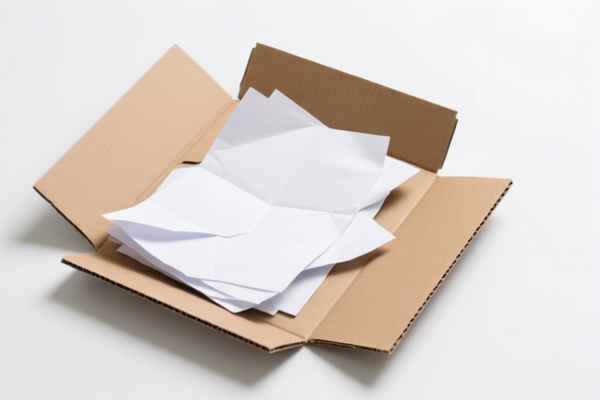
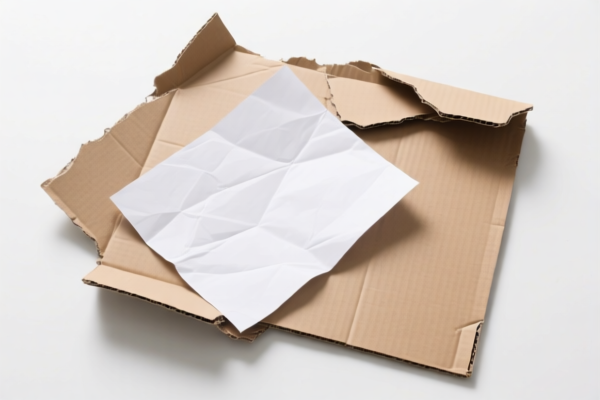
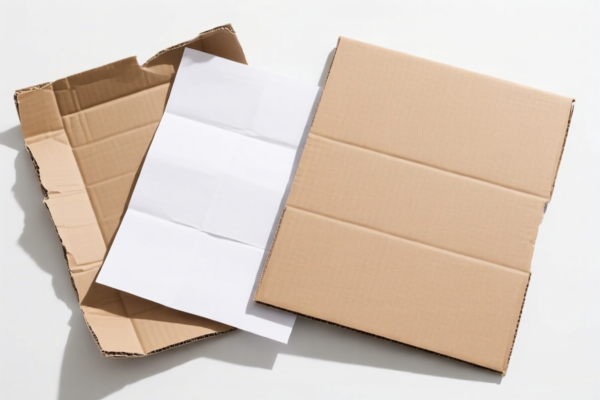
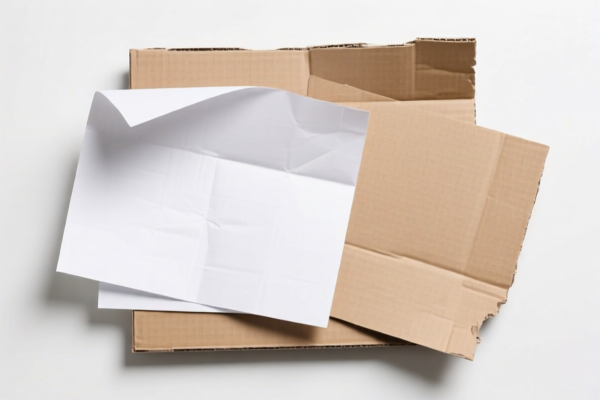
AI分析
♻️ Waste Paper & Chemical Residue (造纸废料与化学残留物)
🌐 HS Code Reference & Customs Clearance Guide | 2026 Latest Tariff Analysis | Strategic Customs Strategy
📌 I. Product Definition & Classification: What Exactly is "Waste Paper Chemical Residue"?
"Waste Paper Chemical Residue" is a complex term in international trade. It generally refers to by-products from the papermaking industry, which can be categorized into two distinct types based on their composition and regulatory treatment:
- Paper Sludge/Residue (Recovered Paper): Mechanical or chemical waste from paper recycling, often containing organic fibers.
- Chemical Industrial Residue: Waste generated during pulping or bleaching processes, containing organic chemicals.
⚠️ Critical Distinction:
- If the residue is primarily paper fibers/sludge → It falls under Chapter 47 (Pulp of wood or of other fibrous cellulose material) as recovered paper.
- If the residue is primarily chemical sludge/waste from industrial processes → It falls under Chapter 38 (Miscellaneous chemical products) as waste.
- Misclassification Risk: Declaring chemical waste as "recovered paper" (or vice versa) can lead to significant delays, penalties, or forced returns due to hazardous waste regulations.
📦 II. HS Code Classification Details (2026 Latest Tariff Authority Match)
Based on your provided data, here are the precise HS Code matches for "Waste Paper Chemical Residue":
| HS Code | Product Description (Summary) | Application Scenario |
|---|---|---|
4707.10.00.00 |
Recovered waste or scrap of paper or paperboard. Matches the recycling attribute of paper waste. | Paper sludge, mixed office paper waste, recycled cardboard residues. |
4707.90.00.00 |
Other waste and scrap of paper or paperboard. Matches unclassified or mixed paper residues. | Unsorted paper waste, paper sludge with low fiber content, non-standard paper scraps. |
3825.61.00.00 |
Residues from the preparation of medicinal ingredients. Matches paper chemical residue as organic chemical industrial waste. Note: Specific to medical-related chemical processes. | Chemical sludge from pharmaceutical-grade paper production (rare). |
3825.69.00.00 |
Other residues from the preparation of medicinal ingredients. Matches other chemical/industrial residues. | General chemical sludge from pulping/bleaching, organic waste from chemical paper processes. |
🔍 Key Note:
-4707.xxCodes are used when the primary characteristic is recoverable paper material.
-3825.xxCodes are used when the primary characteristic is industrial chemical waste (even if derived from paper processes).
- The choice depends on the chemical composition test results and the intended disposal/recycling method.
💰 III. 2026 Latest Tariff Rate Breakdown (Including Additional Duties)
✅ Applicable Country: United States (US)
✅ Country of Origin: China (CN)
✅ Effective Date: November 10, 2025 onwards (for subsequent imports)
🎯 1. 4707.10.00.00 & 4707.90.00.00 — Recovered Paper & Paperboard Waste
| Item | Details |
|---|---|
| Base Tariff | 0.0% (Ad Valorem) |
| Section 301 Additional Tariff | +25.0% |
| Section 122 Tariff (IEEPA) | +10.0% (Specific to certain Chinese goods) |
| Total Tariff Rate | 35.0% |
| Calculation Basis | CIF Value × 35% |
| De Minimis Exemption | ❌ Not Applicable (Denied) |
| Legal Path | Section 301: 847.10 → Section 122: 9903.01.10 → USITC: 4707.xx |
📌 Explanation:
- The 25% is the standard Section 301 tariff on many Chinese industrial goods.
- The 10% is an additional tariff under Section 122 (often related to specific environmental or trade policy measures).
- Total: 35%. This is a high tariff for waste materials, significantly impacting profit margins.
🎯 2. 3825.61.00.00 & 3825.69.00.00 — Chemical Residues/Wastes
| Item | Details |
|---|---|
| Base Tariff | 0.0% (Ad Valorem) |
| Section 301 Additional Tariff | +25.0% |
| Section 122 Tariff (IEEPA) | +10.0% |
| Total Tariff Rate | 35.0% |
| Calculation Basis | CIF Value × 35% |
| De Minimis Exemption | ❌ Not Applicable (Denied) |
| Legal Path | Section 301: 847.10 → Section 122: 9903.01.10 → USITC: 3825.xx |
📌 Explanation:
- Same tariff structure as paper waste.
- Critical Warning: Chemical residues may be subject to EPA (Environmental Protection Agency) regulations in addition to customs tariffs. Ensure you have the necessary TSCA (Toxic Substances Control Act) documentation.
🛠️ IV. Customs Clearance Practical Advice (Avoid Pitfalls)
✅ 1. Required Documentation Checklist
| Document | Mandatory | Notes |
|---|---|---|
| ✅ Material Safety Data Sheet (MSDS) | ✔️ | Essential for 3825 codes. Must specify chemical composition, pH, and hazards. |
| ✅ Certificate of Recycling/Recovery | ✔️ | For 4707 codes. Proves the material is intended for recycling, not landfill. |
| ✅ Chemical Analysis Report | ✔️ | Lab test results showing % of organic matter, moisture, and contaminants. |
| ✅ Commercial Invoice | ✔️ | Must clearly state "Waste Paper" or "Chemical Residue" and HS Code. |
| ✅ Packing List | ✔️ | Detail packaging type (e.g., bales, drums, bulk). |
| ✅ Import License (if required) | ✔️ | Some chemical residues require EPA or state-level permits. |
✅ 2. Declaration Tips (Key Mnemonics)
🔥 “Classify by Nature, Not Just Name!”
- Paper-like sludge → Use4707.xx(Lower regulatory burden, but 35% tariff).
- Chemical sludge → Use3825.xx(Higher regulatory burden, but 35% tariff).
- Never declare hazardous chemical waste as "general paper waste" → Severe penalties!
| Scenario | Correct HS Code | Incorrect HS Code | Consequence |
|---|---|---|---|
| Paper mill sludge (mostly fibers) | 4707.90.00.00 |
3825.69.00.00 |
Minor: Possible reclassification |
| Bleaching plant chemical waste | 3825.69.00.00 |
4707.10.00.00 |
Major: Hazardous waste violation, fines, return |
| Mixed paper & chemical residue | 4707.90.00.00 (if dominant) |
3825.61.00.00 |
Risk: If chemical content > 50%, use 3825 |
✅ 3. Special Considerations
| Issue | Recommendation |
|---|---|
| Hazardous Waste? | If the residue contains toxic chemicals, it may be classified as hazardous waste. Check RCRA (Resource Conservation and Recovery Act) compliance. |
| Moisture Content | High moisture can affect classification. Ensure invoices reflect dry weight or clearly state moisture %. |
| Origin Labeling | Must clearly state "Made in China" to trigger the 35% tariff. Hidden origin can lead to fraud charges. |
| Recycling Intent | Provide a Letter of Intent from the US buyer confirming the material will be recycled, not disposed of. |
🌍 V. Global Market Comparison (2026 Latest)
| Country/Region | Recommended HS Code | Tariff Rate | Certification | Notes |
|---|---|---|---|---|
| 🇺🇸 USA | 4707.90.00.00 / 3825.69.00.00 |
35% (China) | EPA TSCA, MSDS | High tariff, strict environmental checks. |
| 🇨🇳 China | 4707.10.00.00 / 3825.69.00.00 |
5-10% | None | Lower tariff, but import restrictions on "solid waste" are tight. |
| 🇪🇺 EU | 4707.10.00.00 / 3825.69.00.00 |
0-6.5% | REACH, ECHA | Strict chemical regulations. No Section 301/122 tariffs. |
| 🇬🇧 UK | 4707.10.00.00 / 3825.69.00.00 |
0-6.5% | UK REACH | Similar to EU post-Brexit. |
📌 Conclusion:
- The USA imposes a 35% tariff on these items from China.
- Environmental regulations are stricter in the EU/UK but tariffs are lower.
- For US imports, cost management is critical due to the 35% duty. Consider supply chain diversification if margins are tight.
📌 VI. Common Mistakes & Pitfalls (Lessons Learned)
❌ Mistake 1: Declaring chemical sludge as "paper waste" to avoid EPA checks.
👉 Result: Customs seizure, heavy fines, and potential criminal charges for hazardous waste misclassification.
❌ Mistake 2: Ignoring the 10% Section 122 tariff.
👉 Result: Underpayment of duties, leading to back taxes + interest upon audit.
❌ Mistake 3: Not providing an MSDS for 3825 codes.
👉 Result: Customs holds the shipment for inspection, causing delays and storage fees.
✅ Correct Approach:
- Test the material.
- Classify accurately.
- Declare honestly.
- Prepare all environmental documentation.
🎯 VII. Conclusion: Precision in Classification Saves Money!
🎯 Key Takeaways:
🔹 “35% is the Price of Entry for China-Derived Waste to the US.”
🔹 “Paper vs. Chemical: Know your residue!”
🔹 “EPA Compliance is as Important as Customs Clearance.”
📌 Pro Tip:
If you are importing large volumes, consider applying for a Customs Ruling from US CBP to confirm the correct HS Code. This provides legal certainty and avoids surprise audits.
📣 Immediate Action:
📞 Contact a licensed customs broker.
📄 Prepare MSDS and Recycling Certificates.
💰 Budget for 35% duty + handling fees.
🚀 Ensure smooth, compliant, and cost-effective clearance!
✨ Professional Clearance Starts with Accurate Classification!
💼 Every dollar saved on duty is a dollar earned!
用户评价
关于 HS 编码归类
协调制度(HS)是由世界海关组织(WCO)制定的国际贸易商品分类标准。全球 200 多个国家采用 HS 系统作为海关关税、贸易统计和进出口监管的基础。
每个 HS 编码遵循以下层级结构:
- 章(2 位)——商品大类(例如:第 84 章:机器和机械设备)
- 品目(4 位)——章内的更具体分类
- 子目(6 位)——国际通用细分,所有 WCO 成员国统一使用
- 本国细分(8-10 位)——各国自行扩展的细分编码,如美国 HTSUS 10 位编码
正确的 HS 编码归类对于顺利通关、准确缴纳关税和遵守贸易法规至关重要。错误归类可能导致海关延误、多缴关税或罚款。
从CN进口到US时,适用的关税税率可能包括:
- 最惠国(MFN)税率——适用于 WTO 成员国的标准关税税率
- 普通税率——适用于无贸易协定国家
- 贸易救济关税——附加关税,如 301 条款(反倾销)、232 条款(国家安全)或反补贴税
本页内容仅供参考。如需正式归类,请咨询当地海关或持牌报关代理。