Waste Paper Chemical Residue
CN → US| HS Code | Tariff Rate | Origin | Destination | Doc |
|---|---|---|---|---|
| 4707900000 | 35.0% | CN | US | Official Doc |
| 4707100000 | 35.0% | CN | US | Official Doc |
| 3825610000 | 35.0% | CN | US | Official Doc |
| 3825690000 | 35.0% | CN | US | Official Doc |
| 4707900000 | 35.0% | CN | US | Official Doc |
Product Images
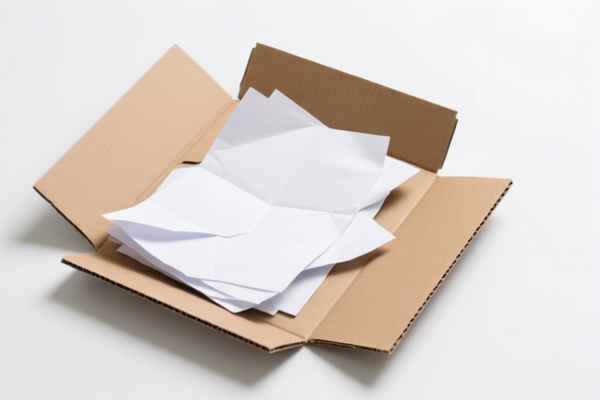
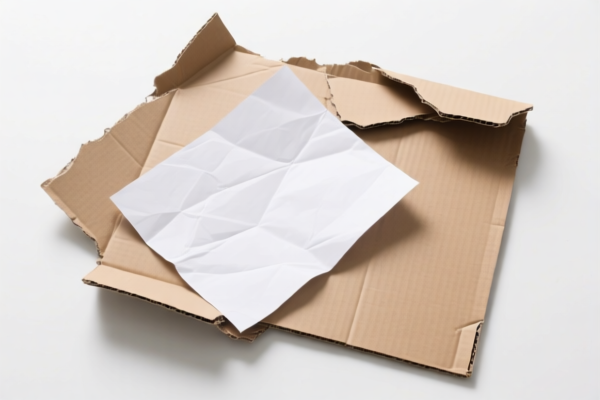
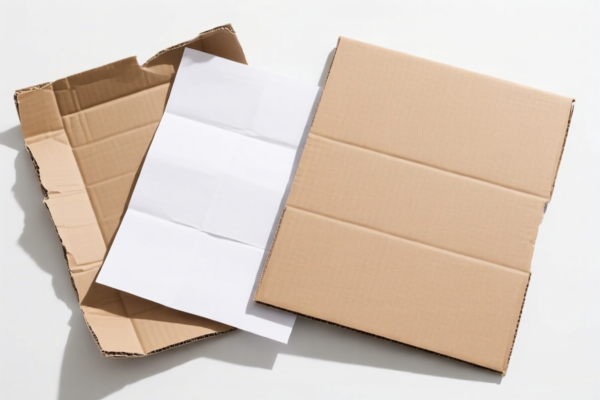
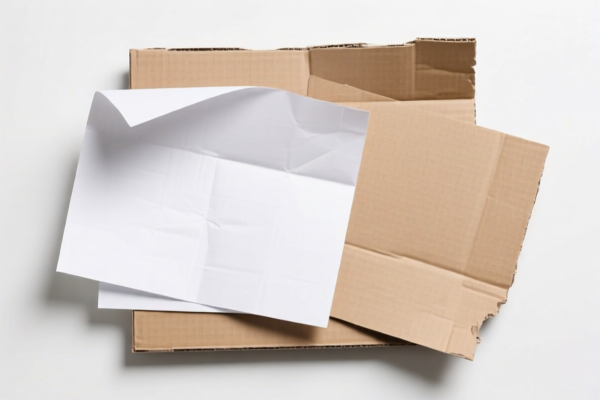
AI Analysis
♻️ Waste Paper & Chemical Residue (造纸废料与化学残留物)
🌐 HS Code Reference & Customs Clearance Guide | 2026 Latest Tariff Analysis | Strategic Customs Strategy
📌 I. Product Definition & Classification: What Exactly is "Waste Paper Chemical Residue"?
"Waste Paper Chemical Residue" is a complex term in international trade. It generally refers to by-products from the papermaking industry, which can be categorized into two distinct types based on their composition and regulatory treatment:
- Paper Sludge/Residue (Recovered Paper): Mechanical or chemical waste from paper recycling, often containing organic fibers.
- Chemical Industrial Residue: Waste generated during pulping or bleaching processes, containing organic chemicals.
⚠️ Critical Distinction:
- If the residue is primarily paper fibers/sludge → It falls under Chapter 47 (Pulp of wood or of other fibrous cellulose material) as recovered paper.
- If the residue is primarily chemical sludge/waste from industrial processes → It falls under Chapter 38 (Miscellaneous chemical products) as waste.
- Misclassification Risk: Declaring chemical waste as "recovered paper" (or vice versa) can lead to significant delays, penalties, or forced returns due to hazardous waste regulations.
📦 II. HS Code Classification Details (2026 Latest Tariff Authority Match)
Based on your provided data, here are the precise HS Code matches for "Waste Paper Chemical Residue":
| HS Code | Product Description (Summary) | Application Scenario |
|---|---|---|
4707.10.00.00 |
Recovered waste or scrap of paper or paperboard. Matches the recycling attribute of paper waste. | Paper sludge, mixed office paper waste, recycled cardboard residues. |
4707.90.00.00 |
Other waste and scrap of paper or paperboard. Matches unclassified or mixed paper residues. | Unsorted paper waste, paper sludge with low fiber content, non-standard paper scraps. |
3825.61.00.00 |
Residues from the preparation of medicinal ingredients. Matches paper chemical residue as organic chemical industrial waste. Note: Specific to medical-related chemical processes. | Chemical sludge from pharmaceutical-grade paper production (rare). |
3825.69.00.00 |
Other residues from the preparation of medicinal ingredients. Matches other chemical/industrial residues. | General chemical sludge from pulping/bleaching, organic waste from chemical paper processes. |
🔍 Key Note:
-4707.xxCodes are used when the primary characteristic is recoverable paper material.
-3825.xxCodes are used when the primary characteristic is industrial chemical waste (even if derived from paper processes).
- The choice depends on the chemical composition test results and the intended disposal/recycling method.
💰 III. 2026 Latest Tariff Rate Breakdown (Including Additional Duties)
✅ Applicable Country: United States (US)
✅ Country of Origin: China (CN)
✅ Effective Date: November 10, 2025 onwards (for subsequent imports)
🎯 1. 4707.10.00.00 & 4707.90.00.00 — Recovered Paper & Paperboard Waste
| Item | Details |
|---|---|
| Base Tariff | 0.0% (Ad Valorem) |
| Section 301 Additional Tariff | +25.0% |
| Section 122 Tariff (IEEPA) | +10.0% (Specific to certain Chinese goods) |
| Total Tariff Rate | 35.0% |
| Calculation Basis | CIF Value × 35% |
| De Minimis Exemption | ❌ Not Applicable (Denied) |
| Legal Path | Section 301: 847.10 → Section 122: 9903.01.10 → USITC: 4707.xx |
📌 Explanation:
- The 25% is the standard Section 301 tariff on many Chinese industrial goods.
- The 10% is an additional tariff under Section 122 (often related to specific environmental or trade policy measures).
- Total: 35%. This is a high tariff for waste materials, significantly impacting profit margins.
🎯 2. 3825.61.00.00 & 3825.69.00.00 — Chemical Residues/Wastes
| Item | Details |
|---|---|
| Base Tariff | 0.0% (Ad Valorem) |
| Section 301 Additional Tariff | +25.0% |
| Section 122 Tariff (IEEPA) | +10.0% |
| Total Tariff Rate | 35.0% |
| Calculation Basis | CIF Value × 35% |
| De Minimis Exemption | ❌ Not Applicable (Denied) |
| Legal Path | Section 301: 847.10 → Section 122: 9903.01.10 → USITC: 3825.xx |
📌 Explanation:
- Same tariff structure as paper waste.
- Critical Warning: Chemical residues may be subject to EPA (Environmental Protection Agency) regulations in addition to customs tariffs. Ensure you have the necessary TSCA (Toxic Substances Control Act) documentation.
🛠️ IV. Customs Clearance Practical Advice (Avoid Pitfalls)
✅ 1. Required Documentation Checklist
| Document | Mandatory | Notes |
|---|---|---|
| ✅ Material Safety Data Sheet (MSDS) | ✔️ | Essential for 3825 codes. Must specify chemical composition, pH, and hazards. |
| ✅ Certificate of Recycling/Recovery | ✔️ | For 4707 codes. Proves the material is intended for recycling, not landfill. |
| ✅ Chemical Analysis Report | ✔️ | Lab test results showing % of organic matter, moisture, and contaminants. |
| ✅ Commercial Invoice | ✔️ | Must clearly state "Waste Paper" or "Chemical Residue" and HS Code. |
| ✅ Packing List | ✔️ | Detail packaging type (e.g., bales, drums, bulk). |
| ✅ Import License (if required) | ✔️ | Some chemical residues require EPA or state-level permits. |
✅ 2. Declaration Tips (Key Mnemonics)
🔥 “Classify by Nature, Not Just Name!”
- Paper-like sludge → Use4707.xx(Lower regulatory burden, but 35% tariff).
- Chemical sludge → Use3825.xx(Higher regulatory burden, but 35% tariff).
- Never declare hazardous chemical waste as "general paper waste" → Severe penalties!
| Scenario | Correct HS Code | Incorrect HS Code | Consequence |
|---|---|---|---|
| Paper mill sludge (mostly fibers) | 4707.90.00.00 |
3825.69.00.00 |
Minor: Possible reclassification |
| Bleaching plant chemical waste | 3825.69.00.00 |
4707.10.00.00 |
Major: Hazardous waste violation, fines, return |
| Mixed paper & chemical residue | 4707.90.00.00 (if dominant) |
3825.61.00.00 |
Risk: If chemical content > 50%, use 3825 |
✅ 3. Special Considerations
| Issue | Recommendation |
|---|---|
| Hazardous Waste? | If the residue contains toxic chemicals, it may be classified as hazardous waste. Check RCRA (Resource Conservation and Recovery Act) compliance. |
| Moisture Content | High moisture can affect classification. Ensure invoices reflect dry weight or clearly state moisture %. |
| Origin Labeling | Must clearly state "Made in China" to trigger the 35% tariff. Hidden origin can lead to fraud charges. |
| Recycling Intent | Provide a Letter of Intent from the US buyer confirming the material will be recycled, not disposed of. |
🌍 V. Global Market Comparison (2026 Latest)
| Country/Region | Recommended HS Code | Tariff Rate | Certification | Notes |
|---|---|---|---|---|
| 🇺🇸 USA | 4707.90.00.00 / 3825.69.00.00 |
35% (China) | EPA TSCA, MSDS | High tariff, strict environmental checks. |
| 🇨🇳 China | 4707.10.00.00 / 3825.69.00.00 |
5-10% | None | Lower tariff, but import restrictions on "solid waste" are tight. |
| 🇪🇺 EU | 4707.10.00.00 / 3825.69.00.00 |
0-6.5% | REACH, ECHA | Strict chemical regulations. No Section 301/122 tariffs. |
| 🇬🇧 UK | 4707.10.00.00 / 3825.69.00.00 |
0-6.5% | UK REACH | Similar to EU post-Brexit. |
📌 Conclusion:
- The USA imposes a 35% tariff on these items from China.
- Environmental regulations are stricter in the EU/UK but tariffs are lower.
- For US imports, cost management is critical due to the 35% duty. Consider supply chain diversification if margins are tight.
📌 VI. Common Mistakes & Pitfalls (Lessons Learned)
❌ Mistake 1: Declaring chemical sludge as "paper waste" to avoid EPA checks.
👉 Result: Customs seizure, heavy fines, and potential criminal charges for hazardous waste misclassification.
❌ Mistake 2: Ignoring the 10% Section 122 tariff.
👉 Result: Underpayment of duties, leading to back taxes + interest upon audit.
❌ Mistake 3: Not providing an MSDS for 3825 codes.
👉 Result: Customs holds the shipment for inspection, causing delays and storage fees.
✅ Correct Approach:
- Test the material.
- Classify accurately.
- Declare honestly.
- Prepare all environmental documentation.
🎯 VII. Conclusion: Precision in Classification Saves Money!
🎯 Key Takeaways:
🔹 “35% is the Price of Entry for China-Derived Waste to the US.”
🔹 “Paper vs. Chemical: Know your residue!”
🔹 “EPA Compliance is as Important as Customs Clearance.”
📌 Pro Tip:
If you are importing large volumes, consider applying for a Customs Ruling from US CBP to confirm the correct HS Code. This provides legal certainty and avoids surprise audits.
📣 Immediate Action:
📞 Contact a licensed customs broker.
📄 Prepare MSDS and Recycling Certificates.
💰 Budget for 35% duty + handling fees.
🚀 Ensure smooth, compliant, and cost-effective clearance!
✨ Professional Clearance Starts with Accurate Classification!
💼 Every dollar saved on duty is a dollar earned!
Customer Reviews
About HS Code Classification
The Harmonized System (HS) is an internationally standardized nomenclature developed by the World Customs Organization (WCO) to classify traded products. Over 200 countries use the HS system as the basis for customs tariffs, trade statistics, and import/export regulations.
Each HS code follows a hierarchical structure:
- Chapter (2 digits) — Broad category of goods (e.g., Chapter 84: Machinery and Mechanical Appliances)
- Heading (4 digits) — More specific grouping within the chapter
- Subheading (6 digits) — Internationally standardized breakdown, used by all WCO member countries
- National subdivisions (8-10 digits) — Country-specific extensions for further classification, such as US HTSUS 10-digit codes
Correct HS code classification is essential for smooth customs clearance, accurate duty payment, and compliance with trade regulations. Misclassification can lead to customs delays, overpayment of duties, or penalties.
When importing from CN to US, the applicable tariff rates may include:
- Most-Favored-Nation (MFN) rate — The standard duty rate applied to WTO members
- General rate — Applied to countries without trade agreements
- Trade remedy duties — Additional tariffs such as Section 301 (anti-dumping), Section 232 (national security), or countervailing duties
The information provided on this page is for reference purposes only. For official classification, please consult with your local customs authority or a licensed customs broker.