Waste Silk (Non Silk)
CN → US| HS编码 | 关税税率 | 原产国 | 目的国 | 文档 |
|---|---|---|---|---|
| 5006009000 | 35.0% | CN | US | 官方文档 |
| 5003009000 | 37.5% | CN | US | 官方文档 |
| 5003001000 | 35.0% | CN | US | 官方文档 |
| 5006001000 | 35.0% | CN | US | 官方文档 |
商品图片
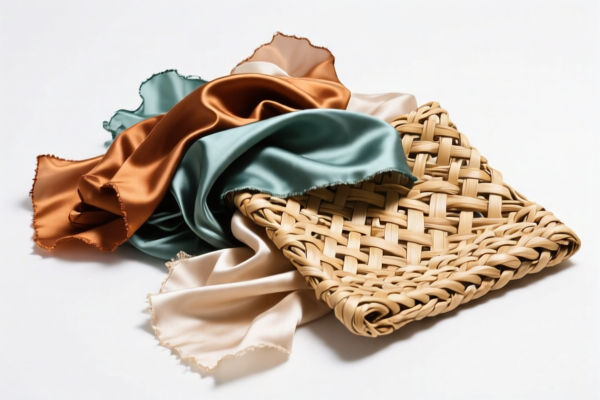
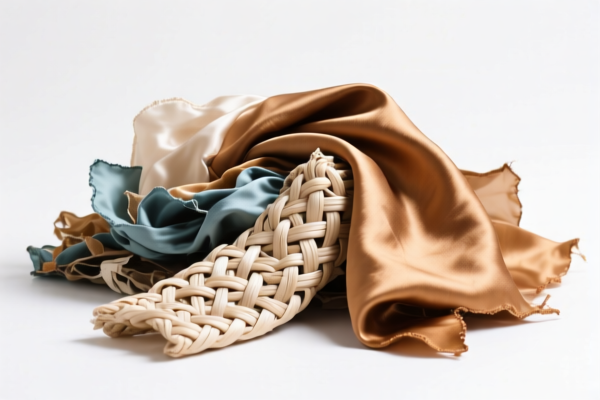
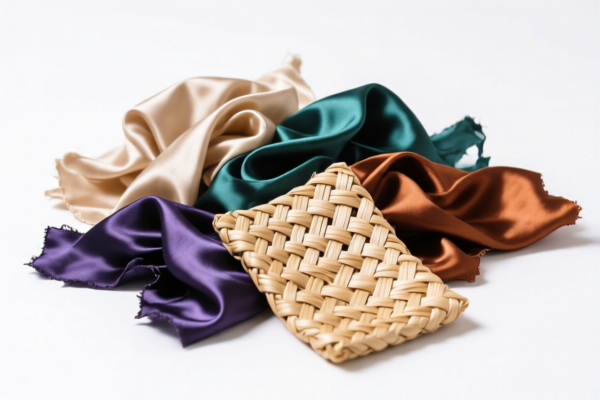
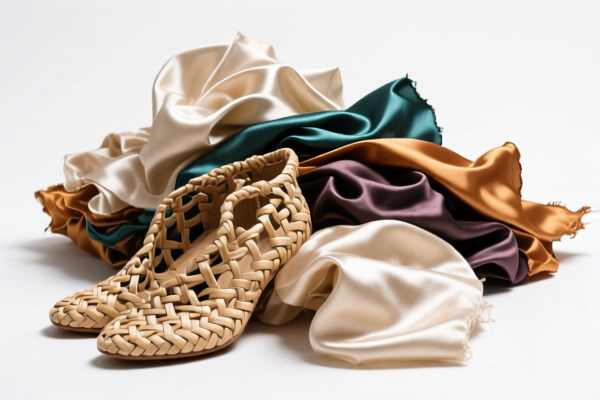
AI分析
🧵 Silk Waste & Non-Silk Silk Products: The Definitive 2026 Customs Clearance Guide
🌐 HS Code Reference & Clearance Strategy | 2026 Latest Tariff Analysis | Professional Compliance Protocol
📌 I. Product Definition & Classification: What Exactly Is "Silk Waste"?
"Silk Waste" in international trade refers to raw silk materials that are not suitable for reeling (filature) or are by-products of silk processing. However, the term "Non-Silk" in the prompt title likely refers to "Non-Reeling Grade" or specific sub-categories defined under HS Chapter 50.
In the context of U.S. Customs (based on the provided <DATA>), these goods fall into two distinct physical categories:
1. Silk Waste (Suitable/Refined): Can be processed into yarn/thread (e.g., combed silk waste).
2. Silk Waste (Unsuitable/Raw): Cannot be reeled directly; includes broken cocoons, noil, and debris.
⚠️ Critical Distinction:
- If the material is waste but suitable for reeling/processing → It often falls under 5006.00 (Silk Yarn/Waste Yarn).
- If the material is waste and unsuitable for reeling (raw debris, broken cocoons) → It falls under 5003.00 (Silk Waste and Silk Noils).
📦 II. HS Code Classification Matrix (2026 Latest Tariff Authority)
Based on the provided <DATA>, here is the precise breakdown for Silk Waste (Non-Silk/Non-Reeling Grade):
| HS Code | Product Description | Physical Form | Suitability | Key Differentiator |
|---|---|---|---|---|
5006.00.90.00 |
Silk Waste (Non-Silk) | Silk waste material | Suitable/Refined | Defined as "Silk Waste" material; fits raw material attributes for silk yarn. |
5003.00.90.00 |
Silk Waste (Non-Silk) | Waste/Debris | Unsuitable for Reeling | Explicitly stated as "unsuitable for reeling"; raw waste form. |
5003.00.10.00 |
Silk Waste | Waste Material | Unsuitable for Reeling | Includes unsuitable cocoons, yarn waste, and raw silk noils. |
5006.00.10.00 |
Silk Waste | Silk Yarn Category | Raw Material Attribute | Fits the attribute of raw material for silk yarn. |
5003.00.90.00 (Duplicate) |
Silk Waste (Non-Silk) | Waste/Debris | Unsuitable for Reeling | Same as above; high tax due to base duty. |
🔍 Key Insight:
The core difference lies in 5003 (Raw Waste, Unreelable) vs. 5006 (Processed/Refined Waste, Yarn-Ready).
- 5003 items generally have a 2.5% Base Duty (if not Chinese-origin exempt) or 0% (if Chinese-origin with specific exemptions, though data shows 0% for 5003.10).
- 5006 items have a 0% Base Duty.
💰 III. 2026 Tariff Rate Breakdown (China Origin → USA)
✅ Applicable Country: United States (US)
✅ Origin: China (CN)
✅ Effective Date: Current trade policies (Section 301 + IEEPA)
🎯 1. 5006.00.90.00 & 5006.00.10.00 — Refined Silk Waste / Yarn-Ready Waste
| Item | Details |
|---|---|
| Base Duty | 0.0% (Ad Valorem) |
| Section 301 Tariff | +25.0% (China-specific additional duty) |
| IEEPA Tariff (122 Clause) | +10.0% (Specific provision for certain silk/waste goods) |
| Total Tax Rate | 35.0% |
| De Minimis Exemption | ❌ Not Applicable (High tax rate exceeds threshold considerations) |
| Legal Authority | USITC:5006 → Footnote:301 → IEEPA:122 |
📌 Explanation:
- These codes benefit from a 0% base rate, but the 35% total is driven entirely by punitive tariffs (25% + 10%).
- This is the "cheaper" option compared to5003.00.90.00because of the lower base duty.
🎯 2. 5003.00.10.00 — Unsuitable Silk Waste (Cocoons/Noils)
| Item | Details |
|---|---|
| Base Duty | 0.0% (Ad Valorem) |
| Section 301 Tariff | +25.0% |
| IEEPA Tariff (122 Clause) | +10.0% |
| Total Tax Rate | 35.0% |
| Legal Authority | USITC:5003.10 → Footnote:301 → IEEPA:122 |
📌 Explanation:
- Similar to 5006, this starts at 0% base.
- Applies to raw, unreelable waste like broken cocoons.
🎯 3. 5003.00.90.00 — Other Silk Waste (Unsuitable)
| Item | Details |
|---|---|
| Base Duty | 2.5% (Ad Valorem) |
| Section 301 Tariff | +25.0% |
| IEEPA Tariff (122 Clause) | +10.0% |
| Total Tax Rate | 37.5% |
| Legal Authority | USITC:5003.90 → Footnote:301 → IEEPA:122 |
📌 Explanation:
- This is the most expensive category due to the 2.5% base duty added on top.
- Often used for "catch-all" silk waste that doesn't fit specific 5003.10 definitions.
🛠️ IV. Customs Clearance Practical Advice (Pitfall Avoidance)
✅ 1. Documentation Checklist (Must-Have)
| Document | Requirement | Why? |
|---|---|---|
| Commercial Invoice | Must specify "Silk Waste" and physical form (e.g., "Broken Cocoons," "Combed Silk Waste") | Determines HS Code (5003 vs 5006). |
| Product Photos | Clear images of material texture, bundle size, and labels | Proves whether it is "reelable" or "waste." |
| Processing Certificate | If claiming 5006 (Refined), provide evidence of sorting/combing |
Distinguishes from raw waste (5003). |
| Certificate of Origin | Required for China origin verification | Triggers 301 + IEEPA tariffs. |
| Packaging List | Net/Gross weight details | Custom duty is weight/value-based. |
✅ 2. Declaration Strategy
🔥 Golden Rule:
"Accurate Physical Description = Accurate HS Code = Lower Tax!"
| Scenario | Correct HS Code | Risk if Misclassified |
|---|---|---|
| Refined/Combed Waste (Can be spun) | 5006.00.90.00 or 5006.00.10.00 |
Misclassifying as 5003 → Overpay 2.5% base |
| Raw Broken Cocoons (Cannot be spun) | 5003.00.10.00 |
Misclassifying as 5006 → Underpayment + Penalty |
| Mixed Waste (Some reelable, some not) | Split Declaration | Mixed申报 may lead to 100% audit and delay |
| Non-Silk Fibers (e.g., Cotton waste) | NOT 50XX | Must use Chapter 52/54 → Complete wrong code |
✅ 3. Critical Tips for "Non-Silk" Labeling
- The term "Non-Silk" in the prompt title is ambiguous. In HS terms:
- If you mean "Silk Waste that is not Reeling Grade", use 5003.
- If you mean "Waste made of Non-Silk materials", do NOT use these codes. Use Chapter 52 (Cotton) or 55 (Synthetic).
- The
<DATA>confirms these are Silk Waste (HS 50), so ensure the product is 100% Silk. If it contains synthetic fibers, 5003/5006 is invalid.
🌍 V. Global Market Comparison (2026)
| Market | HS Code | Total Rate (China Origin) | Notes |
|---|---|---|---|
| 🇺🇸 USA | 5006.00.90.00 |
35.0% | High due to 301 + IEEPA |
| 🇺🇸 USA | 5003.00.90.00 |
37.5% | Highest duty category |
| 🇨🇳 China (Import) | N/A | Varies | China imports silk waste for re-processing; different tax rules |
| 🇪🇺 EU | 5003/5006 | Varies (0-5%) | No Section 301; only standard MFN tariffs |
📌 Conclusion:
- USA is the most expensive market for silk waste due to layered punitive tariffs.
- Base duty difference between5006(0%) and5003.90(2.5%) is significant for large volumes.
- IEEPA 10% is a fixed add-on for these specific codes from China.
📌 VI. Common Errors & How to Avoid Them
❌ Error 1: Declaring "Silk Waste" without specifying "Suitability for Reeling"
👉 Result: Customs may assign the highest default code (5003.00.90.00 at 37.5%) instead of 5006 (35%).
✅ Fix: Clearly state "Refined Silk Waste – Suitable for Spinning" on the invoice.
❌ Error 2: Confusing "Silk Noil" with "Cotton Waste"
👉 Result: Wrong HS Chapter (50 vs 52).
✅ Fix: Provide fiber content test results if unsure.
❌ Error 3: Ignoring the 122 Clause IEEPA Tariff
👉 Result: Underpayment by 10% → Seizure + Penalty.
✅ Fix: Always include "122 Clause Duty: +10%" in cost calculations.
🎯 VII. Final Recommendation
🎯 For Importers from China:
- Classify as
5006.00if the waste is refined/combed (35% total).- Classify as
5003.00.10if raw/cocoons (35% total).- Avoid
5003.00.90if possible (37.5% total).- Always disclose the exact physical state (broken, combed, noil) in the commercial invoice.
🚀 Pro Tip:
If volume is large, consider pre-classification rulings with U.S. CBP to confirm
5006vs5003status, saving up to 2.5% on base duties.
✨ Precise Classification = Cost Savings.
💼 Don’t let "Waste" become a costly mistake!
用户评价
关于 HS 编码归类
协调制度(HS)是由世界海关组织(WCO)制定的国际贸易商品分类标准。全球 200 多个国家采用 HS 系统作为海关关税、贸易统计和进出口监管的基础。
每个 HS 编码遵循以下层级结构:
- 章(2 位)——商品大类(例如:第 84 章:机器和机械设备)
- 品目(4 位)——章内的更具体分类
- 子目(6 位)——国际通用细分,所有 WCO 成员国统一使用
- 本国细分(8-10 位)——各国自行扩展的细分编码,如美国 HTSUS 10 位编码
正确的 HS 编码归类对于顺利通关、准确缴纳关税和遵守贸易法规至关重要。错误归类可能导致海关延误、多缴关税或罚款。
从CN进口到US时,适用的关税税率可能包括:
- 最惠国(MFN)税率——适用于 WTO 成员国的标准关税税率
- 普通税率——适用于无贸易协定国家
- 贸易救济关税——附加关税,如 301 条款(反倾销)、232 条款(国家安全)或反补贴税
本页内容仅供参考。如需正式归类,请咨询当地海关或持牌报关代理。