Waste Silk (Non Silk)
CN → US| HS Code | Tariff Rate | Origin | Destination | Doc |
|---|---|---|---|---|
| 5006009000 | 35.0% | CN | US | Official Doc |
| 5003009000 | 37.5% | CN | US | Official Doc |
| 5003001000 | 35.0% | CN | US | Official Doc |
| 5006001000 | 35.0% | CN | US | Official Doc |
Product Images
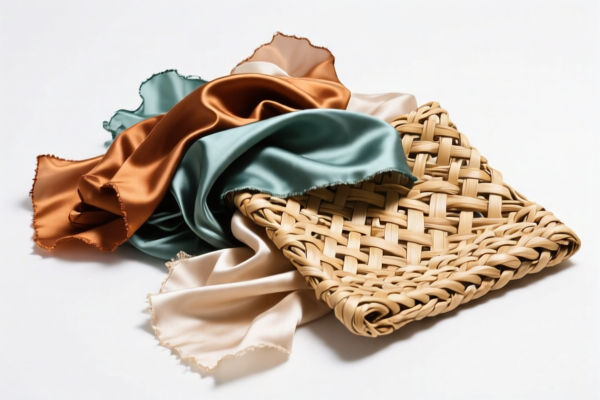

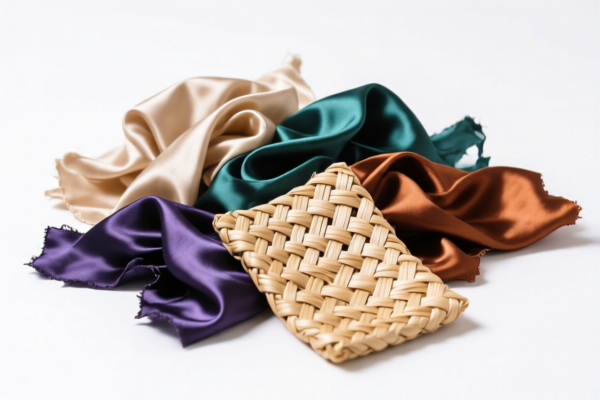

AI Analysis
🧵 Silk Waste & Non-Silk Silk Products: The Definitive 2026 Customs Clearance Guide
🌐 HS Code Reference & Clearance Strategy | 2026 Latest Tariff Analysis | Professional Compliance Protocol
📌 I. Product Definition & Classification: What Exactly Is "Silk Waste"?
"Silk Waste" in international trade refers to raw silk materials that are not suitable for reeling (filature) or are by-products of silk processing. However, the term "Non-Silk" in the prompt title likely refers to "Non-Reeling Grade" or specific sub-categories defined under HS Chapter 50.
In the context of U.S. Customs (based on the provided <DATA>), these goods fall into two distinct physical categories:
1. Silk Waste (Suitable/Refined): Can be processed into yarn/thread (e.g., combed silk waste).
2. Silk Waste (Unsuitable/Raw): Cannot be reeled directly; includes broken cocoons, noil, and debris.
⚠️ Critical Distinction:
- If the material is waste but suitable for reeling/processing → It often falls under 5006.00 (Silk Yarn/Waste Yarn).
- If the material is waste and unsuitable for reeling (raw debris, broken cocoons) → It falls under 5003.00 (Silk Waste and Silk Noils).
📦 II. HS Code Classification Matrix (2026 Latest Tariff Authority)
Based on the provided <DATA>, here is the precise breakdown for Silk Waste (Non-Silk/Non-Reeling Grade):
| HS Code | Product Description | Physical Form | Suitability | Key Differentiator |
|---|---|---|---|---|
5006.00.90.00 |
Silk Waste (Non-Silk) | Silk waste material | Suitable/Refined | Defined as "Silk Waste" material; fits raw material attributes for silk yarn. |
5003.00.90.00 |
Silk Waste (Non-Silk) | Waste/Debris | Unsuitable for Reeling | Explicitly stated as "unsuitable for reeling"; raw waste form. |
5003.00.10.00 |
Silk Waste | Waste Material | Unsuitable for Reeling | Includes unsuitable cocoons, yarn waste, and raw silk noils. |
5006.00.10.00 |
Silk Waste | Silk Yarn Category | Raw Material Attribute | Fits the attribute of raw material for silk yarn. |
5003.00.90.00 (Duplicate) |
Silk Waste (Non-Silk) | Waste/Debris | Unsuitable for Reeling | Same as above; high tax due to base duty. |
🔍 Key Insight:
The core difference lies in 5003 (Raw Waste, Unreelable) vs. 5006 (Processed/Refined Waste, Yarn-Ready).
- 5003 items generally have a 2.5% Base Duty (if not Chinese-origin exempt) or 0% (if Chinese-origin with specific exemptions, though data shows 0% for 5003.10).
- 5006 items have a 0% Base Duty.
💰 III. 2026 Tariff Rate Breakdown (China Origin → USA)
✅ Applicable Country: United States (US)
✅ Origin: China (CN)
✅ Effective Date: Current trade policies (Section 301 + IEEPA)
🎯 1. 5006.00.90.00 & 5006.00.10.00 — Refined Silk Waste / Yarn-Ready Waste
| Item | Details |
|---|---|
| Base Duty | 0.0% (Ad Valorem) |
| Section 301 Tariff | +25.0% (China-specific additional duty) |
| IEEPA Tariff (122 Clause) | +10.0% (Specific provision for certain silk/waste goods) |
| Total Tax Rate | 35.0% |
| De Minimis Exemption | ❌ Not Applicable (High tax rate exceeds threshold considerations) |
| Legal Authority | USITC:5006 → Footnote:301 → IEEPA:122 |
📌 Explanation:
- These codes benefit from a 0% base rate, but the 35% total is driven entirely by punitive tariffs (25% + 10%).
- This is the "cheaper" option compared to5003.00.90.00because of the lower base duty.
🎯 2. 5003.00.10.00 — Unsuitable Silk Waste (Cocoons/Noils)
| Item | Details |
|---|---|
| Base Duty | 0.0% (Ad Valorem) |
| Section 301 Tariff | +25.0% |
| IEEPA Tariff (122 Clause) | +10.0% |
| Total Tax Rate | 35.0% |
| Legal Authority | USITC:5003.10 → Footnote:301 → IEEPA:122 |
📌 Explanation:
- Similar to 5006, this starts at 0% base.
- Applies to raw, unreelable waste like broken cocoons.
🎯 3. 5003.00.90.00 — Other Silk Waste (Unsuitable)
| Item | Details |
|---|---|
| Base Duty | 2.5% (Ad Valorem) |
| Section 301 Tariff | +25.0% |
| IEEPA Tariff (122 Clause) | +10.0% |
| Total Tax Rate | 37.5% |
| Legal Authority | USITC:5003.90 → Footnote:301 → IEEPA:122 |
📌 Explanation:
- This is the most expensive category due to the 2.5% base duty added on top.
- Often used for "catch-all" silk waste that doesn't fit specific 5003.10 definitions.
🛠️ IV. Customs Clearance Practical Advice (Pitfall Avoidance)
✅ 1. Documentation Checklist (Must-Have)
| Document | Requirement | Why? |
|---|---|---|
| Commercial Invoice | Must specify "Silk Waste" and physical form (e.g., "Broken Cocoons," "Combed Silk Waste") | Determines HS Code (5003 vs 5006). |
| Product Photos | Clear images of material texture, bundle size, and labels | Proves whether it is "reelable" or "waste." |
| Processing Certificate | If claiming 5006 (Refined), provide evidence of sorting/combing |
Distinguishes from raw waste (5003). |
| Certificate of Origin | Required for China origin verification | Triggers 301 + IEEPA tariffs. |
| Packaging List | Net/Gross weight details | Custom duty is weight/value-based. |
✅ 2. Declaration Strategy
🔥 Golden Rule:
"Accurate Physical Description = Accurate HS Code = Lower Tax!"
| Scenario | Correct HS Code | Risk if Misclassified |
|---|---|---|
| Refined/Combed Waste (Can be spun) | 5006.00.90.00 or 5006.00.10.00 |
Misclassifying as 5003 → Overpay 2.5% base |
| Raw Broken Cocoons (Cannot be spun) | 5003.00.10.00 |
Misclassifying as 5006 → Underpayment + Penalty |
| Mixed Waste (Some reelable, some not) | Split Declaration | Mixed申报 may lead to 100% audit and delay |
| Non-Silk Fibers (e.g., Cotton waste) | NOT 50XX | Must use Chapter 52/54 → Complete wrong code |
✅ 3. Critical Tips for "Non-Silk" Labeling
- The term "Non-Silk" in the prompt title is ambiguous. In HS terms:
- If you mean "Silk Waste that is not Reeling Grade", use 5003.
- If you mean "Waste made of Non-Silk materials", do NOT use these codes. Use Chapter 52 (Cotton) or 55 (Synthetic).
- The
<DATA>confirms these are Silk Waste (HS 50), so ensure the product is 100% Silk. If it contains synthetic fibers, 5003/5006 is invalid.
🌍 V. Global Market Comparison (2026)
| Market | HS Code | Total Rate (China Origin) | Notes |
|---|---|---|---|
| 🇺🇸 USA | 5006.00.90.00 |
35.0% | High due to 301 + IEEPA |
| 🇺🇸 USA | 5003.00.90.00 |
37.5% | Highest duty category |
| 🇨🇳 China (Import) | N/A | Varies | China imports silk waste for re-processing; different tax rules |
| 🇪🇺 EU | 5003/5006 | Varies (0-5%) | No Section 301; only standard MFN tariffs |
📌 Conclusion:
- USA is the most expensive market for silk waste due to layered punitive tariffs.
- Base duty difference between5006(0%) and5003.90(2.5%) is significant for large volumes.
- IEEPA 10% is a fixed add-on for these specific codes from China.
📌 VI. Common Errors & How to Avoid Them
❌ Error 1: Declaring "Silk Waste" without specifying "Suitability for Reeling"
👉 Result: Customs may assign the highest default code (5003.00.90.00 at 37.5%) instead of 5006 (35%).
✅ Fix: Clearly state "Refined Silk Waste – Suitable for Spinning" on the invoice.
❌ Error 2: Confusing "Silk Noil" with "Cotton Waste"
👉 Result: Wrong HS Chapter (50 vs 52).
✅ Fix: Provide fiber content test results if unsure.
❌ Error 3: Ignoring the 122 Clause IEEPA Tariff
👉 Result: Underpayment by 10% → Seizure + Penalty.
✅ Fix: Always include "122 Clause Duty: +10%" in cost calculations.
🎯 VII. Final Recommendation
🎯 For Importers from China:
- Classify as
5006.00if the waste is refined/combed (35% total).- Classify as
5003.00.10if raw/cocoons (35% total).- Avoid
5003.00.90if possible (37.5% total).- Always disclose the exact physical state (broken, combed, noil) in the commercial invoice.
🚀 Pro Tip:
If volume is large, consider pre-classification rulings with U.S. CBP to confirm
5006vs5003status, saving up to 2.5% on base duties.
✨ Precise Classification = Cost Savings.
💼 Don’t let "Waste" become a costly mistake!
Customer Reviews
About HS Code Classification
The Harmonized System (HS) is an internationally standardized nomenclature developed by the World Customs Organization (WCO) to classify traded products. Over 200 countries use the HS system as the basis for customs tariffs, trade statistics, and import/export regulations.
Each HS code follows a hierarchical structure:
- Chapter (2 digits) — Broad category of goods (e.g., Chapter 84: Machinery and Mechanical Appliances)
- Heading (4 digits) — More specific grouping within the chapter
- Subheading (6 digits) — Internationally standardized breakdown, used by all WCO member countries
- National subdivisions (8-10 digits) — Country-specific extensions for further classification, such as US HTSUS 10-digit codes
Correct HS code classification is essential for smooth customs clearance, accurate duty payment, and compliance with trade regulations. Misclassification can lead to customs delays, overpayment of duties, or penalties.
When importing from CN to US, the applicable tariff rates may include:
- Most-Favored-Nation (MFN) rate — The standard duty rate applied to WTO members
- General rate — Applied to countries without trade agreements
- Trade remedy duties — Additional tariffs such as Section 301 (anti-dumping), Section 232 (national security), or countervailing duties
The information provided on this page is for reference purposes only. For official classification, please consult with your local customs authority or a licensed customs broker.