Water Rat Fur
CN → US| HS编码 | 关税税率 | 原产国 | 目的国 | 文档 |
|---|---|---|---|---|
| 4205008000 | 35.0% | CN | US | 官方文档 |
| 4202213000 | 40.3% | CN | US | 官方文档 |
| 4202313000 | 38.7% | CN | US | 官方文档 |
商品图片
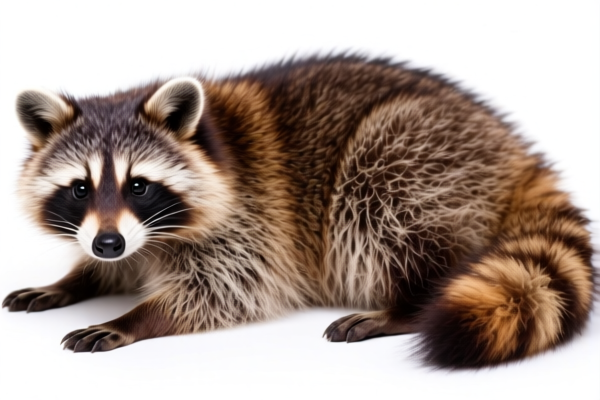
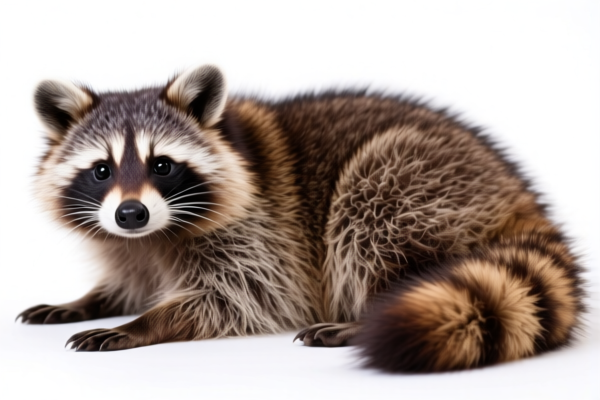
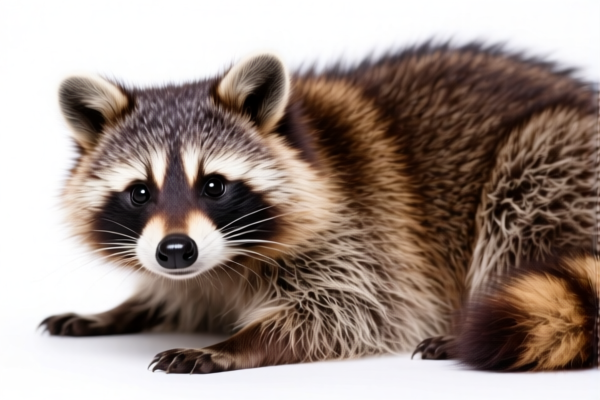
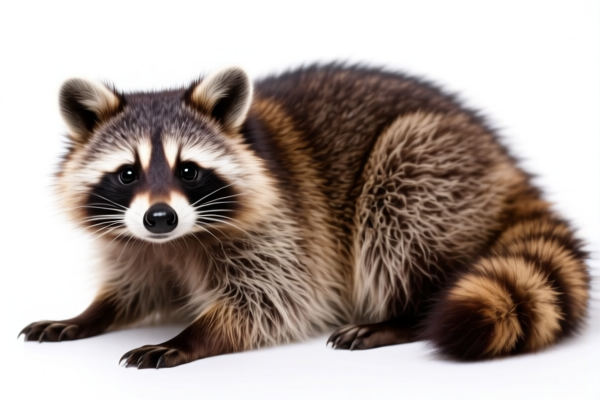
AI分析
🐀 Water Rat Fur (Aquatic Rodent Pelts / Leather Goods)
🌐 HS Code Reference & Customs Clearance Guide | 2026 Latest Tariff Analysis | Professional Clearance Strategy
📌 I. Product Definition & Classification: Do You Truly Understand "Water Rat Fur"?
Water Rat Fur (often referring to pelts from semi-aquatic rodents like nutria, coypu, or muskrat) is primarily classified in international trade not as raw fur, but as leather or semi-manufactured leather products, depending on the processing stage.
In international trade, it falls under two main categories:
1. Semi-Manufactured Leather Products (Chapter 42): Unfinished or partially processed skins intended for further manufacturing.
2. Finished Leather Goods (Chapter 42): Finished articles such as bags, wallets, or accessories made from these skins.
⚠️ Key Distinction:
- If the material is processed into leather sheets or semi-finished skins intended for manufacturing → Falls under Chapter 42 (Other Made-Up Leather Articles).
- If it is used as a component in reptile/finery leather classifications due to texture/treatment → Falls under specific 4202/4205 subheadings.
📦 II. HS Code Classification Details (2026 Latest Tariff Authority Comparison)
| HS Code | Product Description | Applicable Scenario | Material Attribute |
|---|---|---|---|
4205.00.80.00 |
Other articles of leather; leather or composition leather parts of garments or clothing accessories | Unfinished leather sheets, semi-finished pelts, leather scraps for manufacturing | ✅ Leather / Composite Leather |
4202.21.30.00 |
Trunks, suitcases, vanity cases, etc. with outer surface of reptile skin or composition reptile skin | Finished goods (e.g., bags, accessories) made from processed water rat fur treated as "reptile-like" finery leather | ✅ Reptile/Finery Leather Category |
4202.31.30.00 |
Articles of apparel and clothing accessories, with outer surface of reptile skin or composition reptile skin | Small leather goods (wallets, cardholders) made from processed water rat fur | ✅ Reptile Leather Category Extension |
🔍 Key Reminder:
- Water Rat Fur is legally classified as Leather or Composite Leather when processed. It does not fall under raw fur (Chapter 43) in most commercial finished forms.
- If used in bags/accessories, it may be grouped with Reptile Skin equivalents due to cosmetic similarity, triggering higher tariffs.
- Raw pelts vs. Finished Goods: The classification changes drastically based on whether the item is a raw skin or a manufactured article.
💰 III. 2026 Latest Tariff Rate Details (Including Surcharges & Policy Add-ons)
✅ Applicable Country: United States (US)
✅ Origin: China (CN)
✅ Effective Date: From November 10, 2025 (and subsequent imports)
🎯 1. 4205.00.80.00 —— Other Articles of Leather (Semi-Finished/Parts)
| Item | Content |
|---|---|
| Base Tariff | 0% (ad valorem) |
| USITC Surcharge (Section 301) | +25% |
| IEEPA Surcharge (122 Clause) | +10% (Specific to certain Chinese leather/fur products) |
| Total Tax Rate | 35.0% |
| Tax Calculation | CIF Value × 35% |
| De Minimis Eligibility | ❌ Not Eligible (deny_de_minimis) |
| Legal Pathway | IEEPA:122.01 → USITC:4205.00.80.00 → FOOTNOTE:9903.88.01 |
📌 Explanation:
- "0% Base Tariff": Standard MFN rate for "other leather articles" is zero.
- "25% USITC Surcharge": From U.S. Trade Act Section 301 on Chinese imports.
- "10% IEEPA Surcharge": Additional levy under the International Emergency Economic Powers Act for specific categories (often linked to textile/leather/fur surcharges).
- Total 35%: A significant cost barrier for semi-finished leather imports.
🎯 2. 4202.21.30.00 —— Trunks, Suitcases, etc. (Reptile/Finery Leather Category)
| Item | Content |
|---|---|
| Base Tariff | 5.3% |
| USITC Surcharge (Section 301) | +25% |
| IEEPA Surcharge (122 Clause) | +10% |
| Total Tax Rate | 40.3% |
| Tax Calculation | CIF Value × 40.3% |
| De Minimis Eligibility | ❌ Not Eligible (deny_de_minimis) |
| Legal Pathway | IEEPA:122.01 → USITC:4202.21.30.00 → FOOTNOTE:9903.88.01 |
📌 Note:
- Classified under Reptile Skin/Finery Leather due to cosmetic treatment of water rat fur.
- Higher base rate (5.3%) compared to raw leather articles.
- Applies to finished goods like bags, luggage, and vanity cases.
🎯 3. 4202.31.30.00 —— Apparel & Clothing Accessories (Reptile Leather Extension)
| Item | Content |
|---|---|
| Base Tariff | 3.7% |
| USITC Surcharge (Section 301) | +25% |
| IEEPA Surcharge (122 Clause) | +10% |
| Total Tax Rate | 38.7% |
| Tax Calculation | CIF Value × 38.7% |
| De Minimis Eligibility | ❌ Not Eligible (deny_de_minimis) |
| Legal Pathway | IEEPA:122.01 → USITC:4202.31.30.00 → FOOTNOTE:9903.88.01 |
📌 Note:
- Applies to small leather goods (wallets, cardholders, belts) made from processed water rat fur.
- Classified as an extension of Reptile Leather for tariff purposes.
- Total rate of 38.7% makes small accessories highly sensitive to cost changes.
🛠️ IV. Customs Clearance Practical Advice (Battle-Tested Pitfall Guide)
✅ 1. Required Documentation List (All Mandatory)
| Document | Must Provide | Explanation |
|---|---|---|
| ✅ Product Specification Sheet | ✔️ | Must state: "Processed Water Rat Leather" or "Nutria Fur Tanned Leather" |
| ✅ Processing Method Description | ✔️ | Tanning, curing, or finishing process details |
| ✅ Product Photos (Clear) | ✔️ | Show texture, label, and finished form (bag, skin, accessory) |
| ✅ Commercial Invoice | ✔️ | Must specify HS Code and "Country of Origin: China" |
| ✅ Packing List | ✔️ | Detail weights and quantities |
| ✅ Certificate of Origin (CO) | ✔️ | If applicable, for preferential claims (though limited here) |
| ✅ Third-Party Test Report | ✔️ | If claiming specific leather standards (e.g., EPA compliance) |
✅ 2. Declaration Tips (Critical Mantra)
🔥 “Don’t Call It Raw Fur; Call It Leather. Specify the End Product.”
| Scenario | Correct Declaration | Incorrect Action |
|---|---|---|
| Semi-finished pelts/sheets | 4205.00.80.00 ("Other leather articles") |
Misdeclaring as raw fur (Chapter 43) → Audit risk |
| Finished bags/luggage | 4202.21.30.00 ("Reptile-type leather goods") |
Misdeclaring as generic leather → Underpayment of tax |
| Wallets/Accessories | 4202.31.30.00 ("Reptile-type accessories") |
Misdeclaring as fabric/cloth → High penalty |
| Raw, unprocessed skins | Check Chapter 43 (Not in current data) | Using 420x codes → Rejection |
✅ 3. Special Circumstances Handling
| Scenario | Handling Advice |
|---|---|
| OEM Custom Bags | Provide design sketches showing "reptile-like" finish to justify 4202.21.30.00 |
| Mixed Materials | If water rat fur is <50% of surface area, may still be classified under leather rules |
| CITES Regulations | Check CITES Status! Nutria/Coypu may require CITES permits for import/export |
| Anti-Dumping/Countervailing | Verify if additional duties apply beyond the 35-40% range |
🌍 V. Global Market Customs Comparison (2026 Latest)
| Country/Region | Recommended HS Code | Tariff Rate | Certification Required | Notes |
|---|---|---|---|---|
| 🇺🇸 United States | 4205.00.80.00 / 4202.21.30.00 |
35.0% - 40.3% | EPA, IEEPA Compliance | High tariffs due to Section 301 + 122 Clause |
| 🇨🇳 China | 4205.00.80.00 |
~5-10% | None specific | Lower tariffs for processing inputs |
| 🇪🇺 European Union | 4205.00 / 4202.21 |
~4-6% | Ecolabel, REACH | No Section 301 surcharges |
| 🇦🇺 Australia | 4205.00 |
~5% | None | Moderate tariffs |
| 🇯🇵 Japan | 4205.00 |
~0-5% | None | Favorable for semi-finished leather |
📌 Conclusion:
- The United States imposes the highest effective tariff (35-40.3%) on water rat fur products due to trade war measures.
- EU and Asia offer significantly lower costs but require strict environmental/certification compliance.
- Cost-Saving Strategy: Consider sourcing semi-finished goods from non-China origins or final manufacturing in tariff-friendly jurisdictions.
📌 VI. Common Mistakes & Pitfall Guide (Lessons Learned)
❌ Mistake 1: Declaring "Water Rat Fur" as "Raw Fur" (Chapter 43)
👉 Consequence: Customs rejects classification, demands re-classification under Chapter 42 → Delay + Storage Fees
❌ Mistake 2: Ignoring the 122 Clause IEEPA Surcharge
👉 Consequence: Underpayment by 10% → Back Taxes + Penalties
❌ Mistake 3: Misclassifying Finished Bags as "Other Leather" (4205.00.80.00)
👉 Consequence: Tax rate drops from 40.3% to 35% → Audit Triggered for Undervaluation/Tax Evasion
❌ Mistake 4: Assuming De Minimis Applies
👉 Consequence: Shipments under $800 are Denied Entry for Chinese-origin leather/fur goods → Seizure or Return
✅ Correct Approach:
"Tanned Water Rat Leather, Semi-Finished, for Bag Manufacturing. HS Code: 4205.00.80.00. Country of Origin: China. Subject to 25% Section 301 and 10% IEEPA Surcharges."
🎯 VII. Conclusion: Professional Declaration, Risk-Free Clearance
🎯 Remember the Mantra:
🔹 "Leather, Not Fur. Leather, Not Fur."
🔹 "35% for Parts, 40% for Bags. Don’t Guess, Calculate."
🔹 "De Minimis is Dead for This Category."
📌 Pro Tip:
If your Water Rat Fur products are originating from Vietnam, Mexico, or Thailand, you may apply for IEEPA Exemptions or lower tariffs.
Recommendation: Apply for an Advance Ruling from U.S. Customs and Border Protection (CBP) before shipment to confirm the correct HS Code and avoid post-import audits.
📣 Immediate Action:
📞 Contact a Licensed Customs Broker
📝 Provide Product Samples + Photos
🚀 Secure Pre-Classification Ruling
Let Your Water Rat Fur Products Clear Customs Smoothly and Profitably!
✨ Professional Customs Clearance Starts with Accurate Classification!
💼 Every Percentage Point of Tax Matters to Your Bottom Line!
用户评价
关于 HS 编码归类
协调制度(HS)是由世界海关组织(WCO)制定的国际贸易商品分类标准。全球 200 多个国家采用 HS 系统作为海关关税、贸易统计和进出口监管的基础。
每个 HS 编码遵循以下层级结构:
- 章(2 位)——商品大类(例如:第 84 章:机器和机械设备)
- 品目(4 位)——章内的更具体分类
- 子目(6 位)——国际通用细分,所有 WCO 成员国统一使用
- 本国细分(8-10 位)——各国自行扩展的细分编码,如美国 HTSUS 10 位编码
正确的 HS 编码归类对于顺利通关、准确缴纳关税和遵守贸易法规至关重要。错误归类可能导致海关延误、多缴关税或罚款。
从CN进口到US时,适用的关税税率可能包括:
- 最惠国(MFN)税率——适用于 WTO 成员国的标准关税税率
- 普通税率——适用于无贸易协定国家
- 贸易救济关税——附加关税,如 301 条款(反倾销)、232 条款(国家安全)或反补贴税
本页内容仅供参考。如需正式归类,请咨询当地海关或持牌报关代理。