Water Rat Fur
CN → US| HS Code | Tariff Rate | Origin | Destination | Doc |
|---|---|---|---|---|
| 4205008000 | 35.0% | CN | US | Official Doc |
| 4202213000 | 40.3% | CN | US | Official Doc |
| 4202313000 | 38.7% | CN | US | Official Doc |
Product Images
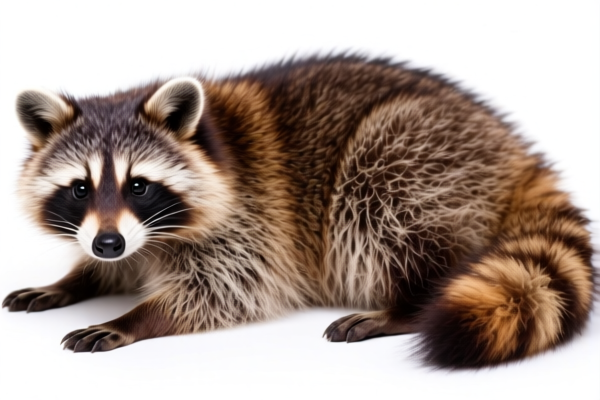

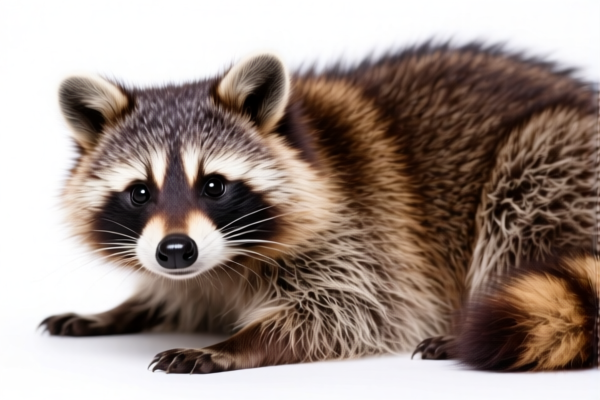

AI Analysis
🐀 Water Rat Fur (Aquatic Rodent Pelts / Leather Goods)
🌐 HS Code Reference & Customs Clearance Guide | 2026 Latest Tariff Analysis | Professional Clearance Strategy
📌 I. Product Definition & Classification: Do You Truly Understand "Water Rat Fur"?
Water Rat Fur (often referring to pelts from semi-aquatic rodents like nutria, coypu, or muskrat) is primarily classified in international trade not as raw fur, but as leather or semi-manufactured leather products, depending on the processing stage.
In international trade, it falls under two main categories:
1. Semi-Manufactured Leather Products (Chapter 42): Unfinished or partially processed skins intended for further manufacturing.
2. Finished Leather Goods (Chapter 42): Finished articles such as bags, wallets, or accessories made from these skins.
⚠️ Key Distinction:
- If the material is processed into leather sheets or semi-finished skins intended for manufacturing → Falls under Chapter 42 (Other Made-Up Leather Articles).
- If it is used as a component in reptile/finery leather classifications due to texture/treatment → Falls under specific 4202/4205 subheadings.
📦 II. HS Code Classification Details (2026 Latest Tariff Authority Comparison)
| HS Code | Product Description | Applicable Scenario | Material Attribute |
|---|---|---|---|
4205.00.80.00 |
Other articles of leather; leather or composition leather parts of garments or clothing accessories | Unfinished leather sheets, semi-finished pelts, leather scraps for manufacturing | ✅ Leather / Composite Leather |
4202.21.30.00 |
Trunks, suitcases, vanity cases, etc. with outer surface of reptile skin or composition reptile skin | Finished goods (e.g., bags, accessories) made from processed water rat fur treated as "reptile-like" finery leather | ✅ Reptile/Finery Leather Category |
4202.31.30.00 |
Articles of apparel and clothing accessories, with outer surface of reptile skin or composition reptile skin | Small leather goods (wallets, cardholders) made from processed water rat fur | ✅ Reptile Leather Category Extension |
🔍 Key Reminder:
- Water Rat Fur is legally classified as Leather or Composite Leather when processed. It does not fall under raw fur (Chapter 43) in most commercial finished forms.
- If used in bags/accessories, it may be grouped with Reptile Skin equivalents due to cosmetic similarity, triggering higher tariffs.
- Raw pelts vs. Finished Goods: The classification changes drastically based on whether the item is a raw skin or a manufactured article.
💰 III. 2026 Latest Tariff Rate Details (Including Surcharges & Policy Add-ons)
✅ Applicable Country: United States (US)
✅ Origin: China (CN)
✅ Effective Date: From November 10, 2025 (and subsequent imports)
🎯 1. 4205.00.80.00 —— Other Articles of Leather (Semi-Finished/Parts)
| Item | Content |
|---|---|
| Base Tariff | 0% (ad valorem) |
| USITC Surcharge (Section 301) | +25% |
| IEEPA Surcharge (122 Clause) | +10% (Specific to certain Chinese leather/fur products) |
| Total Tax Rate | 35.0% |
| Tax Calculation | CIF Value × 35% |
| De Minimis Eligibility | ❌ Not Eligible (deny_de_minimis) |
| Legal Pathway | IEEPA:122.01 → USITC:4205.00.80.00 → FOOTNOTE:9903.88.01 |
📌 Explanation:
- "0% Base Tariff": Standard MFN rate for "other leather articles" is zero.
- "25% USITC Surcharge": From U.S. Trade Act Section 301 on Chinese imports.
- "10% IEEPA Surcharge": Additional levy under the International Emergency Economic Powers Act for specific categories (often linked to textile/leather/fur surcharges).
- Total 35%: A significant cost barrier for semi-finished leather imports.
🎯 2. 4202.21.30.00 —— Trunks, Suitcases, etc. (Reptile/Finery Leather Category)
| Item | Content |
|---|---|
| Base Tariff | 5.3% |
| USITC Surcharge (Section 301) | +25% |
| IEEPA Surcharge (122 Clause) | +10% |
| Total Tax Rate | 40.3% |
| Tax Calculation | CIF Value × 40.3% |
| De Minimis Eligibility | ❌ Not Eligible (deny_de_minimis) |
| Legal Pathway | IEEPA:122.01 → USITC:4202.21.30.00 → FOOTNOTE:9903.88.01 |
📌 Note:
- Classified under Reptile Skin/Finery Leather due to cosmetic treatment of water rat fur.
- Higher base rate (5.3%) compared to raw leather articles.
- Applies to finished goods like bags, luggage, and vanity cases.
🎯 3. 4202.31.30.00 —— Apparel & Clothing Accessories (Reptile Leather Extension)
| Item | Content |
|---|---|
| Base Tariff | 3.7% |
| USITC Surcharge (Section 301) | +25% |
| IEEPA Surcharge (122 Clause) | +10% |
| Total Tax Rate | 38.7% |
| Tax Calculation | CIF Value × 38.7% |
| De Minimis Eligibility | ❌ Not Eligible (deny_de_minimis) |
| Legal Pathway | IEEPA:122.01 → USITC:4202.31.30.00 → FOOTNOTE:9903.88.01 |
📌 Note:
- Applies to small leather goods (wallets, cardholders, belts) made from processed water rat fur.
- Classified as an extension of Reptile Leather for tariff purposes.
- Total rate of 38.7% makes small accessories highly sensitive to cost changes.
🛠️ IV. Customs Clearance Practical Advice (Battle-Tested Pitfall Guide)
✅ 1. Required Documentation List (All Mandatory)
| Document | Must Provide | Explanation |
|---|---|---|
| ✅ Product Specification Sheet | ✔️ | Must state: "Processed Water Rat Leather" or "Nutria Fur Tanned Leather" |
| ✅ Processing Method Description | ✔️ | Tanning, curing, or finishing process details |
| ✅ Product Photos (Clear) | ✔️ | Show texture, label, and finished form (bag, skin, accessory) |
| ✅ Commercial Invoice | ✔️ | Must specify HS Code and "Country of Origin: China" |
| ✅ Packing List | ✔️ | Detail weights and quantities |
| ✅ Certificate of Origin (CO) | ✔️ | If applicable, for preferential claims (though limited here) |
| ✅ Third-Party Test Report | ✔️ | If claiming specific leather standards (e.g., EPA compliance) |
✅ 2. Declaration Tips (Critical Mantra)
🔥 “Don’t Call It Raw Fur; Call It Leather. Specify the End Product.”
| Scenario | Correct Declaration | Incorrect Action |
|---|---|---|
| Semi-finished pelts/sheets | 4205.00.80.00 ("Other leather articles") |
Misdeclaring as raw fur (Chapter 43) → Audit risk |
| Finished bags/luggage | 4202.21.30.00 ("Reptile-type leather goods") |
Misdeclaring as generic leather → Underpayment of tax |
| Wallets/Accessories | 4202.31.30.00 ("Reptile-type accessories") |
Misdeclaring as fabric/cloth → High penalty |
| Raw, unprocessed skins | Check Chapter 43 (Not in current data) | Using 420x codes → Rejection |
✅ 3. Special Circumstances Handling
| Scenario | Handling Advice |
|---|---|
| OEM Custom Bags | Provide design sketches showing "reptile-like" finish to justify 4202.21.30.00 |
| Mixed Materials | If water rat fur is <50% of surface area, may still be classified under leather rules |
| CITES Regulations | Check CITES Status! Nutria/Coypu may require CITES permits for import/export |
| Anti-Dumping/Countervailing | Verify if additional duties apply beyond the 35-40% range |
🌍 V. Global Market Customs Comparison (2026 Latest)
| Country/Region | Recommended HS Code | Tariff Rate | Certification Required | Notes |
|---|---|---|---|---|
| 🇺🇸 United States | 4205.00.80.00 / 4202.21.30.00 |
35.0% - 40.3% | EPA, IEEPA Compliance | High tariffs due to Section 301 + 122 Clause |
| 🇨🇳 China | 4205.00.80.00 |
~5-10% | None specific | Lower tariffs for processing inputs |
| 🇪🇺 European Union | 4205.00 / 4202.21 |
~4-6% | Ecolabel, REACH | No Section 301 surcharges |
| 🇦🇺 Australia | 4205.00 |
~5% | None | Moderate tariffs |
| 🇯🇵 Japan | 4205.00 |
~0-5% | None | Favorable for semi-finished leather |
📌 Conclusion:
- The United States imposes the highest effective tariff (35-40.3%) on water rat fur products due to trade war measures.
- EU and Asia offer significantly lower costs but require strict environmental/certification compliance.
- Cost-Saving Strategy: Consider sourcing semi-finished goods from non-China origins or final manufacturing in tariff-friendly jurisdictions.
📌 VI. Common Mistakes & Pitfall Guide (Lessons Learned)
❌ Mistake 1: Declaring "Water Rat Fur" as "Raw Fur" (Chapter 43)
👉 Consequence: Customs rejects classification, demands re-classification under Chapter 42 → Delay + Storage Fees
❌ Mistake 2: Ignoring the 122 Clause IEEPA Surcharge
👉 Consequence: Underpayment by 10% → Back Taxes + Penalties
❌ Mistake 3: Misclassifying Finished Bags as "Other Leather" (4205.00.80.00)
👉 Consequence: Tax rate drops from 40.3% to 35% → Audit Triggered for Undervaluation/Tax Evasion
❌ Mistake 4: Assuming De Minimis Applies
👉 Consequence: Shipments under $800 are Denied Entry for Chinese-origin leather/fur goods → Seizure or Return
✅ Correct Approach:
"Tanned Water Rat Leather, Semi-Finished, for Bag Manufacturing. HS Code: 4205.00.80.00. Country of Origin: China. Subject to 25% Section 301 and 10% IEEPA Surcharges."
🎯 VII. Conclusion: Professional Declaration, Risk-Free Clearance
🎯 Remember the Mantra:
🔹 "Leather, Not Fur. Leather, Not Fur."
🔹 "35% for Parts, 40% for Bags. Don’t Guess, Calculate."
🔹 "De Minimis is Dead for This Category."
📌 Pro Tip:
If your Water Rat Fur products are originating from Vietnam, Mexico, or Thailand, you may apply for IEEPA Exemptions or lower tariffs.
Recommendation: Apply for an Advance Ruling from U.S. Customs and Border Protection (CBP) before shipment to confirm the correct HS Code and avoid post-import audits.
📣 Immediate Action:
📞 Contact a Licensed Customs Broker
📝 Provide Product Samples + Photos
🚀 Secure Pre-Classification Ruling
Let Your Water Rat Fur Products Clear Customs Smoothly and Profitably!
✨ Professional Customs Clearance Starts with Accurate Classification!
💼 Every Percentage Point of Tax Matters to Your Bottom Line!
Customer Reviews
About HS Code Classification
The Harmonized System (HS) is an internationally standardized nomenclature developed by the World Customs Organization (WCO) to classify traded products. Over 200 countries use the HS system as the basis for customs tariffs, trade statistics, and import/export regulations.
Each HS code follows a hierarchical structure:
- Chapter (2 digits) — Broad category of goods (e.g., Chapter 84: Machinery and Mechanical Appliances)
- Heading (4 digits) — More specific grouping within the chapter
- Subheading (6 digits) — Internationally standardized breakdown, used by all WCO member countries
- National subdivisions (8-10 digits) — Country-specific extensions for further classification, such as US HTSUS 10-digit codes
Correct HS code classification is essential for smooth customs clearance, accurate duty payment, and compliance with trade regulations. Misclassification can lead to customs delays, overpayment of duties, or penalties.
When importing from CN to US, the applicable tariff rates may include:
- Most-Favored-Nation (MFN) rate — The standard duty rate applied to WTO members
- General rate — Applied to countries without trade agreements
- Trade remedy duties — Additional tariffs such as Section 301 (anti-dumping), Section 232 (national security), or countervailing duties
The information provided on this page is for reference purposes only. For official classification, please consult with your local customs authority or a licensed customs broker.