Watt hour Meter
CN → US| HS编码 | 关税税率 | 原产国 | 目的国 | 文档 |
|---|---|---|---|---|
| 9028300000 | 10.0% | CN | US | 官方文档 |
| 9028900040 | 35.0% | CN | US | 官方文档 |
| 9031808085 | 10.0% | CN | US | 官方文档 |
| 9030333800 | 35.0% | CN | US | 官方文档 |
| 9031808060 | 35.0% | CN | US | 官方文档 |
商品图片
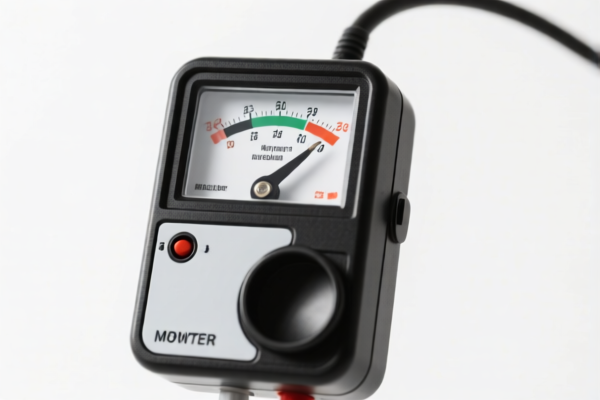
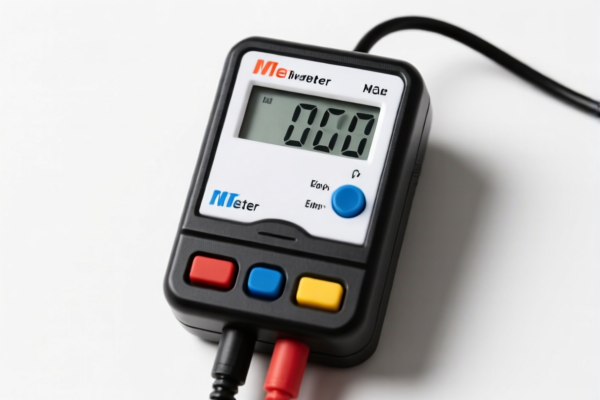
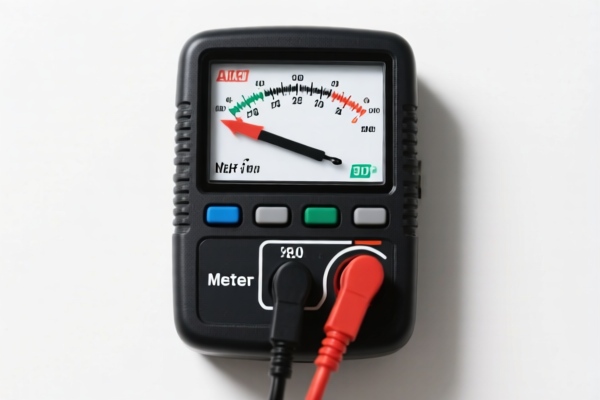
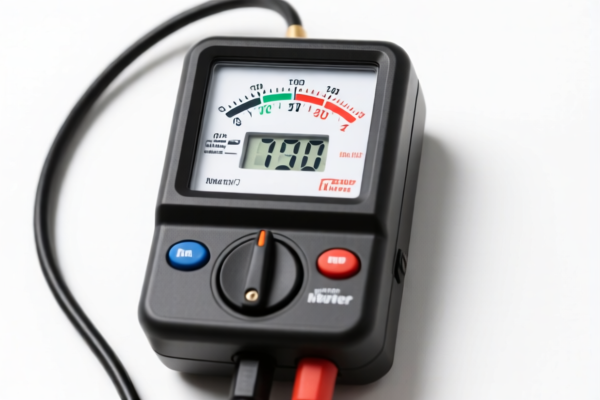
AI分析
⚡ Watt Hour Meter (Smart Electricity Meters & Voltmeters)
🌐 HS Code Reference & Customs Clearance Guide | 2026 Latest Tariff Analysis | Professional Clearance Strategy
📌 I. Product Definition & Classification: Do You Really Understand "Watt Hour Meters"?
In international trade, Watt Hour Meters (Electric Energy Meters) are not a single unified category. Their classification depends heavily on functionality, internal circuitry, and specific use cases. Broadly, they fall into two main buckets:
- Smart Watt Hour Meters (Energy Meters): Devices specifically designed to measure electrical energy consumption (kWh). These often contain microprocessors, communication modules (IoT, NB-IoT, LoRa), and digital displays.
- Voltmeters (Voltage Measurement Instruments): Devices primarily designed to measure voltage potential. While they may have some energy-related functions, if their primary purpose is measuring voltage or testing electrical characteristics, they fall under different headings.
⚠️ Key Distinction Point:
- If the device is primarily for measuring energy consumption (kWh) and fits the general description of an electric energy meter → Go to 9028.30.00.00.
- If the device is a complete finished meter but classified under general electrical measurement instruments not specifically listed as "energy meters" in the primary subheading → Potential risk for 9028.90.00.40.
- If the device is primarily a Voltmeter (measuring voltage) or an electrical characteristic tester → Go to 9031.80.80.85, 9030.33.38.00, or 9031.80.80.60.
📦 II. HS Code Classification Details (2026 Latest Tariff Authority Comparison)
Based on the provided data, here is the breakdown for Watt Hour Meters and related voltage instruments:
| HS Code | Product Description | Applicable Scenario | Tax Category |
|---|---|---|---|
9028.30.00.00 |
Smart Watt Hour Meter: Electric energy meter, purpose consistent with standard energy meters. | Standard residential/commercial smart meters, kWh meters. | ✅ Best Fit for Energy Meters |
9028.90.00.40 |
Finished Electric Meter: Fits the limited purpose definition of an electric meter but under general residual categories. | Meters not clearly fitting 9028.30, or specialized industrial meters classified under general residual. | ⚠️ High Risk/Alternative |
9031.80.80.85 |
Voltmeter: Voltage measuring instrument, fits the "Measuring Instruments" category. | Devices primarily measuring voltage, not energy consumption. | ❌ Wrong for Energy Meters |
9030.33.38.00 |
Voltmeter: Directly fits the purpose description of measuring voltage. | Simple voltmeters, digital voltage testers. | ❌ Wrong for Energy Meters |
9031.80.80.60 |
Voltmeter: Electrical characteristic testing instrument, fits "Other Instruments" category. | Testers for electrical characteristics, multi-function testers focused on voltage. | ❌ Wrong for Energy Meters |
🔍 Crucial Reminder:
- For a standard Watt Hour Meter (measuring kWh),9028.30.00.00is the most accurate and favorable classification.
- Misclassifying a standard watt hour meter as a Voltmeter (9030.33.38.00or9031.80.80.85) is a common error that may lead to customs rejection if the device clearly measures energy (kWh).
- However, if the device is a multi-function tester that includes voltage measurement but is primarily for "testing electrical characteristics," it might fall under9031.80.80.60, but this carries a higher tax rate.
💰 III. 2026 Latest Tariff Rate Breakdown (Including Surtaxes, Policy Add-ons)
✅ Applicable Country: United States (US)
✅ Origin: China (CN)
✅ Effective Time: 2025 onwards (including subsequent imports)
🎯 1. 9028.30.00.00 —— Smart Watt Hour Meter (Energy Meter)
| Item | Content |
|---|---|
| Base Tariff | 0.0% (ad valorem) |
| Section 301 Surtax | 0.0% (No additional 301 surtax for this subheading) |
| Section 122 Surtax | +10% (Specific to this category) |
| Total Tariff Rate | 10.0% |
| Tax Calculation | CIF Value × 10% |
| De Minimis Eligibility | ❌ Not Eligible (Deny de minimis for Section 122 goods) |
| Legal Basis Path | Section 122: 10% → USITC: 9028.30.00.00 |
📌 Explanation:
- This is the most favorable classification for standard watt hour meters.
- Only the 10% Section 122 tariff applies. There is no 25% Section 301 surtax for this specific code.
- Total Cost: 10% of CIF value.
🎯 2. 9028.90.00.40 —— Finished Electric Meter (General Residual)
| Item | Content |
|---|---|
| Base Tariff | 0.0% |
| Section 301 Surtax | +25.0% |
| Section 122 Surtax | +10.0% |
| Total Tariff Rate | 35.0% |
| Tax Calculation | CIF Value × 35% |
| De Minimis Eligibility | ❌ Not Eligible |
| Legal Basis Path | Section 301: 25% → Section 122: 10% → USITC: 9028.90.00.40 |
📌 Warning:
- If your watt hour meter is misclassified or falls into a residual category, the tax rate jumps to 35%.
- This includes both the 25% Section 301 and 10% Section 122 surtaxes.
🎯 3. 9031.80.80.85 / 9030.33.38.00 / 9031.80.80.60 —— Voltmeters & Testers
| Item | Content |
|---|---|
| Base Tariff | 0.0% |
| Section 301 Surtax | 0.0% (for 9031.80.80.85 and 9030.33.38.00) +25.0% (for 9031.80.80.60) |
| Section 122 Surtax | +10.0% (for all three) |
| Total Tariff Rate | 10.0% (for 9031.80.80.85 and 9030.33.38.00) 35.0% (for 9031.80.80.60) |
| Tax Calculation | CIF Value × 10% or 35% |
| De Minimis Eligibility | ❌ Not Eligible |
📌 Note:
-9031.80.80.85(Other measuring instruments) and9030.33.38.00(Voltmeters) have a 10% total rate.
-9031.80.80.60(Electrical characteristic testers) has a 35% total rate.
- Do not use these codes for standard Watt Hour Meters unless they are explicitly designed as testing instruments rather than energy consumption meters. Misclassification here could lead to disputes.
🛠️ IV. Customs Clearance Practical Advice (Avoid Pitfalls)
✅ 1. Preparation Checklist (Must-Haves)
| Document | Mandatory | Explanation |
|---|---|---|
| ✅ Product Specification Sheet | ✔️ | Must clearly state: Function (kWh vs. Voltage), Measurement Range, Accuracy Class, Interface Type. |
| ✅ Circuit Diagram / Block Diagram | ✔️ | To prove it is an energy meter (has watt-hour calculation chip) vs. a simple voltmeter. |
| ✅ Product Photos (with Nameplate) | ✔️ | Show model number, brand, input/output parameters, and "kWh" or "Watt Hour" labels. |
| ✅ Third-Party Test Report | ✔️ | CAL/CE certification showing measurement of active energy (kWh). |
| ✅ Commercial Invoice | ✔️ | Description: "Smart Watt Hour Meter for Measuring Electrical Energy Consumption" |
| ✅ Packing List | ✔️ | Include all accessories (clamps, communication modules). |
✅ 2. Declaration Tips (Key Mantra)
🔥 "Energy Meter is 9028, Voltmeter is 9030. Don't mix them up!"
| Scenario | Correct Declaration | Wrong Declaration |
|---|---|---|
| Standard Smart Watt Hour Meter (kWh) | 9028.30.00.00 |
9030.33.38.00 (Voltmeter) → Risk of Rejection |
| Industrial Watt Hour Meter (Residual) | 9028.90.00.40 |
9028.30.00.00 → Potential Audit |
| Voltage Tester / Multimeter | 9030.33.38.00 or 9031.80.80.85 |
9028.30.00.00 → Wrong Purpose |
| Electrical Characteristic Tester | 9031.80.80.60 |
9028.30.00.00 → Wrong Purpose |
✅ 3. Special Cases
| Case | Handling Advice |
|---|---|
| IoT Smart Meters | Clearly state "Remote Reading" or "IoT Enabled" in description. Still qualifies for 9028.30.00.00 if core function is kWh measurement. |
| Clamp-On Energy Meters | If it measures current/voltage to calculate kWh, it is still a Watt Hour Meter (9028.30.00.00), not a simple ammeter/voltmeter. |
| Multi-Function Analyzers | If it primarily performs power quality analysis or electrical testing, consider 9031.80.80.60 (35% tax). Do not force 9028.30.00.00. |
| Voltage Only Meters | If no energy (kWh) calculation, use 9030.33.38.00 (10% tax). |
🌍 V. Global Market Clearance Comparison (2026 Latest)
| Country/Region | Recommended HS Code | Tariff (China Origin) | Certification | Notes |
|---|---|---|---|---|
| 🇺🇸 USA | 9028.30.00.00 |
10% (Section 122) | NRTL/UL, FCC | Avoid 9028.90.00.40 (35%) |
| 🇨🇳 China | 9028.30.00.00 |
5% | CCC | Lower tariff, simpler clearance |
| 🇪🇺 EU | 9028.30.00.00 |
0% (if valid) | CE, MID | No surtaxes |
| 🇬🇧 UK | 9028.30.00.00 |
0% | UKCA | Post-Brexit rules |
| 🇯🇵 Japan | 9028.30.00.00 |
0% | PSE | Low tariff |
📌 Conclusion:
- USA has the highest friction due to Section 122 (10%) and potential Section 301 (25%) if misclassified.
-9028.30.00.00is the gold standard for Watt Hour Meters in the US, keeping tax at 10%.
- Never declare a kWh meter as a Voltmeter (9030.33.38.00) unless it lacks energy calculation, to avoid customs audits for under-declaration or misclassification.
📌 VI. Common Mistakes & Pitfalls (Blood & Tears Lessons)
❌ Mistake 1: Declaring a Watt Hour Meter as a Voltmeter (9030.33.38.00) to avoid taxes.
👉 Consequence: Customs will request a technical explanation. If proven to be an energy meter, they may reclassify it, causing delays. However, note that 9030.33.38.00 also has a 10% rate in the provided data, so the tax impact is neutral, but the legal risk is high due to misrepresentation of function.
❌ Mistake 2: Declaring a Smart Watt Hour Meter as a general Residual Meter (9028.90.00.40).
👉 Consequence: Tax jumps from 10% to 35%. Loss of 25% margin!
❌ Mistake 3: Ignoring Section 122.
👉 Consequence: Even if you think "no 301 tax," Section 122 adds 10% to most electrical instruments. You must budget for this.
❌ Mistake 4: Using vague descriptions like "Electric Meter."
👉 Consequence: Customs may classify it under the highest risk category. Always use "Smart Watt Hour Meter for Measuring Electrical Energy (kWh)".
✅ Correct Approach:
"Smart Watt Hour Meter, Model XYZ, Measures Active Energy (kWh), Digital Display, IoT Enabled, 110/220V, Accuracy Class 1.0, UL Certified"
🎯 VII. Conclusion: Precise Classification, Lower Costs!
🎯 Remember the Mantra:
🔹 "Watt Hour is 9028.30, Tax is 10%."
🔹 "Voltmeter is 9030, Tax is 10%."
🔹 "Residual Meter is 9028.90, Tax is 35%."
🔹 "Testers are 9031, Tax 10-35%."
🔹 "Don't mix kWh with Voltage! Save 25%!"
📌 Pro Tip:
- If your device is a multi-function power analyzer (measuring voltage, current, power factor, harmonics), consider 9031.80.80.60 (35%) if it's primarily for testing.
- If it's for consumption billing, stick to 9028.30.00.00 (10%).
- Apply for Advance Rulings if the product is new or complex.
📣 Take Action Now:
📞 Contact a professional customs broker + Provide technical datasheets + Apply for HS Code Pre-ruling
🚀 Ensure your Watt Hour Meters clear customs smoothly, save 25% in tariffs, and maximize profit!
✨ Professional Clearance Starts with Accurate Classification!
💼 Every cent saved is pure profit!
用户评价
关于 HS 编码归类
协调制度(HS)是由世界海关组织(WCO)制定的国际贸易商品分类标准。全球 200 多个国家采用 HS 系统作为海关关税、贸易统计和进出口监管的基础。
每个 HS 编码遵循以下层级结构:
- 章(2 位)——商品大类(例如:第 84 章:机器和机械设备)
- 品目(4 位)——章内的更具体分类
- 子目(6 位)——国际通用细分,所有 WCO 成员国统一使用
- 本国细分(8-10 位)——各国自行扩展的细分编码,如美国 HTSUS 10 位编码
正确的 HS 编码归类对于顺利通关、准确缴纳关税和遵守贸易法规至关重要。错误归类可能导致海关延误、多缴关税或罚款。
从CN进口到US时,适用的关税税率可能包括:
- 最惠国(MFN)税率——适用于 WTO 成员国的标准关税税率
- 普通税率——适用于无贸易协定国家
- 贸易救济关税——附加关税,如 301 条款(反倾销)、232 条款(国家安全)或反补贴税
本页内容仅供参考。如需正式归类,请咨询当地海关或持牌报关代理。