Watt hour Meter
CN → US| HS Code | Tariff Rate | Origin | Destination | Doc |
|---|---|---|---|---|
| 9028300000 | 10.0% | CN | US | Official Doc |
| 9028900040 | 35.0% | CN | US | Official Doc |
| 9031808085 | 10.0% | CN | US | Official Doc |
| 9030333800 | 35.0% | CN | US | Official Doc |
| 9031808060 | 35.0% | CN | US | Official Doc |
Product Images
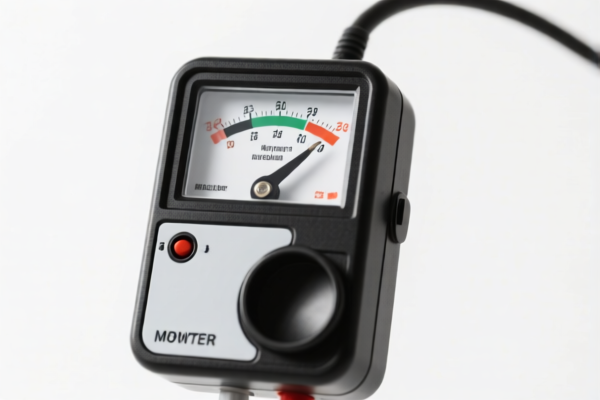
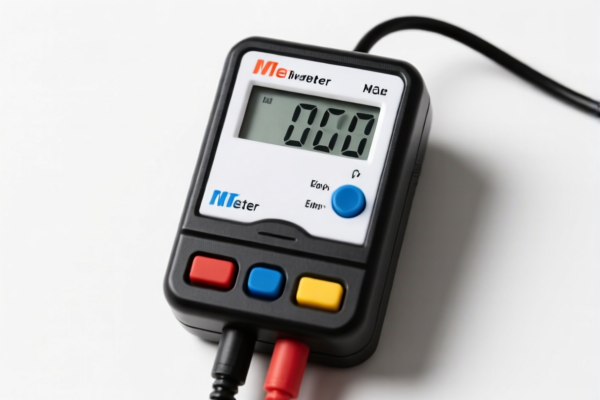
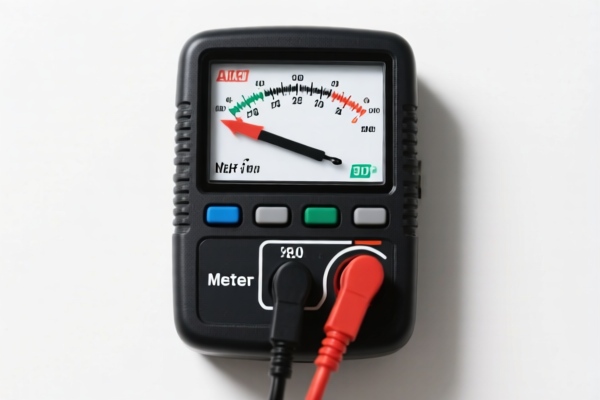
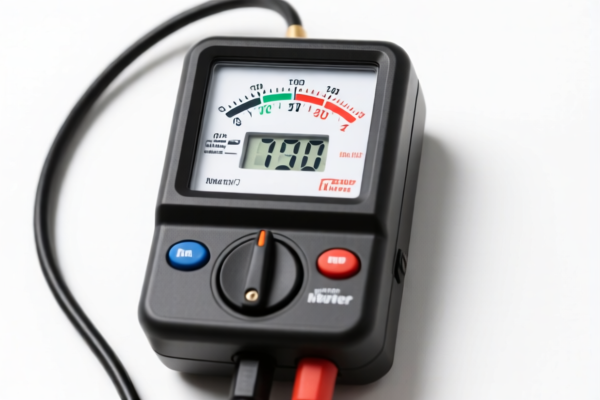
AI Analysis
⚡ Watt Hour Meter (Smart Electricity Meters & Voltmeters)
🌐 HS Code Reference & Customs Clearance Guide | 2026 Latest Tariff Analysis | Professional Clearance Strategy
📌 I. Product Definition & Classification: Do You Really Understand "Watt Hour Meters"?
In international trade, Watt Hour Meters (Electric Energy Meters) are not a single unified category. Their classification depends heavily on functionality, internal circuitry, and specific use cases. Broadly, they fall into two main buckets:
- Smart Watt Hour Meters (Energy Meters): Devices specifically designed to measure electrical energy consumption (kWh). These often contain microprocessors, communication modules (IoT, NB-IoT, LoRa), and digital displays.
- Voltmeters (Voltage Measurement Instruments): Devices primarily designed to measure voltage potential. While they may have some energy-related functions, if their primary purpose is measuring voltage or testing electrical characteristics, they fall under different headings.
⚠️ Key Distinction Point:
- If the device is primarily for measuring energy consumption (kWh) and fits the general description of an electric energy meter → Go to 9028.30.00.00.
- If the device is a complete finished meter but classified under general electrical measurement instruments not specifically listed as "energy meters" in the primary subheading → Potential risk for 9028.90.00.40.
- If the device is primarily a Voltmeter (measuring voltage) or an electrical characteristic tester → Go to 9031.80.80.85, 9030.33.38.00, or 9031.80.80.60.
📦 II. HS Code Classification Details (2026 Latest Tariff Authority Comparison)
Based on the provided data, here is the breakdown for Watt Hour Meters and related voltage instruments:
| HS Code | Product Description | Applicable Scenario | Tax Category |
|---|---|---|---|
9028.30.00.00 |
Smart Watt Hour Meter: Electric energy meter, purpose consistent with standard energy meters. | Standard residential/commercial smart meters, kWh meters. | ✅ Best Fit for Energy Meters |
9028.90.00.40 |
Finished Electric Meter: Fits the limited purpose definition of an electric meter but under general residual categories. | Meters not clearly fitting 9028.30, or specialized industrial meters classified under general residual. | ⚠️ High Risk/Alternative |
9031.80.80.85 |
Voltmeter: Voltage measuring instrument, fits the "Measuring Instruments" category. | Devices primarily measuring voltage, not energy consumption. | ❌ Wrong for Energy Meters |
9030.33.38.00 |
Voltmeter: Directly fits the purpose description of measuring voltage. | Simple voltmeters, digital voltage testers. | ❌ Wrong for Energy Meters |
9031.80.80.60 |
Voltmeter: Electrical characteristic testing instrument, fits "Other Instruments" category. | Testers for electrical characteristics, multi-function testers focused on voltage. | ❌ Wrong for Energy Meters |
🔍 Crucial Reminder:
- For a standard Watt Hour Meter (measuring kWh),9028.30.00.00is the most accurate and favorable classification.
- Misclassifying a standard watt hour meter as a Voltmeter (9030.33.38.00or9031.80.80.85) is a common error that may lead to customs rejection if the device clearly measures energy (kWh).
- However, if the device is a multi-function tester that includes voltage measurement but is primarily for "testing electrical characteristics," it might fall under9031.80.80.60, but this carries a higher tax rate.
💰 III. 2026 Latest Tariff Rate Breakdown (Including Surtaxes, Policy Add-ons)
✅ Applicable Country: United States (US)
✅ Origin: China (CN)
✅ Effective Time: 2025 onwards (including subsequent imports)
🎯 1. 9028.30.00.00 —— Smart Watt Hour Meter (Energy Meter)
| Item | Content |
|---|---|
| Base Tariff | 0.0% (ad valorem) |
| Section 301 Surtax | 0.0% (No additional 301 surtax for this subheading) |
| Section 122 Surtax | +10% (Specific to this category) |
| Total Tariff Rate | 10.0% |
| Tax Calculation | CIF Value × 10% |
| De Minimis Eligibility | ❌ Not Eligible (Deny de minimis for Section 122 goods) |
| Legal Basis Path | Section 122: 10% → USITC: 9028.30.00.00 |
📌 Explanation:
- This is the most favorable classification for standard watt hour meters.
- Only the 10% Section 122 tariff applies. There is no 25% Section 301 surtax for this specific code.
- Total Cost: 10% of CIF value.
🎯 2. 9028.90.00.40 —— Finished Electric Meter (General Residual)
| Item | Content |
|---|---|
| Base Tariff | 0.0% |
| Section 301 Surtax | +25.0% |
| Section 122 Surtax | +10.0% |
| Total Tariff Rate | 35.0% |
| Tax Calculation | CIF Value × 35% |
| De Minimis Eligibility | ❌ Not Eligible |
| Legal Basis Path | Section 301: 25% → Section 122: 10% → USITC: 9028.90.00.40 |
📌 Warning:
- If your watt hour meter is misclassified or falls into a residual category, the tax rate jumps to 35%.
- This includes both the 25% Section 301 and 10% Section 122 surtaxes.
🎯 3. 9031.80.80.85 / 9030.33.38.00 / 9031.80.80.60 —— Voltmeters & Testers
| Item | Content |
|---|---|
| Base Tariff | 0.0% |
| Section 301 Surtax | 0.0% (for 9031.80.80.85 and 9030.33.38.00) +25.0% (for 9031.80.80.60) |
| Section 122 Surtax | +10.0% (for all three) |
| Total Tariff Rate | 10.0% (for 9031.80.80.85 and 9030.33.38.00) 35.0% (for 9031.80.80.60) |
| Tax Calculation | CIF Value × 10% or 35% |
| De Minimis Eligibility | ❌ Not Eligible |
📌 Note:
-9031.80.80.85(Other measuring instruments) and9030.33.38.00(Voltmeters) have a 10% total rate.
-9031.80.80.60(Electrical characteristic testers) has a 35% total rate.
- Do not use these codes for standard Watt Hour Meters unless they are explicitly designed as testing instruments rather than energy consumption meters. Misclassification here could lead to disputes.
🛠️ IV. Customs Clearance Practical Advice (Avoid Pitfalls)
✅ 1. Preparation Checklist (Must-Haves)
| Document | Mandatory | Explanation |
|---|---|---|
| ✅ Product Specification Sheet | ✔️ | Must clearly state: Function (kWh vs. Voltage), Measurement Range, Accuracy Class, Interface Type. |
| ✅ Circuit Diagram / Block Diagram | ✔️ | To prove it is an energy meter (has watt-hour calculation chip) vs. a simple voltmeter. |
| ✅ Product Photos (with Nameplate) | ✔️ | Show model number, brand, input/output parameters, and "kWh" or "Watt Hour" labels. |
| ✅ Third-Party Test Report | ✔️ | CAL/CE certification showing measurement of active energy (kWh). |
| ✅ Commercial Invoice | ✔️ | Description: "Smart Watt Hour Meter for Measuring Electrical Energy Consumption" |
| ✅ Packing List | ✔️ | Include all accessories (clamps, communication modules). |
✅ 2. Declaration Tips (Key Mantra)
🔥 "Energy Meter is 9028, Voltmeter is 9030. Don't mix them up!"
| Scenario | Correct Declaration | Wrong Declaration |
|---|---|---|
| Standard Smart Watt Hour Meter (kWh) | 9028.30.00.00 |
9030.33.38.00 (Voltmeter) → Risk of Rejection |
| Industrial Watt Hour Meter (Residual) | 9028.90.00.40 |
9028.30.00.00 → Potential Audit |
| Voltage Tester / Multimeter | 9030.33.38.00 or 9031.80.80.85 |
9028.30.00.00 → Wrong Purpose |
| Electrical Characteristic Tester | 9031.80.80.60 |
9028.30.00.00 → Wrong Purpose |
✅ 3. Special Cases
| Case | Handling Advice |
|---|---|
| IoT Smart Meters | Clearly state "Remote Reading" or "IoT Enabled" in description. Still qualifies for 9028.30.00.00 if core function is kWh measurement. |
| Clamp-On Energy Meters | If it measures current/voltage to calculate kWh, it is still a Watt Hour Meter (9028.30.00.00), not a simple ammeter/voltmeter. |
| Multi-Function Analyzers | If it primarily performs power quality analysis or electrical testing, consider 9031.80.80.60 (35% tax). Do not force 9028.30.00.00. |
| Voltage Only Meters | If no energy (kWh) calculation, use 9030.33.38.00 (10% tax). |
🌍 V. Global Market Clearance Comparison (2026 Latest)
| Country/Region | Recommended HS Code | Tariff (China Origin) | Certification | Notes |
|---|---|---|---|---|
| 🇺🇸 USA | 9028.30.00.00 |
10% (Section 122) | NRTL/UL, FCC | Avoid 9028.90.00.40 (35%) |
| 🇨🇳 China | 9028.30.00.00 |
5% | CCC | Lower tariff, simpler clearance |
| 🇪🇺 EU | 9028.30.00.00 |
0% (if valid) | CE, MID | No surtaxes |
| 🇬🇧 UK | 9028.30.00.00 |
0% | UKCA | Post-Brexit rules |
| 🇯🇵 Japan | 9028.30.00.00 |
0% | PSE | Low tariff |
📌 Conclusion:
- USA has the highest friction due to Section 122 (10%) and potential Section 301 (25%) if misclassified.
-9028.30.00.00is the gold standard for Watt Hour Meters in the US, keeping tax at 10%.
- Never declare a kWh meter as a Voltmeter (9030.33.38.00) unless it lacks energy calculation, to avoid customs audits for under-declaration or misclassification.
📌 VI. Common Mistakes & Pitfalls (Blood & Tears Lessons)
❌ Mistake 1: Declaring a Watt Hour Meter as a Voltmeter (9030.33.38.00) to avoid taxes.
👉 Consequence: Customs will request a technical explanation. If proven to be an energy meter, they may reclassify it, causing delays. However, note that 9030.33.38.00 also has a 10% rate in the provided data, so the tax impact is neutral, but the legal risk is high due to misrepresentation of function.
❌ Mistake 2: Declaring a Smart Watt Hour Meter as a general Residual Meter (9028.90.00.40).
👉 Consequence: Tax jumps from 10% to 35%. Loss of 25% margin!
❌ Mistake 3: Ignoring Section 122.
👉 Consequence: Even if you think "no 301 tax," Section 122 adds 10% to most electrical instruments. You must budget for this.
❌ Mistake 4: Using vague descriptions like "Electric Meter."
👉 Consequence: Customs may classify it under the highest risk category. Always use "Smart Watt Hour Meter for Measuring Electrical Energy (kWh)".
✅ Correct Approach:
"Smart Watt Hour Meter, Model XYZ, Measures Active Energy (kWh), Digital Display, IoT Enabled, 110/220V, Accuracy Class 1.0, UL Certified"
🎯 VII. Conclusion: Precise Classification, Lower Costs!
🎯 Remember the Mantra:
🔹 "Watt Hour is 9028.30, Tax is 10%."
🔹 "Voltmeter is 9030, Tax is 10%."
🔹 "Residual Meter is 9028.90, Tax is 35%."
🔹 "Testers are 9031, Tax 10-35%."
🔹 "Don't mix kWh with Voltage! Save 25%!"
📌 Pro Tip:
- If your device is a multi-function power analyzer (measuring voltage, current, power factor, harmonics), consider 9031.80.80.60 (35%) if it's primarily for testing.
- If it's for consumption billing, stick to 9028.30.00.00 (10%).
- Apply for Advance Rulings if the product is new or complex.
📣 Take Action Now:
📞 Contact a professional customs broker + Provide technical datasheets + Apply for HS Code Pre-ruling
🚀 Ensure your Watt Hour Meters clear customs smoothly, save 25% in tariffs, and maximize profit!
✨ Professional Clearance Starts with Accurate Classification!
💼 Every cent saved is pure profit!
Customer Reviews
About HS Code Classification
The Harmonized System (HS) is an internationally standardized nomenclature developed by the World Customs Organization (WCO) to classify traded products. Over 200 countries use the HS system as the basis for customs tariffs, trade statistics, and import/export regulations.
Each HS code follows a hierarchical structure:
- Chapter (2 digits) — Broad category of goods (e.g., Chapter 84: Machinery and Mechanical Appliances)
- Heading (4 digits) — More specific grouping within the chapter
- Subheading (6 digits) — Internationally standardized breakdown, used by all WCO member countries
- National subdivisions (8-10 digits) — Country-specific extensions for further classification, such as US HTSUS 10-digit codes
Correct HS code classification is essential for smooth customs clearance, accurate duty payment, and compliance with trade regulations. Misclassification can lead to customs delays, overpayment of duties, or penalties.
When importing from CN to US, the applicable tariff rates may include:
- Most-Favored-Nation (MFN) rate — The standard duty rate applied to WTO members
- General rate — Applied to countries without trade agreements
- Trade remedy duties — Additional tariffs such as Section 301 (anti-dumping), Section 232 (national security), or countervailing duties
The information provided on this page is for reference purposes only. For official classification, please consult with your local customs authority or a licensed customs broker.