Wear Resistant Fireproof Mortar
CN → US| HS编码 | 关税税率 | 原产国 | 目的国 | 文档 |
|---|---|---|---|---|
| 3816002010 | 38.0% | CN | US | 官方文档 |
| 2522200000 | 35.0% | CN | US | 官方文档 |
| 6902905020 | 35.0% | CN | US | 官方文档 |
| 6902205020 | 35.0% | CN | US | 官方文档 |
| 3816002050 | 38.0% | CN | US | 官方文档 |
商品图片
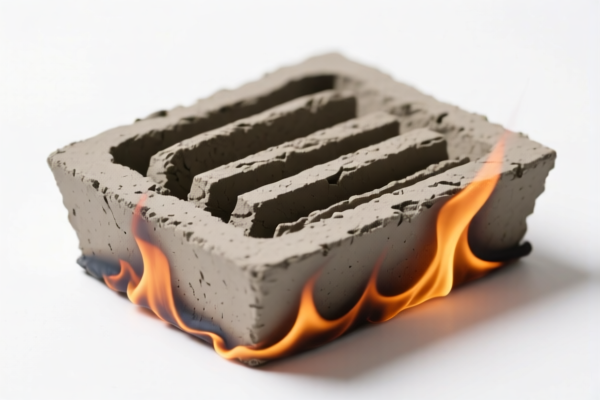
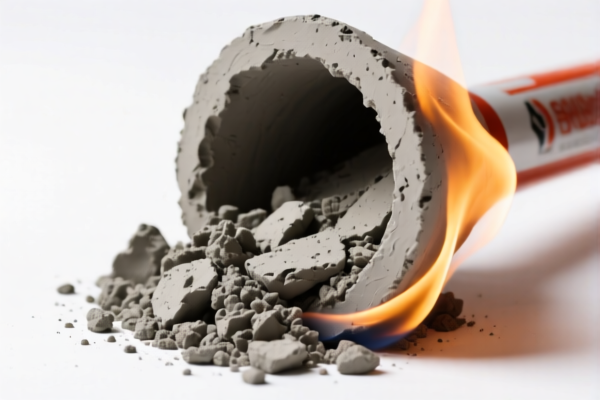
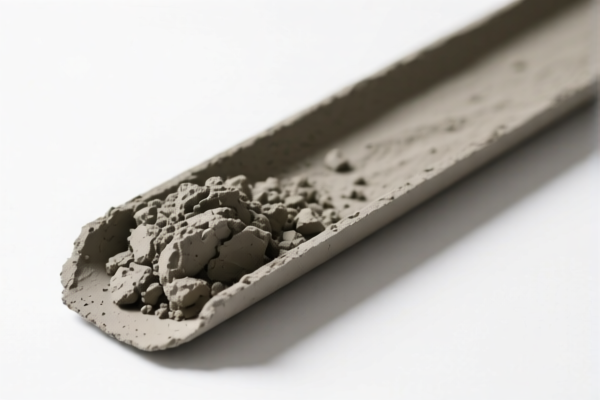

AI分析
🔥 Wear-Resistant Fireproof Mortar: The Ultimate Clearance Guide for US Imports (2026)
🌐 HS Code Reference & Customs Clearance Strategy | 2026 Tariff Rules | Professional Trade Compliance
📌 I. Product Definition & Classification: Do You Really Understand "Fireproof Mortar"?
Wear-resistant fireproof mortar is a specialized construction material composed of refractory aggregates, binders (such as calcium aluminate cement, lime, or silicates), and additives. It is primarily used for grouting, repairing, or lining high-temperature industrial equipment (e.g., kilns, furnaces, chimneys) and heavy-duty flooring.
In international trade, its classification depends heavily on its chemical composition and physical form: * As a Cementitious Product: If it behaves like a specialized lime or cement-based grout. * As a Ceramic/Refractory Component: If it is considered an accessory or part of a refractory brick structure. * As a Chemical Preparation: If it contains specific binding agents classified under Chapter 38.
⚠️ Key Distinction Point:
- If the mortar is lime-based or acts as a binding agent for masonry → Look at HS 2522 (Lime) or HS 3816 (Chemical Preparations).
- If the mortar is treated as a refractory ceramic construction material (similar to bricks) → Look at HS 6902 (Refractory Bricks).
📦 II. HS Code Classification Details (2026 Latest Tariff Authority对照)
| HS Code | Product Description | Applicable Scenario | Total Tax Rate (China Origin to US) |
|---|---|---|---|
3816.00.20.10 |
Mortar preparations, other than those of heading 6910 or 6914; Refractory mortars (Clay-based or similar) | General refractory mortar, including clay-based or mixed binders; Classified under "Mortar preparations". | 38.0% |
2522.20.00.00 |
Lime, hydraulic (including slaked lime and intermediately calcined lime) | Mortar containing significant lime components; Treated similarly to slaked/hydraulic lime. | 35.0% |
6902.90.50.20 |
Refractory bricks, blocks, tiles and similar refractory constructional goods, of other materials; Mortar-like refractory goods | Mortar viewed as an accessory/part of refractory brick systems; Fits "Other refractory constructional goods". | 35.0% |
6902.20.50.20 |
Refractory bricks, blocks, tiles... of alumina ≥50%; Ceramic constructional materials | Mortar with high alumina content, matching ceramic refractory building materials. | 35.0% |
3816.00.20.50 |
Mortar preparations... Other (Non-clay based) | Refractory mortar made from non-clay materials (e.g., chemical binders, specific silicates); "Other" category. | 38.0% |
🔍 Critical Note:
- HS 3816 codes generally attract a 3.0% Base Duty + 25% Section 301 + 10% IEEPA = 38.0% Total.
- HS 2522/6902 codes generally attract 0.0% Base Duty + 25% Section 301 + 10% IEEPA = 35.0% Total.
- The choice between 35% and 38% depends on whether customs views your product as a "Chemical Preparation" (Ch. 38) or a "Lime/Ceramic Product" (Ch. 25/69).
💰 III. 2026 Latest Tariff Rate Breakdown (Including Surtaxes & Policy Surcharges)
✅ Applicable Country: United States (US)
✅ Origin: China (CN)
✅ Effective Date: November 10, 2025 (and onwards)
🎯 1. HS 3816.00.20.10 & HS 3816.00.20.50 — Refractory Mortar Preparations
| Item | Details |
|---|---|
| Base Duty (MFN) | 3.0% (Ad Valorem) |
| Section 301 Surtax | +25.0% (USITC Footnote for China-origin goods) |
| IEEPA Surtax | +10.0% (Targeted Chinese goods, effective Nov 2025) |
| Total Tax Rate | 38.0% |
| Calculation Basis | CIF Value × 38.0% |
| De Minimis Exemption | ❌ Not Applicable (Denied) |
| Legal Path | IEEPA:9903.01.25 → Section 301: 9903.88.01 → USITC: 3816 |
📌 Explanation:
- These codes are classified under Chapter 38 (Miscellaneous Chemical Products).
- The 3% base duty applies because it is considered a chemical preparation/prepared binder.
- The 35% surcharge (25% + 10%) is mandatory for Chinese origin.
🎯 2. HS 2522.20.00.00 — Hydraulic Lime / Slaked Lime Based Mortar
| Item | Details |
|---|---|
| Base Duty (MFN) | 0.0% |
| Section 301 Surtax | +25.0% |
| IEEPA Surtax | +10.0% |
| Total Tax Rate | 35.0% |
| Calculation Basis | CIF Value × 35.0% |
| De Minimis Exemption | ❌ Not Applicable |
| Legal Path | IEEPA:9903.01.24 → Section 301: 9903.88.01 → USITC: 2522.20.00.00 |
📌 Explanation:
- If your mortar is lime-dominated (e.g., mixed with slaked lime), it may be reclassified under Chapter 25 (Salt; Sulfur; Earths and Stone).
- Lime products often have a 0% base duty, making the total tax 3% lower than Chapter 38 options.
- Proof Required: Technical data sheet showing high lime content.
🎯 3. HS 6902.90.50.20 & HS 6902.20.50.20 — Refractory Ceramic Constructional Goods
| Item | Details |
|---|---|
| Base Duty (MFN) | 0.0% |
| Section 301 Surtax | +25.0% |
| IEEPA Surtax | +10.0% |
| Total Tax Rate | 35.0% |
| Calculation Basis | CIF Value × 35.0% |
| De Minimis Exemption | ❌ Not Applicable |
| Legal Path | IEEPA:9903.01.24 → Section 301: 9903.88.01 → USITC: 6902 |
📌 Explanation:
- If the mortar is viewed as a refractory accessory or constructional good (akin to bricks/tiles), it falls under Chapter 69 (Ceramic Products).
- Like lime, ceramics often have a 0% base duty.
- Proof Required: Declaration that the product is for use with refractory bricks, or has similar ceramic refractory properties.
🛠️ IV. Customs Clearance Practical Advice (Pitfall Avoidance Guide)
✅ 1. Required Documentation Checklist (Non-Negotiable)
| Document | Mandatory? | Notes |
|---|---|---|
| ✅ Technical Data Sheet (TDS) | YES | Must detail chemical composition (e.g., % Lime, % Alumina, % Clay) to justify HS Code. |
| ✅ Material Safety Data Sheet (MSDS) | YES | Standard for chemical/construction products. |
| ✅ Product Photos (Clear Packaging) | YES | Show label, net weight, and "Made in China" mark. |
| ✅ Commercial Invoice | YES | Description must match HS Code logic (e.g., "Lime-based Refractory Mortar" vs. "Chemical Mortar"). |
| ✅ Packing List | YES | Include pallet details and total CBM. |
| ✅ Certificate of Origin (CO) | YES | Confirm China origin to apply correct surtaxes. |
✅ 2. Declaration Strategy (Key Mantras)
🔥 "Composition is King: Lime/Ceramic = 35%, Chemical Prep = 38%"
| Scenario | Recommended HS Code | Risk of Misclassification |
|---|---|---|
| High Lime Content | 2522.20.00.00 |
Low. If TDS shows >20% CaO, customs may accept. |
| Refractory Brick Accessory | 6902.90.50.20 |
Medium. Must prove it's used specifically for refractory lining. |
| General Chemical Binder | 3816.00.20.10 |
Low. Safe default if composition is complex/unknown. |
| Non-Clay Chemical Mortar | 3816.00.20.50 |
Low. For specialized silicate or aluminate cements. |
🚫 Common Mistake:
- Declaring all mortar as3816.00.20.10(38%) when it is actually lime-based (35%).
- Result: You overpay 3% on every shipment.
- Solution: Provide TDS to argue for2522or6902if composition allows.
✅ 3. Special Cases
| Situation | Handling Advice |
|---|---|
| Mixed Shipments (Bricks + Mortar) | Declare Separately! Bricks (6902) and Mortar (3816/2522) have different duties. Do not bundle under one HS Code to avoid penalties. |
| Pre-mixed Dry Powder vs. Wet Paste | Both are generally classified under the same HS codes based on composition. Ensure label says "Ready-to-use" or "Dry Mix" accurately. |
| Sample Shipments | Even samples are subject to the 35-38% duty if shipped via standard courier (DHL/FedEx) into the US. No de minimis for this category. |
🌍 V. Global Market Comparison (2026 Update)
| Country/Region | Recommended HS Code | Est. Total Duty (China Origin) | Certification/Notes |
|---|---|---|---|
| 🇺🇸 USA | 3816 / 2522 / 6902 |
35% - 38% | High scrutiny on "China Origin". IEEPA + Sec 301 apply. |
| 🇨🇳 China (Export) | 3824.99 / 2522.20 |
0% - 13% | Depends on export policy. No surtaxes. |
| 🇪🇺 EU | 2522.20 / 6902 |
0% - 6.5% | No Section 301. Standard MFN rates apply. |
| 🇬🇧 UK | 2522.20 / 6902 |
0% - 6.5% | Post-Brexit UK tariff. No US-style surtaxes. |
| 🇨🇦 Canada | 2522.20 / 6902 |
0% - 5% | USMCA benefits may apply if non-China origin. |
📌 Conclusion:
- The USA is the most expensive market for Chinese refractory mortar due to the 35-38% effective tax rate.
- EU and UK are significantly more competitive with 0-6.5% duties.
- Consider supply chain diversification if targeting the US market with high-volume, low-margin products.
📌 VI. Common Errors & How to Avoid Them (Lessons Learned)
❌ Error 1: Declaring "Fireproof Mortar" as 3824.99 (Other prepared binders) without justification.
👉 Consequence: Customs may reclassify to 3816 (38%) or 6902 (35%).
❌ Error 2: Ignoring the IEEPA 10% surcharge in cost calculations.
👉 Consequence: Profit margin erosion. Many importers only account for the 25% Section 301.
❌ Error 3: Failing to provide a Technical Data Sheet (TDS).
👉 Consequence: Customs cannot verify if the product is "Lime-based" (25%) or "Chemical" (38%), leading to forced classification at the highest rate or audit delays.
✅ Correct Practice:
"Refractory Mortar, High-Alumina, for Kiln Lining, Dry Mix, Non-Clay Based" →
3816.00.20.50
"Lime-Based Fireproof Grout, for Masonry Repair" →2522.20.00.00
🎯 VII. Conclusion: Professional Classification Saves Money!
🎯 Remember the Formula:
🔹 Lime/Ceramic Composition = 35% Total Duty
🔹 Chemical/Preparation Composition = 38% Total Duty
🔹 Difference = 3% of CIF Value (On a $100,000 shipment, that's $3,000 savings!)
📌 Pro Tip:
- Always request a TDS from your supplier.
- If the product is Lime-based or Refractory Ceramic-like, argue for HS 2522 or HS 6902 to save 3%.
- If it's a complex chemical binder, stick to HS 3816.
- Never assume "Mortar" is one HS Code. Composition dictates classification.
📣 Immediate Action:
📞 Consult a licensed customs broker with your TDS and Product Photos.
🚀 Pre-apply for a Customs Ruling if shipment volume is high.
💼 Accurate HS Codes = Lower Duties = Higher Profits!
✨ Smart Customs Clearance Starts with Smart Classification!
💼 Every Percentage Point Matters in Cross-Border Trade!
用户评价
关于 HS 编码归类
协调制度(HS)是由世界海关组织(WCO)制定的国际贸易商品分类标准。全球 200 多个国家采用 HS 系统作为海关关税、贸易统计和进出口监管的基础。
每个 HS 编码遵循以下层级结构:
- 章(2 位)——商品大类(例如:第 84 章:机器和机械设备)
- 品目(4 位)——章内的更具体分类
- 子目(6 位)——国际通用细分,所有 WCO 成员国统一使用
- 本国细分(8-10 位)——各国自行扩展的细分编码,如美国 HTSUS 10 位编码
正确的 HS 编码归类对于顺利通关、准确缴纳关税和遵守贸易法规至关重要。错误归类可能导致海关延误、多缴关税或罚款。
从CN进口到US时,适用的关税税率可能包括:
- 最惠国(MFN)税率——适用于 WTO 成员国的标准关税税率
- 普通税率——适用于无贸易协定国家
- 贸易救济关税——附加关税,如 301 条款(反倾销)、232 条款(国家安全)或反补贴税
本页内容仅供参考。如需正式归类,请咨询当地海关或持牌报关代理。