Wear Resistant Fireproof Mortar
CN → US| HS Code | Tariff Rate | Origin | Destination | Doc |
|---|---|---|---|---|
| 3816002010 | 38.0% | CN | US | Official Doc |
| 2522200000 | 35.0% | CN | US | Official Doc |
| 6902905020 | 35.0% | CN | US | Official Doc |
| 6902205020 | 35.0% | CN | US | Official Doc |
| 3816002050 | 38.0% | CN | US | Official Doc |
Product Images
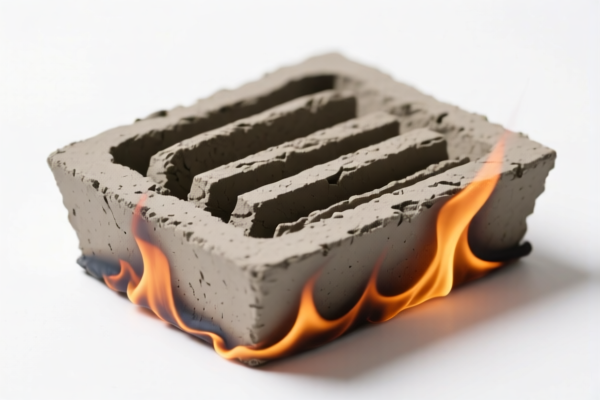
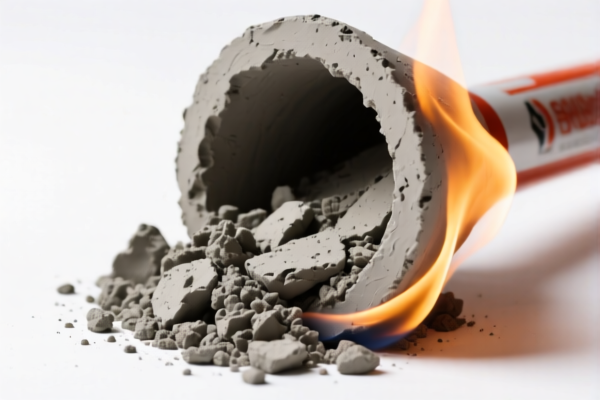
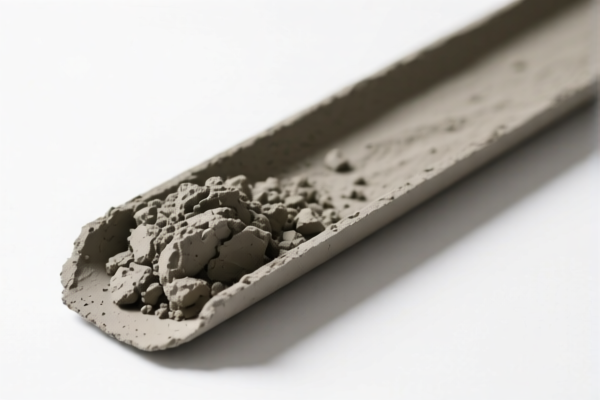

AI Analysis
🔥 Wear-Resistant Fireproof Mortar: The Ultimate Clearance Guide for US Imports (2026)
🌐 HS Code Reference & Customs Clearance Strategy | 2026 Tariff Rules | Professional Trade Compliance
📌 I. Product Definition & Classification: Do You Really Understand "Fireproof Mortar"?
Wear-resistant fireproof mortar is a specialized construction material composed of refractory aggregates, binders (such as calcium aluminate cement, lime, or silicates), and additives. It is primarily used for grouting, repairing, or lining high-temperature industrial equipment (e.g., kilns, furnaces, chimneys) and heavy-duty flooring.
In international trade, its classification depends heavily on its chemical composition and physical form: * As a Cementitious Product: If it behaves like a specialized lime or cement-based grout. * As a Ceramic/Refractory Component: If it is considered an accessory or part of a refractory brick structure. * As a Chemical Preparation: If it contains specific binding agents classified under Chapter 38.
⚠️ Key Distinction Point:
- If the mortar is lime-based or acts as a binding agent for masonry → Look at HS 2522 (Lime) or HS 3816 (Chemical Preparations).
- If the mortar is treated as a refractory ceramic construction material (similar to bricks) → Look at HS 6902 (Refractory Bricks).
📦 II. HS Code Classification Details (2026 Latest Tariff Authority对照)
| HS Code | Product Description | Applicable Scenario | Total Tax Rate (China Origin to US) |
|---|---|---|---|
3816.00.20.10 |
Mortar preparations, other than those of heading 6910 or 6914; Refractory mortars (Clay-based or similar) | General refractory mortar, including clay-based or mixed binders; Classified under "Mortar preparations". | 38.0% |
2522.20.00.00 |
Lime, hydraulic (including slaked lime and intermediately calcined lime) | Mortar containing significant lime components; Treated similarly to slaked/hydraulic lime. | 35.0% |
6902.90.50.20 |
Refractory bricks, blocks, tiles and similar refractory constructional goods, of other materials; Mortar-like refractory goods | Mortar viewed as an accessory/part of refractory brick systems; Fits "Other refractory constructional goods". | 35.0% |
6902.20.50.20 |
Refractory bricks, blocks, tiles... of alumina ≥50%; Ceramic constructional materials | Mortar with high alumina content, matching ceramic refractory building materials. | 35.0% |
3816.00.20.50 |
Mortar preparations... Other (Non-clay based) | Refractory mortar made from non-clay materials (e.g., chemical binders, specific silicates); "Other" category. | 38.0% |
🔍 Critical Note:
- HS 3816 codes generally attract a 3.0% Base Duty + 25% Section 301 + 10% IEEPA = 38.0% Total.
- HS 2522/6902 codes generally attract 0.0% Base Duty + 25% Section 301 + 10% IEEPA = 35.0% Total.
- The choice between 35% and 38% depends on whether customs views your product as a "Chemical Preparation" (Ch. 38) or a "Lime/Ceramic Product" (Ch. 25/69).
💰 III. 2026 Latest Tariff Rate Breakdown (Including Surtaxes & Policy Surcharges)
✅ Applicable Country: United States (US)
✅ Origin: China (CN)
✅ Effective Date: November 10, 2025 (and onwards)
🎯 1. HS 3816.00.20.10 & HS 3816.00.20.50 — Refractory Mortar Preparations
| Item | Details |
|---|---|
| Base Duty (MFN) | 3.0% (Ad Valorem) |
| Section 301 Surtax | +25.0% (USITC Footnote for China-origin goods) |
| IEEPA Surtax | +10.0% (Targeted Chinese goods, effective Nov 2025) |
| Total Tax Rate | 38.0% |
| Calculation Basis | CIF Value × 38.0% |
| De Minimis Exemption | ❌ Not Applicable (Denied) |
| Legal Path | IEEPA:9903.01.25 → Section 301: 9903.88.01 → USITC: 3816 |
📌 Explanation:
- These codes are classified under Chapter 38 (Miscellaneous Chemical Products).
- The 3% base duty applies because it is considered a chemical preparation/prepared binder.
- The 35% surcharge (25% + 10%) is mandatory for Chinese origin.
🎯 2. HS 2522.20.00.00 — Hydraulic Lime / Slaked Lime Based Mortar
| Item | Details |
|---|---|
| Base Duty (MFN) | 0.0% |
| Section 301 Surtax | +25.0% |
| IEEPA Surtax | +10.0% |
| Total Tax Rate | 35.0% |
| Calculation Basis | CIF Value × 35.0% |
| De Minimis Exemption | ❌ Not Applicable |
| Legal Path | IEEPA:9903.01.24 → Section 301: 9903.88.01 → USITC: 2522.20.00.00 |
📌 Explanation:
- If your mortar is lime-dominated (e.g., mixed with slaked lime), it may be reclassified under Chapter 25 (Salt; Sulfur; Earths and Stone).
- Lime products often have a 0% base duty, making the total tax 3% lower than Chapter 38 options.
- Proof Required: Technical data sheet showing high lime content.
🎯 3. HS 6902.90.50.20 & HS 6902.20.50.20 — Refractory Ceramic Constructional Goods
| Item | Details |
|---|---|
| Base Duty (MFN) | 0.0% |
| Section 301 Surtax | +25.0% |
| IEEPA Surtax | +10.0% |
| Total Tax Rate | 35.0% |
| Calculation Basis | CIF Value × 35.0% |
| De Minimis Exemption | ❌ Not Applicable |
| Legal Path | IEEPA:9903.01.24 → Section 301: 9903.88.01 → USITC: 6902 |
📌 Explanation:
- If the mortar is viewed as a refractory accessory or constructional good (akin to bricks/tiles), it falls under Chapter 69 (Ceramic Products).
- Like lime, ceramics often have a 0% base duty.
- Proof Required: Declaration that the product is for use with refractory bricks, or has similar ceramic refractory properties.
🛠️ IV. Customs Clearance Practical Advice (Pitfall Avoidance Guide)
✅ 1. Required Documentation Checklist (Non-Negotiable)
| Document | Mandatory? | Notes |
|---|---|---|
| ✅ Technical Data Sheet (TDS) | YES | Must detail chemical composition (e.g., % Lime, % Alumina, % Clay) to justify HS Code. |
| ✅ Material Safety Data Sheet (MSDS) | YES | Standard for chemical/construction products. |
| ✅ Product Photos (Clear Packaging) | YES | Show label, net weight, and "Made in China" mark. |
| ✅ Commercial Invoice | YES | Description must match HS Code logic (e.g., "Lime-based Refractory Mortar" vs. "Chemical Mortar"). |
| ✅ Packing List | YES | Include pallet details and total CBM. |
| ✅ Certificate of Origin (CO) | YES | Confirm China origin to apply correct surtaxes. |
✅ 2. Declaration Strategy (Key Mantras)
🔥 "Composition is King: Lime/Ceramic = 35%, Chemical Prep = 38%"
| Scenario | Recommended HS Code | Risk of Misclassification |
|---|---|---|
| High Lime Content | 2522.20.00.00 |
Low. If TDS shows >20% CaO, customs may accept. |
| Refractory Brick Accessory | 6902.90.50.20 |
Medium. Must prove it's used specifically for refractory lining. |
| General Chemical Binder | 3816.00.20.10 |
Low. Safe default if composition is complex/unknown. |
| Non-Clay Chemical Mortar | 3816.00.20.50 |
Low. For specialized silicate or aluminate cements. |
🚫 Common Mistake:
- Declaring all mortar as3816.00.20.10(38%) when it is actually lime-based (35%).
- Result: You overpay 3% on every shipment.
- Solution: Provide TDS to argue for2522or6902if composition allows.
✅ 3. Special Cases
| Situation | Handling Advice |
|---|---|
| Mixed Shipments (Bricks + Mortar) | Declare Separately! Bricks (6902) and Mortar (3816/2522) have different duties. Do not bundle under one HS Code to avoid penalties. |
| Pre-mixed Dry Powder vs. Wet Paste | Both are generally classified under the same HS codes based on composition. Ensure label says "Ready-to-use" or "Dry Mix" accurately. |
| Sample Shipments | Even samples are subject to the 35-38% duty if shipped via standard courier (DHL/FedEx) into the US. No de minimis for this category. |
🌍 V. Global Market Comparison (2026 Update)
| Country/Region | Recommended HS Code | Est. Total Duty (China Origin) | Certification/Notes |
|---|---|---|---|
| 🇺🇸 USA | 3816 / 2522 / 6902 |
35% - 38% | High scrutiny on "China Origin". IEEPA + Sec 301 apply. |
| 🇨🇳 China (Export) | 3824.99 / 2522.20 |
0% - 13% | Depends on export policy. No surtaxes. |
| 🇪🇺 EU | 2522.20 / 6902 |
0% - 6.5% | No Section 301. Standard MFN rates apply. |
| 🇬🇧 UK | 2522.20 / 6902 |
0% - 6.5% | Post-Brexit UK tariff. No US-style surtaxes. |
| 🇨🇦 Canada | 2522.20 / 6902 |
0% - 5% | USMCA benefits may apply if non-China origin. |
📌 Conclusion:
- The USA is the most expensive market for Chinese refractory mortar due to the 35-38% effective tax rate.
- EU and UK are significantly more competitive with 0-6.5% duties.
- Consider supply chain diversification if targeting the US market with high-volume, low-margin products.
📌 VI. Common Errors & How to Avoid Them (Lessons Learned)
❌ Error 1: Declaring "Fireproof Mortar" as 3824.99 (Other prepared binders) without justification.
👉 Consequence: Customs may reclassify to 3816 (38%) or 6902 (35%).
❌ Error 2: Ignoring the IEEPA 10% surcharge in cost calculations.
👉 Consequence: Profit margin erosion. Many importers only account for the 25% Section 301.
❌ Error 3: Failing to provide a Technical Data Sheet (TDS).
👉 Consequence: Customs cannot verify if the product is "Lime-based" (25%) or "Chemical" (38%), leading to forced classification at the highest rate or audit delays.
✅ Correct Practice:
"Refractory Mortar, High-Alumina, for Kiln Lining, Dry Mix, Non-Clay Based" →
3816.00.20.50
"Lime-Based Fireproof Grout, for Masonry Repair" →2522.20.00.00
🎯 VII. Conclusion: Professional Classification Saves Money!
🎯 Remember the Formula:
🔹 Lime/Ceramic Composition = 35% Total Duty
🔹 Chemical/Preparation Composition = 38% Total Duty
🔹 Difference = 3% of CIF Value (On a $100,000 shipment, that's $3,000 savings!)
📌 Pro Tip:
- Always request a TDS from your supplier.
- If the product is Lime-based or Refractory Ceramic-like, argue for HS 2522 or HS 6902 to save 3%.
- If it's a complex chemical binder, stick to HS 3816.
- Never assume "Mortar" is one HS Code. Composition dictates classification.
📣 Immediate Action:
📞 Consult a licensed customs broker with your TDS and Product Photos.
🚀 Pre-apply for a Customs Ruling if shipment volume is high.
💼 Accurate HS Codes = Lower Duties = Higher Profits!
✨ Smart Customs Clearance Starts with Smart Classification!
💼 Every Percentage Point Matters in Cross-Border Trade!
Customer Reviews
About HS Code Classification
The Harmonized System (HS) is an internationally standardized nomenclature developed by the World Customs Organization (WCO) to classify traded products. Over 200 countries use the HS system as the basis for customs tariffs, trade statistics, and import/export regulations.
Each HS code follows a hierarchical structure:
- Chapter (2 digits) — Broad category of goods (e.g., Chapter 84: Machinery and Mechanical Appliances)
- Heading (4 digits) — More specific grouping within the chapter
- Subheading (6 digits) — Internationally standardized breakdown, used by all WCO member countries
- National subdivisions (8-10 digits) — Country-specific extensions for further classification, such as US HTSUS 10-digit codes
Correct HS code classification is essential for smooth customs clearance, accurate duty payment, and compliance with trade regulations. Misclassification can lead to customs delays, overpayment of duties, or penalties.
When importing from CN to US, the applicable tariff rates may include:
- Most-Favored-Nation (MFN) rate — The standard duty rate applied to WTO members
- General rate — Applied to countries without trade agreements
- Trade remedy duties — Additional tariffs such as Section 301 (anti-dumping), Section 232 (national security), or countervailing duties
The information provided on this page is for reference purposes only. For official classification, please consult with your local customs authority or a licensed customs broker.