Western Hemlock Timber
CN → US| HS编码 | 关税税率 | 原产国 | 目的国 | 文档 |
|---|---|---|---|---|
| 4403250150 | 35.0% | CN | US | 官方文档 |
| 4403260150 | 35.0% | CN | US | 官方文档 |
| 4407140000 | 35.0% | CN | US | 官方文档 |
| 4407190065 | 35.0% | CN | US | 官方文档 |
商品图片
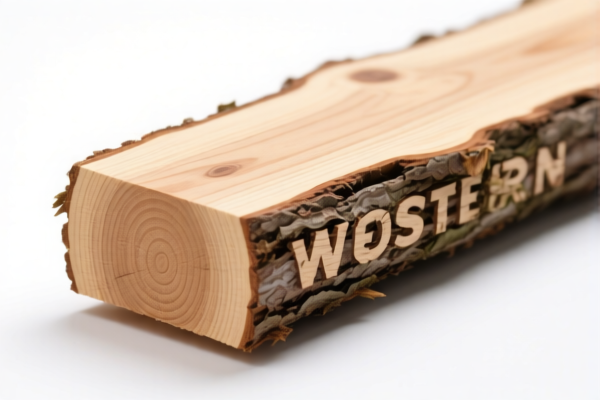
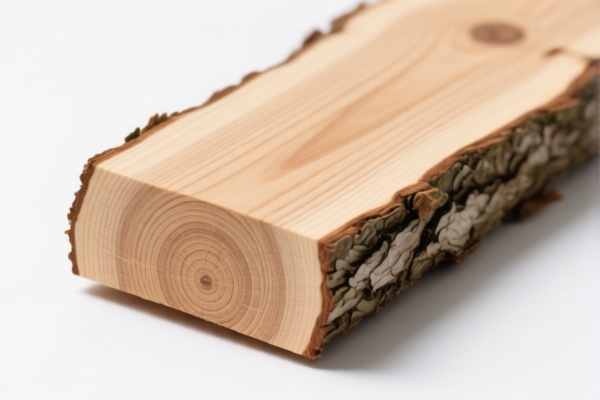
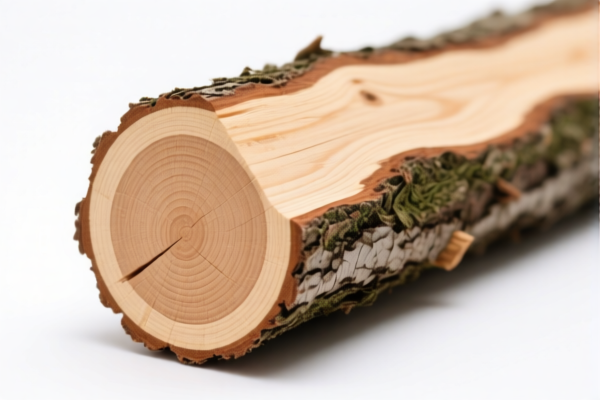
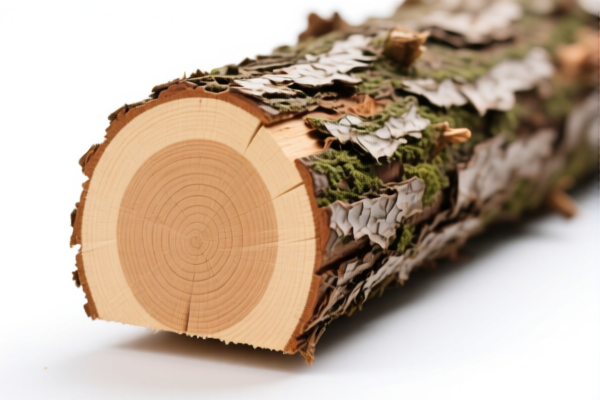
AI分析
🌲 Western Hemlock Timber (Tsuga heterophylla)
🌐 HS Code Reference & Customs Clearance Guide | 2026 Latest Tariff Analysis | Professional Clearance Strategy
📌 I. Product Definition & Classification: Do You Really Understand "Western Hemlock Timber"?
Western Hemlock (Tsuga heterophylla) is a high-quality coniferous wood native to the Pacific Northwest of North America. In international trade, it is primarily exported in its raw or semi-processed form for construction, furniture, and paneling.
Internationally, it is classified based on its physical state: 1. Wood in the Rough (Logs/Timbers): Unprocessed or roughly squared logs, stripped of bark or sapwood, or simply squared for transport. 2. Sawn Wood: Processed into planks, boards, or beams with a thickness exceeding 6mm.
⚠️ Critical Distinction:
- If the wood is in its natural state, rounded, or only roughly squared → It falls under Chapter 44.03 (Wood in the rough).
- If the wood is cut, planed, sanded, or sawn to specific dimensions → It falls under Chapter 44.07 (Wood sawn or chipped lengthwise).
📦 II. HS Code Classification Details (2026 Latest Tariff Authority Comparison)
| HS Code | Product Description | Applicable Scenario | Processing Level |
|---|---|---|---|
4403.25.01.50 |
Wood in the rough: Coniferous: Western hemlock (Tsuga heterophylla), smallest cross-section ≥ 15 cm | Large logs, structural timber, rough-squared beams | ❌ Raw / Roughly Squared |
4403.26.01.50 |
Wood in the rough: Coniferous: Other Logs/Timbers: Western hemlock (Tsuga heterophylla) | Standard logs, bark-stripped logs, slightly processed logs | ❌ Raw / Bark-Stripped |
4407.14.00.00 |
Sawn wood: Coniferous: Hem-fir (Western hemlock & Fir) | Planed, sanded, or end-joined planks > 6mm thick | ✅ Processed (Sawn/Planed) |
4407.19.00.65 |
Sawn wood: Coniferous: Other: Hemlock (Tsuga spp.): Other, not treated | Specific sawn hemlock products not covered by other specific subheadings | ✅ Processed (Sawn) |
🔍 Key Reminder:
- Chapter 44.03 codes apply to wood that has not been fundamentally transformed into a manufactured shape (like a board or plank). It includes logs and "roughly squared" timber.
- Chapter 44.07 codes apply to wood that has been sawn, chipped, sliced, or peeled and has a thickness > 6mm. This includes planed, sanded, or end-joined wood.
- Do not confuse "roughly squared" logs (4403) with "sawn planks" (4407). The former is closer to its natural state; the latter is commercially processed.
💰 III. 2026 Latest Tariff Rate Details (Including Surtaxes & Policy Additions)
✅ Applicable Country: United States (US)
✅ Origin: China (CN) (Note: Western Hemlock is typically imported from Canada/USA, but if re-exported or processed in China, these rates apply. For direct US-origin imports, tariffs may differ. Assuming US-China trade context based on provided tax data.)
✅ Effective Time: Current as of 2025/2026 regulations
🎯 1. 4403.25.01.50 & 4403.26.01.50 —— Wood in the Rough (Logs/Timbers)
| Item | Content |
|---|---|
| Base Tariff Rate | 0.0% (ad valorem) |
| Section 301 Surcharge | +25.0% (Added by USITC) |
| Total Effective Rate | 25.0% |
| Tax Calculation | CIF Value × 25% |
| De Minimis Exemption? | ❌ No (Not applicable for bulk timber) |
| Legal Basis | USITC:4403.25.01.50 / USITC:4403.26.01.50 → Section 301 Footnote |
📌 Explanation:
- The base tariff is 0%, reflecting the duty-free status of raw timber between many allies.
- However, the 25% Section 301 tariff is fully applied to these coniferous wood products originating from China.
- Total Tax: 25%. This is a significant cost burden. Ensure your supplier is not claiming Chinese origin if the wood is actually North American.
🎯 2. 4407.14.00.00 —— Sawn Wood: Hem-Fir (Western Hemlock & Fir)
| Item | Content |
|---|---|
| Base Tariff Rate | 0.0% (ad valorem) |
| Section 301 Surcharge | +25.0% (Added by USITC) |
| Total Effective Rate | 25.0% |
| Tax Calculation | CIF Value × 25% |
| De Minimis Exemption? | ❌ No |
| Legal Basis | USITC:4407.14.00.00 → Section 301 Footnote |
📌 Note:
- Even though this is "processed" wood, the base rate remains 0%, but the 25% surcharge still applies.
- Hem-fir is a common mix (Hemlock + Fir). If the wood is pure Western Hemlock, it still falls under this broad "Hem-fir" category in many tariff schedules unless specified otherwise.
🎯 3. 4407.19.00.65 —— Sawn Wood: Other Hemlock
| Item | Content |
|---|---|
| Base Tariff Rate | 0.0% (ad valorem) |
| Section 301 Surcharge | +25.0% (Added by USITC) |
| Total Effective Rate | 25.0% |
| Tax Calculation | CIF Value × 25% |
| De Minimis Exemption? | ❌ No |
| Legal Basis | USITC:4407.19.00.65 → Section 301 Footnote |
📌 Note:
- This code covers specific sawn hemlock products not listed elsewhere.
- Same 25% total tax rate. Consistency across codes is crucial for cost planning.
🛠️ IV. Customs Clearance Practical Advice (Combat Pitfalls Guide)
✅ 1. Preparation Checklist (Non-negotiable)
| Document | Mandatory? | Explanation |
|---|---|---|
| ✅ Phytosanitary Certificate | ✔️ Yes | Critical. Wood products require proof of pest-free status (ISPM 15 standards). Without it, cargo will be rejected or fumigated at your expense. |
| ✅ Commercial Invoice | ✔️ Yes | Must clearly state: "Western Hemlock (Tsuga heterophylla)", HS Code, Origin, and Value. |
| ✅ Packing List | ✔️ Yes | Detail dimensions, quantities, and packaging type (crates, bundles, etc.). |
| ✅ Bill of Lading / Air Waybill | ✔️ Yes | Standard shipping document. |
| ✅ Certificate of Origin | ✔️ Yes | If claiming preferential treatment (e.g., if from Canada under USMCA, though US-China trade is the focus here). |
| ✅ Material Safety Data Sheet (MSDS) | ✔️ Optional | If the wood is treated with preservatives, MSDS may be required. |
✅ 2. Declaration Tips (Key Mnemonic)
🔥 “Origin Matters, Type Defines, Phytosanitary Saves!”
| Scenario | Correct Declaration | Wrong Practice |
|---|---|---|
| Raw Logs (≥15cm cross-section) | 4403.25.01.50 |
Misdeclaring as 4407 (Sawn) → Risk of penalty for incorrect classification. |
| Sawn Planks >6mm thick | 4407.14.00.00 |
Misdeclaring as 4403 (Rough) → Under-declaration of processing value. |
| Treated Wood | Specify "Pressure-Treated" | Failing to disclose treatment → Phytosanitary rejection. |
| Mixed Species | List dominant species | Claiming "Mixed Wood" without breakdown → Customs holds cargo for inspection. |
✅ 3. Special Case Handling
| Situation | Handling Advice |
|---|---|
| Canadian Origin | If shipped directly from Canada, check USMCA eligibility. Tariff may be 0%! Do not pay 25% if entitled to free trade. |
| Chinese Origin (Re-export) | If Western Hemlock is imported into China, processed, and then shipped to the US, the 25% Section 301 tariff applies. Consider supply chain diversification. |
| Fumigation Required | Ensure the wood has undergone heat treatment or methyl bromide fumigation and has the IPPC mark on the crate/log. |
| Sapwood Content | If "sapwood" is not stripped, it may still be classified under 4403, but ensure it meets "roughly squared" criteria to avoid being classified as "roundwood" (which might have different inspection protocols). |
🌍 V. Global Market Comparison (2026 Latest)
| Country/Region | Recommended HS Code | Tariff (US Origin) | Tariff (China Origin) | Notes |
|---|---|---|---|---|
| 🇺🇸 United States | 4403.25.01.50 / 4407.14.00.00 |
0% (USMCA) | 25% (Section 301) | High vigilance on phytosanitary checks. |
| 🇨🇳 China | 4403.25.00.00 / 4407.11.00.00 |
5-10% | 0-5% | Import duties vary; check latest tariff schedule. |
| 🇪🇺 EU | 4403.25.00 / 4407.10.10 |
0% | 0-6.5% | CITES documentation may be required for some conifers. |
| 🇯🇵 Japan | 4403.25.000 / 4407.10.000 |
0% | 2-6% | Strict fumigation requirements. |
📌 Conclusion:
- US-China trade is the most sensitive due to the 25% Section 301 tariff.
- US-Canada trade is tariff-free under USMCA.
- Phytosanitary compliance is universal and non-negotiable.
📌 VI. Common Mistakes & Pitfalls (Lessons Learned)
❌ Mistake 1: Ignoring Phytosanitary Certificate
👉 Consequence: Cargo detained, fumigated, or returned. Cost: High.
❌ Mistake 2: Misclassifying Sawn Wood as Rough Logs
👉 Consequence: Incorrect HS Code, potential audits, and delays.
❌ Mistake 3: Failing to Declare Section 301 Eligibility
👉 Consequence: If the wood is Chinese-origin, failing to declare may lead to penalties. If Canadian, claiming Chinese origin leads to unnecessary 25% tax.
❌ Mistake 4: Assuming "Hemlock" is one product
👉 Consequence: Eastern Hemlock vs. Western Hemlock have different classifications. Ensure Tsuga heterophylla is explicitly stated.
✅ Correct Practice:
"Western Hemlock Logs (Tsuga heterophylla), Roughly Squared, Phytosanitary Certified, IPPC Marked, Origin: Canada/China, HS Code: 4403.25.01.50"
🎯 VII. Conclusion: Precise Classification Saves Money!
🎯 Remember the Mantra:
🔹 "Logs vs. Sawn, Choose HS Right."
🔹 "Phytosanitary is King, Avoid Delays and Stings."
🔹 "Origin Check, Tariff Drop, 25% Saved or Popped."
📌 Pro Tip:
If your Western Hemlock is sourced from Canada, apply for USMCA Preferential Treatment. You can save the 25% Section 301 tariff entirely!
For Chinese-origin products, factor in the 25% additional cost or consider transshipment risks (which are illegal and risky).
📣 Immediate Action:
📞 Contact a licensed customs broker.
📦 Ensure Phytosanitary Certificate and IPPC Mark are present.
📄 Verify Country of Origin to determine if USMCA or Section 301 applies.
🚀 Clear customs smoothly, save on tariffs, and grow your business!
✨ Professional clearance starts with accurate classification!
💼 Every percentage point of tariff saved is pure profit!
用户评价
关于 HS 编码归类
协调制度(HS)是由世界海关组织(WCO)制定的国际贸易商品分类标准。全球 200 多个国家采用 HS 系统作为海关关税、贸易统计和进出口监管的基础。
每个 HS 编码遵循以下层级结构:
- 章(2 位)——商品大类(例如:第 84 章:机器和机械设备)
- 品目(4 位)——章内的更具体分类
- 子目(6 位)——国际通用细分,所有 WCO 成员国统一使用
- 本国细分(8-10 位)——各国自行扩展的细分编码,如美国 HTSUS 10 位编码
正确的 HS 编码归类对于顺利通关、准确缴纳关税和遵守贸易法规至关重要。错误归类可能导致海关延误、多缴关税或罚款。
从CN进口到US时,适用的关税税率可能包括:
- 最惠国(MFN)税率——适用于 WTO 成员国的标准关税税率
- 普通税率——适用于无贸易协定国家
- 贸易救济关税——附加关税,如 301 条款(反倾销)、232 条款(国家安全)或反补贴税
本页内容仅供参考。如需正式归类,请咨询当地海关或持牌报关代理。