Western Hemlock Timber
CN → US| HS Code | Tariff Rate | Origin | Destination | Doc |
|---|---|---|---|---|
| 4403250150 | 35.0% | CN | US | Official Doc |
| 4403260150 | 35.0% | CN | US | Official Doc |
| 4407140000 | 35.0% | CN | US | Official Doc |
| 4407190065 | 35.0% | CN | US | Official Doc |
Product Images
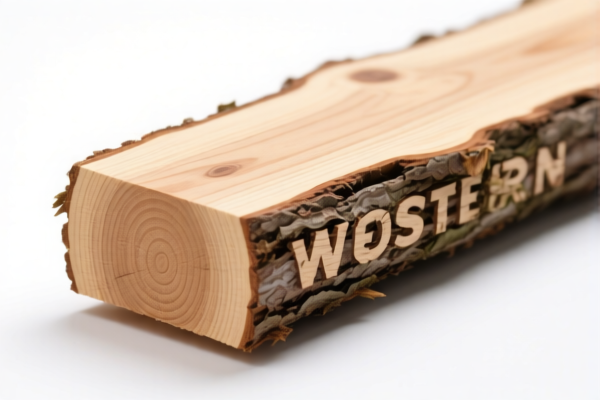
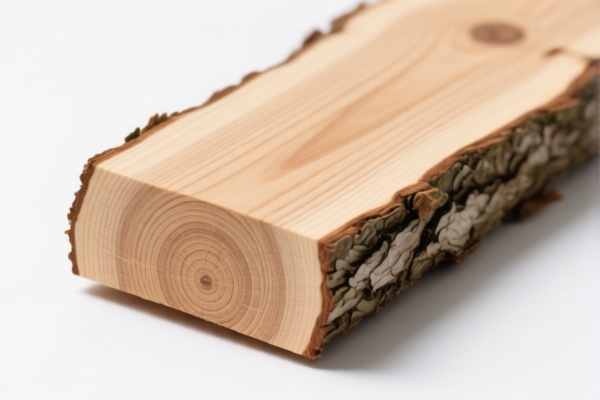
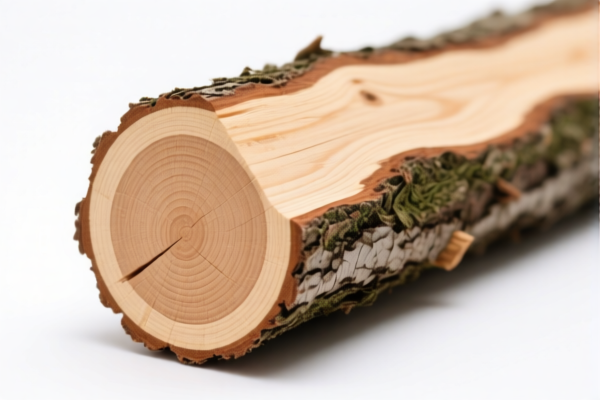
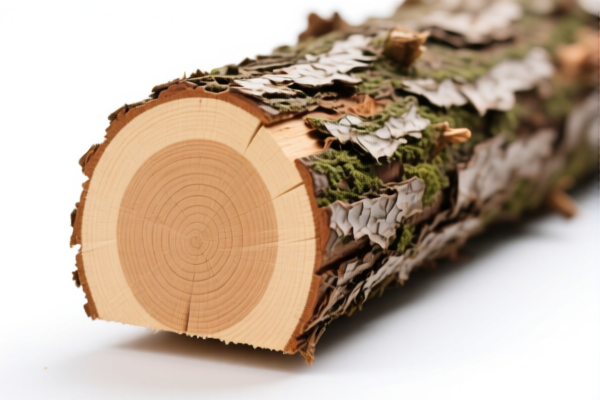
AI Analysis
🌲 Western Hemlock Timber (Tsuga heterophylla)
🌐 HS Code Reference & Customs Clearance Guide | 2026 Latest Tariff Analysis | Professional Clearance Strategy
📌 I. Product Definition & Classification: Do You Really Understand "Western Hemlock Timber"?
Western Hemlock (Tsuga heterophylla) is a high-quality coniferous wood native to the Pacific Northwest of North America. In international trade, it is primarily exported in its raw or semi-processed form for construction, furniture, and paneling.
Internationally, it is classified based on its physical state: 1. Wood in the Rough (Logs/Timbers): Unprocessed or roughly squared logs, stripped of bark or sapwood, or simply squared for transport. 2. Sawn Wood: Processed into planks, boards, or beams with a thickness exceeding 6mm.
⚠️ Critical Distinction:
- If the wood is in its natural state, rounded, or only roughly squared → It falls under Chapter 44.03 (Wood in the rough).
- If the wood is cut, planed, sanded, or sawn to specific dimensions → It falls under Chapter 44.07 (Wood sawn or chipped lengthwise).
📦 II. HS Code Classification Details (2026 Latest Tariff Authority Comparison)
| HS Code | Product Description | Applicable Scenario | Processing Level |
|---|---|---|---|
4403.25.01.50 |
Wood in the rough: Coniferous: Western hemlock (Tsuga heterophylla), smallest cross-section ≥ 15 cm | Large logs, structural timber, rough-squared beams | ❌ Raw / Roughly Squared |
4403.26.01.50 |
Wood in the rough: Coniferous: Other Logs/Timbers: Western hemlock (Tsuga heterophylla) | Standard logs, bark-stripped logs, slightly processed logs | ❌ Raw / Bark-Stripped |
4407.14.00.00 |
Sawn wood: Coniferous: Hem-fir (Western hemlock & Fir) | Planed, sanded, or end-joined planks > 6mm thick | ✅ Processed (Sawn/Planed) |
4407.19.00.65 |
Sawn wood: Coniferous: Other: Hemlock (Tsuga spp.): Other, not treated | Specific sawn hemlock products not covered by other specific subheadings | ✅ Processed (Sawn) |
🔍 Key Reminder:
- Chapter 44.03 codes apply to wood that has not been fundamentally transformed into a manufactured shape (like a board or plank). It includes logs and "roughly squared" timber.
- Chapter 44.07 codes apply to wood that has been sawn, chipped, sliced, or peeled and has a thickness > 6mm. This includes planed, sanded, or end-joined wood.
- Do not confuse "roughly squared" logs (4403) with "sawn planks" (4407). The former is closer to its natural state; the latter is commercially processed.
💰 III. 2026 Latest Tariff Rate Details (Including Surtaxes & Policy Additions)
✅ Applicable Country: United States (US)
✅ Origin: China (CN) (Note: Western Hemlock is typically imported from Canada/USA, but if re-exported or processed in China, these rates apply. For direct US-origin imports, tariffs may differ. Assuming US-China trade context based on provided tax data.)
✅ Effective Time: Current as of 2025/2026 regulations
🎯 1. 4403.25.01.50 & 4403.26.01.50 —— Wood in the Rough (Logs/Timbers)
| Item | Content |
|---|---|
| Base Tariff Rate | 0.0% (ad valorem) |
| Section 301 Surcharge | +25.0% (Added by USITC) |
| Total Effective Rate | 25.0% |
| Tax Calculation | CIF Value × 25% |
| De Minimis Exemption? | ❌ No (Not applicable for bulk timber) |
| Legal Basis | USITC:4403.25.01.50 / USITC:4403.26.01.50 → Section 301 Footnote |
📌 Explanation:
- The base tariff is 0%, reflecting the duty-free status of raw timber between many allies.
- However, the 25% Section 301 tariff is fully applied to these coniferous wood products originating from China.
- Total Tax: 25%. This is a significant cost burden. Ensure your supplier is not claiming Chinese origin if the wood is actually North American.
🎯 2. 4407.14.00.00 —— Sawn Wood: Hem-Fir (Western Hemlock & Fir)
| Item | Content |
|---|---|
| Base Tariff Rate | 0.0% (ad valorem) |
| Section 301 Surcharge | +25.0% (Added by USITC) |
| Total Effective Rate | 25.0% |
| Tax Calculation | CIF Value × 25% |
| De Minimis Exemption? | ❌ No |
| Legal Basis | USITC:4407.14.00.00 → Section 301 Footnote |
📌 Note:
- Even though this is "processed" wood, the base rate remains 0%, but the 25% surcharge still applies.
- Hem-fir is a common mix (Hemlock + Fir). If the wood is pure Western Hemlock, it still falls under this broad "Hem-fir" category in many tariff schedules unless specified otherwise.
🎯 3. 4407.19.00.65 —— Sawn Wood: Other Hemlock
| Item | Content |
|---|---|
| Base Tariff Rate | 0.0% (ad valorem) |
| Section 301 Surcharge | +25.0% (Added by USITC) |
| Total Effective Rate | 25.0% |
| Tax Calculation | CIF Value × 25% |
| De Minimis Exemption? | ❌ No |
| Legal Basis | USITC:4407.19.00.65 → Section 301 Footnote |
📌 Note:
- This code covers specific sawn hemlock products not listed elsewhere.
- Same 25% total tax rate. Consistency across codes is crucial for cost planning.
🛠️ IV. Customs Clearance Practical Advice (Combat Pitfalls Guide)
✅ 1. Preparation Checklist (Non-negotiable)
| Document | Mandatory? | Explanation |
|---|---|---|
| ✅ Phytosanitary Certificate | ✔️ Yes | Critical. Wood products require proof of pest-free status (ISPM 15 standards). Without it, cargo will be rejected or fumigated at your expense. |
| ✅ Commercial Invoice | ✔️ Yes | Must clearly state: "Western Hemlock (Tsuga heterophylla)", HS Code, Origin, and Value. |
| ✅ Packing List | ✔️ Yes | Detail dimensions, quantities, and packaging type (crates, bundles, etc.). |
| ✅ Bill of Lading / Air Waybill | ✔️ Yes | Standard shipping document. |
| ✅ Certificate of Origin | ✔️ Yes | If claiming preferential treatment (e.g., if from Canada under USMCA, though US-China trade is the focus here). |
| ✅ Material Safety Data Sheet (MSDS) | ✔️ Optional | If the wood is treated with preservatives, MSDS may be required. |
✅ 2. Declaration Tips (Key Mnemonic)
🔥 “Origin Matters, Type Defines, Phytosanitary Saves!”
| Scenario | Correct Declaration | Wrong Practice |
|---|---|---|
| Raw Logs (≥15cm cross-section) | 4403.25.01.50 |
Misdeclaring as 4407 (Sawn) → Risk of penalty for incorrect classification. |
| Sawn Planks >6mm thick | 4407.14.00.00 |
Misdeclaring as 4403 (Rough) → Under-declaration of processing value. |
| Treated Wood | Specify "Pressure-Treated" | Failing to disclose treatment → Phytosanitary rejection. |
| Mixed Species | List dominant species | Claiming "Mixed Wood" without breakdown → Customs holds cargo for inspection. |
✅ 3. Special Case Handling
| Situation | Handling Advice |
|---|---|
| Canadian Origin | If shipped directly from Canada, check USMCA eligibility. Tariff may be 0%! Do not pay 25% if entitled to free trade. |
| Chinese Origin (Re-export) | If Western Hemlock is imported into China, processed, and then shipped to the US, the 25% Section 301 tariff applies. Consider supply chain diversification. |
| Fumigation Required | Ensure the wood has undergone heat treatment or methyl bromide fumigation and has the IPPC mark on the crate/log. |
| Sapwood Content | If "sapwood" is not stripped, it may still be classified under 4403, but ensure it meets "roughly squared" criteria to avoid being classified as "roundwood" (which might have different inspection protocols). |
🌍 V. Global Market Comparison (2026 Latest)
| Country/Region | Recommended HS Code | Tariff (US Origin) | Tariff (China Origin) | Notes |
|---|---|---|---|---|
| 🇺🇸 United States | 4403.25.01.50 / 4407.14.00.00 |
0% (USMCA) | 25% (Section 301) | High vigilance on phytosanitary checks. |
| 🇨🇳 China | 4403.25.00.00 / 4407.11.00.00 |
5-10% | 0-5% | Import duties vary; check latest tariff schedule. |
| 🇪🇺 EU | 4403.25.00 / 4407.10.10 |
0% | 0-6.5% | CITES documentation may be required for some conifers. |
| 🇯🇵 Japan | 4403.25.000 / 4407.10.000 |
0% | 2-6% | Strict fumigation requirements. |
📌 Conclusion:
- US-China trade is the most sensitive due to the 25% Section 301 tariff.
- US-Canada trade is tariff-free under USMCA.
- Phytosanitary compliance is universal and non-negotiable.
📌 VI. Common Mistakes & Pitfalls (Lessons Learned)
❌ Mistake 1: Ignoring Phytosanitary Certificate
👉 Consequence: Cargo detained, fumigated, or returned. Cost: High.
❌ Mistake 2: Misclassifying Sawn Wood as Rough Logs
👉 Consequence: Incorrect HS Code, potential audits, and delays.
❌ Mistake 3: Failing to Declare Section 301 Eligibility
👉 Consequence: If the wood is Chinese-origin, failing to declare may lead to penalties. If Canadian, claiming Chinese origin leads to unnecessary 25% tax.
❌ Mistake 4: Assuming "Hemlock" is one product
👉 Consequence: Eastern Hemlock vs. Western Hemlock have different classifications. Ensure Tsuga heterophylla is explicitly stated.
✅ Correct Practice:
"Western Hemlock Logs (Tsuga heterophylla), Roughly Squared, Phytosanitary Certified, IPPC Marked, Origin: Canada/China, HS Code: 4403.25.01.50"
🎯 VII. Conclusion: Precise Classification Saves Money!
🎯 Remember the Mantra:
🔹 "Logs vs. Sawn, Choose HS Right."
🔹 "Phytosanitary is King, Avoid Delays and Stings."
🔹 "Origin Check, Tariff Drop, 25% Saved or Popped."
📌 Pro Tip:
If your Western Hemlock is sourced from Canada, apply for USMCA Preferential Treatment. You can save the 25% Section 301 tariff entirely!
For Chinese-origin products, factor in the 25% additional cost or consider transshipment risks (which are illegal and risky).
📣 Immediate Action:
📞 Contact a licensed customs broker.
📦 Ensure Phytosanitary Certificate and IPPC Mark are present.
📄 Verify Country of Origin to determine if USMCA or Section 301 applies.
🚀 Clear customs smoothly, save on tariffs, and grow your business!
✨ Professional clearance starts with accurate classification!
💼 Every percentage point of tariff saved is pure profit!
Customer Reviews
About HS Code Classification
The Harmonized System (HS) is an internationally standardized nomenclature developed by the World Customs Organization (WCO) to classify traded products. Over 200 countries use the HS system as the basis for customs tariffs, trade statistics, and import/export regulations.
Each HS code follows a hierarchical structure:
- Chapter (2 digits) — Broad category of goods (e.g., Chapter 84: Machinery and Mechanical Appliances)
- Heading (4 digits) — More specific grouping within the chapter
- Subheading (6 digits) — Internationally standardized breakdown, used by all WCO member countries
- National subdivisions (8-10 digits) — Country-specific extensions for further classification, such as US HTSUS 10-digit codes
Correct HS code classification is essential for smooth customs clearance, accurate duty payment, and compliance with trade regulations. Misclassification can lead to customs delays, overpayment of duties, or penalties.
When importing from CN to US, the applicable tariff rates may include:
- Most-Favored-Nation (MFN) rate — The standard duty rate applied to WTO members
- General rate — Applied to countries without trade agreements
- Trade remedy duties — Additional tariffs such as Section 301 (anti-dumping), Section 232 (national security), or countervailing duties
The information provided on this page is for reference purposes only. For official classification, please consult with your local customs authority or a licensed customs broker.