Western Red Cedar Grade Logs
CN → US| HS编码 | 关税税率 | 原产国 | 目的国 | 文档 |
|---|---|---|---|---|
| 4403230142 | 35.0% | CN | US | 官方文档 |
| 4403240142 | 35.0% | CN | US | 官方文档 |
| 4407120058 | 35.0% | CN | US | 官方文档 |
| 4401110000 | 35.0% | CN | US | 官方文档 |
| 4407120059 | 35.0% | CN | US | 官方文档 |
商品图片
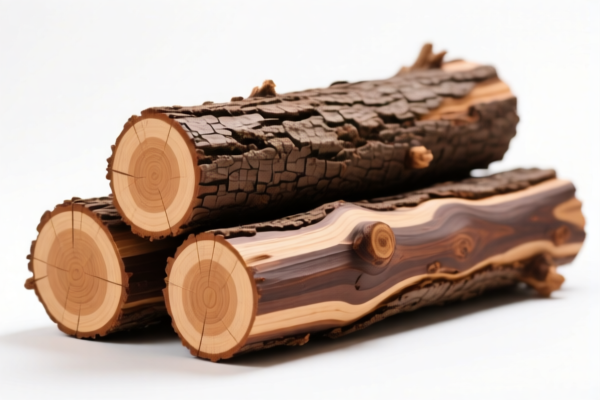
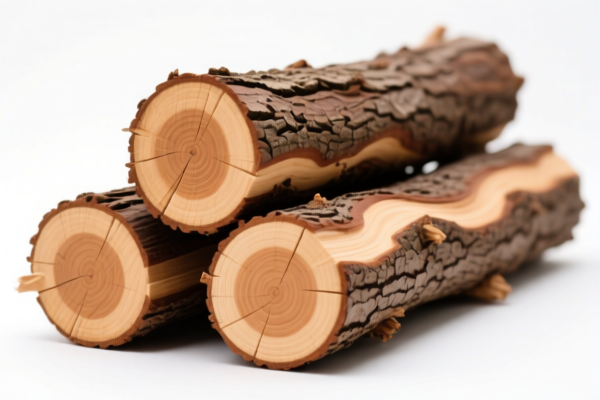
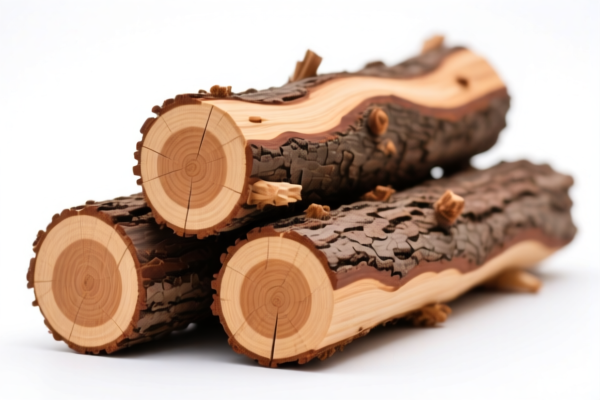
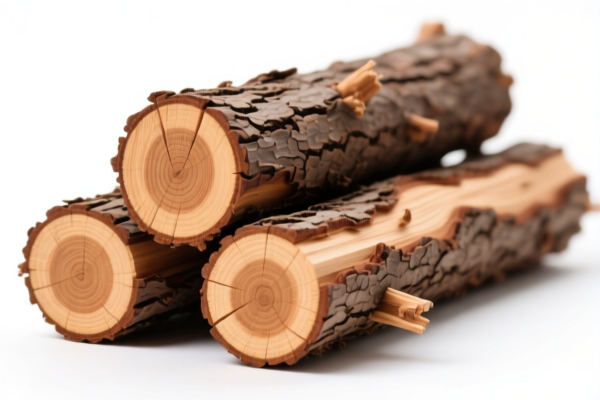
AI分析
🌲 Western Red Cedar Grade Logs (Grade Logs)
🌐 HS Code Reference & Customs Clearance Guide | 2026 Latest Tariff Analysis | Professional Clearance Strategy
📌 I. Product Definition & Classification: Do You Really Understand "Western Red Cedar"?
Western Red Cedar (Thuja plicata) is a premium softwood widely used in construction, outdoor decking, and high-end furniture. In international trade, it is classified based on its physical form and wood family.
Key Distinction by Form: * Raw Logs (4403 Series): Unprocessed timber, stripped of bark or sapwood, but not otherwise worked. * Sawn Wood (4407 Series): Wood that has been longitudinal sawn or chipped, planed, or joined.
⚠️ Critical Classification Point:
- If the wood is in its natural, unworked state (raw logs), it falls under Chapter 4403.
- If the wood has been sawed, peeled, or chipped (even if just roughly cut), it falls under Chapter 4407.
- Botanical Family: Western Red Cedar is botanically a Cedar (genus Thuja) or often classified under Fir (Abies) in broader HS tariff interpretations for tax purposes, triggering specific "122 Section" duties.
📦 II. HS Code Classification Details (2026 Latest Tariff Authority对照)
| HS Code | Product Description | Application Scenario | Processing Level |
|---|---|---|---|
4403.23.01.42 |
Timber of the genus Abies (Fir), including Western Red Cedar logs, in the rough | Raw logs, untreated, bark-on or lightly debarked | ✅ Raw Log (Unworked) |
4403.24.01.42 |
Timber of the genus Pseudotsuga (Douglas-fir) & related species, including Cedar logs | Raw logs, similar to above, specific sub-category for Cedar | ✅ Raw Log (Unworked) |
4407.12.00.58 |
Wood sawn lengthwise, sliced or peeled, of coniferous species (Cedar/Fir category) | Sawn timber, planks, beams, rough sawn cedar | ✅ Sawn/Worked |
4401.11.00.00 |
Wood in the form of logs, roundwood, etc., of coniferous species (Cedar/Fir) | General coniferous logs, including Cedar, for fuel or basic use | ✅ Raw Log (General) |
4407.12.00.59 |
Other wood sawn lengthwise, of coniferous species (Cedar/Fir), >6mm thick | Sawn timber, thicker planks, specific sub-category | ✅ Sawn/Worked |
🔍 Important Reminder:
- Western Red Cedar is often grouped with Fir (Abies) or Douglas-fir in HS codes due to botanical and tariff similarities.
- Form is King: If it’s a log →4403. If it’s sawn →4407. If it’s raw coniferous wood for general use →4401.
- All listed codes attract high tariffs due to US-China trade tensions.
💰 III. 2026 Latest Tariff Rate Details (Including Surtaxes & Policy Add-ons)
✅ Applicable Country: United States (US)
✅ Origin: China (CN)
✅ Effective Date: From November 10, 2025 (and subsequent imports)
🎯 1. 4403.23.01.42 & 4403.24.01.42 —— Western Red Cedar Logs (Raw)
| Item | Content |
|---|---|
| Base Tariff | 0% (ad valorem) |
| USITC Surcharge | +25% (from USITC Footnote under Section 301) |
| Section 122 Surcharge | +10% (Specific to certain timber products from China) |
| Total Tariff Rate | 35% |
| Tax Calculation | CIF Value × 35% |
| De Minimis Exemption | ❌ Not Eligible (deny_de_minimis) |
| Legal Basis Path | USITC:4403.23.01.42 → Section 301: 25% → Section 122: 10% |
📌 Explanation:
- Base Tariff is 0%: Standard WTO rate for logs.
- 25% Section 301 Tariff: Added as a punitive measure on Chinese goods.
- 10% Section 122 Tariff: A specific additional duty applied to certain timber and wood products.
- Total 35%: This is a high-cost classification. Do not assume low duty for "raw materials."
🎯 2. 4407.12.00.58 & 4407.12.00.59 —— Sawn Western Red Cedar Wood
| Item | Content |
|---|---|
| Base Tariff | 0% |
| USITC Surcharge | +25% |
| Section 122 Surcharge | +10% |
| Total Tariff Rate | 35% |
| Tax Calculation | CIF Value × 35% |
| De Minimis Exemption | ❌ Not Eligible |
| Legal Basis Path | USITC:4407.12.00.58/59 → Section 301: 25% → Section 122: 10% |
📌 Note:
- Even if the wood is sawn, the 35% total tariff remains the same.
- Processing the wood into planks or beams does not reduce the tariff burden under current US-China trade policies.
🎯 3. 4401.11.00.00 —— General Coniferous Logs (Cedar)
| Item | Content |
|---|---|
| Base Tariff | 0% |
| USITC Surcharge | +25% |
| Section 122 Surcharge | +10% |
| Total Tariff Rate | 35% |
| Tax Calculation | CIF Value × 35% |
| De Minimis Exemption | ❌ Not Eligible |
| Legal Basis Path | USITC:4401.11.00.00 → Section 301: 25% → Section 122: 10% |
📌 Note:
- If the wood is classified under 4401 (wood in raw form, not strictly timber for construction), the 35% rate still applies.
- There is no tariff advantage for using4401vs4403for Western Red Cedar from China.
🛠️ IV. Customs Clearance Practical Advice (Real-World Pitfall Avoidance Guide)
✅ 1. Required Documentation Checklist (Mandatory)
| Document | Mandatory? | Description |
|---|---|---|
| ✅ Phytosanitary Certificate | ✔️ | Issued by the country of origin. Essential for wood products to prevent pest import. |
| ✅ Commercial Invoice | ✔️ | Must clearly state "Western Red Cedar Logs," HS Code, and CIF value. |
| ✅ Packing List | ✔️ | Detail weight, volume, and number of logs. |
| ✅ Certificate of Origin | ✔️ | Prove origin as China (triggers the 35% tariff). |
| ✅ Wood Treatment Certificate | ✔️ | Proof of heat treatment or fumigation (if required). |
| ✅ Bill of Lading | ✔️ | Standard shipping document. |
✅ 2. Declaration Tips (Key Mantra)
🔥 "Log or Sawn? Be Clear. HS Code Right. Tax at 35%."
| Scenario | Correct Declaration | Wrong Approach |
|---|---|---|
| Raw Logs | 4403.23.01.42 or 4403.24.01.42 |
Misclassify as "Lumber" → 4407 |
| Sawn Planks | 4407.12.00.58 |
Misclassify as "Logs" → 4403 |
| General Wood Chips | 4401.11.00.00 |
Use specific Cedar codes → Potential dispute |
| Non-Chinese Origin | Use different HS/Origin | Assume 0% tariff → Customs Seizure! |
📌 Note:
- Western Red Cedar from USA/Canada will have 0% tariffs (if under FTA or general MFN without surcharges).
- Western Red Cedar from China attracts 35%.
- Always declare the actual origin. False declaration of origin to avoid tariffs is a serious offense.
✅ 3. Special Circumstances Handling
| Situation | Handling Advice |
|---|---|
| Mixed Origin | If logs are from China and USA, declare separately. Do not blend to hide origin. |
| Processed Wood | If cedar is planed or milled further, check if HS changes. Usually still 4407. |
| De Minimis | Not applicable for wood products under 35% tariff. Even small shipments pay tax. |
| Phytosanitary Issues | Ensure wood is free of bark and pests. Inspection delays can incur demurrage fees. |
🌍 V. Global Market Clearance Comparison (2026 Latest)
| Country/Region | Recommended HS Code | Tariff (China Origin) | Certification Requirements | Notes |
|---|---|---|---|---|
| 🇺🇸 USA | 4403.23.01.42 / 4407.12.00.58 |
35% | Phytosanitary Cert | High tariff due to Section 301 + 122 |
| 🇨🇳 China | 4403.23.01.42 |
0% | Phytosanitary Cert | Exporting from China has no export tax |
| 🇪🇺 EU | 4403.23.01.42 |
~2.5% | IPPC Stamp, FLEGT | No Section 301/122 equivalent |
| 🇦🇺 Australia | 4403.23.01.42 |
~5% | Biosecurity Approval | Strict biosecurity rules |
| 🇯🇵 Japan | 4403.23.01.42 |
5.2% | Phytosanitary Cert | Standard MFN rate |
📌 Conclusion:
- The USA is the only major market with 35% tariffs on Chinese Western Red Cedar.
- EU, Japan, Australia have standard MFN rates (2.5%-5.2%).
- Consider sourcing from USA/Canada for US market to avoid the 35% tariff.
📌 VI. Common Mistakes & Pitfall Avoidance (Lessons Learned)
❌ Mistake 1: Assuming "Raw Material" = 0% Tariff
👉 Consequence: 35% tariff applies. Surprise cost eats all profit.
❌ Mistake 2: Misdeclaring Origin (e.g., labeling Chinese cedar as "USA")
👉 Consequence: Customs Fraud. Heavy fines, blacklisting, and seizure of goods.
❌ Mistake 3: Ignoring Phytosanitary Certificate
👉 Consequence: Shipment Rejected or Destroyed by US Customs and Border Protection (CBP) or USDA.
❌ Mistake 4: Confusing "Logs" (4403) with "Sawn Wood" (4407)
👉 Consequence: Classification Error. May lead to retroactive duty adjustments and penalties.
✅ Correct Approach:
"Western Red Cedar Logs, Thuja plicata, Origin: China, HS: 4403.23.01.42, With Phytosanitary Cert, Heat Treated."
🎯 VII. Conclusion: Professional Declaration, Time-Saving, Cost-Effective!
🎯 Remember the Mantra:
🔹 "China Cedar, 35% Tax. Log or Sawn, No Difference."
🔹 "Phytosanitary Cert is Key. No Cert, No Entry."
🔹 "Source USA for US Market. Save 35%, Boost Profit."
📌 Tip:
If your cedar is sourced from the USA, Canada, or Europe, the tariff is 0%-5.2%.
Consider supply chain diversification to avoid the 35% US tariff on Chinese wood products.
📣 Immediate Action:
📞 Contact a Licensed Customs Broker + Verify Phytosanitary Certificate + Confirm HS Code
🚀 Ensure Smooth Customs Clearance, Efficient Export, and Maximized Profit!
✨ Professional Clearance Starts with Accurate Classification!
💼 Every Dollar of Tariff Saved is Pure Profit!
用户评价
关于 HS 编码归类
协调制度(HS)是由世界海关组织(WCO)制定的国际贸易商品分类标准。全球 200 多个国家采用 HS 系统作为海关关税、贸易统计和进出口监管的基础。
每个 HS 编码遵循以下层级结构:
- 章(2 位)——商品大类(例如:第 84 章:机器和机械设备)
- 品目(4 位)——章内的更具体分类
- 子目(6 位)——国际通用细分,所有 WCO 成员国统一使用
- 本国细分(8-10 位)——各国自行扩展的细分编码,如美国 HTSUS 10 位编码
正确的 HS 编码归类对于顺利通关、准确缴纳关税和遵守贸易法规至关重要。错误归类可能导致海关延误、多缴关税或罚款。
从CN进口到US时,适用的关税税率可能包括:
- 最惠国(MFN)税率——适用于 WTO 成员国的标准关税税率
- 普通税率——适用于无贸易协定国家
- 贸易救济关税——附加关税,如 301 条款(反倾销)、232 条款(国家安全)或反补贴税
本页内容仅供参考。如需正式归类,请咨询当地海关或持牌报关代理。