Western Red Cedar Grade Logs
CN → US| HS Code | Tariff Rate | Origin | Destination | Doc |
|---|---|---|---|---|
| 4403230142 | 35.0% | CN | US | Official Doc |
| 4403240142 | 35.0% | CN | US | Official Doc |
| 4407120058 | 35.0% | CN | US | Official Doc |
| 4401110000 | 35.0% | CN | US | Official Doc |
| 4407120059 | 35.0% | CN | US | Official Doc |
Product Images
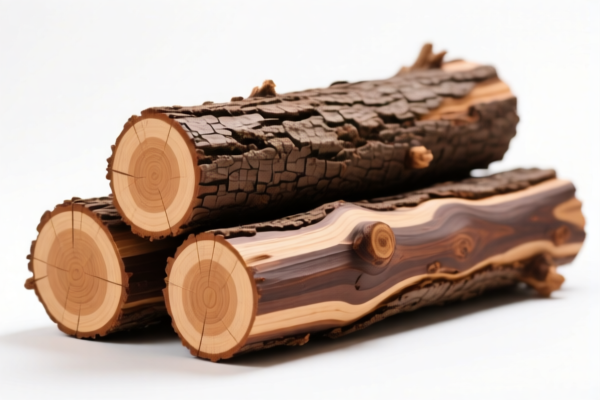
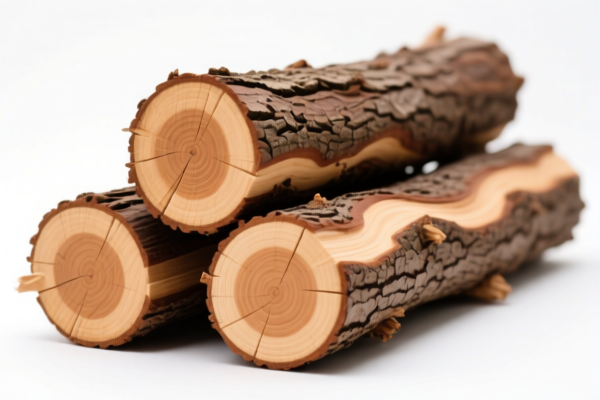
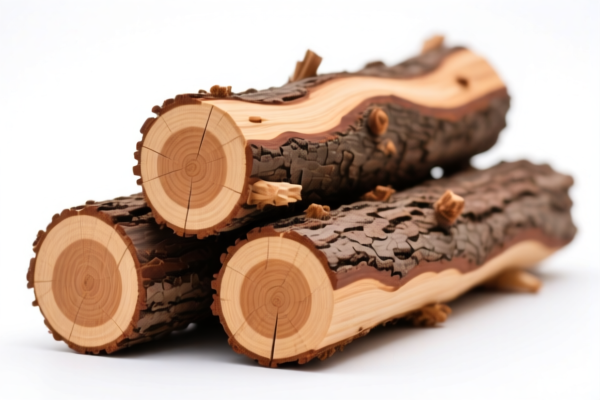
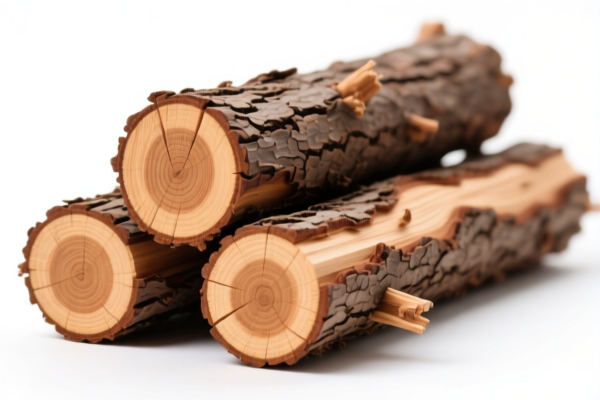
AI Analysis
🌲 Western Red Cedar Grade Logs (Grade Logs)
🌐 HS Code Reference & Customs Clearance Guide | 2026 Latest Tariff Analysis | Professional Clearance Strategy
📌 I. Product Definition & Classification: Do You Really Understand "Western Red Cedar"?
Western Red Cedar (Thuja plicata) is a premium softwood widely used in construction, outdoor decking, and high-end furniture. In international trade, it is classified based on its physical form and wood family.
Key Distinction by Form: * Raw Logs (4403 Series): Unprocessed timber, stripped of bark or sapwood, but not otherwise worked. * Sawn Wood (4407 Series): Wood that has been longitudinal sawn or chipped, planed, or joined.
⚠️ Critical Classification Point:
- If the wood is in its natural, unworked state (raw logs), it falls under Chapter 4403.
- If the wood has been sawed, peeled, or chipped (even if just roughly cut), it falls under Chapter 4407.
- Botanical Family: Western Red Cedar is botanically a Cedar (genus Thuja) or often classified under Fir (Abies) in broader HS tariff interpretations for tax purposes, triggering specific "122 Section" duties.
📦 II. HS Code Classification Details (2026 Latest Tariff Authority对照)
| HS Code | Product Description | Application Scenario | Processing Level |
|---|---|---|---|
4403.23.01.42 |
Timber of the genus Abies (Fir), including Western Red Cedar logs, in the rough | Raw logs, untreated, bark-on or lightly debarked | ✅ Raw Log (Unworked) |
4403.24.01.42 |
Timber of the genus Pseudotsuga (Douglas-fir) & related species, including Cedar logs | Raw logs, similar to above, specific sub-category for Cedar | ✅ Raw Log (Unworked) |
4407.12.00.58 |
Wood sawn lengthwise, sliced or peeled, of coniferous species (Cedar/Fir category) | Sawn timber, planks, beams, rough sawn cedar | ✅ Sawn/Worked |
4401.11.00.00 |
Wood in the form of logs, roundwood, etc., of coniferous species (Cedar/Fir) | General coniferous logs, including Cedar, for fuel or basic use | ✅ Raw Log (General) |
4407.12.00.59 |
Other wood sawn lengthwise, of coniferous species (Cedar/Fir), >6mm thick | Sawn timber, thicker planks, specific sub-category | ✅ Sawn/Worked |
🔍 Important Reminder:
- Western Red Cedar is often grouped with Fir (Abies) or Douglas-fir in HS codes due to botanical and tariff similarities.
- Form is King: If it’s a log →4403. If it’s sawn →4407. If it’s raw coniferous wood for general use →4401.
- All listed codes attract high tariffs due to US-China trade tensions.
💰 III. 2026 Latest Tariff Rate Details (Including Surtaxes & Policy Add-ons)
✅ Applicable Country: United States (US)
✅ Origin: China (CN)
✅ Effective Date: From November 10, 2025 (and subsequent imports)
🎯 1. 4403.23.01.42 & 4403.24.01.42 —— Western Red Cedar Logs (Raw)
| Item | Content |
|---|---|
| Base Tariff | 0% (ad valorem) |
| USITC Surcharge | +25% (from USITC Footnote under Section 301) |
| Section 122 Surcharge | +10% (Specific to certain timber products from China) |
| Total Tariff Rate | 35% |
| Tax Calculation | CIF Value × 35% |
| De Minimis Exemption | ❌ Not Eligible (deny_de_minimis) |
| Legal Basis Path | USITC:4403.23.01.42 → Section 301: 25% → Section 122: 10% |
📌 Explanation:
- Base Tariff is 0%: Standard WTO rate for logs.
- 25% Section 301 Tariff: Added as a punitive measure on Chinese goods.
- 10% Section 122 Tariff: A specific additional duty applied to certain timber and wood products.
- Total 35%: This is a high-cost classification. Do not assume low duty for "raw materials."
🎯 2. 4407.12.00.58 & 4407.12.00.59 —— Sawn Western Red Cedar Wood
| Item | Content |
|---|---|
| Base Tariff | 0% |
| USITC Surcharge | +25% |
| Section 122 Surcharge | +10% |
| Total Tariff Rate | 35% |
| Tax Calculation | CIF Value × 35% |
| De Minimis Exemption | ❌ Not Eligible |
| Legal Basis Path | USITC:4407.12.00.58/59 → Section 301: 25% → Section 122: 10% |
📌 Note:
- Even if the wood is sawn, the 35% total tariff remains the same.
- Processing the wood into planks or beams does not reduce the tariff burden under current US-China trade policies.
🎯 3. 4401.11.00.00 —— General Coniferous Logs (Cedar)
| Item | Content |
|---|---|
| Base Tariff | 0% |
| USITC Surcharge | +25% |
| Section 122 Surcharge | +10% |
| Total Tariff Rate | 35% |
| Tax Calculation | CIF Value × 35% |
| De Minimis Exemption | ❌ Not Eligible |
| Legal Basis Path | USITC:4401.11.00.00 → Section 301: 25% → Section 122: 10% |
📌 Note:
- If the wood is classified under 4401 (wood in raw form, not strictly timber for construction), the 35% rate still applies.
- There is no tariff advantage for using4401vs4403for Western Red Cedar from China.
🛠️ IV. Customs Clearance Practical Advice (Real-World Pitfall Avoidance Guide)
✅ 1. Required Documentation Checklist (Mandatory)
| Document | Mandatory? | Description |
|---|---|---|
| ✅ Phytosanitary Certificate | ✔️ | Issued by the country of origin. Essential for wood products to prevent pest import. |
| ✅ Commercial Invoice | ✔️ | Must clearly state "Western Red Cedar Logs," HS Code, and CIF value. |
| ✅ Packing List | ✔️ | Detail weight, volume, and number of logs. |
| ✅ Certificate of Origin | ✔️ | Prove origin as China (triggers the 35% tariff). |
| ✅ Wood Treatment Certificate | ✔️ | Proof of heat treatment or fumigation (if required). |
| ✅ Bill of Lading | ✔️ | Standard shipping document. |
✅ 2. Declaration Tips (Key Mantra)
🔥 "Log or Sawn? Be Clear. HS Code Right. Tax at 35%."
| Scenario | Correct Declaration | Wrong Approach |
|---|---|---|
| Raw Logs | 4403.23.01.42 or 4403.24.01.42 |
Misclassify as "Lumber" → 4407 |
| Sawn Planks | 4407.12.00.58 |
Misclassify as "Logs" → 4403 |
| General Wood Chips | 4401.11.00.00 |
Use specific Cedar codes → Potential dispute |
| Non-Chinese Origin | Use different HS/Origin | Assume 0% tariff → Customs Seizure! |
📌 Note:
- Western Red Cedar from USA/Canada will have 0% tariffs (if under FTA or general MFN without surcharges).
- Western Red Cedar from China attracts 35%.
- Always declare the actual origin. False declaration of origin to avoid tariffs is a serious offense.
✅ 3. Special Circumstances Handling
| Situation | Handling Advice |
|---|---|
| Mixed Origin | If logs are from China and USA, declare separately. Do not blend to hide origin. |
| Processed Wood | If cedar is planed or milled further, check if HS changes. Usually still 4407. |
| De Minimis | Not applicable for wood products under 35% tariff. Even small shipments pay tax. |
| Phytosanitary Issues | Ensure wood is free of bark and pests. Inspection delays can incur demurrage fees. |
🌍 V. Global Market Clearance Comparison (2026 Latest)
| Country/Region | Recommended HS Code | Tariff (China Origin) | Certification Requirements | Notes |
|---|---|---|---|---|
| 🇺🇸 USA | 4403.23.01.42 / 4407.12.00.58 |
35% | Phytosanitary Cert | High tariff due to Section 301 + 122 |
| 🇨🇳 China | 4403.23.01.42 |
0% | Phytosanitary Cert | Exporting from China has no export tax |
| 🇪🇺 EU | 4403.23.01.42 |
~2.5% | IPPC Stamp, FLEGT | No Section 301/122 equivalent |
| 🇦🇺 Australia | 4403.23.01.42 |
~5% | Biosecurity Approval | Strict biosecurity rules |
| 🇯🇵 Japan | 4403.23.01.42 |
5.2% | Phytosanitary Cert | Standard MFN rate |
📌 Conclusion:
- The USA is the only major market with 35% tariffs on Chinese Western Red Cedar.
- EU, Japan, Australia have standard MFN rates (2.5%-5.2%).
- Consider sourcing from USA/Canada for US market to avoid the 35% tariff.
📌 VI. Common Mistakes & Pitfall Avoidance (Lessons Learned)
❌ Mistake 1: Assuming "Raw Material" = 0% Tariff
👉 Consequence: 35% tariff applies. Surprise cost eats all profit.
❌ Mistake 2: Misdeclaring Origin (e.g., labeling Chinese cedar as "USA")
👉 Consequence: Customs Fraud. Heavy fines, blacklisting, and seizure of goods.
❌ Mistake 3: Ignoring Phytosanitary Certificate
👉 Consequence: Shipment Rejected or Destroyed by US Customs and Border Protection (CBP) or USDA.
❌ Mistake 4: Confusing "Logs" (4403) with "Sawn Wood" (4407)
👉 Consequence: Classification Error. May lead to retroactive duty adjustments and penalties.
✅ Correct Approach:
"Western Red Cedar Logs, Thuja plicata, Origin: China, HS: 4403.23.01.42, With Phytosanitary Cert, Heat Treated."
🎯 VII. Conclusion: Professional Declaration, Time-Saving, Cost-Effective!
🎯 Remember the Mantra:
🔹 "China Cedar, 35% Tax. Log or Sawn, No Difference."
🔹 "Phytosanitary Cert is Key. No Cert, No Entry."
🔹 "Source USA for US Market. Save 35%, Boost Profit."
📌 Tip:
If your cedar is sourced from the USA, Canada, or Europe, the tariff is 0%-5.2%.
Consider supply chain diversification to avoid the 35% US tariff on Chinese wood products.
📣 Immediate Action:
📞 Contact a Licensed Customs Broker + Verify Phytosanitary Certificate + Confirm HS Code
🚀 Ensure Smooth Customs Clearance, Efficient Export, and Maximized Profit!
✨ Professional Clearance Starts with Accurate Classification!
💼 Every Dollar of Tariff Saved is Pure Profit!
Customer Reviews
About HS Code Classification
The Harmonized System (HS) is an internationally standardized nomenclature developed by the World Customs Organization (WCO) to classify traded products. Over 200 countries use the HS system as the basis for customs tariffs, trade statistics, and import/export regulations.
Each HS code follows a hierarchical structure:
- Chapter (2 digits) — Broad category of goods (e.g., Chapter 84: Machinery and Mechanical Appliances)
- Heading (4 digits) — More specific grouping within the chapter
- Subheading (6 digits) — Internationally standardized breakdown, used by all WCO member countries
- National subdivisions (8-10 digits) — Country-specific extensions for further classification, such as US HTSUS 10-digit codes
Correct HS code classification is essential for smooth customs clearance, accurate duty payment, and compliance with trade regulations. Misclassification can lead to customs delays, overpayment of duties, or penalties.
When importing from CN to US, the applicable tariff rates may include:
- Most-Favored-Nation (MFN) rate — The standard duty rate applied to WTO members
- General rate — Applied to countries without trade agreements
- Trade remedy duties — Additional tariffs such as Section 301 (anti-dumping), Section 232 (national security), or countervailing duties
The information provided on this page is for reference purposes only. For official classification, please consult with your local customs authority or a licensed customs broker.