Western Red Cedar Shipping Logs
CN → US| HS编码 | 关税税率 | 原产国 | 目的国 | 文档 |
|---|---|---|---|---|
| 4403250155 | 35.0% | CN | US | 官方文档 |
| 4403260155 | 35.0% | CN | US | 官方文档 |
商品图片
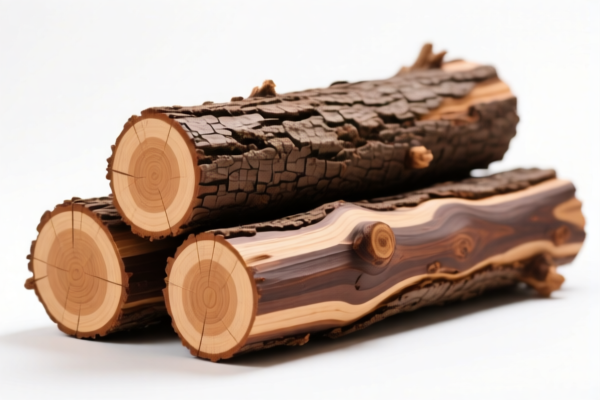
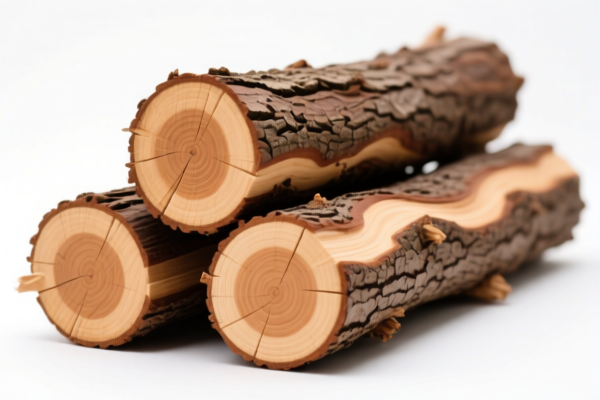
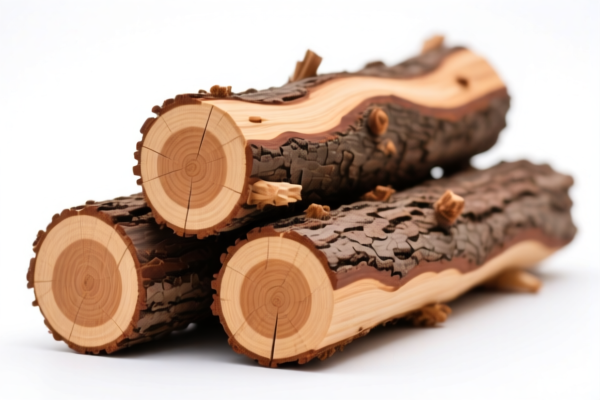
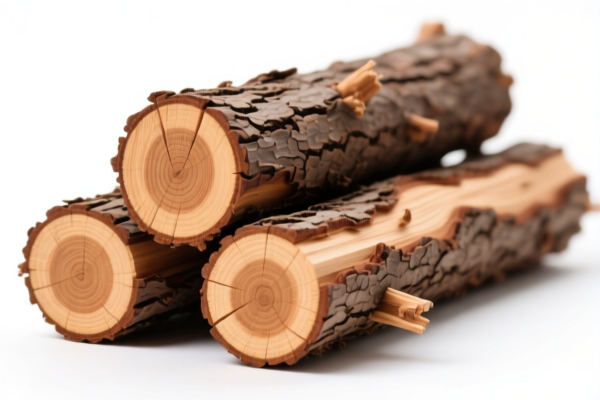
AI分析
🌲 Western Red Cedar Shipping Logs (Raw Wood)
🌐 HS Code Reference & Customs Clearance Guide | 2026 Latest Tariff Analysis | Professional Entry Strategy
📌 I. Product Definition & Classification: What Exactly Are "Shipping Logs"?
Western Red Cedar (Thuja plicata) logs are a high-value timber resource, prized for its durability, aromatic quality, and resistance to decay. In international trade, these logs are classified under Chapter 44: Wood and articles of wood; wood charcoal.
The classification depends strictly on the degree of processing and the cross-sectional dimensions:
Rough Wood in the Rough (Logs/Timbers):
- These are trees that have been felled, stripped of bark, or roughly squared.
- They are not sawn, planed, or otherwise processed into lumber.
- Key criterion: If the smallest cross-sectional dimension is 15 cm or more, they fall under specific HS codes for "Logs and timber."
⚠️ Key Distinction:
- If the wood is sawn (planks, beams) → It falls under Chapter 4403/4407/4409 (Sawn wood).
- If the wood is rough, unprocessed, and ≥15cm diameter → It falls under 4403.25 or 4403.26 (Logs/Timbers).
- If the wood is <15cm in smallest dimension → It may fall under different subcategories (not covered in this specific dataset).
📦 II. HS Code Classification Details (2026 Latest Tariff Authority Alignment)
Based on the provided data, there are two specific HS Codes for Western Red Cedar logs. They differ primarily by diameter/size specifications or specific sub-category definitions within the "Other, coniferous" group.
| HS Code | Product Description | Size/Dimension Criteria | Processing Level |
|---|---|---|---|
4403.25.01.55 |
Wood in the rough: Other coniferous: Western Red Cedar (Thuja plicata) | Specific size range (typically standard logging dimensions) | Raw, stripped/squared, Not Sawn |
4403.26.01.55 |
Wood in the rough: Other coniferous: Logs/Timbers: Western Red Cedar (Thuja plicata) | Logs/Timbers (General Category) | Raw, stripped/squared, Not Sawn |
🔍 Critical Note:
- Both codes apply only to Western Red Cedar (Thuja plicata).
- Both codes require the wood to be "in the rough" – meaning it has NOT been sawn into boards or planks.
- If the wood is sawn, do not use these codes. Use 4407.13 (Sawn wood of coniferous) instead.
- The difference between4403.25and4403.26often relates to specific diameter thresholds or national sub-classifications. Verify with your local customs authority which sub-code applies to your specific log diameter.
💰 III. 2026 Latest Tariff Rate Breakdown (Including Surcharge Taxes)
✅ Applicable Country: United States (US)
✅ Origin: China (CN)
✅ Effective Date: As per current USITC and IEEPA regulations
🎯 1. 4403.25.01.55 – Western Red Cedar Logs (Coniferous, Other)
| Item | Details |
|---|---|
| Base Tariff | 0.0% (Free trade rate for rough wood in many contexts) |
| Section 301 Surcharge | +25.0% (USITC Footnote: Section 301 Tariffs) |
| Total Tariff | 25.0% |
| Tax Calculation | CIF Value × 25% |
| De Minimis Eligibility | ❌ No (Wood products generally do not qualify for de minimis exemptions under Section 301) |
| Legal Basis | USITC:4403.25.01.55 → FOOTNOTE:301.01.25 |
📌 Explanation:
- While the base MFN (Most Favored Nation) rate for raw logs is often low or zero, Section 301 tariffs apply heavily to Chinese-origin timber products.
- 25% is a fixed additional duty. There are no other hidden "IEEPA" surcharges listed in the provided data for this specific code, so the total is 25%.
- Warning: Raw wood is a high-inspection category for pests (e.g., emerald ash borer, bark beetles). Ensure ISPM 15 compliance.
🎯 2. 4403.26.01.55 – Western Red Cedar Logs/Timbers
| Item | Details |
|---|---|
| Base Tariff | 0.0% |
| Section 301 Surcharge | +25.0% |
| Total Tariff | 25.0% |
| Tax Calculation | CIF Value × 25% |
| De Minimis Eligibility | ❌ No |
| Legal Basis | USITC:4403.26.01.55 → FOOTNOTE:301.01.25 |
📌 Note:
- Identical tax treatment to4403.25.01.55.
- The key is ensuring the physical description matches the code (e.g., "Logs" vs. "Timbers").
- If your logs are cut to specific lengths for "timber" use (construction frames),4403.26may be more appropriate. If they are raw tree trunks,4403.25might apply. Clarify with your broker.
🛠️ IV. Customs Clearance Practical Advice (Pitfall Avoidance Guide)
✅ 1. Required Documentation (Non-Negotiable)
| Document | Required? | Notes |
|---|---|---|
| Commercial Invoice | ✔️ | Must clearly state "Western Red Cedar Logs," Thuja plicata, Raw Wood. |
| Packing List | ✔️ | Detail dimensions (diameter, length), weight, and number of logs. |
| Phytosanitary Certificate | ✔️ | CRITICAL: Must be issued by the country of origin. Certifies no pests/diseases. |
| ISPM 15 Mark | ✔️ | Wooden packaging must be heat-treated/fumigated and stamped. |
| Bill of Lading | ✔️ | Standard shipping document. |
| Fumigation Certificate | ✔️ | If required by destination port (often combined with Phyto). |
| Certificate of Origin | ✔️ | To confirm Chinese origin (for Section 301 assessment). |
✅ 2. Declaration Tips (Key Mantras)
🔥 "Raw Wood, Not Lumber! State Diameter, State Species, Avoid Pests!"
| Scenario | Correct Declaration | Common Mistake |
|---|---|---|
| Raw Logs | "Western Red Cedar Logs, Raw, Stripped Bark, ~20cm Diameter" | Calling it "Lumber" or "Wood Planks" → Wrong HS Code! |
| Sawn Boards | Use 4407.13 (Sawn Wood) | Using 4403 codes for sawn wood → Penalty + Misdeclaration |
| Mixed Species | Declare each species separately | Mixing Cedar with Pine → Audit risk |
| Packaging | State "Heat-Treated Pallets" | Using untreated wood pallets → Rejection/Fumigation at Port |
✅ 3. Special Considerations
| Situation | Handling Advice |
|---|---|
| Pest Inspection | USDA APHIS will inspect logs for bark beetles, nematodes, etc. Expect delays. |
| Bark Status | If bark is present, additional scrutiny for pests. Stripped bark reduces risk but must be declared. |
| Value Declaration | Ensure CIF value is accurate. 25% of a high value is significant. |
| Section 301 Exclusions | Check if Western Red Cedar logs are on the current exclusion list. (As of 2026, most timber remains subject). |
🌍 V. Global Market Comparison (2026)
| Country/Region | Recommended HS Code | Tariff Rate | Key Requirements | Notes |
|---|---|---|---|---|
| 🇺🇸 USA | 4403.25.01.55 / 4403.26.01.55 |
25% | Phyto, ISPM 15, Fumigation | High inspection rate |
| 🇨🇳 China | 4403.25 / 4403.26 |
Varies (Import Duty ~5-10%) | Phyto, Quarantine | Major consumer of raw timber |
| 🇪🇺 EU | 4403.25 / 4403.26 |
0-5% | Fumigation, EUDR Compliance | EUDR (Deforestation Regulation) requires geolocation proof |
| 🇨🇦 Canada | 4403.25 / 4403.26 |
0% (USMCA) | Phyto | If originating from US/Canada |
📌 Conclusion:
- USA imposes a flat 25% surcharge due to Section 301.
- EU is increasingly strict on deforestation-free supply chains (EUDR). Ensure full traceability.
- Physical Inspection is the biggest bottleneck, not just the tax.
📌 VI. Common Errors & Pitfalls (Lessons Learned)
❌ Error 1: Declaring "Sawn Lumber" as "Logs"
👉 Consequence: Wrong HS Code → Customs Seizure + Heavy Fines.
👉 Fix: If sawn, use 4407.13. If raw, use 4403.
❌ Error 2: Missing Phyto Certificate
👉 Consequence: Port Rejection / Re-export / Destruction.
👉 Fix: Obtain from origin country before shipment.
❌ Error 3: Using Untreated Wooden Pallets
👉 Consequence: ISPM 15 Violation. Goods held until fumigation.
👉 Fix: Use plastic/metal pallets or certified wood.
❌ Error 4: Ignoring EUDR (for EU Bound)
👉 Consequence: Market Ban.
👉 Fix: Provide geolocation coordinates of harvest plots.
✅ Correct Declaration Example:
"Western Red Cedar (Thuja plicata) Logs, Raw, Stripped of Bark, Roughly Squared, Diameter 15-25cm, HS Code 4403.25.01.55, Fumigated, Phyto Certificate Attached"
🎯 VII. Conclusion: Professional Clearance Saves Time & Money!
🎯 Remember the Mantra:
🔹 "Raw Wood is Logs, Sawn Wood is Planks. Don't Mix Them!"
🔹 "Phyto is Key, ISPM 15 is Law, 25% Tax is the Cost."
🔹 "Clear Declaration, Accurate HS, Smooth Passage!"
📌 Pro Tip:
- If you are importing large volumes, consider Pre-Clearance Inspections in the country of origin to avoid port delays.
- Always verify the latest Section 301 exclusion list for wooden products.
📣 Immediate Action:
📞 Consult a Customs Broker for HS Code pre-ruling.
📄 Secure Phyto Certificate before loading.
🚀 Ensure ISPM 15 Compliance on all packaging.
✨ Expert Clearance, From Precise Classification Onwards!
💼 Your Timber, Your Profit, Your Responsibility!
用户评价
关于 HS 编码归类
协调制度(HS)是由世界海关组织(WCO)制定的国际贸易商品分类标准。全球 200 多个国家采用 HS 系统作为海关关税、贸易统计和进出口监管的基础。
每个 HS 编码遵循以下层级结构:
- 章(2 位)——商品大类(例如:第 84 章:机器和机械设备)
- 品目(4 位)——章内的更具体分类
- 子目(6 位)——国际通用细分,所有 WCO 成员国统一使用
- 本国细分(8-10 位)——各国自行扩展的细分编码,如美国 HTSUS 10 位编码
正确的 HS 编码归类对于顺利通关、准确缴纳关税和遵守贸易法规至关重要。错误归类可能导致海关延误、多缴关税或罚款。
从CN进口到US时,适用的关税税率可能包括:
- 最惠国(MFN)税率——适用于 WTO 成员国的标准关税税率
- 普通税率——适用于无贸易协定国家
- 贸易救济关税——附加关税,如 301 条款(反倾销)、232 条款(国家安全)或反补贴税
本页内容仅供参考。如需正式归类,请咨询当地海关或持牌报关代理。