Western Red Cedar Shipping Logs
CN → US| HS Code | Tariff Rate | Origin | Destination | Doc |
|---|---|---|---|---|
| 4403250155 | 35.0% | CN | US | Official Doc |
| 4403260155 | 35.0% | CN | US | Official Doc |
Product Images
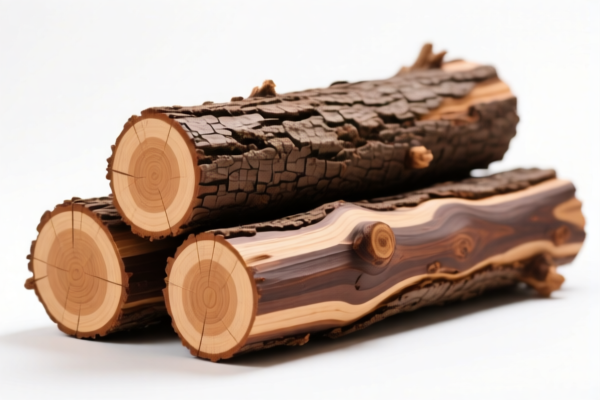
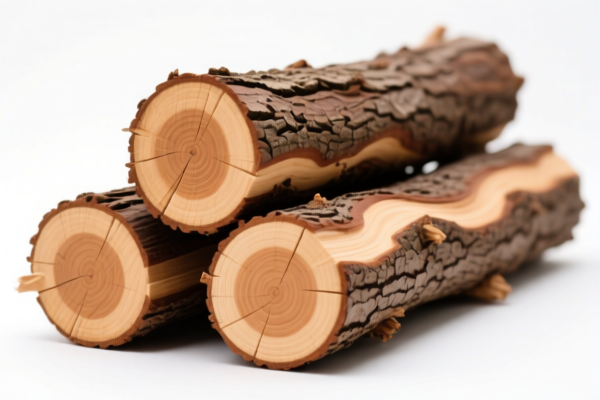
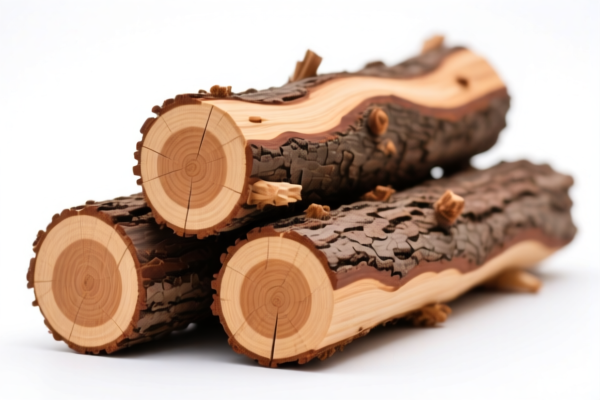
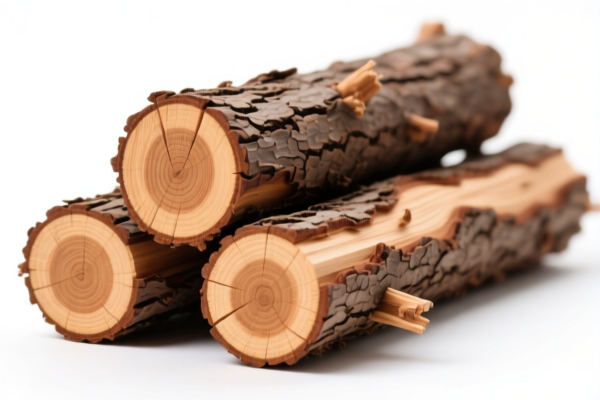
AI Analysis
🌲 Western Red Cedar Shipping Logs (Raw Wood)
🌐 HS Code Reference & Customs Clearance Guide | 2026 Latest Tariff Analysis | Professional Entry Strategy
📌 I. Product Definition & Classification: What Exactly Are "Shipping Logs"?
Western Red Cedar (Thuja plicata) logs are a high-value timber resource, prized for its durability, aromatic quality, and resistance to decay. In international trade, these logs are classified under Chapter 44: Wood and articles of wood; wood charcoal.
The classification depends strictly on the degree of processing and the cross-sectional dimensions:
Rough Wood in the Rough (Logs/Timbers):
- These are trees that have been felled, stripped of bark, or roughly squared.
- They are not sawn, planed, or otherwise processed into lumber.
- Key criterion: If the smallest cross-sectional dimension is 15 cm or more, they fall under specific HS codes for "Logs and timber."
⚠️ Key Distinction:
- If the wood is sawn (planks, beams) → It falls under Chapter 4403/4407/4409 (Sawn wood).
- If the wood is rough, unprocessed, and ≥15cm diameter → It falls under 4403.25 or 4403.26 (Logs/Timbers).
- If the wood is <15cm in smallest dimension → It may fall under different subcategories (not covered in this specific dataset).
📦 II. HS Code Classification Details (2026 Latest Tariff Authority Alignment)
Based on the provided data, there are two specific HS Codes for Western Red Cedar logs. They differ primarily by diameter/size specifications or specific sub-category definitions within the "Other, coniferous" group.
| HS Code | Product Description | Size/Dimension Criteria | Processing Level |
|---|---|---|---|
4403.25.01.55 |
Wood in the rough: Other coniferous: Western Red Cedar (Thuja plicata) | Specific size range (typically standard logging dimensions) | Raw, stripped/squared, Not Sawn |
4403.26.01.55 |
Wood in the rough: Other coniferous: Logs/Timbers: Western Red Cedar (Thuja plicata) | Logs/Timbers (General Category) | Raw, stripped/squared, Not Sawn |
🔍 Critical Note:
- Both codes apply only to Western Red Cedar (Thuja plicata).
- Both codes require the wood to be "in the rough" – meaning it has NOT been sawn into boards or planks.
- If the wood is sawn, do not use these codes. Use 4407.13 (Sawn wood of coniferous) instead.
- The difference between4403.25and4403.26often relates to specific diameter thresholds or national sub-classifications. Verify with your local customs authority which sub-code applies to your specific log diameter.
💰 III. 2026 Latest Tariff Rate Breakdown (Including Surcharge Taxes)
✅ Applicable Country: United States (US)
✅ Origin: China (CN)
✅ Effective Date: As per current USITC and IEEPA regulations
🎯 1. 4403.25.01.55 – Western Red Cedar Logs (Coniferous, Other)
| Item | Details |
|---|---|
| Base Tariff | 0.0% (Free trade rate for rough wood in many contexts) |
| Section 301 Surcharge | +25.0% (USITC Footnote: Section 301 Tariffs) |
| Total Tariff | 25.0% |
| Tax Calculation | CIF Value × 25% |
| De Minimis Eligibility | ❌ No (Wood products generally do not qualify for de minimis exemptions under Section 301) |
| Legal Basis | USITC:4403.25.01.55 → FOOTNOTE:301.01.25 |
📌 Explanation:
- While the base MFN (Most Favored Nation) rate for raw logs is often low or zero, Section 301 tariffs apply heavily to Chinese-origin timber products.
- 25% is a fixed additional duty. There are no other hidden "IEEPA" surcharges listed in the provided data for this specific code, so the total is 25%.
- Warning: Raw wood is a high-inspection category for pests (e.g., emerald ash borer, bark beetles). Ensure ISPM 15 compliance.
🎯 2. 4403.26.01.55 – Western Red Cedar Logs/Timbers
| Item | Details |
|---|---|
| Base Tariff | 0.0% |
| Section 301 Surcharge | +25.0% |
| Total Tariff | 25.0% |
| Tax Calculation | CIF Value × 25% |
| De Minimis Eligibility | ❌ No |
| Legal Basis | USITC:4403.26.01.55 → FOOTNOTE:301.01.25 |
📌 Note:
- Identical tax treatment to4403.25.01.55.
- The key is ensuring the physical description matches the code (e.g., "Logs" vs. "Timbers").
- If your logs are cut to specific lengths for "timber" use (construction frames),4403.26may be more appropriate. If they are raw tree trunks,4403.25might apply. Clarify with your broker.
🛠️ IV. Customs Clearance Practical Advice (Pitfall Avoidance Guide)
✅ 1. Required Documentation (Non-Negotiable)
| Document | Required? | Notes |
|---|---|---|
| Commercial Invoice | ✔️ | Must clearly state "Western Red Cedar Logs," Thuja plicata, Raw Wood. |
| Packing List | ✔️ | Detail dimensions (diameter, length), weight, and number of logs. |
| Phytosanitary Certificate | ✔️ | CRITICAL: Must be issued by the country of origin. Certifies no pests/diseases. |
| ISPM 15 Mark | ✔️ | Wooden packaging must be heat-treated/fumigated and stamped. |
| Bill of Lading | ✔️ | Standard shipping document. |
| Fumigation Certificate | ✔️ | If required by destination port (often combined with Phyto). |
| Certificate of Origin | ✔️ | To confirm Chinese origin (for Section 301 assessment). |
✅ 2. Declaration Tips (Key Mantras)
🔥 "Raw Wood, Not Lumber! State Diameter, State Species, Avoid Pests!"
| Scenario | Correct Declaration | Common Mistake |
|---|---|---|
| Raw Logs | "Western Red Cedar Logs, Raw, Stripped Bark, ~20cm Diameter" | Calling it "Lumber" or "Wood Planks" → Wrong HS Code! |
| Sawn Boards | Use 4407.13 (Sawn Wood) | Using 4403 codes for sawn wood → Penalty + Misdeclaration |
| Mixed Species | Declare each species separately | Mixing Cedar with Pine → Audit risk |
| Packaging | State "Heat-Treated Pallets" | Using untreated wood pallets → Rejection/Fumigation at Port |
✅ 3. Special Considerations
| Situation | Handling Advice |
|---|---|
| Pest Inspection | USDA APHIS will inspect logs for bark beetles, nematodes, etc. Expect delays. |
| Bark Status | If bark is present, additional scrutiny for pests. Stripped bark reduces risk but must be declared. |
| Value Declaration | Ensure CIF value is accurate. 25% of a high value is significant. |
| Section 301 Exclusions | Check if Western Red Cedar logs are on the current exclusion list. (As of 2026, most timber remains subject). |
🌍 V. Global Market Comparison (2026)
| Country/Region | Recommended HS Code | Tariff Rate | Key Requirements | Notes |
|---|---|---|---|---|
| 🇺🇸 USA | 4403.25.01.55 / 4403.26.01.55 |
25% | Phyto, ISPM 15, Fumigation | High inspection rate |
| 🇨🇳 China | 4403.25 / 4403.26 |
Varies (Import Duty ~5-10%) | Phyto, Quarantine | Major consumer of raw timber |
| 🇪🇺 EU | 4403.25 / 4403.26 |
0-5% | Fumigation, EUDR Compliance | EUDR (Deforestation Regulation) requires geolocation proof |
| 🇨🇦 Canada | 4403.25 / 4403.26 |
0% (USMCA) | Phyto | If originating from US/Canada |
📌 Conclusion:
- USA imposes a flat 25% surcharge due to Section 301.
- EU is increasingly strict on deforestation-free supply chains (EUDR). Ensure full traceability.
- Physical Inspection is the biggest bottleneck, not just the tax.
📌 VI. Common Errors & Pitfalls (Lessons Learned)
❌ Error 1: Declaring "Sawn Lumber" as "Logs"
👉 Consequence: Wrong HS Code → Customs Seizure + Heavy Fines.
👉 Fix: If sawn, use 4407.13. If raw, use 4403.
❌ Error 2: Missing Phyto Certificate
👉 Consequence: Port Rejection / Re-export / Destruction.
👉 Fix: Obtain from origin country before shipment.
❌ Error 3: Using Untreated Wooden Pallets
👉 Consequence: ISPM 15 Violation. Goods held until fumigation.
👉 Fix: Use plastic/metal pallets or certified wood.
❌ Error 4: Ignoring EUDR (for EU Bound)
👉 Consequence: Market Ban.
👉 Fix: Provide geolocation coordinates of harvest plots.
✅ Correct Declaration Example:
"Western Red Cedar (Thuja plicata) Logs, Raw, Stripped of Bark, Roughly Squared, Diameter 15-25cm, HS Code 4403.25.01.55, Fumigated, Phyto Certificate Attached"
🎯 VII. Conclusion: Professional Clearance Saves Time & Money!
🎯 Remember the Mantra:
🔹 "Raw Wood is Logs, Sawn Wood is Planks. Don't Mix Them!"
🔹 "Phyto is Key, ISPM 15 is Law, 25% Tax is the Cost."
🔹 "Clear Declaration, Accurate HS, Smooth Passage!"
📌 Pro Tip:
- If you are importing large volumes, consider Pre-Clearance Inspections in the country of origin to avoid port delays.
- Always verify the latest Section 301 exclusion list for wooden products.
📣 Immediate Action:
📞 Consult a Customs Broker for HS Code pre-ruling.
📄 Secure Phyto Certificate before loading.
🚀 Ensure ISPM 15 Compliance on all packaging.
✨ Expert Clearance, From Precise Classification Onwards!
💼 Your Timber, Your Profit, Your Responsibility!
Customer Reviews
About HS Code Classification
The Harmonized System (HS) is an internationally standardized nomenclature developed by the World Customs Organization (WCO) to classify traded products. Over 200 countries use the HS system as the basis for customs tariffs, trade statistics, and import/export regulations.
Each HS code follows a hierarchical structure:
- Chapter (2 digits) — Broad category of goods (e.g., Chapter 84: Machinery and Mechanical Appliances)
- Heading (4 digits) — More specific grouping within the chapter
- Subheading (6 digits) — Internationally standardized breakdown, used by all WCO member countries
- National subdivisions (8-10 digits) — Country-specific extensions for further classification, such as US HTSUS 10-digit codes
Correct HS code classification is essential for smooth customs clearance, accurate duty payment, and compliance with trade regulations. Misclassification can lead to customs delays, overpayment of duties, or penalties.
When importing from CN to US, the applicable tariff rates may include:
- Most-Favored-Nation (MFN) rate — The standard duty rate applied to WTO members
- General rate — Applied to countries without trade agreements
- Trade remedy duties — Additional tariffs such as Section 301 (anti-dumping), Section 232 (national security), or countervailing duties
The information provided on this page is for reference purposes only. For official classification, please consult with your local customs authority or a licensed customs broker.