Western Red Cedar Wood (Outdoor Use)
CN → US| HS编码 | 关税税率 | 原产国 | 目的国 | 文档 |
|---|---|---|---|---|
| 4407190068 | 35.0% | CN | US | 官方文档 |
| 9403910080 | 35.0% | CN | US | 官方文档 |
| 4407190069 | 35.0% | CN | US | 官方文档 |
商品图片
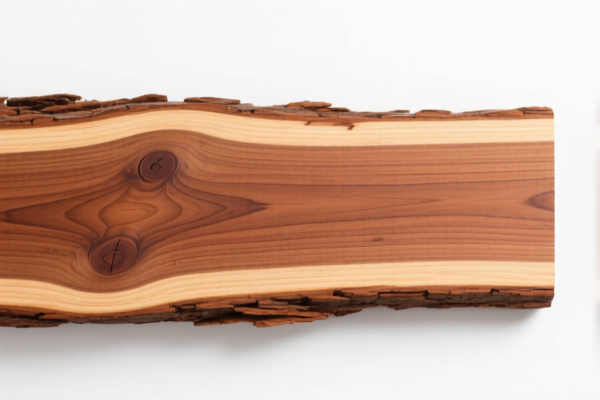
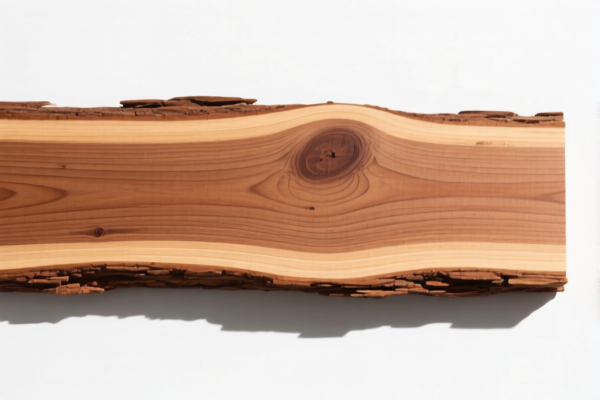
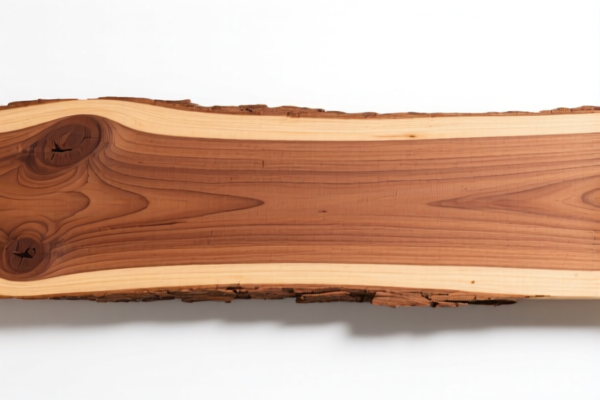
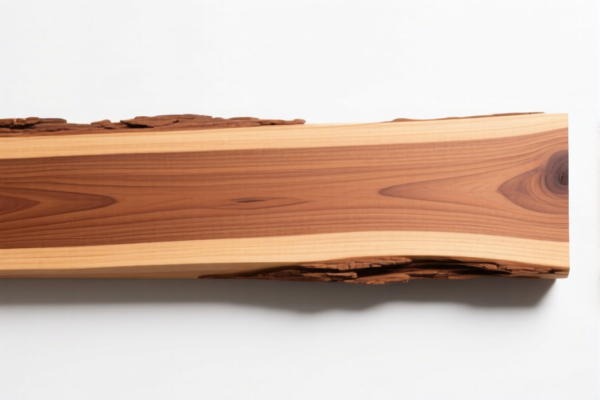
AI分析
🌲 Western Red Cedar Wood (Outdoor Use)
🌐 HS Code Reference & Customs Clearance Guide | 2026 Latest Tariff Analysis | Professional-Level Clearance Strategy
📌 I. Product Definition & Classification: Do You Really Understand "Western Red Cedar"?
Western Red Cedar is a premium softwood renowned for its natural resistance to rot, insects, and moisture, making it the gold standard for outdoor applications such as decking, siding, fences, and garden structures.
In international trade, it is strictly classified based on its processing state and dimensions. It falls under Chapter 44 (Wood and articles of wood), specifically categorized as "Sawn wood."
Key Classification Distinctions: * Material Type: Western Red Cedar (Thuja plicata). * Processing Method: Sawn or chipped lengthwise, sliced, or peeled, with a thickness exceeding 6 mm. * Treatment Status: Typically untreated for raw timber exports (unless specified otherwise). * Surface Finish: Rough (unplaned/sanded) vs. Other (planed/sanded/end-jointed).
⚠️ Critical Distinction Point:
- If the wood is Rough (unplaned, raw cut) → Classified under4407.19.00.68
- If the wood is Other (planed, sanded, or end-jointed) → Classified under4407.19.00.69
- Do NOT confuse with furniture parts (9403.91.00), which applies only to finished or semi-finished parts of furniture, not raw lumber.
📦 II. HS Code Classification Details (2026 Latest Tariff Authority Comparison)
| HS Code | Product Description | Application Scenario | Surface Finish | Treatment Status |
|---|---|---|---|---|
4407.19.00.68 |
Western Red Cedar, Rough, Not Treated | Raw lumber for custom decking, rough-cut beams, pallets, or further processing | ❌ Rough (Unplaned) | ❌ Not Treated |
4407.19.00.69 |
Western Red Cedar, Other (Planed/Sanded), Not Treated | Premium decking planks, finished siding, garden furniture components | ✅ Planed/Sanded/End-Jointed | ❌ Not Treated |
9403.91.00.80 |
Parts of Wood Furniture (Other) | Pre-cut parts for wooden garden benches, tables, or storage units | N/A (Finished Parts) | N/A |
9403.91.00.10 |
Parts of Wood Furniture (Play Yards/Enclosures) | Specific parts for children's play yards or confinement enclosures | N/A (Finished Parts) | N/A |
🔍 Key Reminder:
- Raw lumber (boards, planks, beams) must go to Chapter 44.
- Finished or semi-finished furniture parts go to Chapter 94.
- Misclassification between4407(Raw) and9403(Parts) can lead to customs delays, as duties and regulations differ. However, in this specific dataset, all codes carry the same total tax rate.
💰 III. 2026 Latest Tariff Rate Breakdown (Including Supplementary Taxes)
✅ Applicable Country: United States (US)
✅ Country of Origin: China (CN)
✅ Effective Time: Ongoing (Subject to USITC Section 301 & IEEPA regulations)
🎯 1. 4407.19.00.68 —— Western Red Cedar, Rough (Not Treated)
| Item | Content |
|---|---|
| Base Duty Rate | 0.0% (Ad valorem) |
| Section 301 Supplementary Duty (USITC) | +25.0% |
| Total Duty Rate | 25.0% |
| Tax Calculation | CIF Value × 25% |
| De Minimis Exemption | ❌ Not Eligible (High tariff impact on small packages) |
| Legal Basis Path | USITC:4407.19.00.68 → Footnote:301-Section-301 |
📌 Explanation:
- "Base Duty: 0%" reflects the standard MFN (Most Favored Nation) rate for many coniferous woods.
- "25% Supplementary Duty" is applied under US Trade Law Section 301, targeting specific Chinese-origin wood products.
- This is a high-cost category for raw timber imports. Cost calculation must include this 25% on top of the freight and insurance costs (CIF).
🎯 2. 4407.19.00.69 —— Western Red Cedar, Other (Planed/Sanded/End-Jointed, Not Treated)
| Item | Content |
|---|---|
| Base Duty Rate | 0.0% (Ad valorem) |
| Section 301 Supplementary Duty (USITC) | +25.0% |
| Total Duty Rate | 25.0% |
| Tax Calculation | CIF Value × 25% |
| De Minimis Exemption | ❌ Not Eligible |
| Legal Basis Path | USITC:4407.19.00.69 → Footnote:301-Section-301 |
📌 Note:
- Even though this wood is planed or sanded (higher value-add), the tariff rate remains identical to rough lumber in this context.
- The distinction lies in the product description for customs inspection, not in the duty percentage.
🎯 3. 9403.91.00.80 —— Parts of Wood Furniture (Other)
| Item | Content |
|---|---|
| Base Duty Rate | 0.0% (Ad valorem) |
| Section 301 Supplementary Duty (USITC) | +25.0% |
| Total Duty Rate | 25.0% |
| Tax Calculation | CIF Value × 25% |
| De Minimis Exemption | ❌ Not Eligible |
| Legal Basis Path | USITC:9403.91.00.80 → Footnote:301-Section-301 |
📌 Explanation:
- Applies to wooden parts that are not for play yards.
- If you are exporting pre-cut wooden legs, frames, or shelves for garden furniture, use this code.
🎯 4. 9403.91.00.10 —— Parts of Wood Furniture (For Play Yards/Enclosures)
| Item | Content |
|---|---|
| Base Duty Rate | 0.0% (Ad valorem) |
| Section 301 Supplementary Duty (USITC) | +25.0% |
| Total Duty Rate | 25.0% |
| Tax Calculation | CIF Value × 25% |
| De Minimis Exemption | ❌ Not Eligible |
| Legal Basis Path | USITC:9403.91.00.10 → Footnote:301-Section-301 |
📌 Note:
- Specific to parts for children's play yards or confinement enclosures.
- Ensure the product is explicitly designed for this use to justify this specific subheading.
🛠️ IV. Customs Clearance Practical Advice (Battle-Tested Pitfall Guide)
✅ 1. Preparation Checklist (Mandatory Documents)
| Document | Required | Explanation |
|---|---|---|
| ✅ Commercial Invoice | ✔️ | Must clearly state "Western Red Cedar," HS Code, and "Not Treated." |
| ✅ Packing List | ✔️ | Detail dimensions (thickness > 6mm is critical for Ch. 44). |
| ✅ Wood Treatment Certificate | ✔️ | Confirm if "Not Treated." If chemically treated, different codes may apply. |
| ✅ Phytosanitary Certificate | ✔️ | Mandatory for raw wood. USDA/Chinese Customs issued. Proves free of pests. |
| ✅ Product Photos | ✔️ | Show grain, roughness/planing, and labels (e.g., "Western Red Cedar"). |
| ✅ Material Safety Data Sheet (MSDS) | ✔️ | If any stain or preservative is applied, though "Not Treated" simplifies this. |
✅ 2. Declaration Tips (Key Mnemonics)
🔥 "Thickness Matters, Treatment Status is King, Rough vs. Planed Defines the Code!"
| Scenario | Correct HS Code | Wrong Approach |
|---|---|---|
| Raw lumber, >6mm thick, unplaned | 4407.19.00.68 |
Classifying as furniture parts → Potential rejection |
| Planed/Sanded decking boards | 4407.19.00.69 |
Calling it "Furniture" without being parts → Misclassification |
| Pre-cut bench frames | 9403.91.00.80 |
Shipping as raw lumber → Inefficient duty/inspection |
| Playpen parts | 9403.91.00.10 |
Using generic furniture code → Compliance risk |
✅ 3. Special Considerations
| Scenario | Handling Advice |
|---|---|
| ISPM 15 Compliance | If packaging uses raw wood pallets/cribs, they must be heat-treated or fumigated and marked. |
| "Not Treated" Claim | Do not declare "Chemically Treated" unless true. Western Red Cedar is naturally resistant; artificial treatment is rare for raw exports. |
| Thickness Verification | Customs may measure. If thickness ≤ 6mm, it may be reclassified under different heading (e.g., wood veneers). Ensure >6mm. |
| Labeling | Clearly mark bundles as "Western Red Cedar" to avoid confusion with other cedars (like Spanish Cedar), which may have different rates. |
🌍 V. Global Market Comparison (2026 Latest)
| Country/Region | Recommended HS Code | Duty Rate (China Origin) | Certification Requirements | Notes |
|---|---|---|---|---|
| 🇺🇸 USA | 4407.19.00.68/69 |
25% (Total) | Phytosanitary + ISPM 15 | High duty due to Sec 301 |
| 🇨🇳 China | 4407.19.00 |
0-5% (Import) | Phytosanitary | Raw material hub |
| 🇪🇺 EU | 4407.19 |
0-5% | FLEGT/EUTR (Legality) | Strict legality proof |
| 🇬🇧 UK | 4407.19 |
0-5% | Post-Brexit Rules | Check UK Global Tariff |
| 🇦🇺 Australia | 4407.19 |
5% | Biosecurity Inspection | High biosecurity standards |
📌 Conclusion:
- The US market imposes a flat 25% additional tariff on these Western Red Cedar products regardless of finish (rough or planed).
- Biosecurity (Phytosanitary) is the biggest non-tariff barrier globally for wood. Ensure your certificate is flawless.
📌 VI. Common Errors & Pitfalls (Lessons Learned from Blood and Tears)
❌ Mistake 1: Declaring planed decking as "Rough Lumber"
👉 Consequence: Customs may downgrade or inspect more thoroughly, causing delays.
👉 Fix: Accurately describe surface finish.
❌ Mistake 2: Ignoring the ">6mm" thickness rule
👉 Consequence: If wood is thin veneer, it falls under 4408 (Veneers), with different duties.
👉 Fix: Verify thickness on every pallet.
❌ Mistake 3: Missing Phytosanitary Certificate
👉 Consequence: Ship returned or destroyed. Wood products are high-risk for pests.
👉 Fix: Get cert from origin country's agricultural department.
❌ Mistake 4: Confusing "Furniture Parts" with "Raw Lumber"
👉 Consequence: If you send raw boards but label as "Furniture Parts," customs may reject for mismatch.
👉 Fix: Only use 9403 for actual pre-cut parts.
✅ Correct Declaration Example:
"Western Red Cedar Lumber, Sawn, Rough, Not Treated, Thickness 25mm, Quantity 5000 Boards, HS Code: 4407.19.00.68, Origin: China"
🎯 VII. Conclusion: Precision in Wood, Profit in Logistics
🎯 Remember the Mnemonic:
🔹 "Rough is .68, Planed is .69, Furniture Parts are .80, Play Yard Parts are .10."
🔹 "25% Duty is the Rule, 0% Base is the Start, Phytosanitary is the Key to Entry."
🔹 "Thickness > 6mm is Mandatory for Chapter 44, Less than that is Veneer!"
📌 Pro Tip:
- If you are shipping finished furniture (not parts), consider if a different HS Code in Chapter 94 might be more appropriate, but note that parts (9403.91) also carry the 25% duty in this dataset.
- For large shipments, request a Binding Tariff Ruling from US Customs if the product state is ambiguous.
📣 Take Action Now:
📞 Hire a seasoned customs broker specializing in wood products.
📦 Ensure your Phytosanitary Certificate is in order before loading.
🚀 Clear customs smoothly, avoid delays, and protect your margins!
✨ Professional clearance starts with accurate classification!
💼 Every percentage point of duty matters. Know your code!
用户评价
关于 HS 编码归类
协调制度(HS)是由世界海关组织(WCO)制定的国际贸易商品分类标准。全球 200 多个国家采用 HS 系统作为海关关税、贸易统计和进出口监管的基础。
每个 HS 编码遵循以下层级结构:
- 章(2 位)——商品大类(例如:第 84 章:机器和机械设备)
- 品目(4 位)——章内的更具体分类
- 子目(6 位)——国际通用细分,所有 WCO 成员国统一使用
- 本国细分(8-10 位)——各国自行扩展的细分编码,如美国 HTSUS 10 位编码
正确的 HS 编码归类对于顺利通关、准确缴纳关税和遵守贸易法规至关重要。错误归类可能导致海关延误、多缴关税或罚款。
从CN进口到US时,适用的关税税率可能包括:
- 最惠国(MFN)税率——适用于 WTO 成员国的标准关税税率
- 普通税率——适用于无贸易协定国家
- 贸易救济关税——附加关税,如 301 条款(反倾销)、232 条款(国家安全)或反补贴税
本页内容仅供参考。如需正式归类,请咨询当地海关或持牌报关代理。