Wet state Tanned Sheepskin
CN → US商品图片
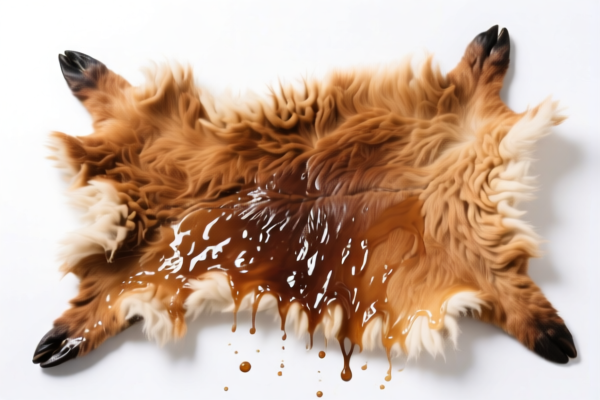
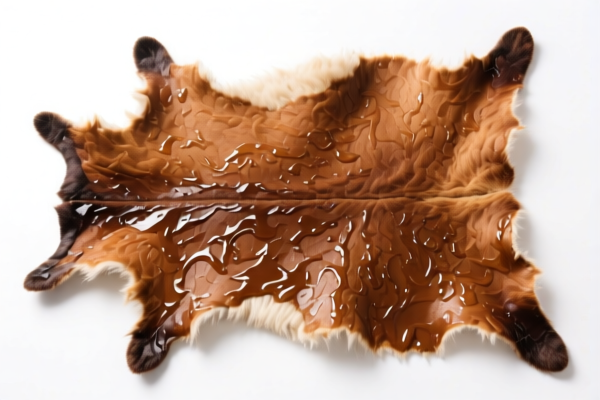
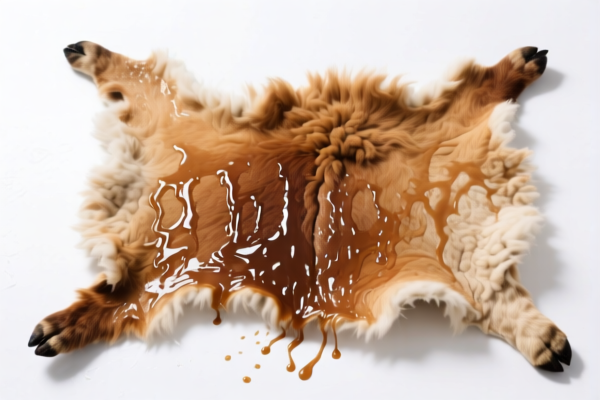
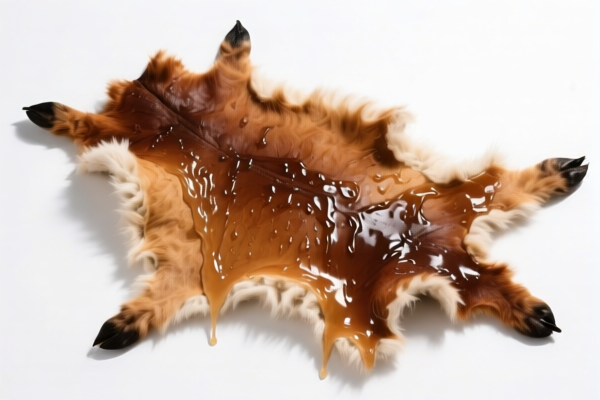
AI分析
🐑 Wet State Tanned Sheepskin
🌐 HS Code Reference & Customs Clearance Guide | 2026 Latest Tariff Analysis | Professional Customs Strategy
📌 I. Product Definition & Classification: Do You Truly Understand "Wet State Tanned Sheepskin"?
Wet State Tanned Sheepskin refers to sheepskins that have undergone the tanning process (usually chrome tanning or vegetable tanning) but remain in a damp or wet condition, not yet fully dried and fleshed for retail or garment use. In international trade, the state of the leather is a critical determinant for HS Code classification.
Key Distinction:
- Wet Blue/Wet Tanned: If the skin is tanned but still wet/damp, it is classified under Chapter 41 (Leather).
- Fully Tanned and Dried: If the skin is fully processed, dried, and finished, it may fall under Chapter 41 (if raw) or Chapter 64/61 (if made up into garments/footwear).
- Raw (Un-tanned): If merely salted or pickled without tanning, it is also under Chapter 41.
⚠️ Critical Differentiator:
- The term "Wet State" implies the leather has not been dried. This is crucial because customs authorities may require specific documentation to confirm it is not a semi-finished good awaiting further processing that might change its classification.
- Chrome-tanned vs. Vegetable-tanned can sometimes affect duty rates in specific countries, but generally, they fall under the same HS codes for raw hides.
📦 II. HS Code Classification Details (2026 Latest Tariff Authority Comparison)
| HS Code | Product Description | Application Scenario | State of Leather |
|---|---|---|---|
4102.21 |
Sheep or Lamb Skin, Tanned or Crusted, without wool on (i.e., Wet Blue/Wet Tanned) | Industrial leather production, upholstery manufacturing | ✅ Wet/Tanned |
4102.29 |
Sheep or Lamb Skin, Tanned or Crusted, with wool on | Fur-lined applications, rug production | ✅ Wet/Tanned |
4101.20 |
Cattle/Equine Hides, Tanned | Not applicable to Sheepskin | ❌ Wrong Animal |
4106.22 |
Sheep or Lamb Skins, Dried, Tanned | Fully processed leather for retail | ❌ Dry (Different State) |
4107.11 |
Sheep or Lamb Skins, Dried, Tanned and Crusted | Leather goods semi-finished | ❌ Dry |
🔍 Key Reminder:
- "Wet State" is explicitly covered under 4102.21 (without wool) or 4102.29 (with wool).
- Do not misclassify as 4106 or 4107 (which are for dried skins). Drying changes the physical properties and customs treatment.
- If the wool is not removed, it must be classified under 4102.29. If the wool is removed, it is 4102.21.
💰 III. 2026 Latest Tariff Rate Details (Including Additional Taxes & Policy Add-ons)
✅ Applicable Country: United States (US)
✅ Origin: China (CN)
✅ Effective Date: From November 10, 2025 (including subsequent imports)
🎯 1. HS Code 4102.21.0000 – Sheep/Lamb Skin, Tanned, Without Wool On
| Item | Content |
|---|---|
| Base Duty Rate | 3.2% (ad valorem) |
| USITC Additional Duty | +25% (from USITC Footnote 9903.88.01, under Section 301) |
| IEEPA Additional Duty | +10% (targeting China/HK products, effective Nov 10, 2025) |
| Total Duty Rate | 38.2% |
| Tax Calculation | CIF Value × 38.2% |
| De Minimis Exemption Available? | ❌ No (deny_de_minimis) |
| Legal Basis Path | IEEPA:9903.01.25 → IEEPA:9903.01.24 → USITC:4102.21.0000 → FOOTNOTE:9903.88.01 |
📌 Explanation:
- "USITC Additional Duty 25%" comes from the Section 301 tariffs under the U.S. Trade Act;
- "IEEPA 10%" is the additional tariff under the International Emergency Economic Powers Act for Chinese goods;
- Total 38.2% is a high tariff, requiring advance cost planning!
🎯 2. HS Code 4102.29.0000 – Sheep/Lamb Skin, Tanned, With Wool On
| Item | Content |
|---|---|
| Base Duty Rate | 3.2% (ad valorem) |
| USITC Additional Duty | +25% |
| IEEPA Additional Duty | +10% |
| Total Duty Rate | 38.2% |
| Tax Calculation | CIF × 38.2% |
| De Minimis Exemption Available? | ❌ No |
| Legal Basis Path | IEEPA:9901.25 → IEEPA:9903.01.24 → USITC:4102.29.0000 → FOOTNOTE:9903.88.01 |
📌 Note:
- Same base rate as4102.21; the presence of wool does not change the duty structure in the U.S.
- Whether it is chrome-tanned or vegetable-tanned, if it is wet/tanned, it falls under this code.
🛠️ IV. Customs Clearance Practical Advice (Battle-Tested Pitfall Avoidance Guide)
✅ 1. Document Checklist (None Can Be Omitted)
| Document | Must Provide | Explanation |
|---|---|---|
| ✅ Product Specification Sheet | ✔️ | Details tanning method (Chrome/veg), weight, dimensions, moisture content |
| ✅ Certificate of Origin | ✔️ | Confirms origin; critical for tariff calculation |
| ✅ Commercial Invoice | ✔️ | Must clearly state "Wet State Tanned Sheepskin, HS 4102.21" |
| ✅ Packing List | ✔️ | Must specify gross/net weight, number of skins |
| ✅ Tanning Process Description | ✔️ | To prove it is "wet state" and not "raw" or "finished" |
| ✅ Fumigation Certificate | ✔️ | Required for animal products to prevent pest invasion |
| ✅ Health/Veterinary Certificate | ✔️ | May be required depending on origin and destination port |
✅ 2. Declaration Tips (Key Mantra)
🔥 "Wet State, Tanned, Wool Yes/No, HS 4102, Docs Complete!"
| Scenario | Correct Declaration Method | Wrong Practice |
|---|---|---|
| Sheepskin, tanned, no wool, wet | 4102.21.0000 |
Misclassified as "raw hide" → 0% base but penalties |
| Sheepskin, tanned, with wool, wet | 4102.29.0000 |
Misclassified as "garment material" → higher duties |
| Dried tanned sheepskin | 4106.22 or 4107.11 |
Misclassified as "wet" → clearance delay |
| Raw (salted) sheepskin | 4102.10 |
Misclassified as "tanned" → incorrect duty rate |
✅ 3. Special Case Handling
| Situation | Handling Advice |
|---|---|
| OEM Custom Tanning | Provide customer orders + tanning specs to avoid "standard" classification issues |
| Mixed Lots (Wool/No Wool) | Separate declaration for each type. Do not mix 4102.21 and 4102.29 in one line item |
| Leather with Defects | Declare condition accurately. "Cull" or "Grade B" may attract lower duties in some countries, but not in the U.S. |
| Animal By-Product Regulations | Ensure compliance with FDA/USDA regulations for animal imports. Misdeclaration can lead to destruction of goods |
🌍 V. Global Market Customs Clearance Comparison (2026 Latest)
| Country/Region | Recommended HS Code | Duty Rate | Certification Requirements | Notes |
|---|---|---|---|---|
| 🇺🇸 USA | 4102.21.0000 |
38.2% (China) | FDA/USDA Compliance | High tariffs due to Section 301 |
| 🇨🇳 China | 4102.21 |
5% | None | Low duty, but import quota may apply |
| 🇪🇺 EU | 4102.21 |
0% (If GSP/EBA applies) | REACH Compliance | No additional tariffs if origin valid |
| 🇬🇧 UK | 4102.21 |
6.5% | UKCA Compliance | Post-Brexit independent tariffs |
| 🇯🇵 Japan | 4102.21 |
3.2% | FISC Certification | Low duty, strict hygiene checks |
📌 Conclusion:
- USA is the most expensive market for Chinese sheepskin due to 38.2% total duty;
- EU and Japan offer more favorable conditions, but compliance certifications are stricter;
- China has low duties but may impose import quotas or environmental restrictions.
📌 VI. Common Mistakes & Pitfall Avoidance (Lessons Learned)
❌ Mistake 1: Declaring "Wet Tanned Sheepskin" as "Raw Hides"
👉 Consequence: Under-declaration of value/duty → Penalties + Back Taxes!
❌ Mistake 2: Mixing "With Wool" and "Without Wool" in one HS Code
👉 Consequence: Customs rejection → De-consolidation + Storage Fees!
❌ Mistake 3: Ignoring Animal Health Certificates
👉 Consequence: Goods destroyed or returned due to biosecurity risks!
❌ Mistake 4: Not specifying "Wet State" in Invoice
👉 Consequence: Customs suspects "Finished Leather" → Additional Inspection + Delay!
✅ Correct Practice:
"Wet State Tanned Sheepskin, Chrome-Tanned, Without Wool, HS 4102.21.0000, Fumigated, USDA Approved, Model: Raw Leather for Upholstery"
🎯 VII. Conclusion: Professional Declaration, Save Time, Reduce Costs!
🎯 Remember the Mantra:
🔹 "Wet State, Tanned, Wool Yes/No, HS 4102, Docs Complete!"
🔹 "HS Code determines duty, 38.2% in US, 0% in EU, Declare Correctly!"
📌 Pro Tip:
If your sheepskin is originated from Vietnam, Indonesia, or Thailand, you may apply for GSP Preferences in the EU or FTA Benefits in Japan, reducing duties to 0%~3%;
Recommend Advance Ruling from US CBP to avoid classification disputes.
📣 Immediate Action:
📞 Contact professional customs broker + Provide Product Photos + Apply for HS Code Pre-classification
🚀 Let your sheepskin clear customs smoothly, efficiently export, and maximize profits!
✨ Professional Customs Clearance Starts with Accurate Classification!
💼 Every cent of your cost deserves precise calculation!
用户评价
关于 HS 编码归类
协调制度(HS)是由世界海关组织(WCO)制定的国际贸易商品分类标准。全球 200 多个国家采用 HS 系统作为海关关税、贸易统计和进出口监管的基础。
每个 HS 编码遵循以下层级结构:
- 章(2 位)——商品大类(例如:第 84 章:机器和机械设备)
- 品目(4 位)——章内的更具体分类
- 子目(6 位)——国际通用细分,所有 WCO 成员国统一使用
- 本国细分(8-10 位)——各国自行扩展的细分编码,如美国 HTSUS 10 位编码
正确的 HS 编码归类对于顺利通关、准确缴纳关税和遵守贸易法规至关重要。错误归类可能导致海关延误、多缴关税或罚款。
从CN进口到US时,适用的关税税率可能包括:
- 最惠国(MFN)税率——适用于 WTO 成员国的标准关税税率
- 普通税率——适用于无贸易协定国家
- 贸易救济关税——附加关税,如 301 条款(反倾销)、232 条款(国家安全)或反补贴税
本页内容仅供参考。如需正式归类,请咨询当地海关或持牌报关代理。