Wet state Tanned Sheepskin
CN → USProduct Images
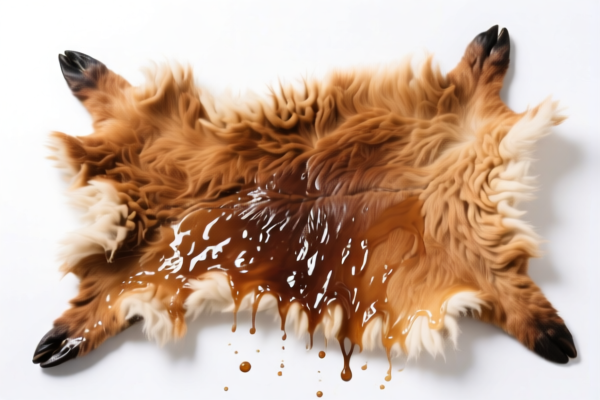
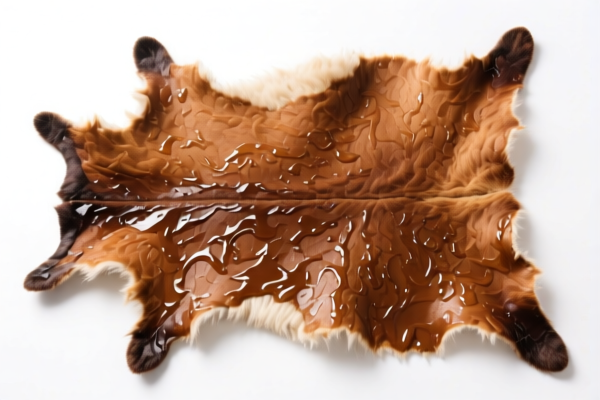
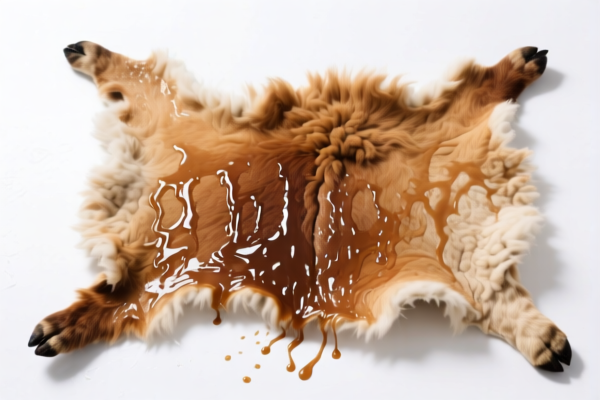
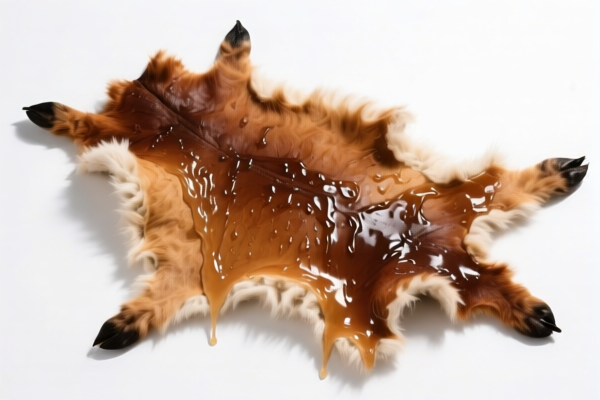
AI Analysis
🐑 Wet State Tanned Sheepskin
🌐 HS Code Reference & Customs Clearance Guide | 2026 Latest Tariff Analysis | Professional Customs Strategy
📌 I. Product Definition & Classification: Do You Truly Understand "Wet State Tanned Sheepskin"?
Wet State Tanned Sheepskin refers to sheepskins that have undergone the tanning process (usually chrome tanning or vegetable tanning) but remain in a damp or wet condition, not yet fully dried and fleshed for retail or garment use. In international trade, the state of the leather is a critical determinant for HS Code classification.
Key Distinction:
- Wet Blue/Wet Tanned: If the skin is tanned but still wet/damp, it is classified under Chapter 41 (Leather).
- Fully Tanned and Dried: If the skin is fully processed, dried, and finished, it may fall under Chapter 41 (if raw) or Chapter 64/61 (if made up into garments/footwear).
- Raw (Un-tanned): If merely salted or pickled without tanning, it is also under Chapter 41.
⚠️ Critical Differentiator:
- The term "Wet State" implies the leather has not been dried. This is crucial because customs authorities may require specific documentation to confirm it is not a semi-finished good awaiting further processing that might change its classification.
- Chrome-tanned vs. Vegetable-tanned can sometimes affect duty rates in specific countries, but generally, they fall under the same HS codes for raw hides.
📦 II. HS Code Classification Details (2026 Latest Tariff Authority Comparison)
| HS Code | Product Description | Application Scenario | State of Leather |
|---|---|---|---|
4102.21 |
Sheep or Lamb Skin, Tanned or Crusted, without wool on (i.e., Wet Blue/Wet Tanned) | Industrial leather production, upholstery manufacturing | ✅ Wet/Tanned |
4102.29 |
Sheep or Lamb Skin, Tanned or Crusted, with wool on | Fur-lined applications, rug production | ✅ Wet/Tanned |
4101.20 |
Cattle/Equine Hides, Tanned | Not applicable to Sheepskin | ❌ Wrong Animal |
4106.22 |
Sheep or Lamb Skins, Dried, Tanned | Fully processed leather for retail | ❌ Dry (Different State) |
4107.11 |
Sheep or Lamb Skins, Dried, Tanned and Crusted | Leather goods semi-finished | ❌ Dry |
🔍 Key Reminder:
- "Wet State" is explicitly covered under 4102.21 (without wool) or 4102.29 (with wool).
- Do not misclassify as 4106 or 4107 (which are for dried skins). Drying changes the physical properties and customs treatment.
- If the wool is not removed, it must be classified under 4102.29. If the wool is removed, it is 4102.21.
💰 III. 2026 Latest Tariff Rate Details (Including Additional Taxes & Policy Add-ons)
✅ Applicable Country: United States (US)
✅ Origin: China (CN)
✅ Effective Date: From November 10, 2025 (including subsequent imports)
🎯 1. HS Code 4102.21.0000 – Sheep/Lamb Skin, Tanned, Without Wool On
| Item | Content |
|---|---|
| Base Duty Rate | 3.2% (ad valorem) |
| USITC Additional Duty | +25% (from USITC Footnote 9903.88.01, under Section 301) |
| IEEPA Additional Duty | +10% (targeting China/HK products, effective Nov 10, 2025) |
| Total Duty Rate | 38.2% |
| Tax Calculation | CIF Value × 38.2% |
| De Minimis Exemption Available? | ❌ No (deny_de_minimis) |
| Legal Basis Path | IEEPA:9903.01.25 → IEEPA:9903.01.24 → USITC:4102.21.0000 → FOOTNOTE:9903.88.01 |
📌 Explanation:
- "USITC Additional Duty 25%" comes from the Section 301 tariffs under the U.S. Trade Act;
- "IEEPA 10%" is the additional tariff under the International Emergency Economic Powers Act for Chinese goods;
- Total 38.2% is a high tariff, requiring advance cost planning!
🎯 2. HS Code 4102.29.0000 – Sheep/Lamb Skin, Tanned, With Wool On
| Item | Content |
|---|---|
| Base Duty Rate | 3.2% (ad valorem) |
| USITC Additional Duty | +25% |
| IEEPA Additional Duty | +10% |
| Total Duty Rate | 38.2% |
| Tax Calculation | CIF × 38.2% |
| De Minimis Exemption Available? | ❌ No |
| Legal Basis Path | IEEPA:9901.25 → IEEPA:9903.01.24 → USITC:4102.29.0000 → FOOTNOTE:9903.88.01 |
📌 Note:
- Same base rate as4102.21; the presence of wool does not change the duty structure in the U.S.
- Whether it is chrome-tanned or vegetable-tanned, if it is wet/tanned, it falls under this code.
🛠️ IV. Customs Clearance Practical Advice (Battle-Tested Pitfall Avoidance Guide)
✅ 1. Document Checklist (None Can Be Omitted)
| Document | Must Provide | Explanation |
|---|---|---|
| ✅ Product Specification Sheet | ✔️ | Details tanning method (Chrome/veg), weight, dimensions, moisture content |
| ✅ Certificate of Origin | ✔️ | Confirms origin; critical for tariff calculation |
| ✅ Commercial Invoice | ✔️ | Must clearly state "Wet State Tanned Sheepskin, HS 4102.21" |
| ✅ Packing List | ✔️ | Must specify gross/net weight, number of skins |
| ✅ Tanning Process Description | ✔️ | To prove it is "wet state" and not "raw" or "finished" |
| ✅ Fumigation Certificate | ✔️ | Required for animal products to prevent pest invasion |
| ✅ Health/Veterinary Certificate | ✔️ | May be required depending on origin and destination port |
✅ 2. Declaration Tips (Key Mantra)
🔥 "Wet State, Tanned, Wool Yes/No, HS 4102, Docs Complete!"
| Scenario | Correct Declaration Method | Wrong Practice |
|---|---|---|
| Sheepskin, tanned, no wool, wet | 4102.21.0000 |
Misclassified as "raw hide" → 0% base but penalties |
| Sheepskin, tanned, with wool, wet | 4102.29.0000 |
Misclassified as "garment material" → higher duties |
| Dried tanned sheepskin | 4106.22 or 4107.11 |
Misclassified as "wet" → clearance delay |
| Raw (salted) sheepskin | 4102.10 |
Misclassified as "tanned" → incorrect duty rate |
✅ 3. Special Case Handling
| Situation | Handling Advice |
|---|---|
| OEM Custom Tanning | Provide customer orders + tanning specs to avoid "standard" classification issues |
| Mixed Lots (Wool/No Wool) | Separate declaration for each type. Do not mix 4102.21 and 4102.29 in one line item |
| Leather with Defects | Declare condition accurately. "Cull" or "Grade B" may attract lower duties in some countries, but not in the U.S. |
| Animal By-Product Regulations | Ensure compliance with FDA/USDA regulations for animal imports. Misdeclaration can lead to destruction of goods |
🌍 V. Global Market Customs Clearance Comparison (2026 Latest)
| Country/Region | Recommended HS Code | Duty Rate | Certification Requirements | Notes |
|---|---|---|---|---|
| 🇺🇸 USA | 4102.21.0000 |
38.2% (China) | FDA/USDA Compliance | High tariffs due to Section 301 |
| 🇨🇳 China | 4102.21 |
5% | None | Low duty, but import quota may apply |
| 🇪🇺 EU | 4102.21 |
0% (If GSP/EBA applies) | REACH Compliance | No additional tariffs if origin valid |
| 🇬🇧 UK | 4102.21 |
6.5% | UKCA Compliance | Post-Brexit independent tariffs |
| 🇯🇵 Japan | 4102.21 |
3.2% | FISC Certification | Low duty, strict hygiene checks |
📌 Conclusion:
- USA is the most expensive market for Chinese sheepskin due to 38.2% total duty;
- EU and Japan offer more favorable conditions, but compliance certifications are stricter;
- China has low duties but may impose import quotas or environmental restrictions.
📌 VI. Common Mistakes & Pitfall Avoidance (Lessons Learned)
❌ Mistake 1: Declaring "Wet Tanned Sheepskin" as "Raw Hides"
👉 Consequence: Under-declaration of value/duty → Penalties + Back Taxes!
❌ Mistake 2: Mixing "With Wool" and "Without Wool" in one HS Code
👉 Consequence: Customs rejection → De-consolidation + Storage Fees!
❌ Mistake 3: Ignoring Animal Health Certificates
👉 Consequence: Goods destroyed or returned due to biosecurity risks!
❌ Mistake 4: Not specifying "Wet State" in Invoice
👉 Consequence: Customs suspects "Finished Leather" → Additional Inspection + Delay!
✅ Correct Practice:
"Wet State Tanned Sheepskin, Chrome-Tanned, Without Wool, HS 4102.21.0000, Fumigated, USDA Approved, Model: Raw Leather for Upholstery"
🎯 VII. Conclusion: Professional Declaration, Save Time, Reduce Costs!
🎯 Remember the Mantra:
🔹 "Wet State, Tanned, Wool Yes/No, HS 4102, Docs Complete!"
🔹 "HS Code determines duty, 38.2% in US, 0% in EU, Declare Correctly!"
📌 Pro Tip:
If your sheepskin is originated from Vietnam, Indonesia, or Thailand, you may apply for GSP Preferences in the EU or FTA Benefits in Japan, reducing duties to 0%~3%;
Recommend Advance Ruling from US CBP to avoid classification disputes.
📣 Immediate Action:
📞 Contact professional customs broker + Provide Product Photos + Apply for HS Code Pre-classification
🚀 Let your sheepskin clear customs smoothly, efficiently export, and maximize profits!
✨ Professional Customs Clearance Starts with Accurate Classification!
💼 Every cent of your cost deserves precise calculation!
Customer Reviews
About HS Code Classification
The Harmonized System (HS) is an internationally standardized nomenclature developed by the World Customs Organization (WCO) to classify traded products. Over 200 countries use the HS system as the basis for customs tariffs, trade statistics, and import/export regulations.
Each HS code follows a hierarchical structure:
- Chapter (2 digits) — Broad category of goods (e.g., Chapter 84: Machinery and Mechanical Appliances)
- Heading (4 digits) — More specific grouping within the chapter
- Subheading (6 digits) — Internationally standardized breakdown, used by all WCO member countries
- National subdivisions (8-10 digits) — Country-specific extensions for further classification, such as US HTSUS 10-digit codes
Correct HS code classification is essential for smooth customs clearance, accurate duty payment, and compliance with trade regulations. Misclassification can lead to customs delays, overpayment of duties, or penalties.
When importing from CN to US, the applicable tariff rates may include:
- Most-Favored-Nation (MFN) rate — The standard duty rate applied to WTO members
- General rate — Applied to countries without trade agreements
- Trade remedy duties — Additional tariffs such as Section 301 (anti-dumping), Section 232 (national security), or countervailing duties
The information provided on this page is for reference purposes only. For official classification, please consult with your local customs authority or a licensed customs broker.