Wide format Label Paper Roll
CN → US| HS编码 | 关税税率 | 原产国 | 目的国 | 文档 |
|---|---|---|---|---|
| 3919905040 | 40.8% | CN | US | 官方文档 |
| 4821904000 | 35.0% | CN | US | 官方文档 |
| 4811412100 | 35.0% | CN | US | 官方文档 |
| 4811492100 | 35.0% | CN | US | 官方文档 |
| 4821902000 | 35.0% | CN | US | 官方文档 |
| 3919102055 | 40.8% | CN | US | 官方文档 |
商品图片
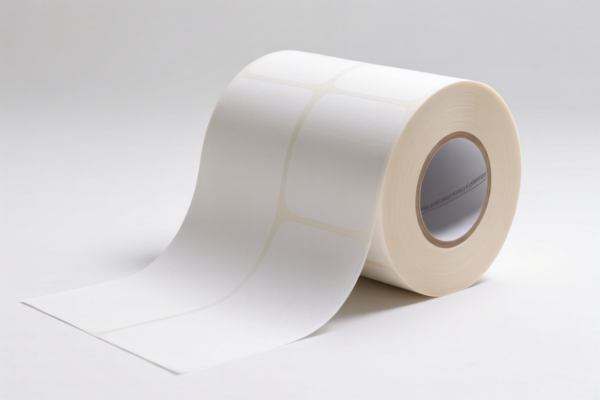
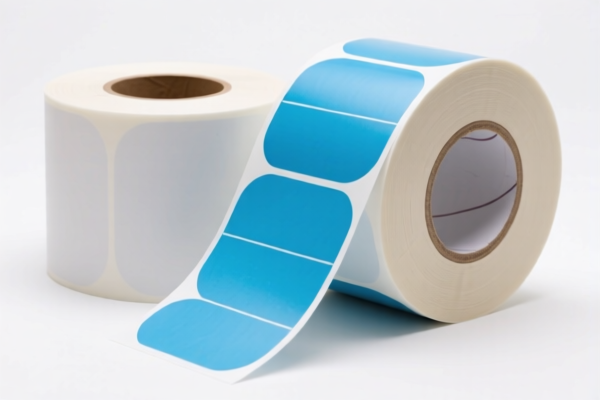
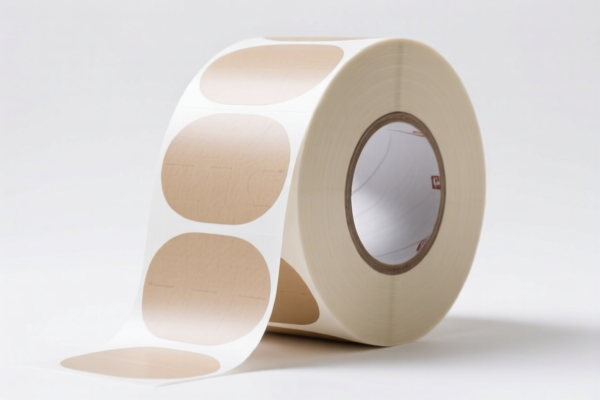
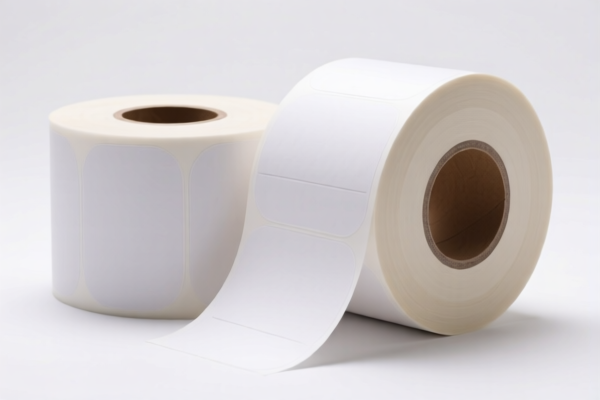
AI分析
🏷️ Wide Format Label Paper Roll
🌐 HS Code Reference & Customs Clearance Guide | 2026 Latest Tariff Breakdown | Strategic Clearance Strategy
📌 I. Product Definition & Classification: Is Your Label Paper Actually Paper?
"Label Paper Roll" is a generic trade term that masks the critical material composition. In international trade, the distinction between Plastic/Composite Materials and Paper Materials determines whether you face a 40.8% tax rate or a 35.0% rate.
The classification depends entirely on the substrate material: * Plastic/Composite Base: If the backing or face material is synthetic (e.g., BOPP, PET, PVC) or a composite where plastic is dominant, it falls under HS 3919. * Paper Base: If the substrate is primarily wood pulp/paper, even if coated, it falls under HS 4821 or 4811.
⚠️ Critical Distinction Point:
- If the label is sticky and the base is Plastic/Composite → HS 3919 (Higher Tax)
- If the label is sticky and the base is Paper → HS 4821/4811 (Lower Tax)
📦 II. HS Code Classification Details (2026 Latest Tariff Authority)
| HS Code | Product Description | Material Inference | Tax Rate |
|---|---|---|---|
3919.90.50.40 |
Plastic Tape / Self-adhesive Products in rolls | Plastic or Composite Material; Flat,带状 (strip-like) shape. | 40.8% |
4821.90.40.00 |
Paper Labels (Other) | Primarily Paper; Matches "Paper Label" material requirements. | 35.0% |
4811.41.21.00 |
Adhesive Paper in Rolls | Paper Material; Rolled format; Self-adhesive property. | 35.0% |
4811.49.21.00 |
Coated/Self-adhesive Paper (Other) | Paper Material; Rolled format; Glued or Self-adhesive features. | 35.0% |
4821.90.20.00 |
Paper Labels (Specific) | "Paper Label" name matches material; "Roll" is common storage form. | 35.0% |
3919.10.20.55 |
Self-adhesive Plastic Tape | Paper or Plastic-coated; Rolled; Fits "Other" flat strip category. | 40.8% |
🔍 Key Insight:
- HS 3919 codes imply a Plastic/Composite nature, triggering the higher tax bracket due to USITC duties on synthetic goods.
- HS 4821/4811 codes imply a Paper nature, benefiting from lower base duties (0% vs 5.8%).
- The "Wide Format" descriptor does not change the material-based classification but confirms the Roll (卷装) format.
💰 III. 2026 Latest Tariff Rate Breakdown (Including Surtaxes & Policy Add-ons)
✅ Applicable Country: USA (US)
✅ Origin: China (CN)
✅ Effective Date: Post-November 2025 Import Cycle
🎯 1. HS 3919 Series (Plastic/Composite Labels)
Codes: 3919.90.50.40, 3919.10.20.55
| Item | Content |
|---|---|
| Base Duty Rate | 5.8% (Ad Valorem) |
| Section 301 Surtax | +25.0% (USITC Footnote for China-origin plastics) |
| IEEPA Surtax | +10.0% (China/HK specific emergency tariff) |
| Total Tax Rate | 40.8% |
| Calculation Basis | CIF Value × 40.8% |
| De Minimis Exemption? | ❌ NO (Cannot use Section 321/De Minimis for duty avoidance) |
| Legal Basis Path | USITC:3919 → 301 Section: 25% → IEEPA: 10% |
📌 Explanation:
- The 5.8% base rate applies to plastic self-adhesive tapes/labels.
- The 25% Section 301 tax is the heavy burden on Chinese plastic goods.
- The 10% IEEPA tax is an additional layer on top.
- Total 40.8% is significant. Misclassifying plastic as paper to avoid this is considered fraud.
🎯 2. HS 4821 / 4811 Series (Paper Labels)
Codes: 4821.90.40.00, 4811.41.21.00, 4811.49.21.00, 4821.90.20.00
| Item | Content |
|---|---|
| Base Duty Rate | 0.0% (Ad Valorem) |
| Section 301 Surtax | +25.0% (USITC Footnote for China-origin paper goods) |
| IEEPA Surtax | +10.0% (China/HK specific emergency tariff) |
| Total Tax Rate | 35.0% |
| Calculation Basis | CIF Value × 35.0% |
| De Minimis Exemption? | ❌ NO (Denied for Chinese origin under current rules) |
| Legal Basis Path | USITC:4821/4811 → 301 Section: 25% → IEEPA: 10% |
📌 Note:
- Although the base duty is 0%, the 25% Section 301 tax still applies to Chinese paper products.
- The 10% IEEPA tax also applies.
- Total 35.0% is 5.8% lower than the plastic classification.
- Strategic Advantage: If your label backing is paper (even if coated), this is the optimal classification.
🛠️ IV. Customs Clearance Practical Advice (Battle-Tested Pitfall Guide)
✅ 1. Documentation Checklist (Mandatory)
| Document | Required | Purpose |
|---|---|---|
| ✅ Product Specification Sheet | ✔️ | Must explicitly state Substrate Material (Paper vs. BOPP/PET) |
| ✅ Material Composition Certificate | ✔️ | Third-party lab report confirming % of paper vs. plastic |
| ✅ Product Photos | ✔️ | Show texture (matte/glossy paper) and tear test (paper tears, plastic stretches) |
| ✅ Commercial Invoice | ✔️ | Use precise description: "Paper-based Self-Adhesive Label Roll" or "Plastic-based Label Roll" |
| ✅ Packing List | ✔️ | Confirm "Roll" format to match HS code structure |
✅ 2. Classification Strategy (Key Mantra)
🔥 “Material Defines Code, Paper Saves 5.8%!”
| Scenario | Correct HS Code | Tax Rate | Risk if Wrong |
|---|---|---|---|
| Paper Base (Standard Label Paper) | 4821.90.40.00 or 4811.41.21.00 |
35.0% | Misclassifying as Plastic → Pay 40.8% (Overpayment) |
| Plastic/Composite Base (Synthetic Label) | 3919.90.50.40 |
40.8% | Misclassifying as Paper → Audit Risk, Penalties, Back Taxes |
| Unknown/Mixed Material | 3919.90.50.40 (Conservative) |
40.8% | Default to Plastic if composition is unclear |
✅ 3. Special Cases & Handling
| Situation | Handling Advice |
|---|---|
| Thermal Paper Labels | Usually Paper-based. Use 4821 codes. Confirm no plastic coating. |
| BOPP/PET Labels | Plastic-based. Must use 3919 codes. Do not attempt to claim "Paper". |
| Composite Material | If >50% plastic by weight/value, 3919 is safer. |
| Wide Format | No special HS change. Ensure description includes "Wide Format" to prevent ambiguity at USCBP. |
🌍 V. Global Market Comparison (2026 Context)
| Country/Region | Recommended HS Code | Total Tax (China Origin) | Key Requirement | Note |
|---|---|---|---|---|
| 🇺🇸 USA | 4821.90.40.00 (Paper) |
35.0% | Section 301 + IEEPA Apply | Best Option if Paper |
| 🇺🇸 USA | 3919.90.50.40 (Plastic) |
40.8% | Section 301 + IEEPA Apply | Higher cost for synthetics |
| 🇨🇳 China (Export) | N/A | N/A | N/A | N/A |
| 🇪🇺 EU | 3703/4811 | Varies | CE/RoHS for some | No Section 301 equivalent |
📌 Conclusion:
- USA is the primary concern due to叠加 taxes (Section 301 + IEEPA).
- Optimization Opportunity: Switch to Paper-based labels if functionally possible to save 5.8% on CIF value.
- Documentation is Key: US Customs (CBP) will challenge "Label Paper" without proof of material.
📌 VI. Common Errors & Pitfalls (Lessons Learned)
❌ Error 1: Using "Label" as the sole description.
👉 Consequence: CBP assigns a default code, often 3919 (Plastic), leading to 40.8% tax.
✅ Fix: Specify "Paper-based" or "Plastic-based" in the description.
❌ Error 2: Assuming "Paper Roll" means 0% tax.
👉 Consequence: Ignoring Section 301 (25%) and IEEPA (10%) leads to severe penalties.
✅ Fix: Remember, even paper has 35% total duty from China.
❌ Error 3: Misidentifying Composite Materials.
👉 Consequence: Claiming Paper for a BOPP/PE composite.
✅ Fix: Get a Material Analysis Report. If it tears cleanly, it's paper. If it stretches, it's plastic.
🎯 VII. Conclusion: Professional Clearance, Cost Efficiency!
🎯 Remember the Mantra:
🔹 "Paper = 35%, Plastic = 40.8%. Know your substrate!"
🔹 "Describe the Material, Not Just the Use."
🔹 "Section 301 + IEEPA = 35-40%. Plan Ahead."
📌 Pro Tip:
If your label product is exclusively paper-based, emphasize this in the commercial invoice:
"Self-adhesive Paper Labels, Paper Substrate, Wide Format, for Packaging Use."
This helps CBP quickly approve 4821/4811 codes, avoiding delays.
📣 Immediate Action:
📞 Consult your supplier for the exact substrate material (Paper vs. BOPP).
📄 Request a Material Certificate before shipment.
🚀 Optimize your HS Code to save 5.8% on every shipment to the USA.
✨ Professional clearance starts with precise classification!
💼 Your margin depends on the right HS Code!
用户评价
关于 HS 编码归类
协调制度(HS)是由世界海关组织(WCO)制定的国际贸易商品分类标准。全球 200 多个国家采用 HS 系统作为海关关税、贸易统计和进出口监管的基础。
每个 HS 编码遵循以下层级结构:
- 章(2 位)——商品大类(例如:第 84 章:机器和机械设备)
- 品目(4 位)——章内的更具体分类
- 子目(6 位)——国际通用细分,所有 WCO 成员国统一使用
- 本国细分(8-10 位)——各国自行扩展的细分编码,如美国 HTSUS 10 位编码
正确的 HS 编码归类对于顺利通关、准确缴纳关税和遵守贸易法规至关重要。错误归类可能导致海关延误、多缴关税或罚款。
从CN进口到US时,适用的关税税率可能包括:
- 最惠国(MFN)税率——适用于 WTO 成员国的标准关税税率
- 普通税率——适用于无贸易协定国家
- 贸易救济关税——附加关税,如 301 条款(反倾销)、232 条款(国家安全)或反补贴税
本页内容仅供参考。如需正式归类,请咨询当地海关或持牌报关代理。