Windshield
CN → US| HS编码 | 关税税率 | 原产国 | 目的国 | 文档 |
|---|---|---|---|---|
| 7014003000 | 38.4% | CN | US | 官方文档 |
| 7014005000 | 38.3% | CN | US | 官方文档 |
| 7007211190 | 39.9% | CN | US | 官方文档 |
| 8708220000 | 0.0% | CN | US | 官方文档 |
| 8708295160 | 0.0% | CN | US | 官方文档 |
| 7007211110 | 39.9% | CN | US | 官方文档 |
商品图片
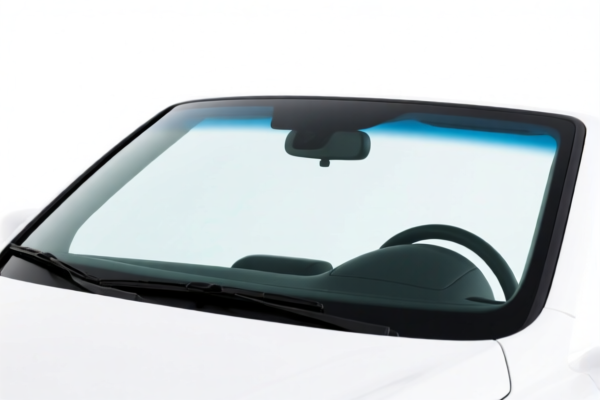
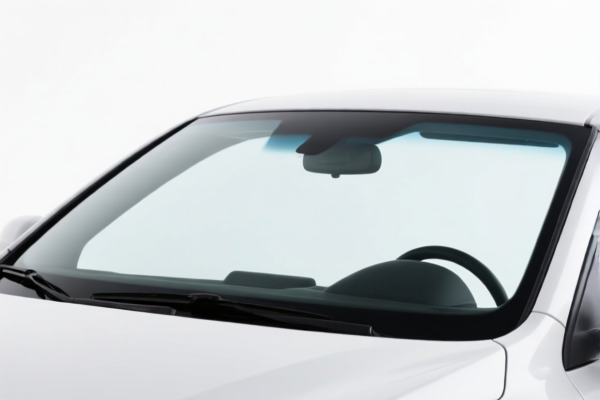
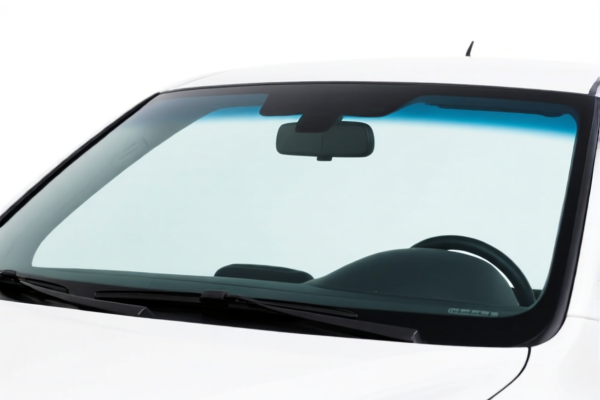
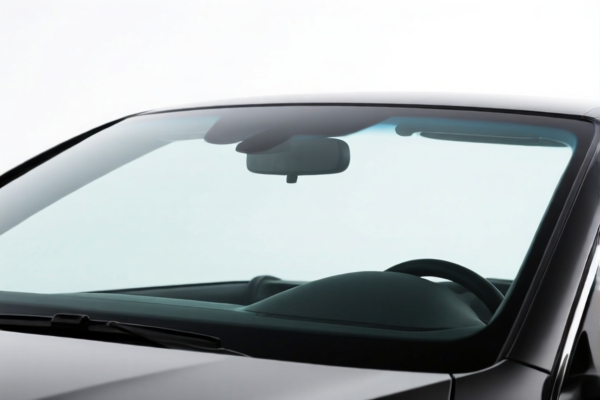
AI分析
🚗 Windshields (Auto Glass Windshields)
🌐 HS Code Reference & Customs Clearance Guide | 2026 Latest Tariff Analysis | Professional Clearance Strategy
📌 I. Product Definition & Classification: Do You Really Understand "Windshields"?
A windshield is a critical safety component of a vehicle, designed to protect occupants from wind, debris, and weather while maintaining structural integrity in the event of a rollover. In international trade, classification depends heavily on material, treatment process (tempered vs. laminated), and specific application (automotive vs. general building/glassware).
Key Classification Distinctions:
Automotive Parts (Chapter 87): If the windshield is specifically identifiable as a part of a motor vehicle (e.g., "for cars," "for trucks"), it may fall under 8708.22 (Safety glass of a kind used in motor vehicles).
Glass Articles (Chapter 70): If the classification focuses on the material and form (e.g., laminated safety glass, tempered glass) without explicit vehicle part designation, it falls under 7007 (Safety glass, heat-strengthened or toughened) or 7014 (Glass ware of a kind used for optical purposes).
⚠️ Critical Distinction:
- If declared as "Safety Glass for Motor Vehicles" → Potential HS Code 8708.22.00.00 (Low base duty, but subject to high additional tariffs).
- If declared as "Laminated Safety Glass" → HS Code 7007.21.11.10 (Higher base duty).
- If declared as "Other Glass Windshield/Lens" → HS Code 7014.00.30.00 / 7014.00.50.00 (General glass category).
📦 II. HS Code Classification Details (2026 Latest Tariff Authority Comparison)
| HS Code | Product Description | Application Scenario | Basis for Classification |
|---|---|---|---|
8708.22.00.00 |
Safety glass of a kind used in motor vehicles (e.g., windshields) | Direct vehicle parts, OEM replacements | ✅ Parts of Motor Vehicles |
8708.29.51.60 |
Other parts and accessories of bodies (including glass not elsewhere specified) | Other body glass parts, non-standard automotive glass | ✅ Other Body Parts |
7007.21.11.10 |
Laminated safety glass, heat-strengthened or toughened, of a kind used in vehicles | Laminated automotive glass (if not classified as vehicle part) | ✅ Laminated Safety Glass |
7007.21.11.90 |
Other safety glass, heat-strengthened or toughened, of a kind used in vehicles | Tempered/Auto glass not specified as laminated | ✅ Tempered Safety Glass |
7014.00.30.00 |
Glass of a kind used for optical purposes (e.g., lenses, filters, or parts thereof) | Windshields classified as optical components/lenses | ✅ Optical Glass Category |
7014.00.50.00 |
Other glass of a kind used for optical purposes | Other glass forms, inferred as "other" in absence of specific optical processing | ✅ Other Optical Glass |
🔍 Key Reminder:
-8708.22.00.00is often the most direct code for automotive windshields, but it attracts significant Additional Tariffs.
-7007.21.11.10applies if the product is defined by its manufacturing process (laminated) rather than its final vehicle application.
- Misclassification between "Vehicle Part" (Ch 87) and "Glass Article" (Ch 70) can lead to severe customs penalties.
💰 III. 2026 Latest Tariff Rate Breakdown (Including Additional Taxes & Policy Surcharges)
✅ Applicable Country: United States (US)
✅ Country of Origin: China (CN)
✅ Effective Date: From November 10, 2025 (and subsequent imports)
🎯 1. 8708.22.00.00 —— Safety Glass for Motor Vehicles (Vehicle Parts)
| Item | Details |
|---|---|
| Base Duty Rate | 2.5% |
| Additional Tariff (Section 301) | +25.0% |
| IEEPA Tariff (122 Items) | +10.0% |
| Total Tariff Rate | 37.5% (Calculated as: 2.5% base + 25% + 10%) |
| Tax Calculation | CIF Value × 37.5% |
| De Minimis Exemption | ❌ Not Eligible (deny_de_minimis) |
| Legal Basis Path | USITC:8708.22.00.00 → Section 301: Footnote 9903.88.01 → IEEPA: 10% surcharge |
📌 Explanation:
- Although the base duty is low (2.5%), the 35% total surcharge (25% + 10%) makes it expensive.
- This code is strictly for safety glass used in vehicles. If the glass is not specifically for vehicles, it cannot use this code.
🎯 2. 8708.29.51.60 —— Other Parts and Accessories of Bodies
| Item | Details |
|---|---|
| Base Duty Rate | 2.5% |
| Additional Tariff (Section 301) | +25.0% |
| Steel/Aluminum/Copper Surcharge | +50.0% (If applicable to specific metallic components associated with the glass frame/installation) |
| IEEPA Tariff (122 Items) | +10.0% |
| Total Tariff Rate | 85.0% (Highly punitive due to material-specific surcharges) |
| Tax Calculation | CIF Value × 85.0% |
| De Minimis Exemption | ❌ Not Eligible |
| Legal Basis Path | USITC:8708.29.51.60 → Section 301 → Material-Specific Surcharges |
📌 Note:
- This code is risky if the product is perceived to contain steel/aluminum/copper parts (e.g., metal frames).
- The 50% surcharge on metal products drastically increases the total cost. Only use if no other vehicle-specific code applies.
🎯 3. 7007.21.11.10 —— Laminated Safety Glass
| Item | Details |
|---|---|
| Base Duty Rate | 4.9% |
| Additional Tariff (Section 301) | +25.0% |
| IEEPA Tariff (122 Items) | +10.0% |
| Total Tariff Rate | 39.9% |
| Tax Calculation | CIF Value × 39.9% |
| De Minimis Exemption | ❌ Not Eligible |
| Legal Basis Path | USITC:7007.21.11.10 → Section 301 → IEEPA: 9903.01.24 |
📌 Explanation:
- If the windshield is explicitly laminated (two layers of glass with PVB interlayer), this code is appropriate if not declared as a vehicle part.
- The rate is slightly higher than8708.22due to the higher base duty (4.9% vs 2.5%), but the surcharge structure is similar.
🎯 4. 7007.21.11.90 —— Other Safety Glass (e.g., Tempered)
| Item | Details |
|---|---|
| Base Duty Rate | 4.9% |
| Additional Tariff (Section 301) | +25.0% |
| IEEPA Tariff (122 Items) | +10.0% |
| Total Tariff Rate | 39.9% |
| Tax Calculation | CIF Value × 39.9% |
| De Minimis Exemption | ❌ Not Eligible |
| Legal Basis Path | USITC:7007.21.11.90 → Section 301 → IEEPA |
📌 Note:
- Applies to tempered safety glass or laminated glass not falling into the specific "vehicle part" definition.
- Same total rate as7007.21.11.10, but different base justification.
🎯 5. 7014.00.30.00 & 7014.00.50.00 —— Optical Glass / Other Glass
| Item | Details |
|---|---|
| Base Duty Rate | 3.3% - 3.4% |
| Additional Tariff (Section 301) | +25.0% |
| IEEPA Tariff (122 Items) | +10.0% |
| Total Tariff Rate | 38.3% - 38.4% |
| Tax Calculation | CIF Value × ~38.3% |
| De Minimis Exemption | ❌ Not Eligible |
| Legal Basis Path | USITC:7014.00.30.00 / 7014.00.50.00 → Section 301 → IEEPA |
📌 Explanation:
- These codes classify the windshield as glass ware for optical purposes (e.g., lenses, filters) or general glass products.
- Used when the product is not clearly a "safety glass for vehicles" but rather a glass component with optical properties.
- Slightly lower total rate than8708or7007codes due to marginally lower base duty, but still high due to surcharges.
🛠️ IV. Customs Clearance Practical Advice (Real-World Pitfall Guide)
✅ 1. Required Documentation Checklist (Non-Negotiable)
| Document | Must Provide | Explanation |
|---|---|---|
| ✅ Product Specification Sheet | ✔️ | Must detail: Material (Glass type), Treatment (Tempered/Laminated), Dimensions, Curvature. |
| ✅ Technical Drawing/Blueprint | ✔️ | To prove if it's a "vehicle part" (Ch 87) or "glass article" (Ch 70). |
| ✅ Product Photos | ✔️ | Clear shots of the windshield, including any markings (e.g., DOT certification, manufacturer logo). |
| ✅ Certificate of Origin (CO) | ✔️ | Essential for verifying origin to apply correct IEEPA/Section 301 rates. |
| ✅ Commercial Invoice | ✔️ | Must accurately describe the product (e.g., "Automotive Safety Glass, Laminated, for Passenger Cars"). |
| ✅ Packing List | ✔️ | Detail how items are packed to prevent damage and clarify quantities. |
✅ 2. Declaration Tips (Key Mnemonics)
🔥 "Declare Part vs. Material, Choose Code Wisely, Avoid Metal Surcharges!"
| Scenario | Correct Declaration | Wrong Practice |
|---|---|---|
| New Car Windshield | 8708.22.00.00 (Safety Glass for Vehicles) |
Declare as "Glass Pane" → Incorrect classification |
| Windshield with Metal Frame | 8708.29.51.60 (Caution: 85% Total Tax) |
Hide metal parts → Fraud/Risk |
| Loose Laminated Glass (Not for Vehicle) | 7007.21.11.10 (Laminated Safety Glass) |
Declare as "Building Glass" → Risk of Misclassification |
| Optical Glass Lens (Used in Windshield Context) | 7014.00.30.00 |
Declare as "Automotive Part" without proof |
✅ 3. Special Situation Handling
| Situation | Handling Advice |
|---|---|
| OEM vs. Aftermarket | Provide OEM authorization or aftermarket certification to justify "Vehicle Part" status. |
| Windshield with Heaters/Defrosters | If electrical components are integrated, it may fall under Chapter 85 (Electrical) or 8708 depending on primary function. Consult customs broker. |
| Partial Shipments | Declare all components together. Splitting "Glass" and "Mounting Clips" leads to fragmented HS codes and higher taxes. |
| Used Windshields | Generally prohibited or restricted. Ensure they meet safety standards (e.g., no cracks, DOT compliant). |
🌍 V. Global Market Comparison for Windshields (2026 Latest)
| Country/Region | Recommended HS Code | Tariff (China Origin) | Certification Requirements | Notes |
|---|---|---|---|---|
| 🇺🇸 USA | 8708.22.00.00 |
37.5% (2.5% Base + 25% + 10%) | DOT, SAE | Highest surcharges due to US-China trade tensions. |
| 🇨🇳 China | 7007.21.11.10 |
~4.9% (Base) | CCC (if applicable) | No additional surcharges for domestic trade. |
| 🇪🇺 EU | 7007.21.11.10 |
0-6% (Depends on specific subheading) | ECE R43, CE | No major surcharges, but strict safety standards (ECE R43). |
| 🇲🇽 Mexico | 8708.22.00.00 |
0-5% (Under USMCA if eligible) | NOM | Potential for zero duty if meeting USMCA rules of origin. |
| 🇻🇳 Vietnam | 7007.21.11.10 |
Varies (FTA dependent) | TCVN | Beneficial for supply chain diversification. |
📌 Conclusion:
- The USA imposes the highest tariffs due to Section 301 and IEEPA surcharges.
- Mexico and Vietnam offer potential duty advantages if supply chains are shifted.
- Europe has lower tariffs but stricter product safety certifications (ECE R43).
📌 VI. Common Errors & Pitfall Guide (Lessons Learned)
❌ Error 1: Declaring "Automotive Windshield" as "Building Glass" (7007.99)
👉 Consequence: Customs may reject the classification as "not specifically for vehicles," leading to delays or penalties.
❌ Error 2: Omitting "Laminated" or "Tempered" from description
👉 Consequence: Unclear classification between 7007.21.11.10 (Laminated) and 7007.21.11.90 (Other), causing valuation disputes.
❌ Error 3: Ignoring Metal Components (e.g., Chrome trim, metal frames)
👉 Consequence: If classified under 8708.29.51.60, the 50% metal surcharge applies, totaling 85% tax.
❌ Error 4: Assuming "De Minimis" applies for small shipments
👉 Consequence: Glass products are explicitly excluded from de minimis exemptions for China-origin goods under current US regulations.
✅ Correct Approach:
"Automotive Safety Windshield, Laminated Glass, PVB Interlayer, for Passenger Cars, Model XYZ, DOT-Certified, CIF Value $XXX"
🎯 VII. Conclusion: Professional Declaration, Risk Mitigation, Cost Optimization
🎯 Key Takeaways:
🔹 "Vehicle Part = 37.5% | Laminated Glass = 39.9% | Metal Parts = 85%!"
🔹 "Always specify Material + Treatment + Application."
🔹 "US Market: Expect High Tariffs; Plan Supply Chain Accordingly."
📌 Pro Tip:
If your windshields are originating from Vietnam, Mexico, or Thailand, you may qualify for IEEPA Exemptions or USMCA/TVA Preferences, reducing tariffs to 0-5%.
Recommend applying for an Advance Ruling with US Customs to confirm the HS Code before shipment.
📣 Immediate Action:
📞 Consult a Licensed Customs Broker + Provide Product Specs + Apply for Pre-Ruling
🚀 Ensure Smooth Clearance, Avoid Delays, and Maximize Profit Margins!
✨ Professional Clearance Starts with Accurate Classification!
💼 Every Dollar of Duty Savings Counts!
用户评价
关于 HS 编码归类
协调制度(HS)是由世界海关组织(WCO)制定的国际贸易商品分类标准。全球 200 多个国家采用 HS 系统作为海关关税、贸易统计和进出口监管的基础。
每个 HS 编码遵循以下层级结构:
- 章(2 位)——商品大类(例如:第 84 章:机器和机械设备)
- 品目(4 位)——章内的更具体分类
- 子目(6 位)——国际通用细分,所有 WCO 成员国统一使用
- 本国细分(8-10 位)——各国自行扩展的细分编码,如美国 HTSUS 10 位编码
正确的 HS 编码归类对于顺利通关、准确缴纳关税和遵守贸易法规至关重要。错误归类可能导致海关延误、多缴关税或罚款。
从CN进口到US时,适用的关税税率可能包括:
- 最惠国(MFN)税率——适用于 WTO 成员国的标准关税税率
- 普通税率——适用于无贸易协定国家
- 贸易救济关税——附加关税,如 301 条款(反倾销)、232 条款(国家安全)或反补贴税
本页内容仅供参考。如需正式归类,请咨询当地海关或持牌报关代理。