Windshield
CN → US| HS Code | Tariff Rate | Origin | Destination | Doc |
|---|---|---|---|---|
| 7014003000 | 38.4% | CN | US | Official Doc |
| 7014005000 | 38.3% | CN | US | Official Doc |
| 7007211190 | 39.9% | CN | US | Official Doc |
| 8708220000 | 0.0% | CN | US | Official Doc |
| 8708295160 | 0.0% | CN | US | Official Doc |
| 7007211110 | 39.9% | CN | US | Official Doc |
Product Images
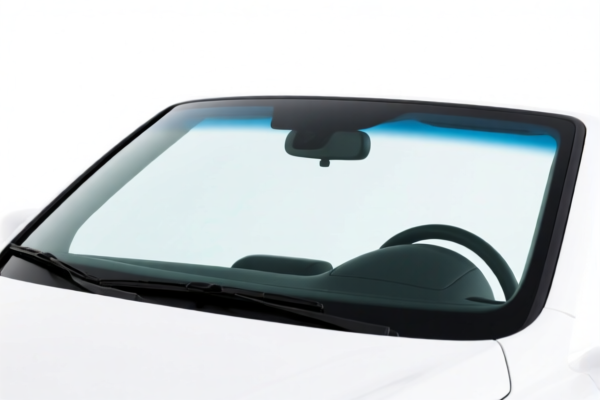
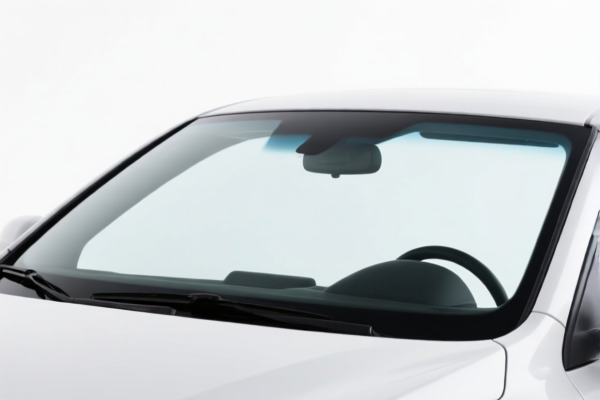
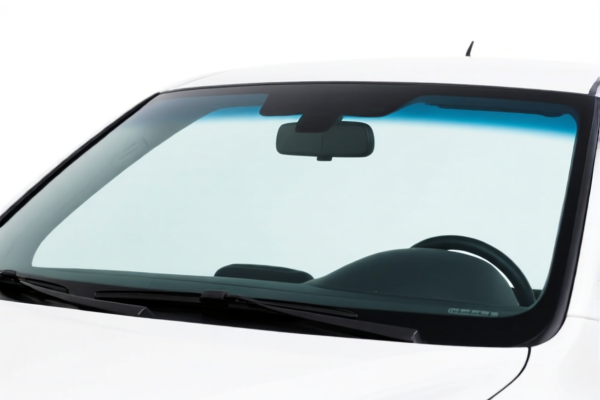
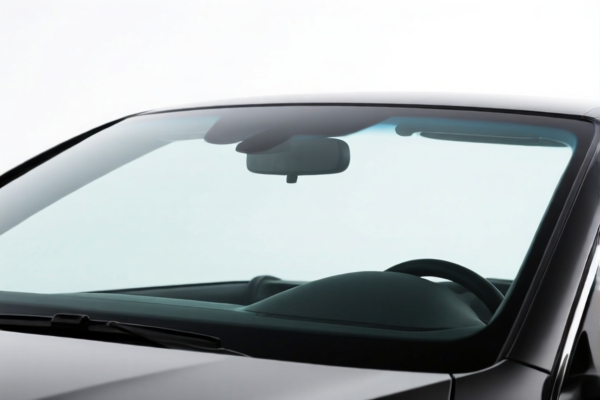
AI Analysis
🚗 Windshields (Auto Glass Windshields)
🌐 HS Code Reference & Customs Clearance Guide | 2026 Latest Tariff Analysis | Professional Clearance Strategy
📌 I. Product Definition & Classification: Do You Really Understand "Windshields"?
A windshield is a critical safety component of a vehicle, designed to protect occupants from wind, debris, and weather while maintaining structural integrity in the event of a rollover. In international trade, classification depends heavily on material, treatment process (tempered vs. laminated), and specific application (automotive vs. general building/glassware).
Key Classification Distinctions:
Automotive Parts (Chapter 87): If the windshield is specifically identifiable as a part of a motor vehicle (e.g., "for cars," "for trucks"), it may fall under 8708.22 (Safety glass of a kind used in motor vehicles).
Glass Articles (Chapter 70): If the classification focuses on the material and form (e.g., laminated safety glass, tempered glass) without explicit vehicle part designation, it falls under 7007 (Safety glass, heat-strengthened or toughened) or 7014 (Glass ware of a kind used for optical purposes).
⚠️ Critical Distinction:
- If declared as "Safety Glass for Motor Vehicles" → Potential HS Code 8708.22.00.00 (Low base duty, but subject to high additional tariffs).
- If declared as "Laminated Safety Glass" → HS Code 7007.21.11.10 (Higher base duty).
- If declared as "Other Glass Windshield/Lens" → HS Code 7014.00.30.00 / 7014.00.50.00 (General glass category).
📦 II. HS Code Classification Details (2026 Latest Tariff Authority Comparison)
| HS Code | Product Description | Application Scenario | Basis for Classification |
|---|---|---|---|
8708.22.00.00 |
Safety glass of a kind used in motor vehicles (e.g., windshields) | Direct vehicle parts, OEM replacements | ✅ Parts of Motor Vehicles |
8708.29.51.60 |
Other parts and accessories of bodies (including glass not elsewhere specified) | Other body glass parts, non-standard automotive glass | ✅ Other Body Parts |
7007.21.11.10 |
Laminated safety glass, heat-strengthened or toughened, of a kind used in vehicles | Laminated automotive glass (if not classified as vehicle part) | ✅ Laminated Safety Glass |
7007.21.11.90 |
Other safety glass, heat-strengthened or toughened, of a kind used in vehicles | Tempered/Auto glass not specified as laminated | ✅ Tempered Safety Glass |
7014.00.30.00 |
Glass of a kind used for optical purposes (e.g., lenses, filters, or parts thereof) | Windshields classified as optical components/lenses | ✅ Optical Glass Category |
7014.00.50.00 |
Other glass of a kind used for optical purposes | Other glass forms, inferred as "other" in absence of specific optical processing | ✅ Other Optical Glass |
🔍 Key Reminder:
-8708.22.00.00is often the most direct code for automotive windshields, but it attracts significant Additional Tariffs.
-7007.21.11.10applies if the product is defined by its manufacturing process (laminated) rather than its final vehicle application.
- Misclassification between "Vehicle Part" (Ch 87) and "Glass Article" (Ch 70) can lead to severe customs penalties.
💰 III. 2026 Latest Tariff Rate Breakdown (Including Additional Taxes & Policy Surcharges)
✅ Applicable Country: United States (US)
✅ Country of Origin: China (CN)
✅ Effective Date: From November 10, 2025 (and subsequent imports)
🎯 1. 8708.22.00.00 —— Safety Glass for Motor Vehicles (Vehicle Parts)
| Item | Details |
|---|---|
| Base Duty Rate | 2.5% |
| Additional Tariff (Section 301) | +25.0% |
| IEEPA Tariff (122 Items) | +10.0% |
| Total Tariff Rate | 37.5% (Calculated as: 2.5% base + 25% + 10%) |
| Tax Calculation | CIF Value × 37.5% |
| De Minimis Exemption | ❌ Not Eligible (deny_de_minimis) |
| Legal Basis Path | USITC:8708.22.00.00 → Section 301: Footnote 9903.88.01 → IEEPA: 10% surcharge |
📌 Explanation:
- Although the base duty is low (2.5%), the 35% total surcharge (25% + 10%) makes it expensive.
- This code is strictly for safety glass used in vehicles. If the glass is not specifically for vehicles, it cannot use this code.
🎯 2. 8708.29.51.60 —— Other Parts and Accessories of Bodies
| Item | Details |
|---|---|
| Base Duty Rate | 2.5% |
| Additional Tariff (Section 301) | +25.0% |
| Steel/Aluminum/Copper Surcharge | +50.0% (If applicable to specific metallic components associated with the glass frame/installation) |
| IEEPA Tariff (122 Items) | +10.0% |
| Total Tariff Rate | 85.0% (Highly punitive due to material-specific surcharges) |
| Tax Calculation | CIF Value × 85.0% |
| De Minimis Exemption | ❌ Not Eligible |
| Legal Basis Path | USITC:8708.29.51.60 → Section 301 → Material-Specific Surcharges |
📌 Note:
- This code is risky if the product is perceived to contain steel/aluminum/copper parts (e.g., metal frames).
- The 50% surcharge on metal products drastically increases the total cost. Only use if no other vehicle-specific code applies.
🎯 3. 7007.21.11.10 —— Laminated Safety Glass
| Item | Details |
|---|---|
| Base Duty Rate | 4.9% |
| Additional Tariff (Section 301) | +25.0% |
| IEEPA Tariff (122 Items) | +10.0% |
| Total Tariff Rate | 39.9% |
| Tax Calculation | CIF Value × 39.9% |
| De Minimis Exemption | ❌ Not Eligible |
| Legal Basis Path | USITC:7007.21.11.10 → Section 301 → IEEPA: 9903.01.24 |
📌 Explanation:
- If the windshield is explicitly laminated (two layers of glass with PVB interlayer), this code is appropriate if not declared as a vehicle part.
- The rate is slightly higher than8708.22due to the higher base duty (4.9% vs 2.5%), but the surcharge structure is similar.
🎯 4. 7007.21.11.90 —— Other Safety Glass (e.g., Tempered)
| Item | Details |
|---|---|
| Base Duty Rate | 4.9% |
| Additional Tariff (Section 301) | +25.0% |
| IEEPA Tariff (122 Items) | +10.0% |
| Total Tariff Rate | 39.9% |
| Tax Calculation | CIF Value × 39.9% |
| De Minimis Exemption | ❌ Not Eligible |
| Legal Basis Path | USITC:7007.21.11.90 → Section 301 → IEEPA |
📌 Note:
- Applies to tempered safety glass or laminated glass not falling into the specific "vehicle part" definition.
- Same total rate as7007.21.11.10, but different base justification.
🎯 5. 7014.00.30.00 & 7014.00.50.00 —— Optical Glass / Other Glass
| Item | Details |
|---|---|
| Base Duty Rate | 3.3% - 3.4% |
| Additional Tariff (Section 301) | +25.0% |
| IEEPA Tariff (122 Items) | +10.0% |
| Total Tariff Rate | 38.3% - 38.4% |
| Tax Calculation | CIF Value × ~38.3% |
| De Minimis Exemption | ❌ Not Eligible |
| Legal Basis Path | USITC:7014.00.30.00 / 7014.00.50.00 → Section 301 → IEEPA |
📌 Explanation:
- These codes classify the windshield as glass ware for optical purposes (e.g., lenses, filters) or general glass products.
- Used when the product is not clearly a "safety glass for vehicles" but rather a glass component with optical properties.
- Slightly lower total rate than8708or7007codes due to marginally lower base duty, but still high due to surcharges.
🛠️ IV. Customs Clearance Practical Advice (Real-World Pitfall Guide)
✅ 1. Required Documentation Checklist (Non-Negotiable)
| Document | Must Provide | Explanation |
|---|---|---|
| ✅ Product Specification Sheet | ✔️ | Must detail: Material (Glass type), Treatment (Tempered/Laminated), Dimensions, Curvature. |
| ✅ Technical Drawing/Blueprint | ✔️ | To prove if it's a "vehicle part" (Ch 87) or "glass article" (Ch 70). |
| ✅ Product Photos | ✔️ | Clear shots of the windshield, including any markings (e.g., DOT certification, manufacturer logo). |
| ✅ Certificate of Origin (CO) | ✔️ | Essential for verifying origin to apply correct IEEPA/Section 301 rates. |
| ✅ Commercial Invoice | ✔️ | Must accurately describe the product (e.g., "Automotive Safety Glass, Laminated, for Passenger Cars"). |
| ✅ Packing List | ✔️ | Detail how items are packed to prevent damage and clarify quantities. |
✅ 2. Declaration Tips (Key Mnemonics)
🔥 "Declare Part vs. Material, Choose Code Wisely, Avoid Metal Surcharges!"
| Scenario | Correct Declaration | Wrong Practice |
|---|---|---|
| New Car Windshield | 8708.22.00.00 (Safety Glass for Vehicles) |
Declare as "Glass Pane" → Incorrect classification |
| Windshield with Metal Frame | 8708.29.51.60 (Caution: 85% Total Tax) |
Hide metal parts → Fraud/Risk |
| Loose Laminated Glass (Not for Vehicle) | 7007.21.11.10 (Laminated Safety Glass) |
Declare as "Building Glass" → Risk of Misclassification |
| Optical Glass Lens (Used in Windshield Context) | 7014.00.30.00 |
Declare as "Automotive Part" without proof |
✅ 3. Special Situation Handling
| Situation | Handling Advice |
|---|---|
| OEM vs. Aftermarket | Provide OEM authorization or aftermarket certification to justify "Vehicle Part" status. |
| Windshield with Heaters/Defrosters | If electrical components are integrated, it may fall under Chapter 85 (Electrical) or 8708 depending on primary function. Consult customs broker. |
| Partial Shipments | Declare all components together. Splitting "Glass" and "Mounting Clips" leads to fragmented HS codes and higher taxes. |
| Used Windshields | Generally prohibited or restricted. Ensure they meet safety standards (e.g., no cracks, DOT compliant). |
🌍 V. Global Market Comparison for Windshields (2026 Latest)
| Country/Region | Recommended HS Code | Tariff (China Origin) | Certification Requirements | Notes |
|---|---|---|---|---|
| 🇺🇸 USA | 8708.22.00.00 |
37.5% (2.5% Base + 25% + 10%) | DOT, SAE | Highest surcharges due to US-China trade tensions. |
| 🇨🇳 China | 7007.21.11.10 |
~4.9% (Base) | CCC (if applicable) | No additional surcharges for domestic trade. |
| 🇪🇺 EU | 7007.21.11.10 |
0-6% (Depends on specific subheading) | ECE R43, CE | No major surcharges, but strict safety standards (ECE R43). |
| 🇲🇽 Mexico | 8708.22.00.00 |
0-5% (Under USMCA if eligible) | NOM | Potential for zero duty if meeting USMCA rules of origin. |
| 🇻🇳 Vietnam | 7007.21.11.10 |
Varies (FTA dependent) | TCVN | Beneficial for supply chain diversification. |
📌 Conclusion:
- The USA imposes the highest tariffs due to Section 301 and IEEPA surcharges.
- Mexico and Vietnam offer potential duty advantages if supply chains are shifted.
- Europe has lower tariffs but stricter product safety certifications (ECE R43).
📌 VI. Common Errors & Pitfall Guide (Lessons Learned)
❌ Error 1: Declaring "Automotive Windshield" as "Building Glass" (7007.99)
👉 Consequence: Customs may reject the classification as "not specifically for vehicles," leading to delays or penalties.
❌ Error 2: Omitting "Laminated" or "Tempered" from description
👉 Consequence: Unclear classification between 7007.21.11.10 (Laminated) and 7007.21.11.90 (Other), causing valuation disputes.
❌ Error 3: Ignoring Metal Components (e.g., Chrome trim, metal frames)
👉 Consequence: If classified under 8708.29.51.60, the 50% metal surcharge applies, totaling 85% tax.
❌ Error 4: Assuming "De Minimis" applies for small shipments
👉 Consequence: Glass products are explicitly excluded from de minimis exemptions for China-origin goods under current US regulations.
✅ Correct Approach:
"Automotive Safety Windshield, Laminated Glass, PVB Interlayer, for Passenger Cars, Model XYZ, DOT-Certified, CIF Value $XXX"
🎯 VII. Conclusion: Professional Declaration, Risk Mitigation, Cost Optimization
🎯 Key Takeaways:
🔹 "Vehicle Part = 37.5% | Laminated Glass = 39.9% | Metal Parts = 85%!"
🔹 "Always specify Material + Treatment + Application."
🔹 "US Market: Expect High Tariffs; Plan Supply Chain Accordingly."
📌 Pro Tip:
If your windshields are originating from Vietnam, Mexico, or Thailand, you may qualify for IEEPA Exemptions or USMCA/TVA Preferences, reducing tariffs to 0-5%.
Recommend applying for an Advance Ruling with US Customs to confirm the HS Code before shipment.
📣 Immediate Action:
📞 Consult a Licensed Customs Broker + Provide Product Specs + Apply for Pre-Ruling
🚀 Ensure Smooth Clearance, Avoid Delays, and Maximize Profit Margins!
✨ Professional Clearance Starts with Accurate Classification!
💼 Every Dollar of Duty Savings Counts!
Customer Reviews
About HS Code Classification
The Harmonized System (HS) is an internationally standardized nomenclature developed by the World Customs Organization (WCO) to classify traded products. Over 200 countries use the HS system as the basis for customs tariffs, trade statistics, and import/export regulations.
Each HS code follows a hierarchical structure:
- Chapter (2 digits) — Broad category of goods (e.g., Chapter 84: Machinery and Mechanical Appliances)
- Heading (4 digits) — More specific grouping within the chapter
- Subheading (6 digits) — Internationally standardized breakdown, used by all WCO member countries
- National subdivisions (8-10 digits) — Country-specific extensions for further classification, such as US HTSUS 10-digit codes
Correct HS code classification is essential for smooth customs clearance, accurate duty payment, and compliance with trade regulations. Misclassification can lead to customs delays, overpayment of duties, or penalties.
When importing from CN to US, the applicable tariff rates may include:
- Most-Favored-Nation (MFN) rate — The standard duty rate applied to WTO members
- General rate — Applied to countries without trade agreements
- Trade remedy duties — Additional tariffs such as Section 301 (anti-dumping), Section 232 (national security), or countervailing duties
The information provided on this page is for reference purposes only. For official classification, please consult with your local customs authority or a licensed customs broker.