Wine Bottle
CN → US| HS编码 | 关税税率 | 原产国 | 目的国 | 文档 |
|---|---|---|---|---|
| 2204215035 | 0.0% | CN | US | 官方文档 |
| 3923300010 | 38.0% | CN | US | 官方文档 |
| 7010905025 | 35.0% | CN | US | 官方文档 |
| 7010905029 | 35.0% | CN | US | 官方文档 |
| 3923300090 | 38.0% | CN | US | 官方文档 |
| 2204215040 | 0.0% | CN | US | 官方文档 |
商品图片
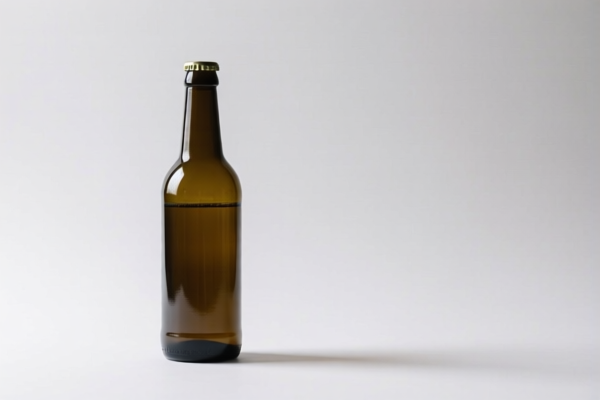
AI分析
🍷 Wine Bottle: HS Code Classification & Customs Clearance Strategy (2026)
🌐 HS Code Reference & Customs Guide | 2026 Latest Tariff Analysis | Professional-Level Clearance Strategy
📌 I. Product Definition & Classification: Do You Really Know "Wine Bottle"?
"Wine Bottle" is a broad term that can refer to two distinct categories in international trade:
1. The Product Itself: Bottled Red Wine (the consumable liquid).
2. The Packaging: Empty bottles (glass or plastic) used to contain or transport the wine.
⚠️ Key Distinction Point:
- If the item is filled with red wine, it is classified based on the beverage (HS 2204).
- If the item is an empty container, it is classified based on the material (Glass: HS 7010, Plastic: HS 3923).
- Never mix these two categories in a single declaration line. The tax implications differ drastically.
📦 II. HS Code Classification Details (2026 Latest Tariff Authority Comparison)
Below are the specific HS Codes derived from the provided data, categorized by product type.
| HS Code | Product Description | Application Scenario | Material/State |
|---|---|---|---|
2204.21.50.35 |
Bottled Red Wine (Capacity ≤ 2L) | Ready-to-consume red wine in bottles | Filled Liquid |
3923.30.00.10 |
Plastic or Glass Bottles (For Red Wine Packaging) | Empty bottles made of plastic or glass | Empty Container |
7010.90.50.25 |
Glass Containers (For Holding Red Wine) | Empty glass jars/bottles | Empty Container (Glass) |
7010.90.50.29 |
Glass Bottles (For Red Wine) | Empty glass bottles matching wine bottle morphology | Empty Container (Glass) |
3923.30.00.90 |
Other Bottles (Usually Plastic) | Empty bottles for wine packaging/transport | Empty Container (Plastic/Other) |
🔍 Key Reminder:
- Filled Wine (2204) is taxed as a beverage.
- Empty Bottles (7010or3923) are taxed as packaging materials.
- Even if the empty bottle is intended for wine, if it is empty at the time of import, it must be classified as packaging (7010/3923), NOT as wine (2204).
💰 III. 2026 Latest Tariff Rate Details (Including Surcharges & Policy Add-ons)
✅ Applicable Country: United States (US)
✅ Origin: China (CN)
✅ Effective Date: Includes imports from November 10, 2025 onwards
🎯 1. 2204.21.50.35 —— Bottled Red Wine (≤ 2 Liters)
| Item | Content |
|---|---|
| Base Tariff | 6.3¢/liter (Specific Duty) |
| Section 301 Surcharge | +25.0% (Ad Valorem) |
| Section 122 Surcharge | +10.0% (Ad Valorem) |
| Total Effective Tax | Base + 35% surcharge (Calculated on CIF value for ad valorem parts) |
| Tax Calculation | 6.3¢ per liter + (CIF Value × 35%) |
| De Minimis Eligibility | ❌ No (High-risk category for de minimis exemption) |
| Legal Basis Path | Section 301: 25% → Section 122: 10% → USITC: 2204.21.50.35 |
📌 Explanation:
- "Base Tariff 6.3¢/liter": A specific duty applied per liter of wine.
- "35% Total Surcharge": Composed of the 25% Section 301 tariff and 10% Section 122 tariff.
- Total Cost Impact: You pay a per-liter fee PLUS 35% of the total value. This is a very high effective tax rate for bulk imports.
🎯 2. 3923.30.00.10 & 3923.30.00.90 —— Plastic/Other Bottles (Empty)
| Item | Content |
|---|---|
| Base Tariff | 3.0% |
| Section 301 Surcharge | +25.0% |
| Section 122 Surcharge | +10.0% |
| Total Tariff Rate | 38.0% |
| Tax Calculation | CIF Value × 38% |
| De Minimis Eligibility | ❌ No |
| Legal Basis Path | IEEPA: 10% → Section 301: 25% → USITC: 3923.30.xx.xx |
📌 Note:
- Whether the bottle is for red wine or not, if it is plastic or "other material," it falls under HS 3923.
- The base rate is slightly higher (3%) than glass, leading to a 38% total rate.
🎯 3. 7010.90.50.25 & 7010.90.50.29 —— Glass Bottles/Containers (Empty)
| Item | Content |
|---|---|
| Base Tariff | 0.0% |
| Section 301 Surcharge | +25.0% |
| Section 122 Surcharge | +10.0% |
| Total Tariff Rate | 35.0% |
| Tax Calculation | CIF Value × 35% |
| De Minimis Eligibility | ❌ No |
| Legal Basis Path | IEEPA: 10% → Section 301: 25% → USITC: 7010.90.50.xx |
📌 Note:
- Glass bottles have a 0% base tariff, but the 35% surcharge makes them nearly as expensive as plastic ones in total duty.
- HS 7010.90.50.25 and .29 are specific sub-categories for glass containers/bottles. Choose the one that best matches your bottle's specific shape/use if required by customs, otherwise, they share the same 35% rate.
🛠️ IV. Customs Clearance Practical Advice (Battle-Tested Pitfall Guide)
✅ 1. Documentation Checklist (None Are Optional)
| Document | Required | Description |
|---|---|---|
| ✅ Product Specification | ✔️ | Specify: Filled vs. Empty. If empty, state material (Glass/Plastic). |
| ✅ Commercial Invoice | ✔️ | Clearly state "Empty Glass Bottles for Wine Packaging" OR "Red Wine, Bottled, 750ml". |
| ✅ Packing List | ✔️ | Detail net weight, gross weight, and volume (liters for wine). |
| ✅ Declaration of Content | ✔️ | CRITICAL: If empty, declare "EMPTY." If filled, declare "WINE." Misdeclaration leads to heavy fines. |
| ✅ Certificate of Origin | ✔️ | Proof of Chinese origin triggers the 35-38% surcharges. |
| ✅ TAA Compliance (If Applicable) | N/A | Glass/plastic bottles generally do not qualify for TAA exemptions from China. |
✅ 2. Declaration Tips (Key Mantra)
🔥 “Empty is Packaging, Filled is Beverage; Name it Right, Tax is Light (or Heavy, depending on category)!”
| Scenario | Correct Declaration | Incorrect Practice | Consequence of Error |
|---|---|---|---|
| Empty Glass Bottles | HS 7010.90.50.25/29Desc: "Empty Glass Wine Bottles" |
Declare as HS 2204 (Wine) |
Severe Penalty: Underpayment of tax + Fraud investigation. |
| Filled Red Wine | HS 2204.21.50.35Desc: "Red Wine, Bottled, ≤2L" |
Declare as HS 7010 (Bottle) |
Severe Penalty: Misclassification, loss of specific duty exemption, plus penalties. |
| Plastic Bottles | HS 3923.30.00.10 or .90Desc: "Plastic Bottles for Packaging" |
Declare as generic "Containers" | Delay in clearance, request for further evidence. |
| Mixed Shipment | Split Lines: One line for Wine, one for Empty Bottles | Combine into one line | Customs will reject the mixed declaration; whole shipment held. |
✅ 3. Special Handling
| Scenario | Handling Advice |
|---|---|
| Bottles with Wine Residue | If empty bottles still contain liquid residue, US Customs may classify them as filled wine (2204). Ensure bottles are completely clean and dry. |
| Bottle Caps/Corks | If shipped with bottles, they are usually absorbed into the main item. Declare separately if high value to avoid valuation disputes. |
| De Minimis (Section 321) | ❌ Not Eligible. Goods with HS Codes 2204, 7010, 3923 from China cannot use the $800 de minimis exemption due to Section 301/122 exclusions. |
| Valuation | Ensure CIF value includes freight and insurance. The 35-38% ad valorem tax applies to the CIF value. |
🌍 V. Global Market Clearance Comparison (2026 Latest)
| Country/Region | Recommended HS Code | Tariff (China Origin) | Certification/Notes |
|---|---|---|---|
| 🇺🇸 United States | 2204.21.50.35 (Wine)7010/3923 (Empty) |
Wine: 6.3¢/L + 35% Empty: 35-38% |
No De Minimis. High scrutiny on "Empty" vs. "Filled". |
| 🇨🇳 China | 2204.21 |
~14% | Import duties for wine. |
| 🇪🇺 European Union | 2204.21 |
~27% (Wine) 0-4.7% (Empty) |
VAT applies. Empty bottles may have lower duties. |
| 🇬🇧 United Kingdom | 2204.21 |
~27% (Wine) | Post-Brexit rules apply. |
📌 Conclusion:
- The US is the most complex market due to the combination of specific duties (per liter) and high ad valorem surcharges (35-38%).
- Empty glass bottles (35%) are cheaper than plastic bottles (38%) in total duty, but both are expensive compared to other global markets.
- De Minimis (Section 321) is off the table for all these items from China. You must prepare for full formal entry and bond requirements.
📌 VI. Common Errors & Pitfall Guide (Lessons Learned)
❌ Error 1: Declaring empty bottles as wine to avoid packaging duties.
👉 Consequence: Customs inspectors will detect no liquid volume/weight mismatch. Fines for misdeclaration + potential seizure.
❌ Error 2: Assuming small shipments of empty bottles qualify for De Minimis ($800).
👉 Consequence: HS 7010/3923/2204 are excluded from De Minimis for China. Shipments will be held, and you will owe back taxes + storage fees.
❌ Error 3: Using Generic Descriptions like "Glass Jars" without specifying "For Wine".
👉 Consequence: Customs may assign a higher default duty rate or request a classification ruling, delaying shipment by weeks.
❌ Error 4: Forgetting the Specific Duty (6.3¢/liter) on wine.
👉 Consequence: Underpayment of 35% and the per-liter fee. The USCBP calculates this automatically, so your system must be set up correctly.
✅ Correct Action:
"Empty Glass Wine Bottles, Clean, For Packaging Use" (HS 7010.90.50.25)
"Red Wine, Bottled, 750ml, Alcohol Content XX%" (HS 2204.21.50.35)
🎯 VII. Conclusion: Professional Declaration Saves Money!
🎯 Remember the Mantra:
🔹 "Empty = Packaging (35-38%), Filled = Beverage (6.3¢/L + 35%)."
🔹 "No De Minimis for China!"
🔹 "Specify 'Empty' clearly to avoid fraud allegations!"
📌 Pro Tip:
If you are importing filled wine, ensure your alcohol by volume (ABV) and bottle size are explicitly stated, as these affect the 6.3¢/liter specific duty calculation.
For empty bottles, provide high-res photos of the label and shape to prove they are "containers" and not "filled goods."
📣 Immediate Action:
📞 Consult a licensed US Customs Broker before shipping.
📄 Prepare a Precise Commercial Invoice distinguishing between product and packaging.
🚀 Clear Customs Smoothly, Avoid Penalties, Protect Your Profit Margins!
✨ Professional Customs Clearance Starts with Accurate Classification!
💼 Every Percent of Tax Matters in the Wine Industry!
用户评价
关于 HS 编码归类
协调制度(HS)是由世界海关组织(WCO)制定的国际贸易商品分类标准。全球 200 多个国家采用 HS 系统作为海关关税、贸易统计和进出口监管的基础。
每个 HS 编码遵循以下层级结构:
- 章(2 位)——商品大类(例如:第 84 章:机器和机械设备)
- 品目(4 位)——章内的更具体分类
- 子目(6 位)——国际通用细分,所有 WCO 成员国统一使用
- 本国细分(8-10 位)——各国自行扩展的细分编码,如美国 HTSUS 10 位编码
正确的 HS 编码归类对于顺利通关、准确缴纳关税和遵守贸易法规至关重要。错误归类可能导致海关延误、多缴关税或罚款。
从CN进口到US时,适用的关税税率可能包括:
- 最惠国(MFN)税率——适用于 WTO 成员国的标准关税税率
- 普通税率——适用于无贸易协定国家
- 贸易救济关税——附加关税,如 301 条款(反倾销)、232 条款(国家安全)或反补贴税
本页内容仅供参考。如需正式归类,请咨询当地海关或持牌报关代理。